• Skip to main content
  • Skip to primary sidebar
  • Skip to footer

Chimpanzee Sanctuary Northwest

Hope. Love. Home. Sanctuary

  • Our Family
    • The Chimpanzees
    • The Cattle
  • Blog
  • About Us
    • Visiting the Sanctuary
    • Philosophy
      • FAQs
      • Mission, Vision & Goals
      • Privacy Policy
    • The Humans
      • Staff
      • Board of Directors
      • Founder
    • Annual Reports
    • The Future of CSNW
    • CSNW In The News
  • You can help
    • Donate
      • Become a Chimpanzee Pal
      • Sponsor A Day
      • Transfer Stock
      • Be A Produce Patron
      • Be a Bovine Buddy
      • Give from your IRA
      • Personalized Stones
      • Bring Them Home Campaign
    • Leave A Legacy
    • Employment Opportunities
    • Volunteer
    • See Our Wish List
    • Events
  • Resources
    • About Chimpanzees
    • Enrichment Database
    • Advocacy
      • Advocacy Action Center
      • Apes in Entertainment
        • Trainers
        • Role of the AHA
        • Greeting Cards
      • Chimpanzees as Pets
      • Roadside Zoos
      • Chimpanzees in Biomedical Research
      • Conservation
        • African Apes
        • Orangutans
  • Shop
    • Merchandise Store
  • Contact
  • DONATE NOW

chimpanzee

Bedtime stories

October 26, 2020 by Katelyn

Bedtime stories! We received several wonderful questions from Diana’s recent blog post, “Inviting your questions,” about the chimpanzees’ bedtime routines!

We run a pretty tight ship here for a variety of reasons. In part, because we have a lot we need to complete each day! Another reason is because, as you might imagine, it’s really important for former lab chimpanzees, or anyone living in captivity, to have a routine in which they know what to expect and when to expect it. And while we still allow for, and adjust the routine to suit the chimpanzees’ choices, it definitely helps facilitate our ability to do things such as shifting the chimpanzees out of areas we need to enter to clean each day when they know what’s happening.

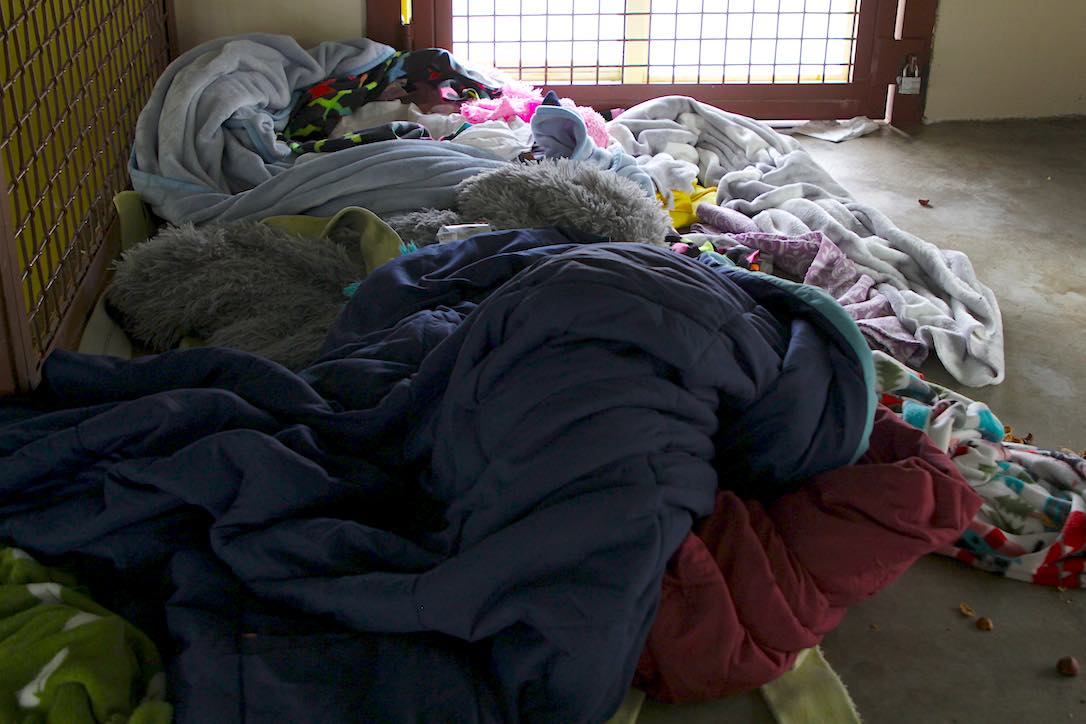
So with that in mind, we serve dinner at 4:30 and believe me, the chimpanzees’ don’t need a clock to tell us what time it is! (As a sidenote, with daylight savings time happening soon, this will be changing to 3:30. We humans adjust our schedules with daylight savings in order to allow the chimpanzees to have the maximum amount of outdoor access with daylight they can, so while we work from 9:00 am-5:30 pm in the spring/summer, we “fall back” to 8:00-4:30 for autumn/winter). While someone serves the chimps their dinner in the greenhouse or front rooms, the lead caregiver for the day takes the opportunity to spot clean the playroom (where the seven tend to sleep), put out extra blankets for night nests (we pass out at minimum 70+ blankets each day) and distribute their after-dinner evening enrichment (food puzzles!). At the end of dinner we hand out night bags (small bags full of nuts, seeds, dried fruit and popcorn) and just about the time they finish these, the playroom is about ready for them to be given access to again for the night. Once they’re given access, they are pretty excited about searching out their puzzles. Then when they’re done with their puzzles they promptly start building their night nests. The chimpanzees are typically all in bed by the time we wrap up the day (with the exception of boss lady, Jamie, who is very busy).

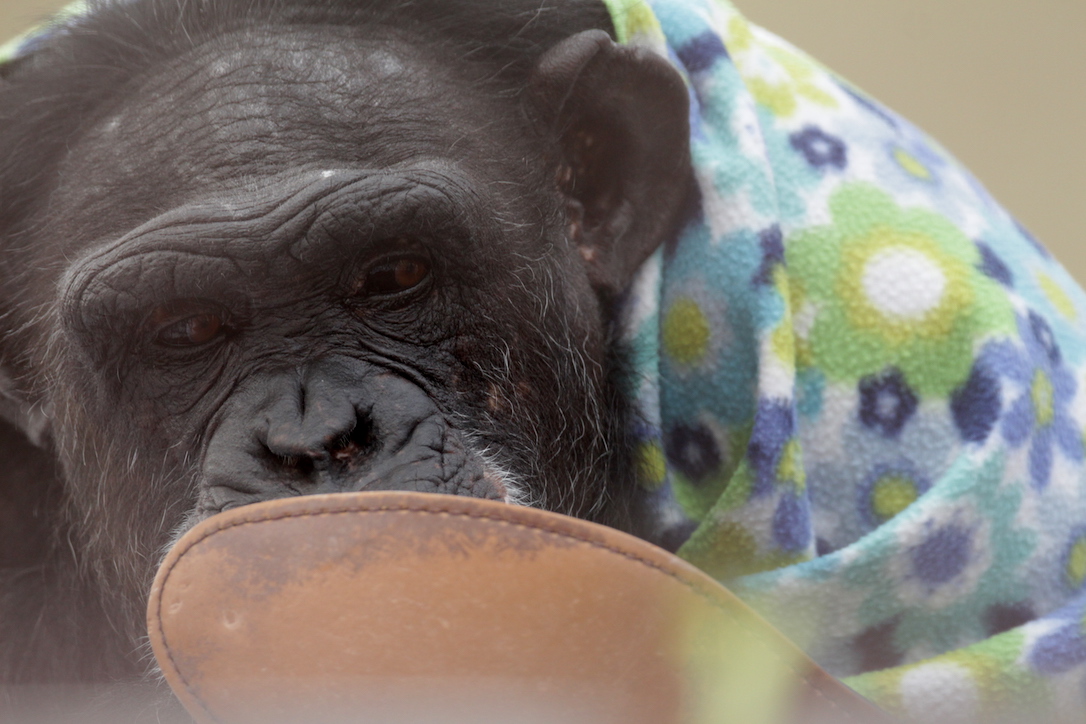
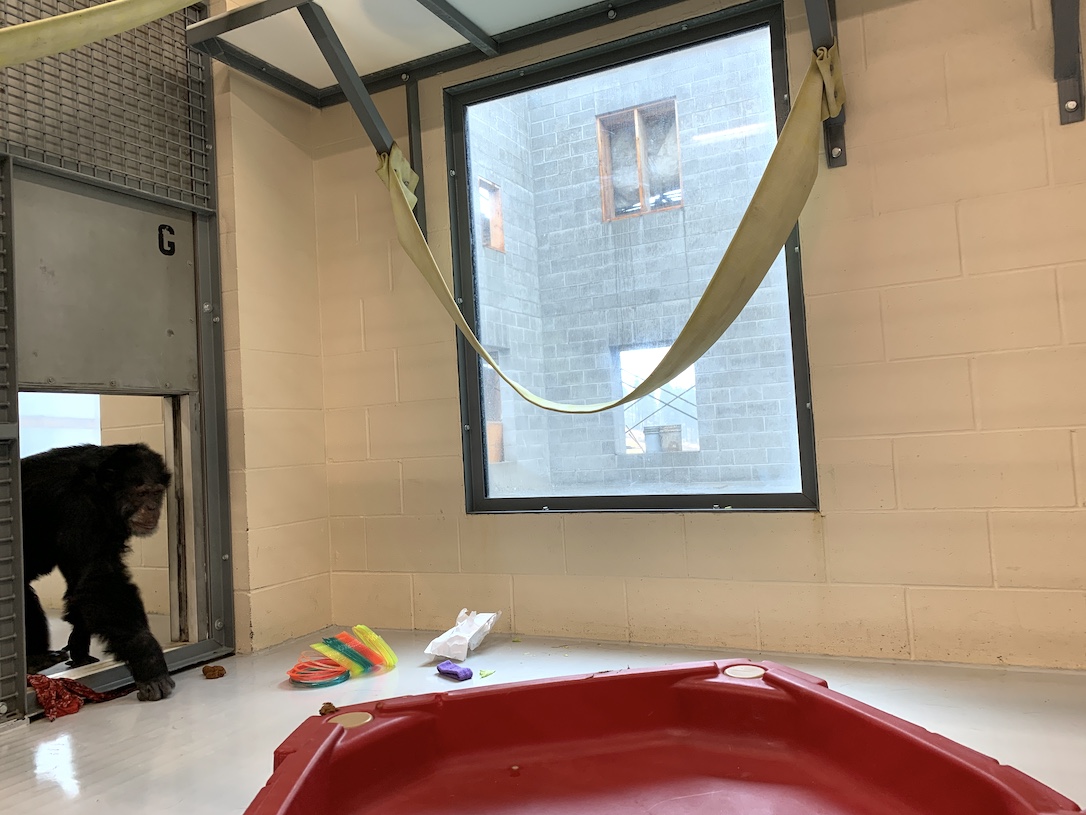
Where do they sleep? By nature, chimpanzees are arboreal sleepers and in the wild they climb trees and build nests each night by tucking and weaving the branches around them. Only mothers and infants share nests so while our resident chimpanzee friends are weaving nests of blankets, none of them share a nest, though they will often sleep near one another. They usually all build their nests upstairs along the windows (maybe their version of climbing up a tree, they have a good view, and it’s extra warm up there!). Though they have separate nests, Annie and Missy do have an endearing habit of occasionally weaving their individual nests together into a figure eight. You can kind of see it here (they are super fluffy right now with all the amazing blankets people have been donating!):
Willy B on a shelf in the front rooms:
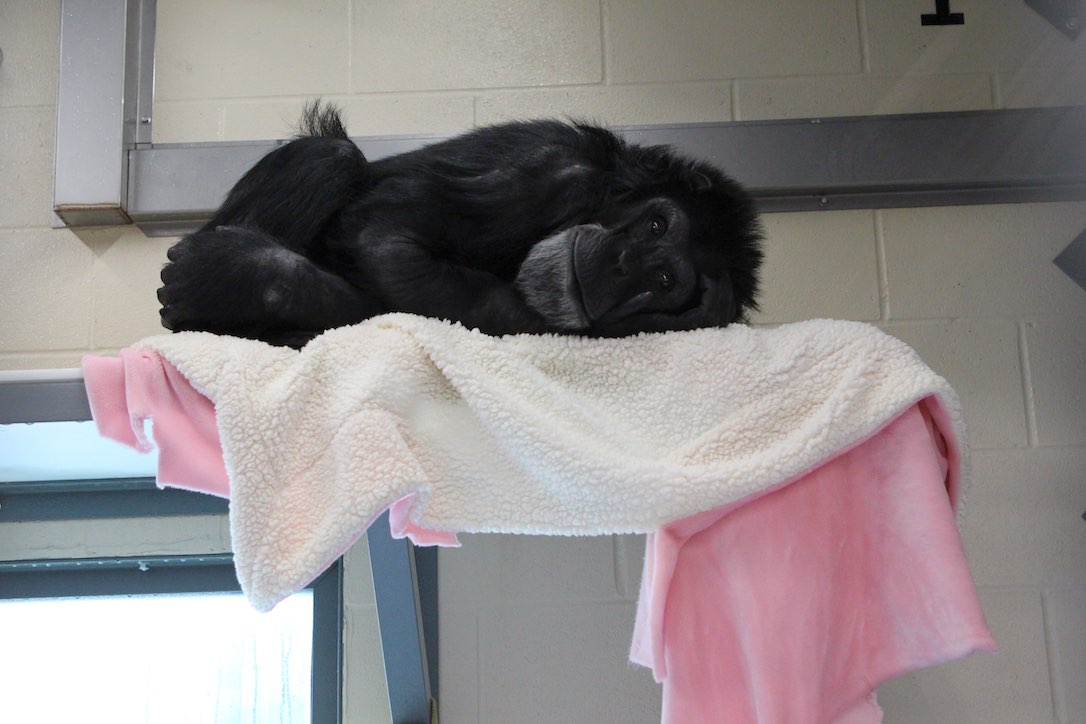
Sigh…Willy B is a handsome devil:
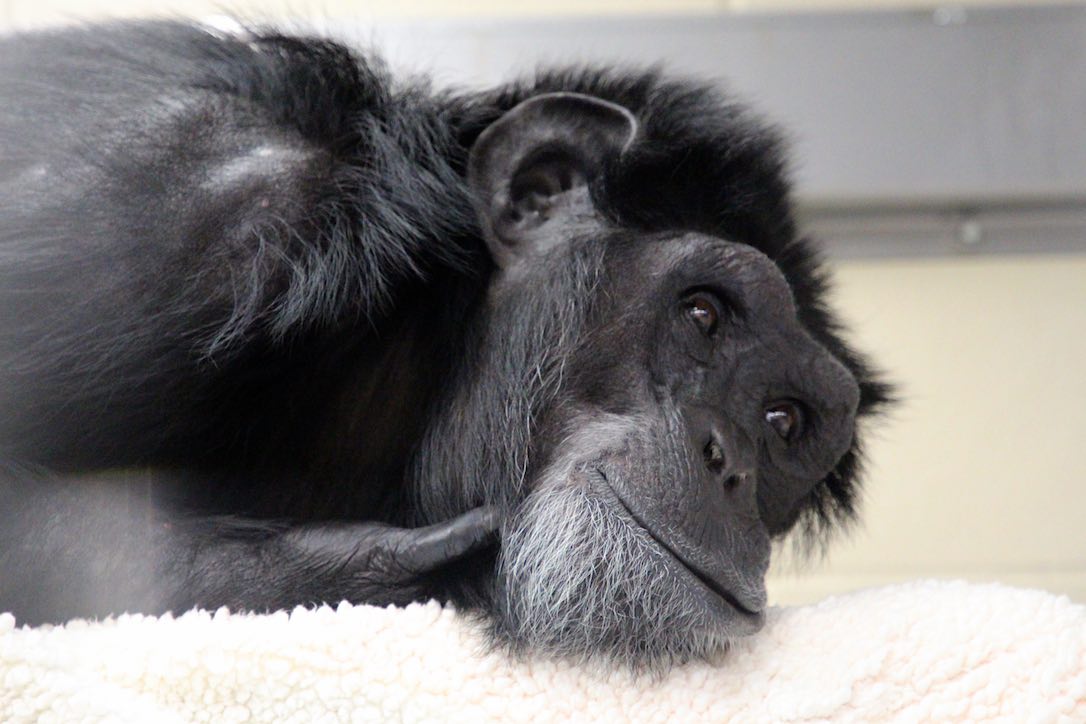
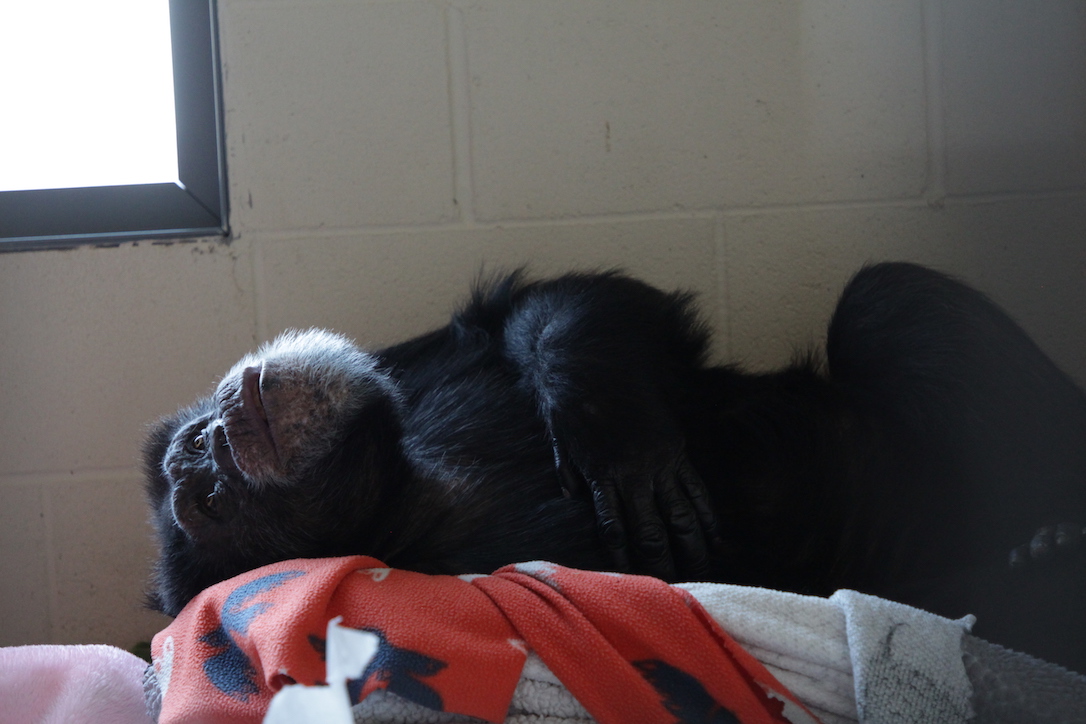
Here’s Honey B in her amazing night nest! A very sweet thing that she does once she lies down in the middle of her nest is to pull a blanket up to her chest, tucking herself in:
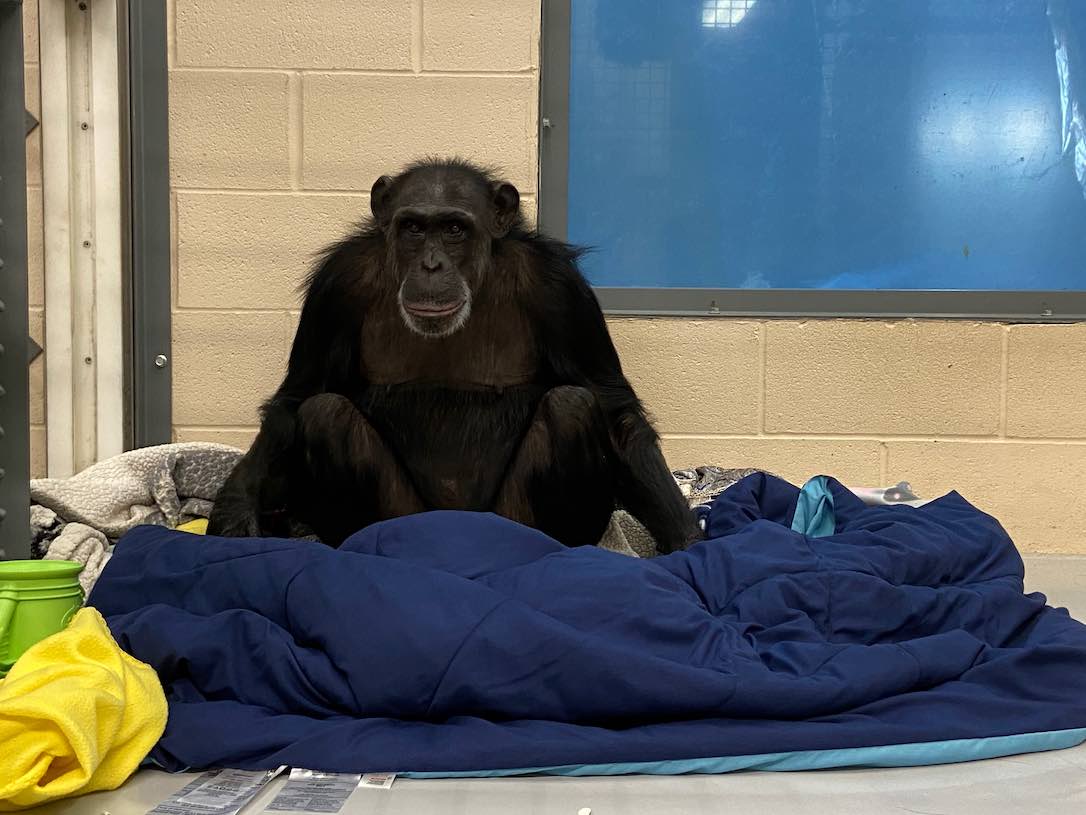
I wanted to have photos of everyone in their nests, but you know, it just doesn’t go that way when you plan for it, so hopefully this has given you an idea. Important bedtime notes!

  • Mave, Honey B and Willy B are people who go to bed early! (Like me!) Once they are in bed, they expect the lights to be turned off, the door to close and the humans to get out.
  • Burrito operates on “go” all. day. long. But once he’s in bed, he also expects lights and humans out! He gets furious with us on those long summer nights with Jamie or when we go in to do a final chimp count for the night (to make sure everyone is accounted for, safe, sound and secure) if he happens to be in bed. I’ve tried countless times to capture the look on his face! He literally stares at us, incredulous, and angrily waves his arm at us clearly saying, “Get outta here!” I know, it’s impossible to believe until you’ve seen it and though we apologize to him profusely it makes us giggle every time.
  • Foxie often has a bedtime routine of playing pass the troll/doll with her caregivers until she’s ready to fall asleep. Sometimes I will be quietly walking down the human hallway getting ready to lockup when “plink!” Orange Marmalade drops down from the heavens above, landing in front of me. I’ll look up only to see Foxie’s toes and fingers through the caging, wiggling and waiting for me to toss her doll back up to her. Also, Foxie is one person who still has no interest in building a nest. She prefers, for her own reasons, to shirk any blankets, often aggressively pushing them aside, and chooses to sleep on a shelf or just enjoy the heated floors. It’s emotionally appealing for us to envision her in a cozy nest, but she chooses as she pleases and her and her doll du jour seem happy curled up together, which is all that matters. And yes, she sleeps with her dolls every night.
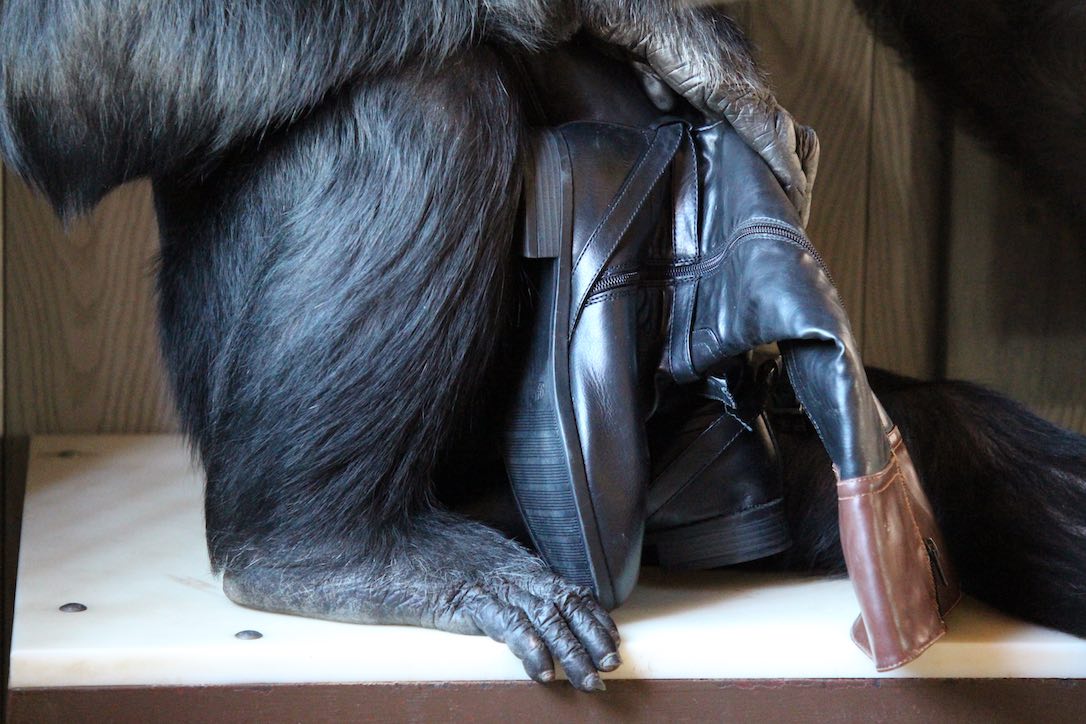
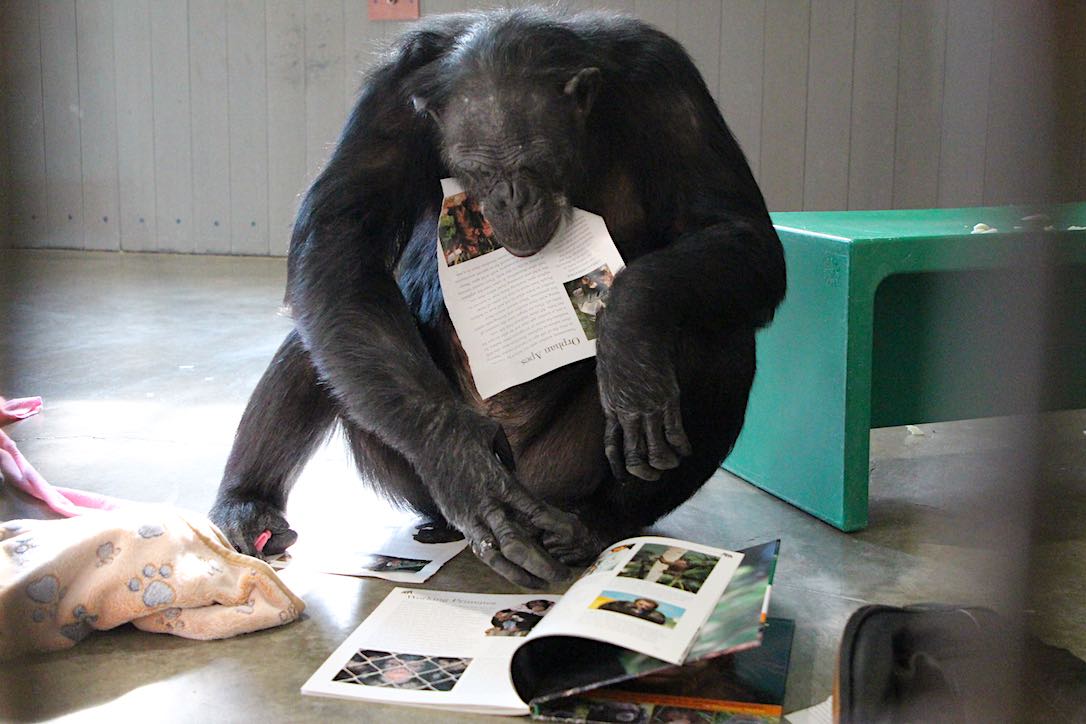
  • And this brings us to the boss. Jamie’s bedtime routine is that she wants her chosen boots and books passed through the food chute to her before we go. Sometimes she takes this time to groom with us, have us model the boots, or look at her books with her. But just as often she takes them and carries on with her own agenda for the evening while everyone else is in bed. As I mentioned earlier, she is often the only one still awake when we leave for the night. She’s busy, you know. The boss’s work is never done. She reads, scouts around to see if any food puzzles still have any treats missed earlier, or sometimes just enjoys her solitude in the greenhouse for awhile, listening to the night sounds, holding her boots, thinking whatever amazing thoughts we all know she has rumbling around in that amazing head of hers.

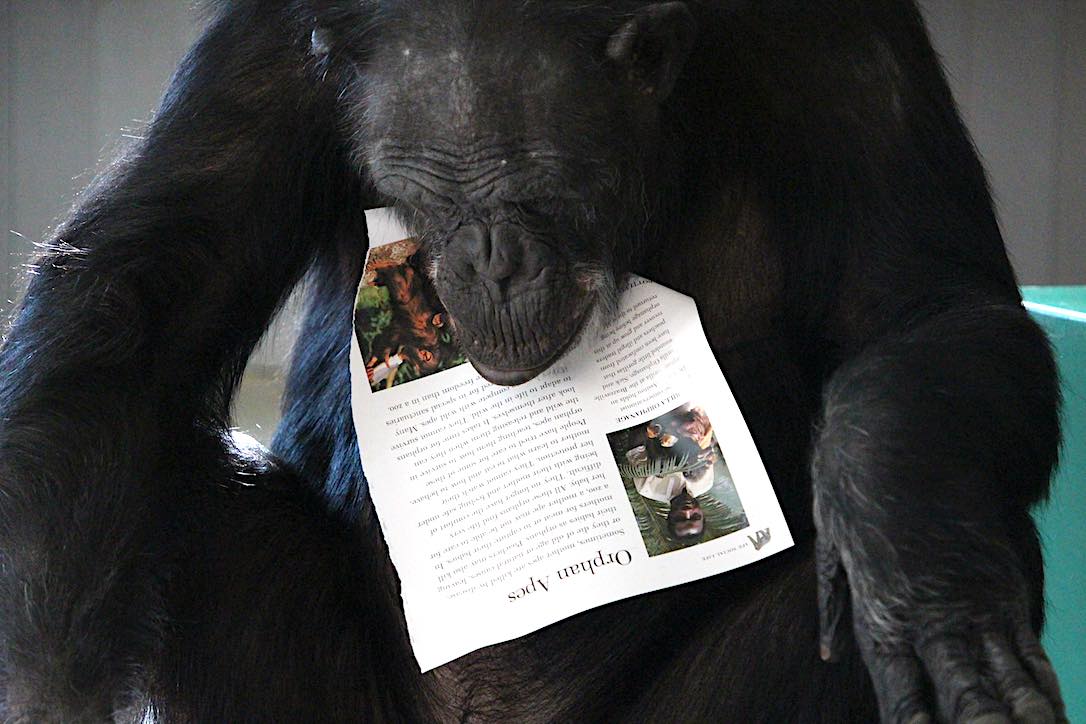
Here she is earlier today looking at her newest book about apes. She tears out very specific pages she finds fascinating and carries them around or nests with them. It’s one of my favorite things to see what we find the next day in her nest, what her interests are:
For the past two days, she’s been particularly fascinated with this page:
The final thing for the evening is lights out and it’s one of my favorite moments with the chimpanzees. Why? Because of nest grunts! I had a recording of this that I posted on FB ages ago and have to dig up as it’s just not something I usually have the phone out for. But it’s a vocalization that chimpanzees make to one another from their night nests. A way of checking in with one another for the night, saying all is well. Kind of like a chimpanzee version of the decades old show, “The Waltons,” where everyone in the family yelled goodnight to one another when the lights went out. And so it is here. We turn the lights out and whether we say goodnight in English or chimpanzee, nest grunts echo and build throughout the chimp house until all falls quiet. I say “I love you. Rest well and we’ll see you all in the morning.”

As far as morning goes, the chimpanzees are mostly awake by the time the humans arrive and either sleepily playing with one another, quietly enjoying the morning sunshine in the greenhouse or view from the window, or still curled into their warm nests until breakfast is served (this if often where you will find Negra and Missy). This is another favorite time of my day as the chimpanzees are typically all really joyful, excited to greet the humans, playfully wrestling and chasing one another as their excitement grows for breakfast.

Hoping you all have an equally cozy night in your nests, grunting to loved ones near and far, resting with ease, dreaming in wonder.
Filed Under: Chimpanzee Behavior, Sanctuary Tagged With: chimpanzee, chimpanzee sanctuary, Chimpanzee Sanctuary Northwest, Sanctuary

Willy B and his Dipper Tube

October 23, 2020 by J.B.

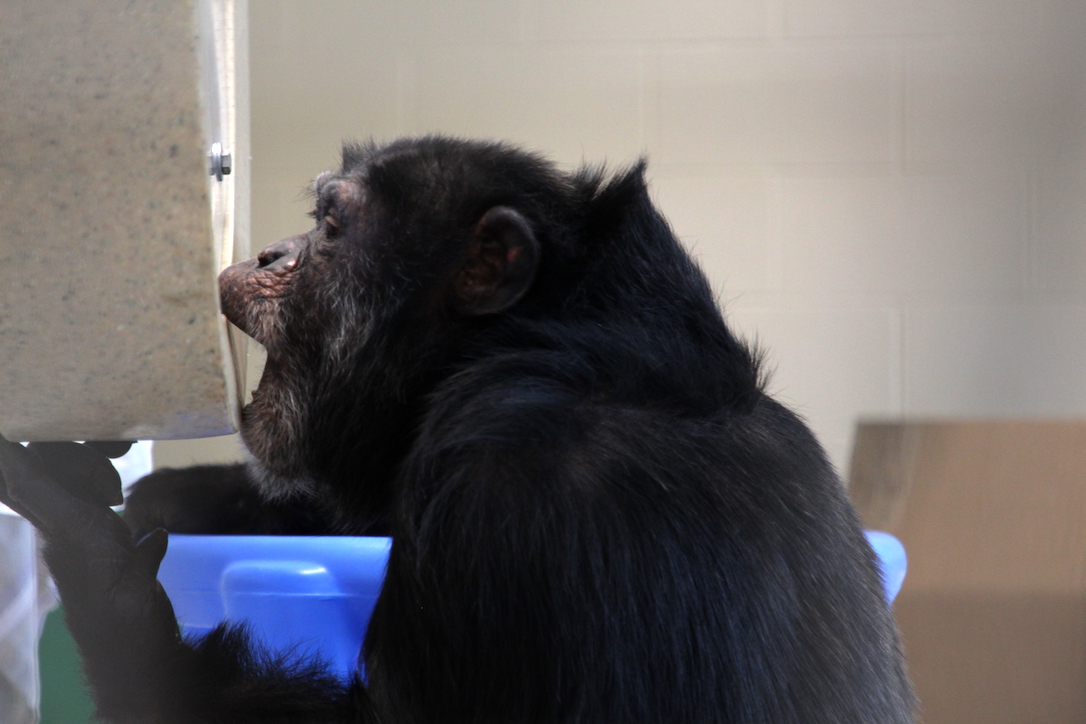
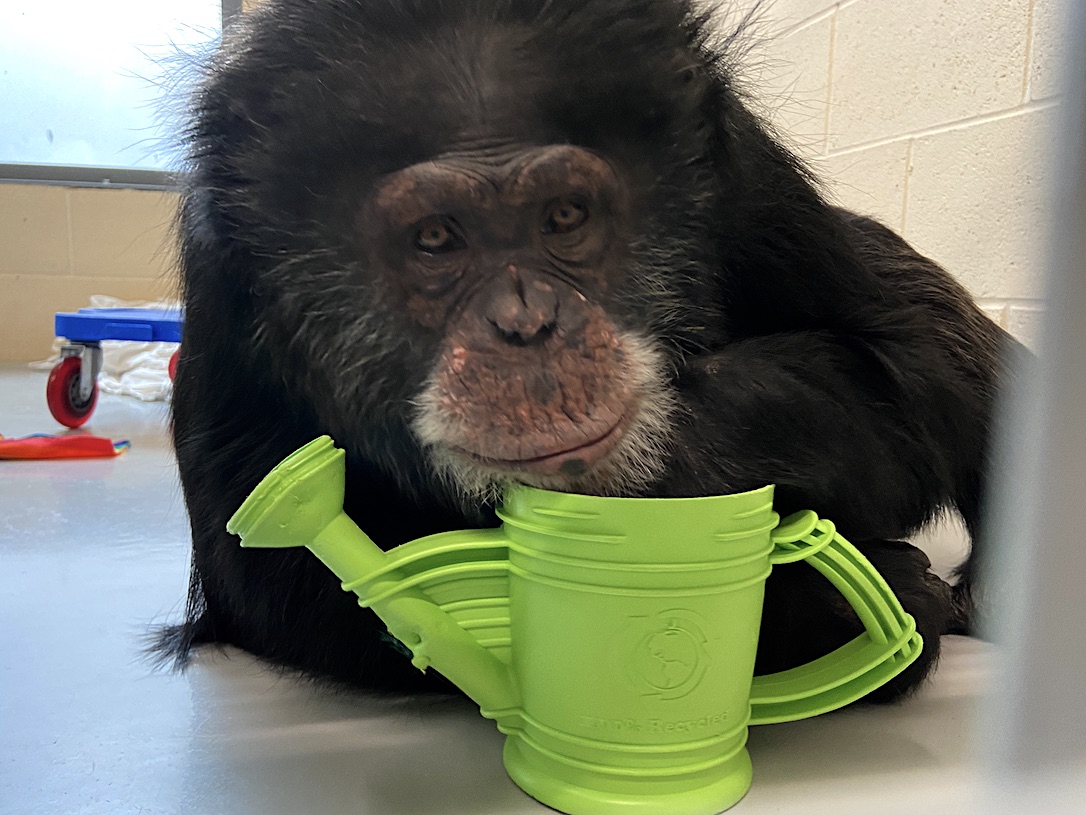
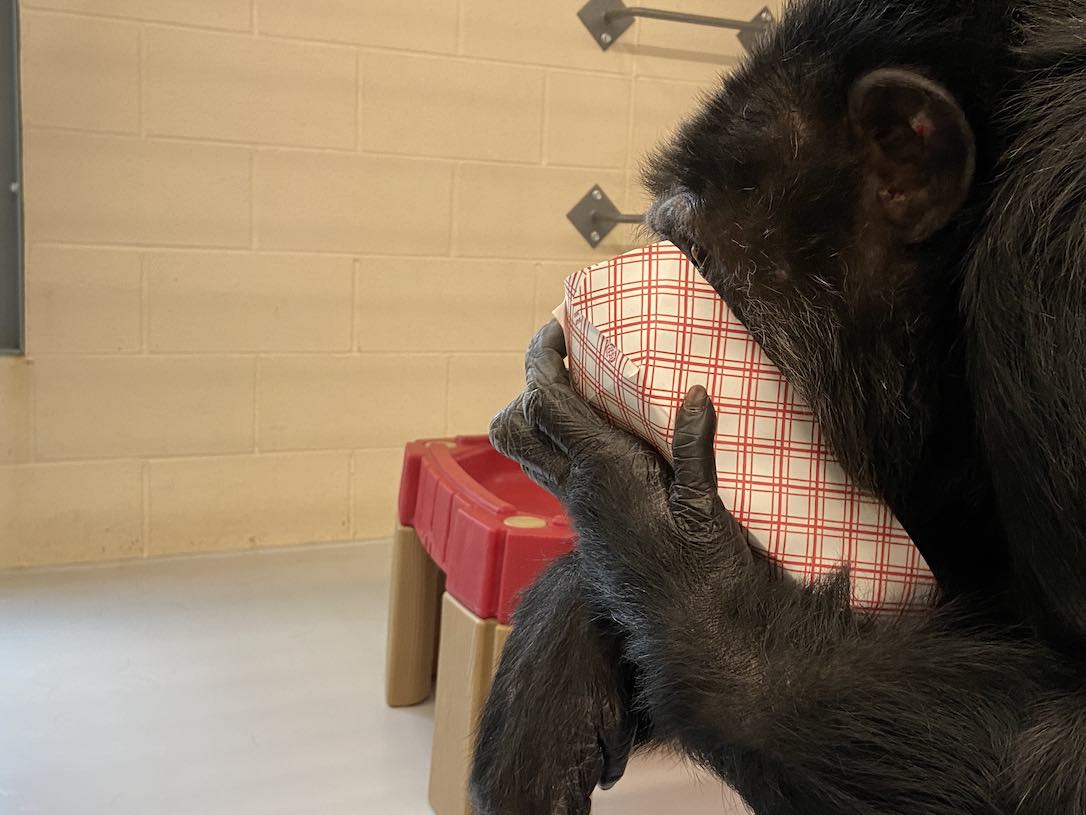
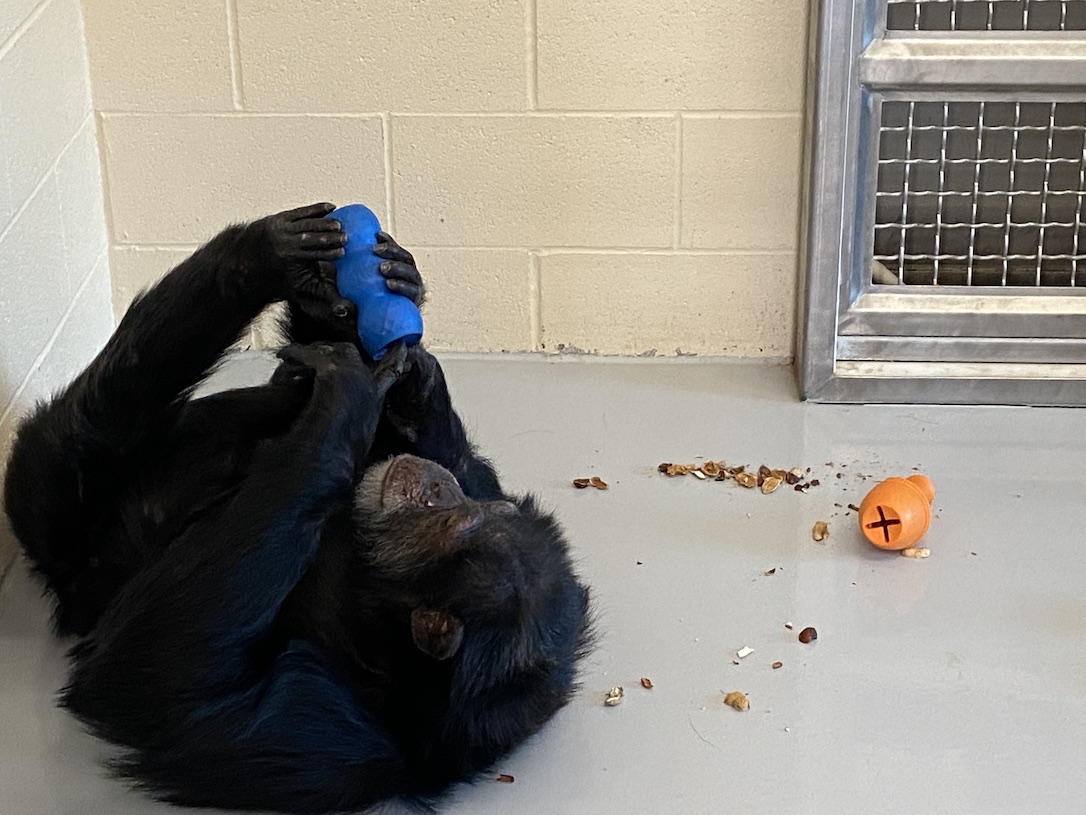
Willy B is quite the tool-user! As you can see, enrichment doesn’t have to be expensive or complicated to be effective.

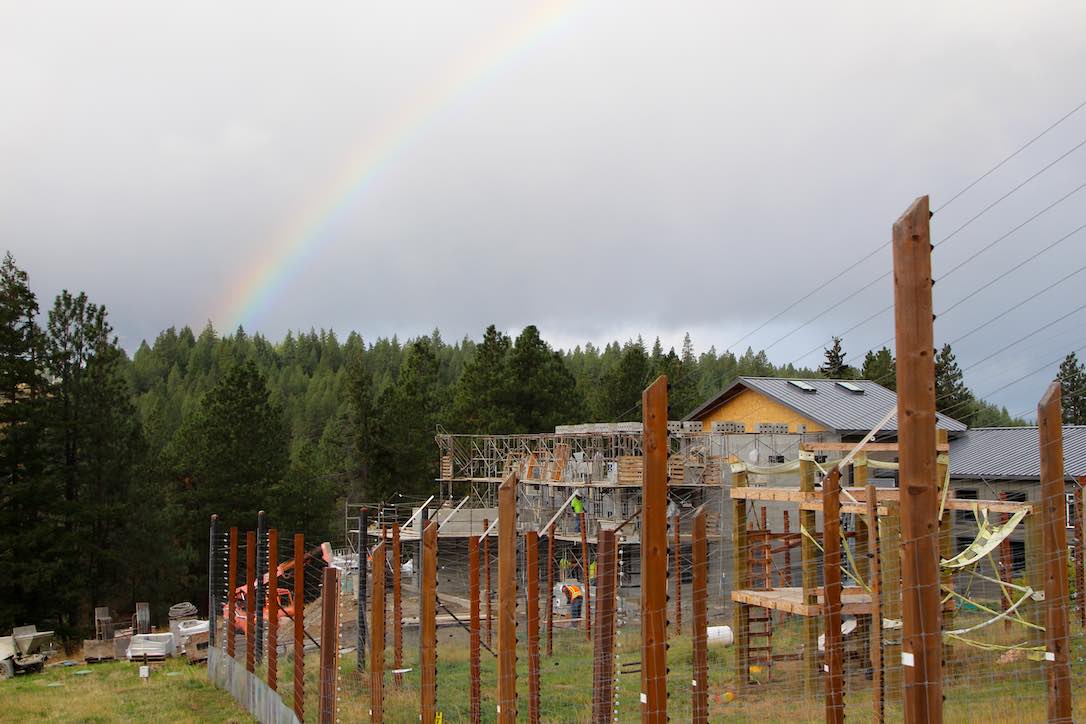
It was a busy week for the block masons working on the new playrooms. You can see the walls taking shape now that the scaffolding has been taken down. Next week – fingers crossed – the roof goes on and we get ‘dried in’, so to speak. That should ensure that construction can continue even if the weather turns bad. This morning’s dreary snow/rain was an ominous start to the season.

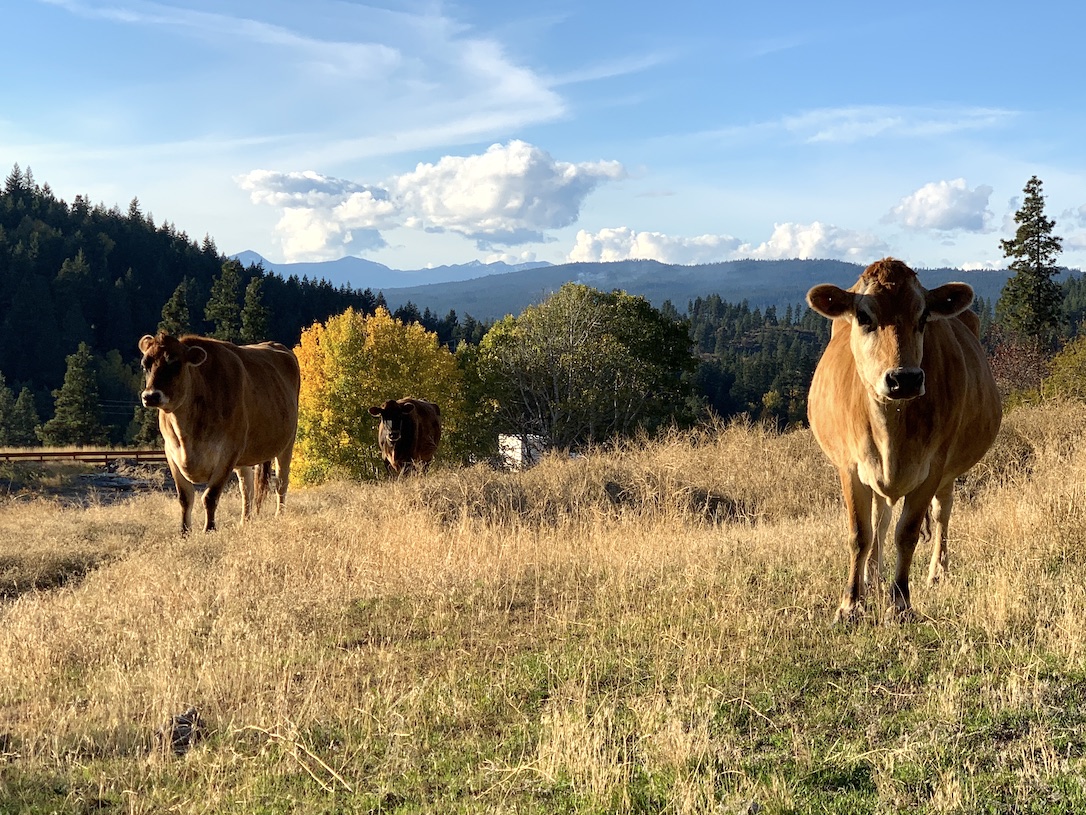
Meanwhile, on the other side of the ranch, the cows were thrilled to regain access to their winter pasture. I’ll have to share the video of them running through the fields in another post.

Filed Under: Enrichment, Latest Videos, Tool Use, Willy B Tagged With: chimpanzee, Enrichment, food puzzle, northwest, rescue, Sanctuary, tool use

Everybody Loves Mavis

October 20, 2020 by Chad de Bree

Today is all about Mave (aka Mavis)!

Last week, Diana invited all of our followers and readers to submit whatever questions they may have (this includes you). One question which was asked on the Facebook post was about Mave’s eyes. I personally cannot resist talking about Mave in general because she is such a unique individual. That goes without saying, her eyes are also unique among the 10 chimpanzee residents here.

Her eyes are a little bit lighter in coloration compared to the rest. The question asked was to clarify the coloration of the outside (sclera) of Mave’s eyes. The follower was curious if Mave’s sclera was lighter in color, similar to a human’s eye. The answer is yes!

Mave does have a lighter tone of sclera. Compared to someone like Jamie:

Though chimpanzees generally have darker sclera and lighter iris, it is not uncommon for some chimpanzees to deviate from this. The easiest explanation for this is genetics. Some chimpanzees inherit a mutated gene that causes their sclera to be white or lighter brown in stead of black. A classic example is the case of Pincer. Pincer was and adult male of the Ngogo community in the Kibale Forest of Uganda. He is also well known due to his unique expressive eyes and has been photographed and filmed for many documentaries. While most of the males in Ngogo have the traditional eye coloration, Pincer was born with a mutated gene that caused him to have eyes that looked human, which he passed down to the several children he sired, who also have his eyes.
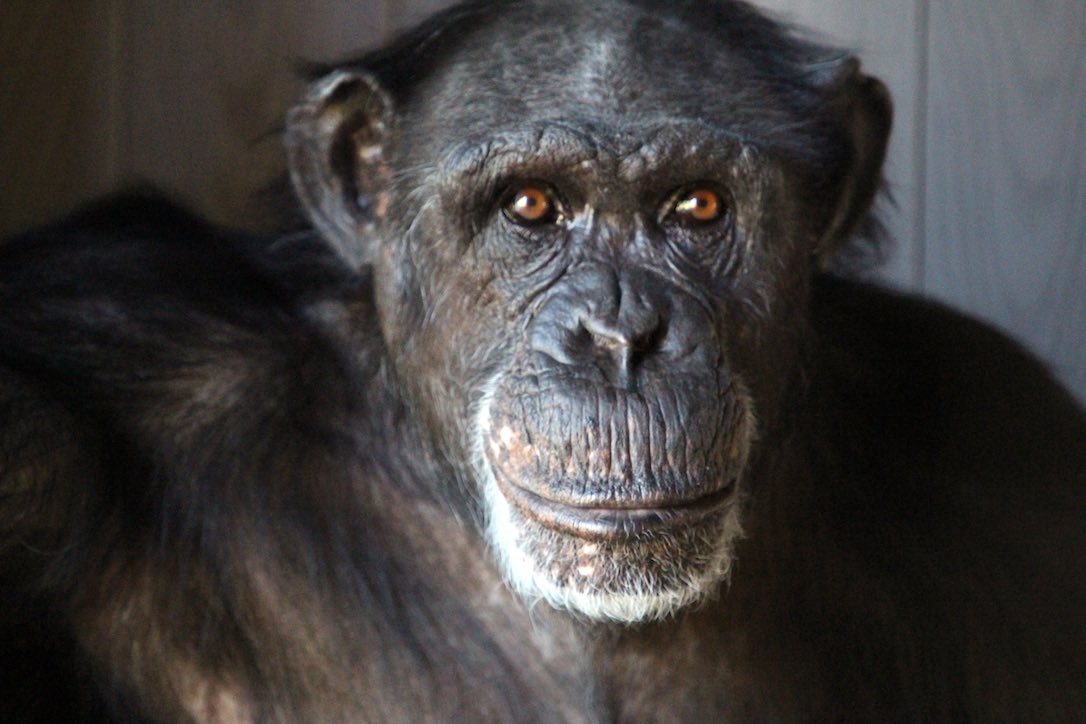
There are several theories as to why chimpanzees are so different compared to humans in this aspect. One of the most prominent theories is the “cooperative eye hypothesis.” This states that humans adapted to have a lighter sclera and darker iris in order to communicate more effectively. It’s easier to follow the gaze of someone with a light sclera and dark iris. Conversely, chimpanzees adapted to having darker sclera and lighter iris to hide their intentions, making their gaze more cryptic. I.e. if they are looking at a high value food item, it would be harder for others to see what they see or where they are looking.

This has been a long accepted theory, though recently researchers have started to question if this is the case. Last year, researchers discovered there wasn’t too much difference between the contrast between the iris and pupil in chimpanzees, bonobos, and humans. This just means though we have opposite coloration schematics in our sclera/iris contrasts, the ratio between light and dark is essentially the same. Though we think it’s easier to follow the gaze of a human with white sclera and a darker iris, chimpanzees may think it’s easier to follow along with someone with a darker sclera and lighter iris.

Regardless of the theories, I think we can all agree that we all love Mave and her eyes are just one more thing that makes her, her own unique individual here (though all 10 of them are unique).

That being said, let’s go into a Day In The Life of Mave!

When caregivers first arrive in the morning, the first thing we do is immediately start to make breakfast. Mave is a firm believer that breakfast is the most important meal of the day! She gets really excited when she sees breakfast being brought out! (You can hear it here.)

I tried to get a shot of her initial reaction to seeing breakfast, but she was too quick for the camera to focus on.

After breakfast, Mave generally is very low key. She will spend a lot of time grooming by herself, or with Willy B and Honey B grooming them.

Lunch with Mave can be hit or miss. She will either show some (minor) excitement for it, or just wait for the one or two things she wants offered and leaves.

After lunch, she loves to spend time in the Mezzanine. Usually, grooming (either herself or someone else) or gazing at herself in the Looky Lou mirror. Who can blame her?
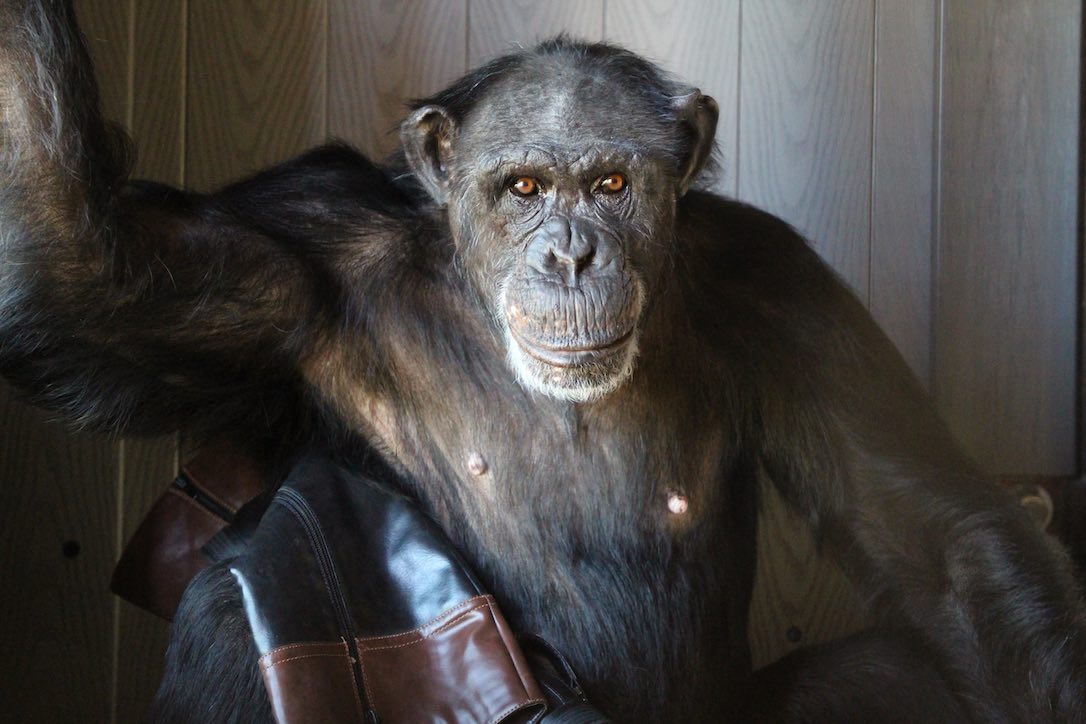
When she’s not doing any of those things, she loves to relax.
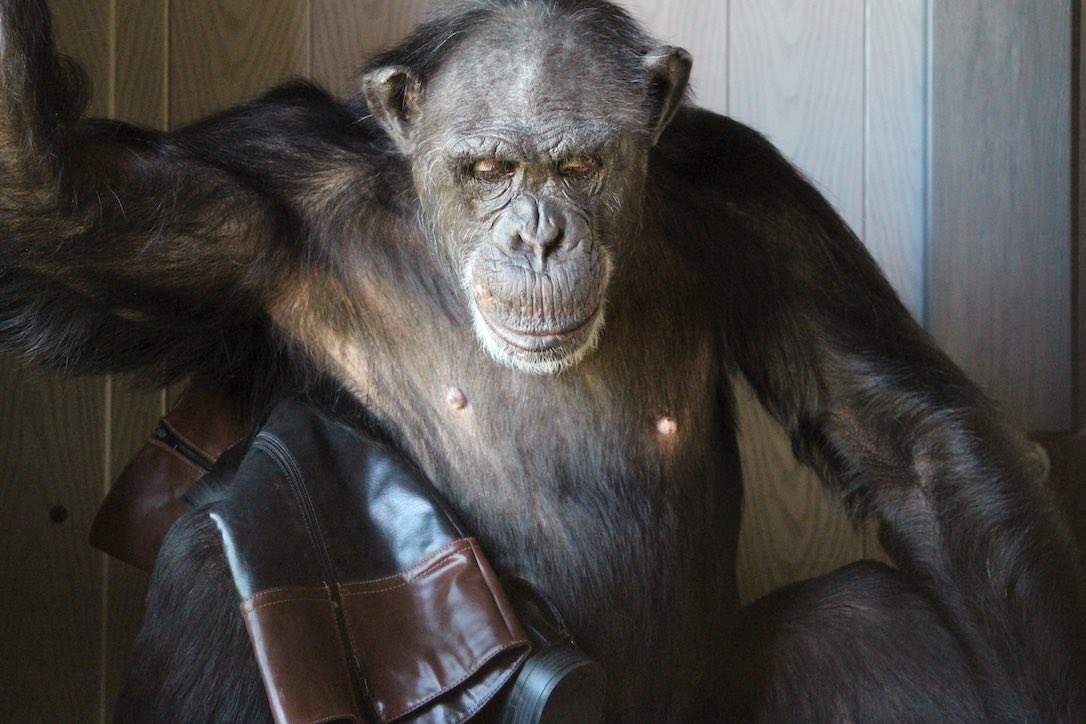
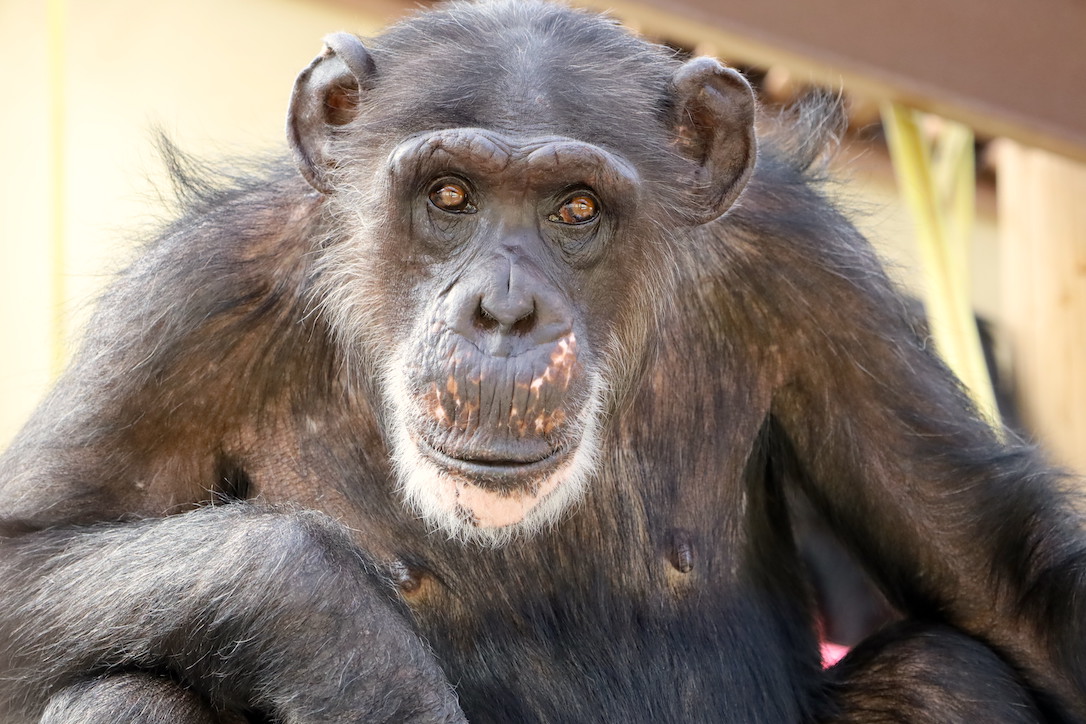
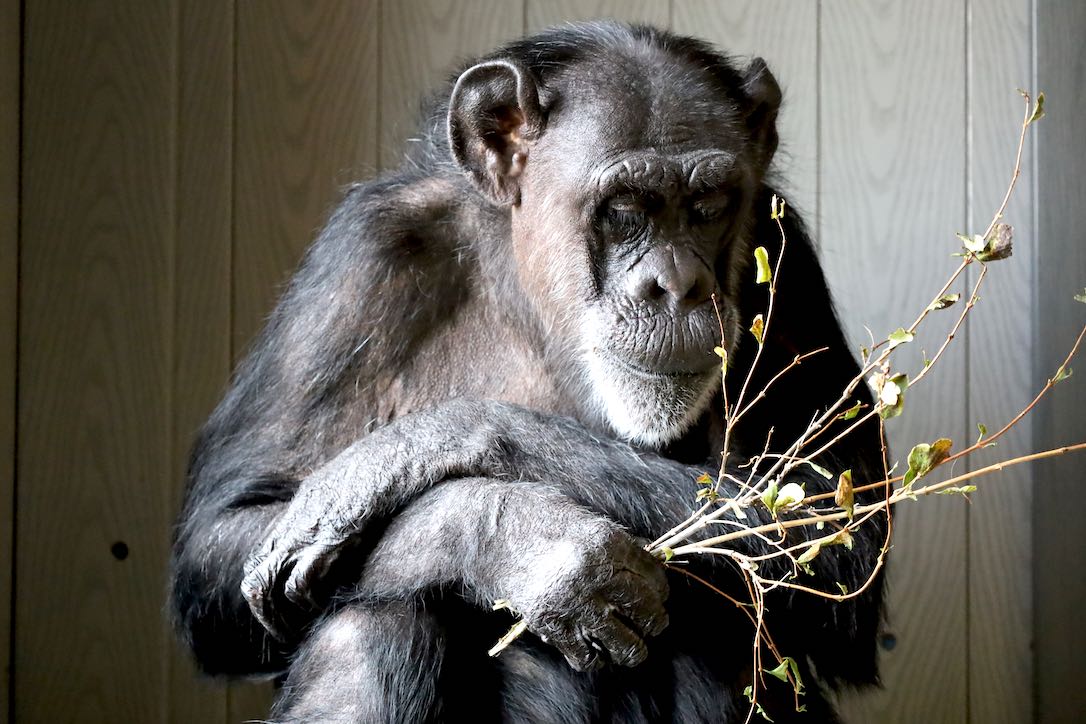
She also has a very distinctive pose all of the staff try to capture when she’s relaxing where she looks like she’s deep in thought.

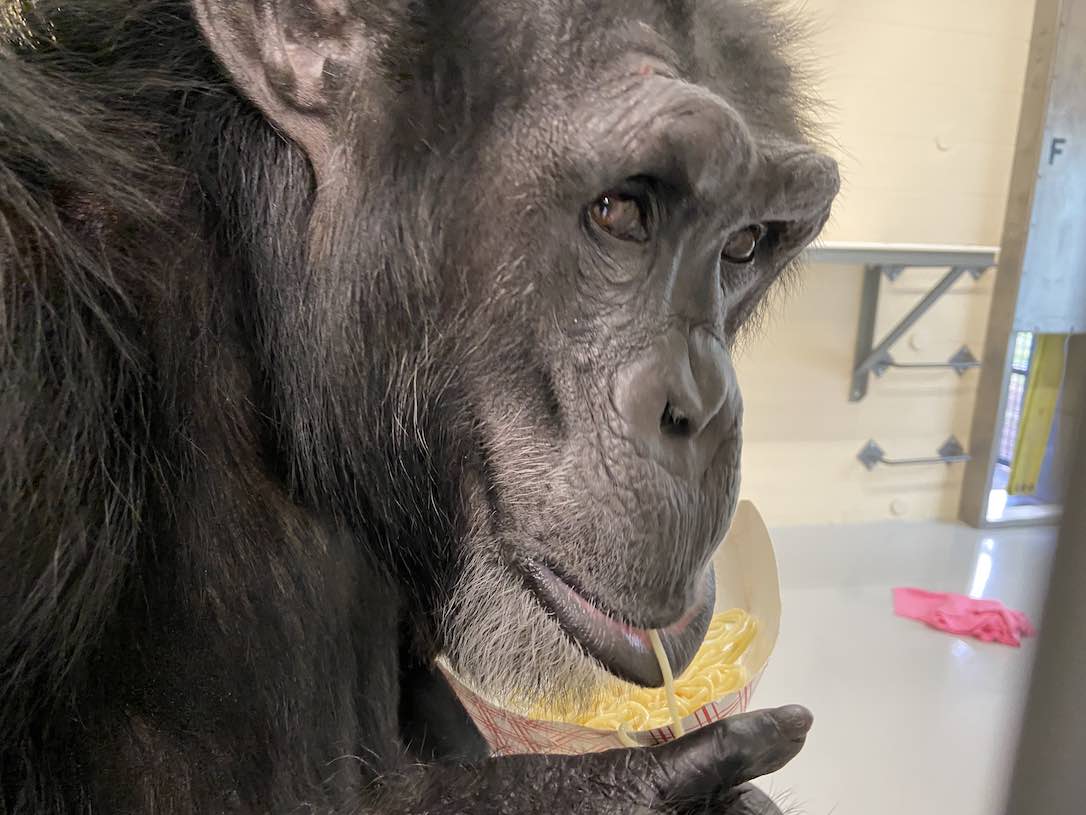
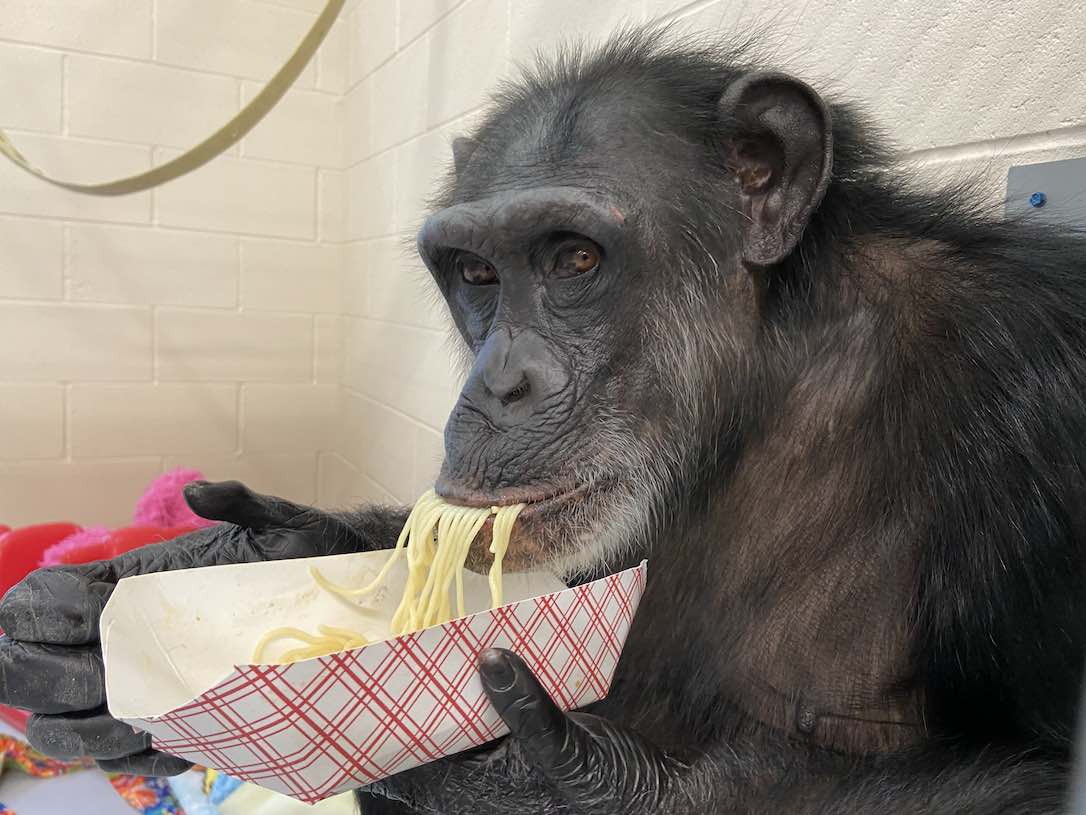
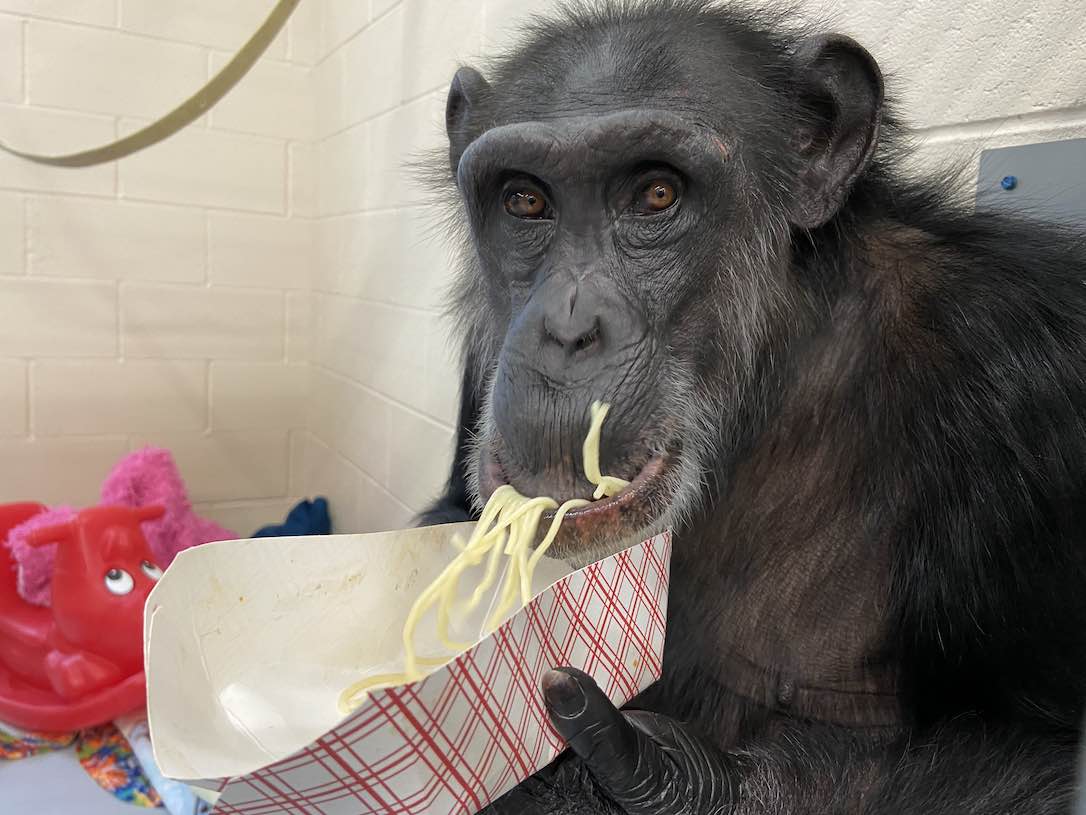
When dinner comes around, she shows almost (but not quite) the same excitement as breakfast. I want to re-share this photo from yesterday of her eating spaghetti because I like it.

After dinner is finished, it’s time for nighttime enrichment.

Then it is bed time!

Mave really finds away to entrench herself into the hearts of everybody who gets to know her!

And don’t forget! You can help support Mave by becoming a Chimpanzee Pal!

Filed Under: Mave, Sanctuary Tagged With: chimpanzee, chimpanzee retirement, chimpanzee sanctuary, Chimpanzee Sanctuary Northwest, chimpanzees, Sanctuary

Rainbows and spaghetti

October 19, 2020 by Katelyn

We are all so enjoying your great questions Diana invited in her blog post the other day and we’re looking forward to answering as many as we can! I had a wonderful blog planned to speak to the chimpanzees’ sleeping routines and came in early to capture them waking up. They are so endearing in the mornings, typically happy and playful as they sleepily greet the humans. Some begin slow motion chase trains around the loft in anticipation of breakfast, some choose to sleep in until it’s time to eat, Burrito is ready to play wild games of chase, Foxie troll toss/chase, and others are anxious to get outside for a pre-breakfast stroll. It’s one of my favorite times of the day really.

But if you know chimpanzees, you know it’s pretty ridiculous to “plan” anything like a blog post. *Snort* *Guffaw* I mean, what was I thinking? Literally, two seconds in the door and all ten chimpanzees were wide awake and screaming and yelling at one another, nests flying through the air. Sigh…fingers and opposable thumbs crossed for next week, folks.

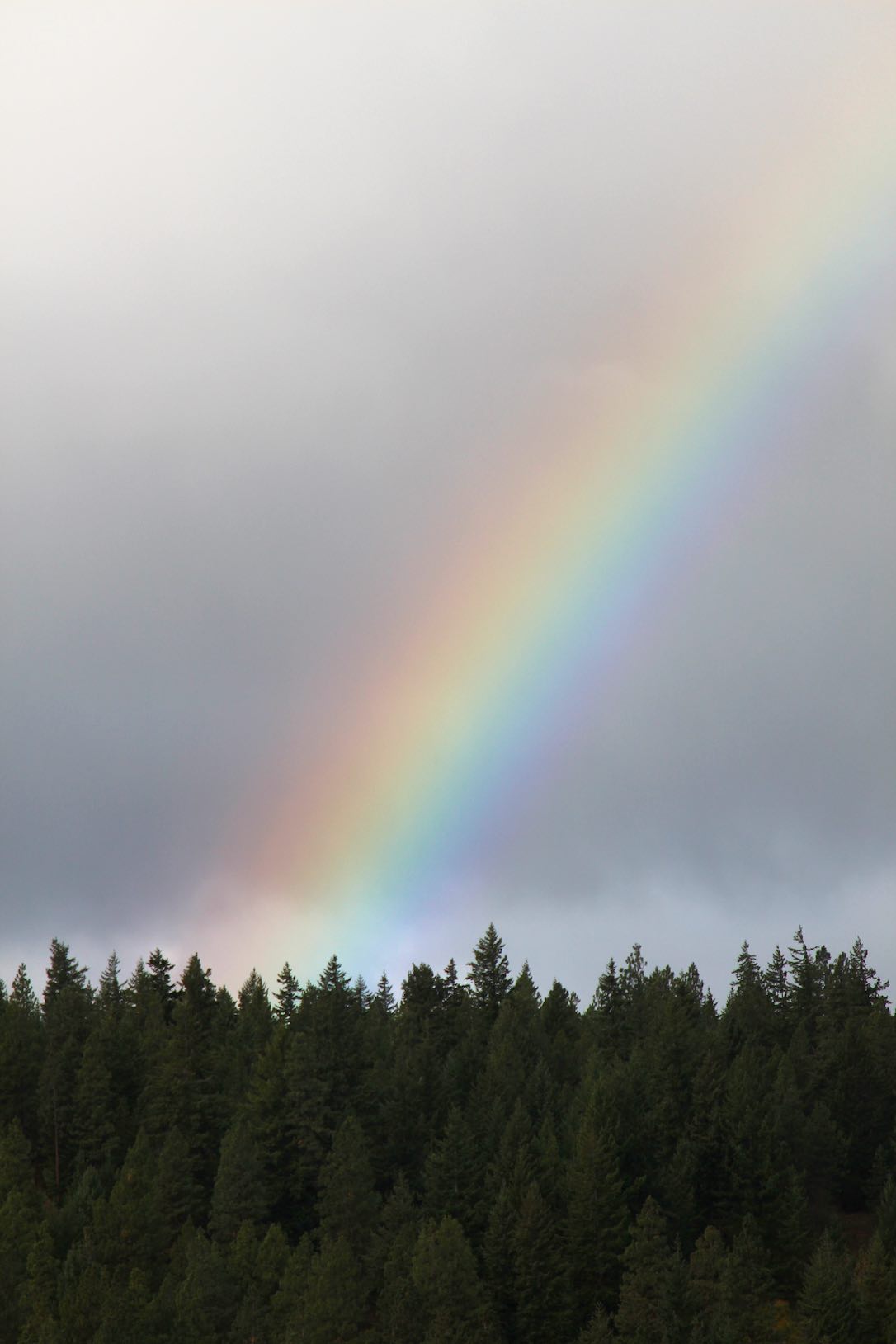
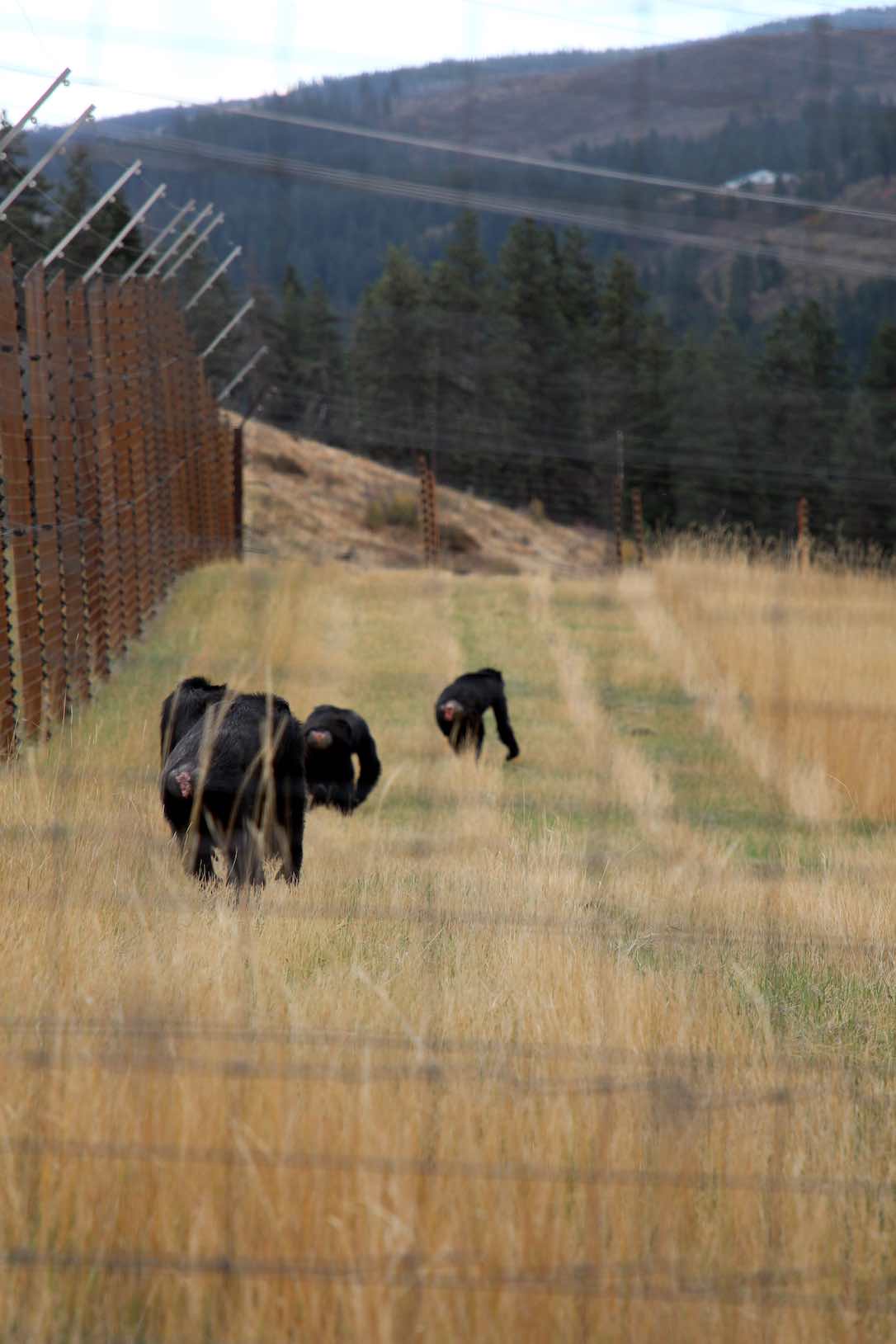
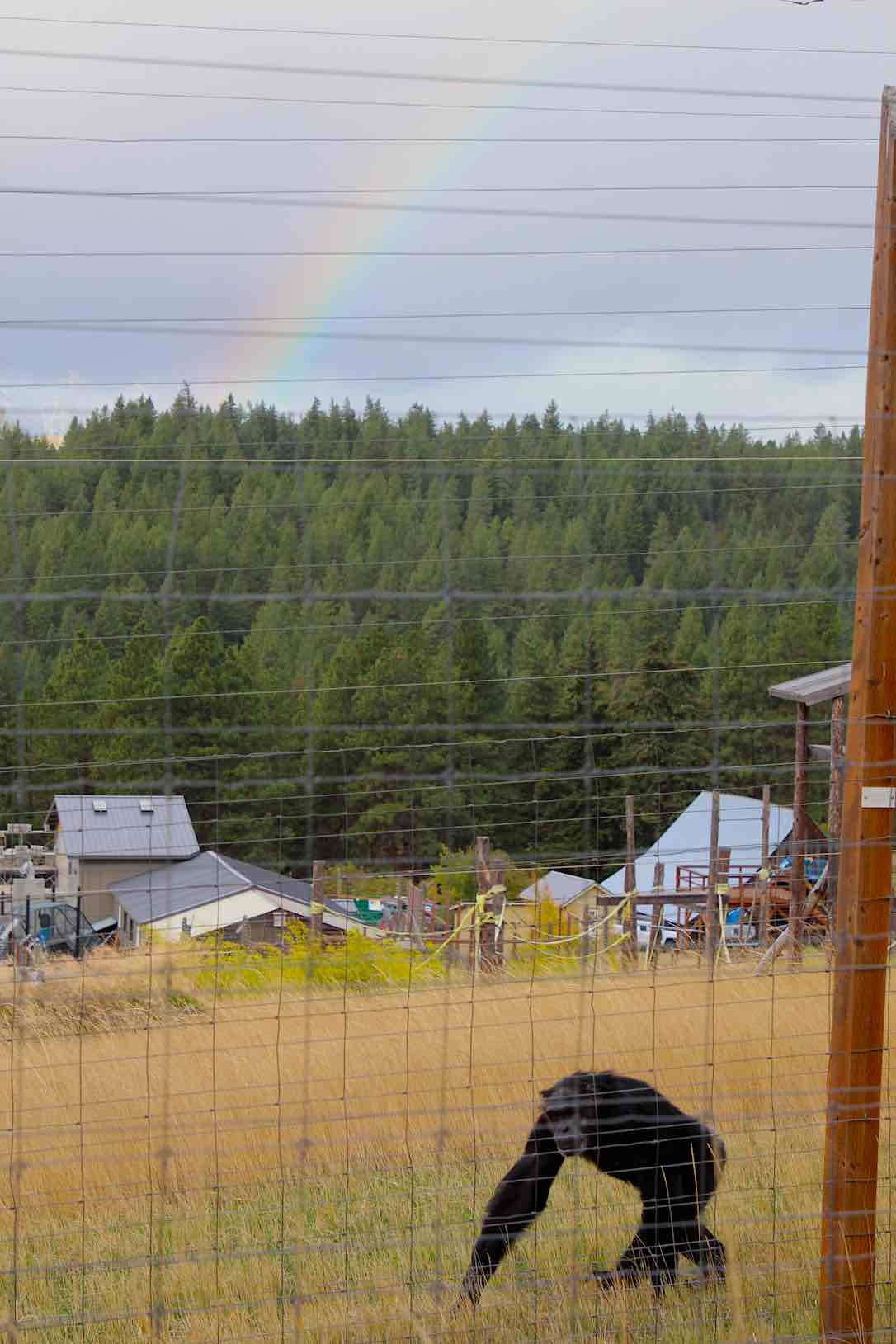
That said, the day was nothing short of wondrous and magical. I saw no less than six rainbows on the way to work this morning and as soon as we headed out for a pre-breakfast walk around Young’s Hill, we looked up to see this beauty over the sanctuary:

Jamie took one look outside and one look at me and immediately flew out the doorway to Young’s Hill:

Jody, Burrito, Jamie and Missy:

Foxie chose to explore on her own (and I didn’t capture any of Negra this morning, but safe to say you may picture her under a pile of cozy new blankets with a rainbow overhead):

Annie (and I) running to catch up:

I mean this is ridiculous, but what can I say, it’s just a magical place:

Can you believe the construction progress?!

After breakfast, Jamie was practicing her “bat pose” (perhaps for Jamieween, our celebration of her upcoming Halloween birthday!):

All ten of the chimpanzees were so incredibly playful ALL day long! We saw people doing moves we’ve never seen before! Foxie did a back-flip while spraying water out of her mouth. Mave was doing pirouettes and lying on her back while spin herself ’round and ’round. Willy B was playing a game of chase while swinging across the caging. It was amazing! And this went on all day! So we figured the only way to end such a joyful day was to have spaghetti dinner. Naturally. 😉

Now it’s a rare treat to serve the chimpanzees spaghetti and while we know the seven love it (it’s a common menu item for Burrito’s birthday), we anticipated the three, who tend to be a little distrustful of new food items, would most likely toss it on the ground at first sight so I prepared a backup dinner for them. But we wanted to give them the option to try it out and much to our surprise and delight, they LOVED it!! If you’re not sitting down for these photos Chad captured, now’s your chance to do so:

Willy B:

Mave:

And HONEY B!!:

Well, I look forward to picking up where I left off next time, but there’s a high wind advisory happening and the wind is not disappointing in that category. The chimpanzees are all tucked into their nests for the night safe and sound, warm and cozy, bellies full of spaghetti. I am going to get myself home and replicate that I think. Have a wondrous, magical, restful night (or day) wherever you may be. And keep any questions coming (while bearing with us on the responses – we really are looking forward to it)!

Filed Under: Annie, Burrito, Construction, Enrichment, Food, Foxie, Honey B, Jamie, Jody, Mave, Missy, Sanctuary, Young's Hill Tagged With: chimpanzee, chimpanzee sanctuary, Chimpanzee Sanctuary Northwest, Sanctuary, young's hill

The Mystery of Love

October 18, 2020 by Anthony

Yesterday, Diana had some thoughtful musings on the sanctuary’s blog and invited you all, our followers and supporters, to ask questions.

One topic that came up several times, as it has in the past, is that of chimpanzee reproductive behavior. I’d like to thank you all for giving me an excuse to write this blog for two main reasons. First, I thrive on awkwardness. Second, the sex lives of chimpanzees can really be fascinating.

For decades, scientists observed the sexual behavior of chimpanzees and other primates with the goal of learning more about our own species’ habits. The initial logic, seemingly, was that our ape cousins must have a system that closely resembles that of our common ancestor. By watching free-ranging primates go about their business, anthropologists hoped to gain a window into our evolutionary past that wasn’t obscured by the filter of our own culture.

Missy is a chimpanzee.

From our modern perspective, we now have a greater appreciation for a simple fact; chimps are related to us, but they’re not necessarily anything like our common ancestor. Chimps and humans have been separate for six million years, during which our respective lineages were subjected to extremely different pressures that caused us to diverge physically, behaviorally, and cognitively. Our branch diversified over time into several types of humans that took over the globe (the rest of which we then subsequently absorbed or drove to extinction). Meanwhile, the nearest branch grew in a different direction and, as far as we know, forked into a pair of twigs: chimpanzees and bonobos. Using this reasoning, the other primates are not really primitive. They’re not human-like oddities that emerged among the animals, nor are they less-evolved versions of early humans. They’re something different entirely. Chimpanzees are just chimpanzees.

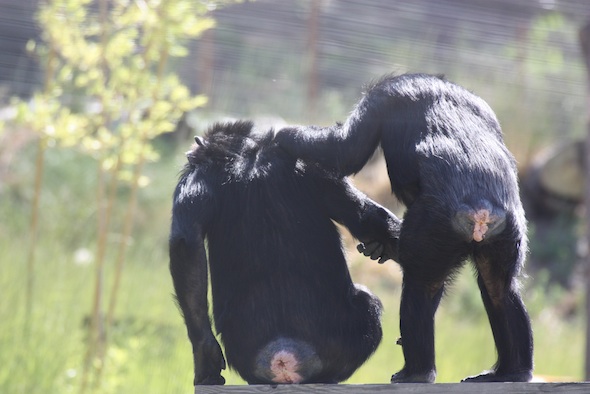
For the most part, chimpanzees do resemble us (and vice versa). They have the same amount of hair (which is just coarser and longer than ours), similar skin and pigmentation, and muscles and bones that are arranged much like a human’s. Upon first glance, it can be difficult to identify any conspicuous trait that is uniquely chimpanzee, but they become familiar over time. Longer fingers… larger canine teeth… a pronounced brow ridge… shorter, stockier bodies… and, of course, the butts.

Annie Missy best friends
Annie and Missy

Male chimpanzees do not have flashy backsides. In fact, the norm is to have a flat, gray callous-like pad that serves as a portable seat cushion and seems to keep the pressure off of their oversized testicles. Relative to humans, adult male chimps have much larger testicles for their body size. (It looks like they’re hiding a pair of mangoes in there.) Meanwhile, their smaller penises stay hidden until they’re needed for copulation. The testes produce crucial hormones that influence behavior and physical development, so neuters are not a recommended form of population control for chimps (nor are they particularly safe or humane). Instead, most sanctuaries rely on less-invasive vasectomies to keep their males from successfully impregnating females, and many also use forms of birth control for females. As stated on our website, there are several good reasons to not breed captive chimpanzees.

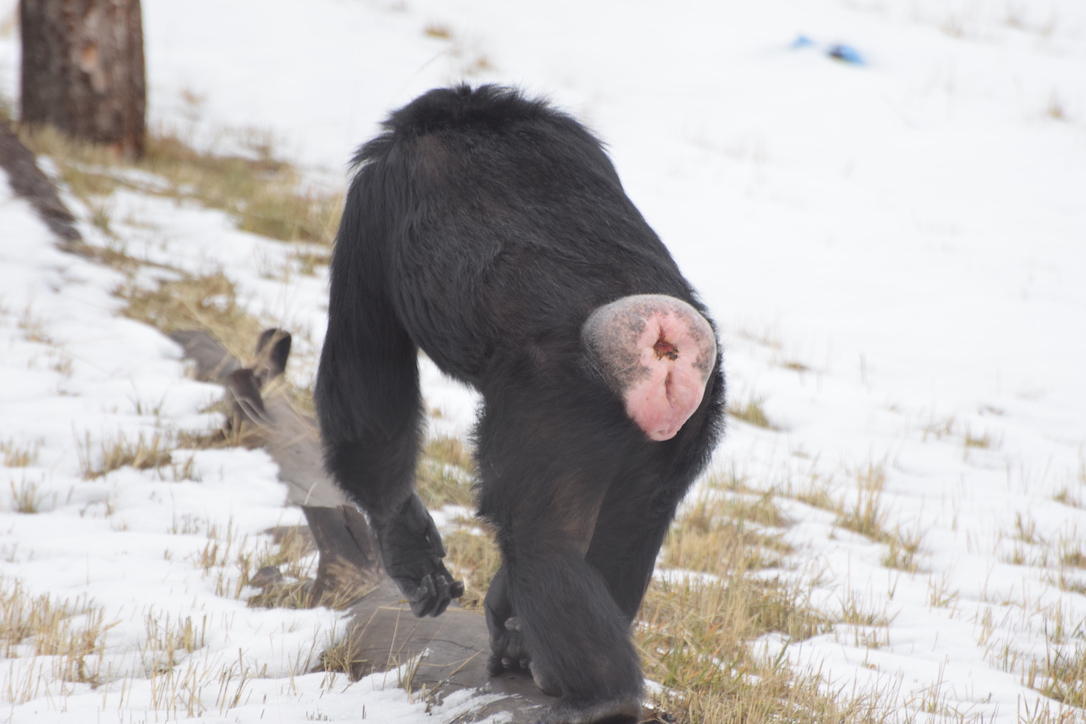
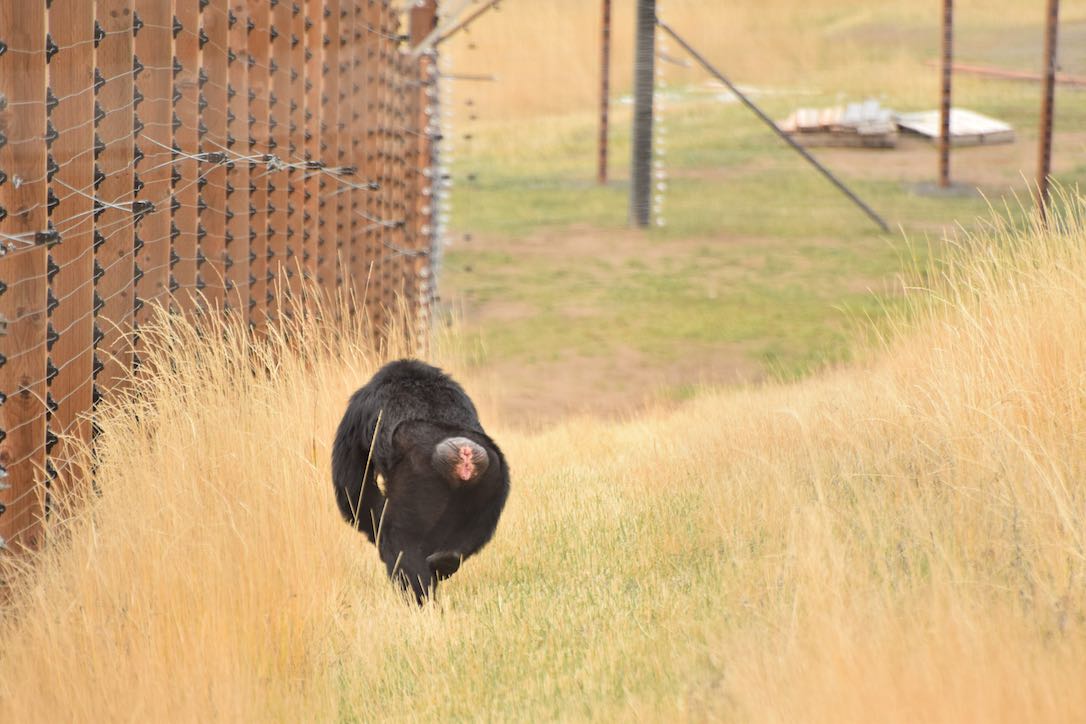
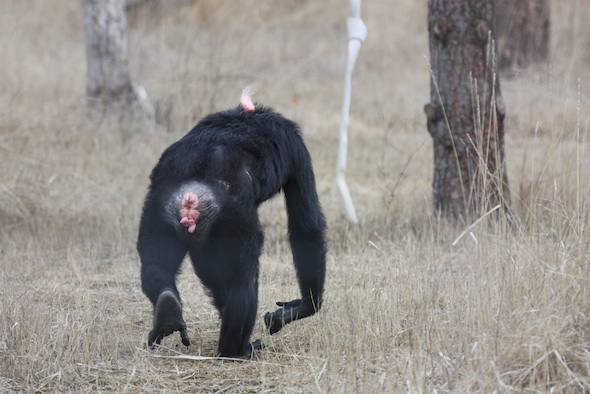
Much like in humans, female chimpanzees are anatomically different from males. Biologists call this disparity sexual dimorphism. In chimps, adult females have an entire appendage dedicated to advertising their reproductive status. Often referred to as a “swelling,” this wrinkly patch of skin is composed of the vulva and surrounds the anal and vaginal openings. This flap of tissue can inflate with over a liter of fluid, causing it to become rosy and bulbous. It looks uncomfortable to be so swollen for almost two weeks, but it’s a natural aspect of the chimpanzee experience. This process is often captured, unintentionally, in the photos we take while developing content for the blog.

Jamie’s swelling – mostly inflated! Note the shiny, stretched appearance and the higher proportion of pink skin to gray skin.
Jamie’s swelling – not inflated! Note the wrinkles and the higher ratio of gray to pink skin

Swellings help chimpanzees to maximize their reproductive potential. Essentially, the bright pink signal lets males know when a female is likely to ovulate, and that female receives a corresponding flood of attention and may even temporarily rise in social rank. As J.B. explained back in 2013, chimpanzee menstrual cycles are quite similar to ours (and notably different from the estrus cycles observed in many other mammals), but the swelling corresponds to some key differences. Ovulating female chimpanzees often choose to mate with any interested males, and those males usually attempt to mate with each swollen female (although the alpha male may guard them from the others). For this reason, females need a way to let the guys know what’s going on, and a bright pink swelling usually does the trick. A tumescent swelling literally brings all the boys to the yard.

Interestingly, females will often allow subordinate males to mate with them and will continue to mate frequently even once pregnancy has begun. Because of this, males have little idea which offspring are theirs and are therefore incentivized to protect them all equally. This pattern of paternity confusion acts as insurance against coups. If a new alpha emerges, he will be less likely to cull his group’s infants because he may have sired them back when he was still a subordinate. Furthermore, male chimps in the same community tend to be related to each other, so the potential costs of infanticide tend to outweigh any competitive advantages. In other primate societies where the alphas have exclusive mating rights, changes in leadership can be tragic for newborn infants.

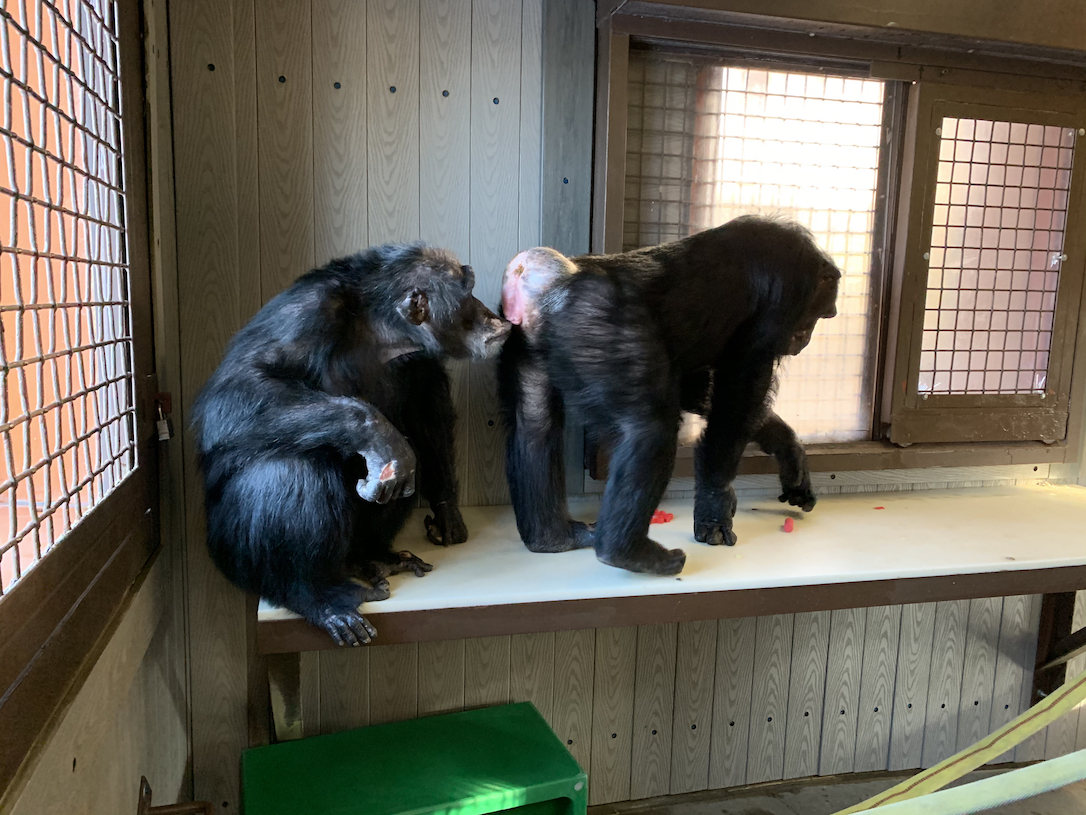
You may have seen on the blog that the sanctuary’s male residents are fascinated by swellings, but don’t seem to have the social skills required to successfully copulate. This is not uncommon for captive chimps who were raised in abnormal social groups. However, it’s worth noting that Burrito and Willy B’s attractions to the females’ swellings are quite obvious and seem to have developed without the enculturation of a larger chimpanzee society. Furthermore, the life-saving castration that Burrito endured does not seem to affect this behavior, and he still watches over any swollen females with keen interest.

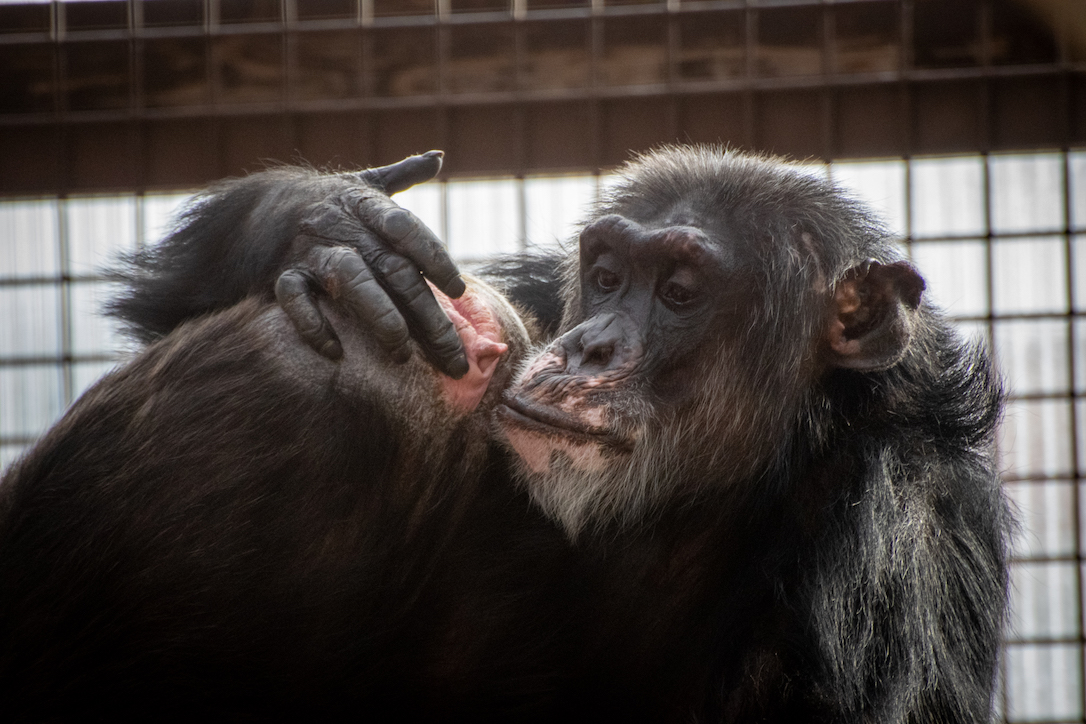
Burrito sniffs Jamie’s swelling.

One question that often arises is that of female contraception. As with many dilemmas relating to captive chimpanzees, we do our best to balance natural processes, physical health, emotional impacts, and logistical challenges. In the case of birth control, our team evaluates each female’s unique needs and consults with outside experts in order to give them the best experience that this environment allows. Therefore, we do not have a comprehensive protocol for administering contraceptives and each individual case is managed separately.

Foxie, Missy and Honey B underwent hysterectomies at their previous facilities due to underlying health issues. We also suspect that Negra had one in the past, although it’s possible that she has simply transitioned through menopause. In all of these cases, no contraception is necessary. These females don’t swell, have little chance of becoming pregnant, and aren’t prone to reproductive health issues.

Foxie’s swelling is permanently deflated.

Mave and Annie have no known health issues and are at low risk of pregnancy because both of the sanctuary’s males, in addition to being sexually naïve, are medically unable to reproduce. (Burrito no longer has testicles and Willy B’s vasectomy is still serving its purpose.) In these cases, we’re not intervening with contraceptives because there is no clinical reason to do so. Without a medical issue, we’re more comfortable with letting Annie and Mave’s respective cycles progress naturally, for now.

Jody and Jamie, on the other hand, receive daily doses of medroxyprogesterone (an oral contraceptive) for reasons other than preventing pregnancy. The medication is relatively bland and dissolves well in juice, so both females will gladly take it from their caregivers each morning. In Jody’s case, her recent medical exams allowed us to detect a small uterine mass that we suspect is a mineralized fibroid, and the medroxyprogesterone is a recommended treatment for managing these. Jamie, meanwhile, has a recurring anal fistula that is not severe but seems to cause more discomfort when she is swollen. Neither Jamie nor Jody swell while they are on “the pill,” although I have seen that female chimpanzees at other sanctuaries may continue to do so (albeit with changes in frequency and intensity).

Burrito inspects Mave’s swelling during their first meeting last year. Willy B did the same when he met Jody, Annie and Jamie.

One advantage of the chimpanzee sexual cycle is that males will be extremely interested in, and friendly to, swollen females. In the wild, females can use this attention to work their way into new communities once they are mature enough to leave the one they were born in. For managers of captive chimpanzees, an awareness of the reproductive cycle can help us to merge smaller social groups into larger ones. Predictably, males will generally be more accepting of an unfamiliar female if she’s dragging an inflated swelling behind her. I’ve even noticed that, in some cases, the excitement of socialization events and proximity to males seems to cause rapid inflation of the swelling. Accordingly, tracking sexual swellings helps us to understand their social behavior in addition to monitoring their physical health.

As the sanctuary grows and the chimpanzees age, their group dynamics and individual health conditions will certainly change, too. Some treatments that don’t make sense now may be more practical, or even imperative, in the future. Alternatively, new developments will surely force us to reconsider existing protocols. Therefore, we will continue to be open-minded about reproductive issues to ensure that all the chimps remain comfortable, healthy and safe throughout their retirement.


Filed Under: Chimpanzee Behavior, Featured Post, Free-living chimps, Introductions, Veterinary Care Tagged With: animal rescue, animal rights, Animal Welfare, chimp, chimp rescue, chimp sanctuary, chimpanzee, chimpanzee sanctuary, Chimpanzee Sanctuary Northwest, chimpanzees, chimps, csnw, Primates, Sanctuary

Inviting your questions

October 17, 2020 by Diana

This is apparently blog post #5316. This blog is pretty unique. In the beginning, we didn’t know how it would go. To be frank, we didn’t know how anything would go. We just knew we needed people to get involved and donate so that we could care for the chimpanzees, and we had a desire to share the chimpanzees and their stories so people would know what was happening to chimpanzees in the world, particularly those in captivity.

A lot has transpired at the sanctuary and in the world since starting the blog in 2007. A LOT! If we were starting today, I am not sure we would choose to have such a frequent and deep form of communication. It’s really quite a lot of work, and for that reason not the most efficient of marketing tools. But it has become much more than a marketing tool. It’s the diary of Chimpanzee Sanctuary Northwest, and we hear from you readers/followers how much it brings to your lives, particularly when other things in the world are contentious and uncertain.

One thing that I love about the blog is that all of the staff caregivers, past and present, have contributed regularly. Each person has a different perspective with different thoughts rolling around in the back of their brains, and sees different things that the chimpanzees do on any given day; having a variety of writers makes the blog all the more interesting.

Posting daily and including the troubling events like fights and injuries as well as private reflections about the individual chimpanzees and chimpanzees in captivity in general, in addition to the hours of play, foraging, nesting, grooming, and eating that make up the chimpanzees’ day, has naturally lead to a more intimate and transparent look at life in a sanctuary.

I imagine, given unlimited time and resources, each of the caregivers could post multiple times a day. There’s just always something to say about chimpanzees (and bovines too!). I know I’m biased, but I think they are endlessly fascinating and endearing.

I know there are a handful (maybe more than a handful?) of people out there who have gone back and read every single blog post since the very beginning in 2007. That is mind blowing to me. You all are in a exclusive club!

Most people jump in at a specific time and try to catch up, learning about the chimpanzees’ quirks and our plans for the future as each new post is published.

Whether you are new to the blog or are in that exclusive club, I know you have questions.

So, today I invite you to post those questions in the comments – the ones that you’ve been wondering about for a while or the ones you just thought of a second ago.

I will not answer them in the comments, but rather the staff will use the questions to build future blog posts upon. I am not making any promises; we likely won’t get to every question posed to us, but I imagine we will see some trends and your questions will spark future blog posts.

This whole blog experiment has been a rewarding interactive process. I know I’ve met, both virtually and in person, some of the most thoughtful and kind people I will ever meet because they happened upon this blog and fell in love with the chimpanzees.

No doubt many posts have been written based on comments. This is just a more formal process. So, feel free to come back to this post later and pose more questions. I think it will be really interesting to see what you want to know!

In another take on intimacy, you may know that there’s a spot in one of the front rooms that we call the “Portrait Studio” because of the natural light that comes through the window, creating opportunities for photos that bring out the gorgeousness of the chimps. Below are a few I have taken recently.

Jody:


Jamie:

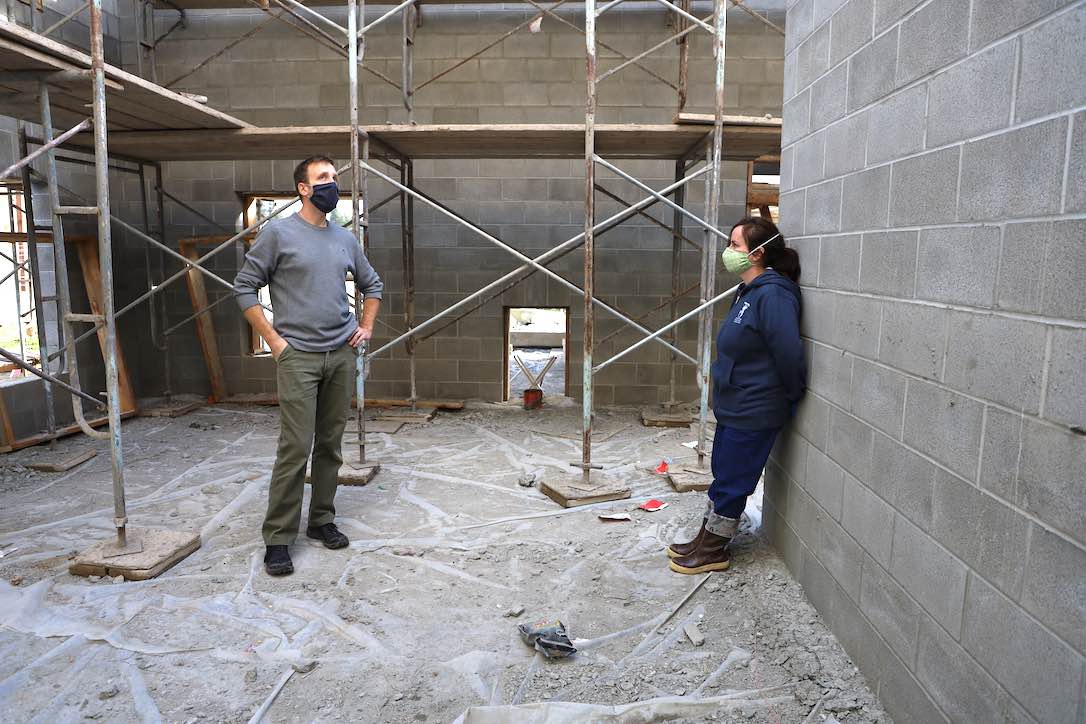
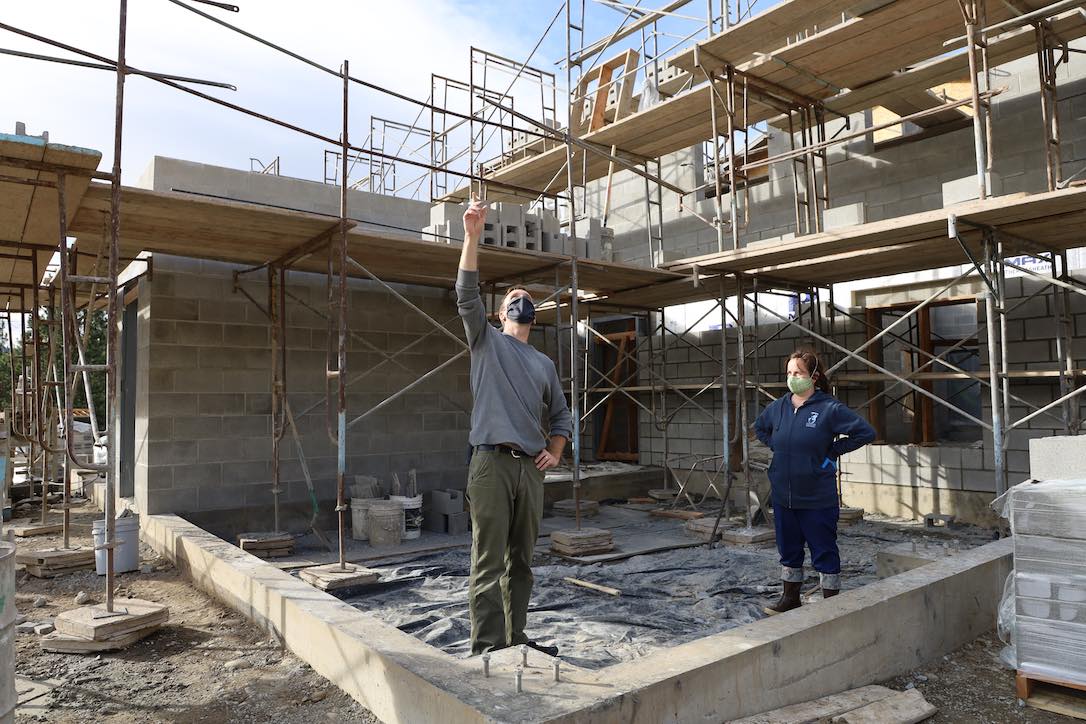
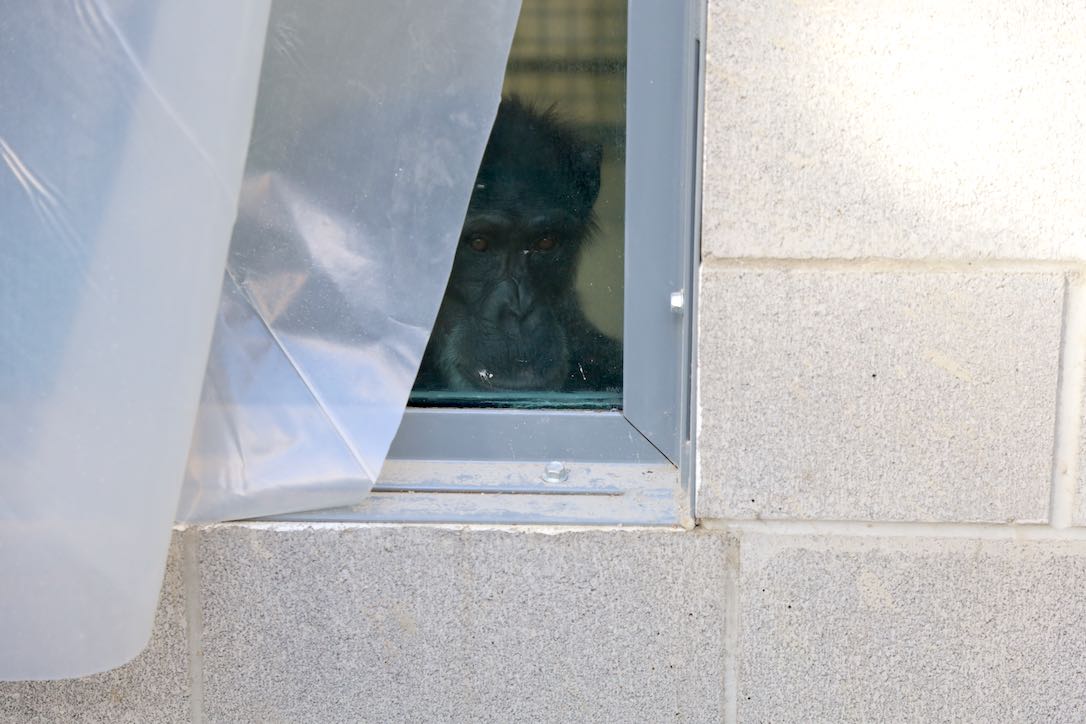
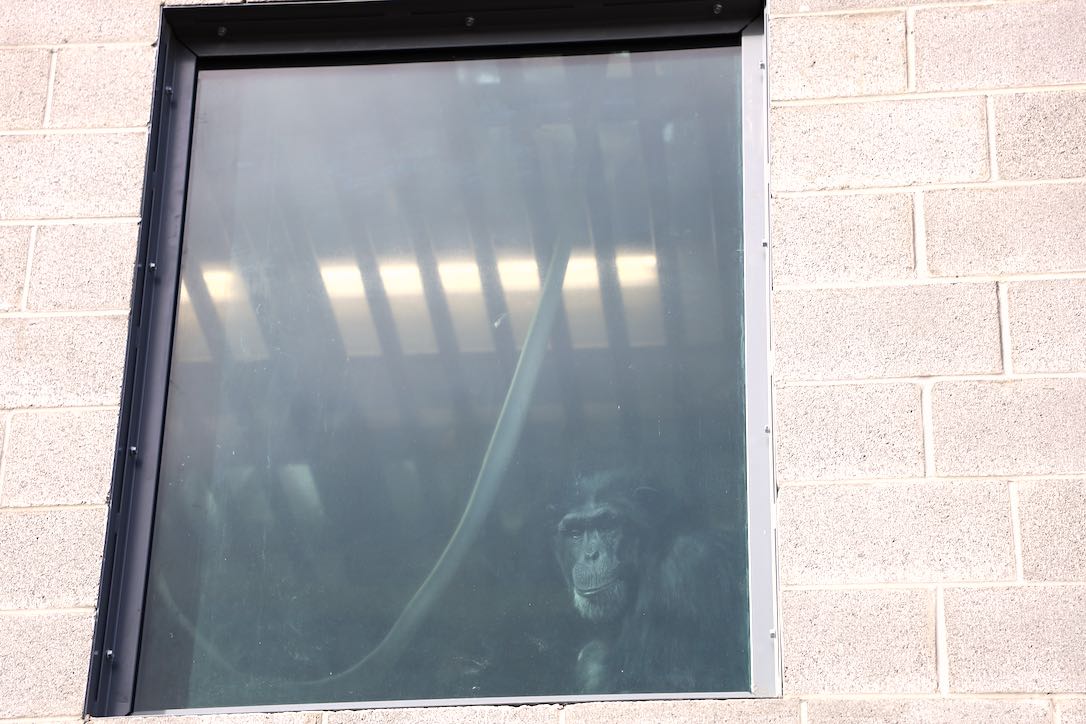
And for a slice of today, here are some photos of J.B. giving Anna and I the tour of the expansion in progress, with Honey B and Willy B looking on:

Filed Under: Boots, Caregivers, Featured Post, Sanctuary Tagged With: animal protection, Animal Welfare, chimp enrichment, chimpanzee, chimpanzee rescue, chimpanzee retirement, chimpanzee sanctuary, Chimpanzee Sanctuary Northwest, chimpanzees, primate protection, primate rescue

Rainy Day Time to Play

October 16, 2020 by J.B.

The chimps weren’t about to let a little rain spoil their fun today.

Filed Under: Latest Videos, Play Tagged With: chimpanzee, northwest, Play, rescue, Sanctuary

  • « Go to Previous Page
  • Page 1
  • Interim pages omitted …
  • Page 93
  • Page 94
  • Page 95
  • Page 96
  • Page 97
  • Interim pages omitted …
  • Page 532
  • Go to Next Page »

Primary Sidebar

Subscribe To the Blog and Get Notified of New Posts First!

Archives

Calendar of Blog Posts

June 2026
S M T W T F S
 123456
78910111213
14151617181920
21222324252627
282930  
« May    

Categories

SUBSCRIBE TO OUR NEWSLETTER

Footer

PO Box 952
Cle Elum, WA 98922
[email protected]
509-699-0728
501c3 registered charity
EIN: 68-0552915

Official DDAF Grantee

Menu

  • The Chimpanzees
  • Blog
  • About Us
  • You can help
  • Resources
  • Contact
  • Donate

Proud Member of

Connect With Us

Search

Copyright © 2026 Chimpanzee Sanctuary Northwest. All Rights Reserved. Site by Vegan Web Design