• Skip to main content
  • Skip to primary sidebar
  • Skip to footer

Chimpanzee Sanctuary Northwest

Hope. Love. Home. Sanctuary

  • Our Family
    • The Chimpanzees
    • The Cattle
  • Blog
  • About Us
    • Visiting the Sanctuary
    • Philosophy
      • FAQs
      • Mission, Vision & Goals
      • Privacy Policy
    • The Humans
      • Staff
      • Board of Directors
      • Founder
    • Annual Reports
    • The Future of CSNW
    • CSNW In The News
  • You can help
    • Donate
      • Become a Chimpanzee Pal
      • Sponsor A Day
      • Transfer Stock
      • Be A Produce Patron
      • Be a Bovine Buddy
      • Give from your IRA
      • Personalized Stones
      • Bring Them Home Campaign
    • Leave A Legacy
    • Employment Opportunities
    • Volunteer
    • See Our Wish List
    • Events
  • Resources
    • About Chimpanzees
    • Enrichment Database
    • Advocacy
      • Advocacy Action Center
      • Apes in Entertainment
        • Trainers
        • Role of the AHA
        • Greeting Cards
      • Chimpanzees as Pets
      • Roadside Zoos
      • Chimpanzees in Biomedical Research
      • Conservation
        • African Apes
        • Orangutans
  • Shop
    • Merchandise Store
  • Contact
  • DONATE NOW

Chimpanzee Sanctuary Northwest

Recall Me by Your Name

September 19, 2022 by Anthony

I recently discussed the behavioral training program in this blog post: “Are the chimps trained?”

The post summarized our efforts to improve the chimps’ lives by promoting cooperative behaviors. However, I neglected to mention one of the simplest and most important behaviors of all: recall.

In plain terms, recall behavior is approaching another individual’s location when they call you. Those of you who care for a domestic dog may already know the importance of reliable recalls, especially if your surroundings allow them to be off leash sometimes. In fact, recalls are often the first thing that companion animals learn, either intentionally or by accident, and that’s a good thing.

The chimpanzees are not pets, but we practice this behavior with them to ensure they cooperate when we need them to vacate an enclosure.

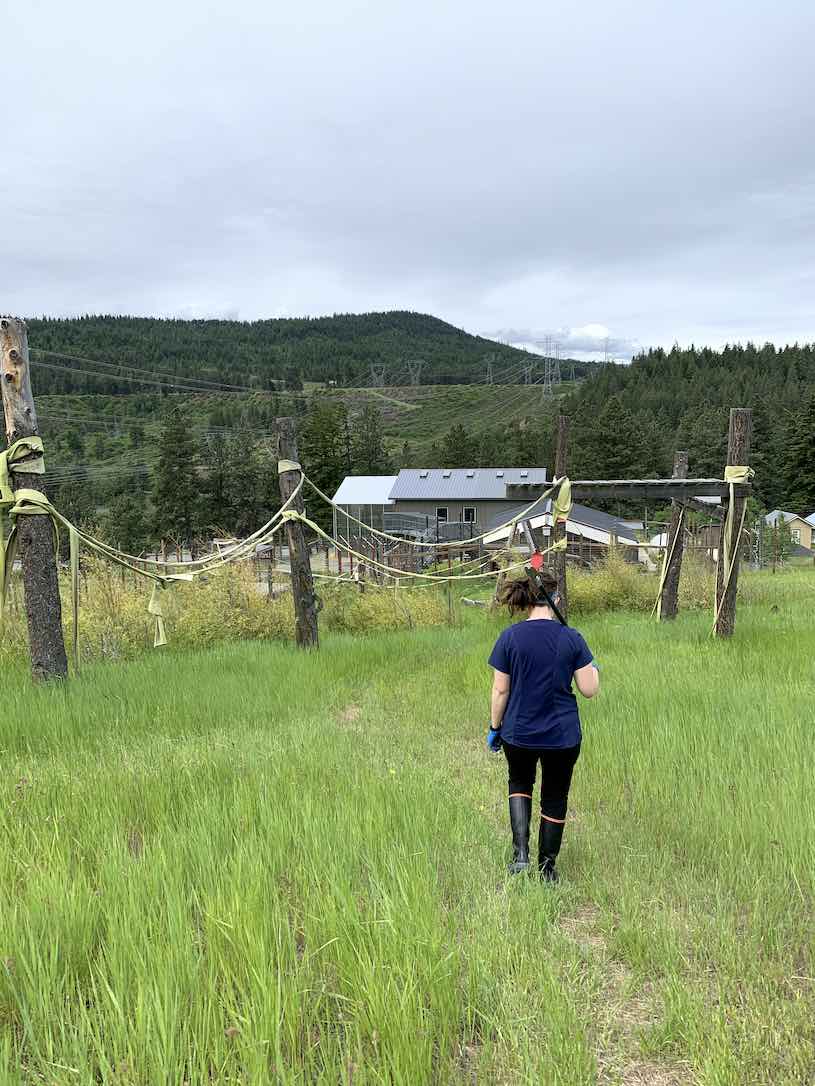
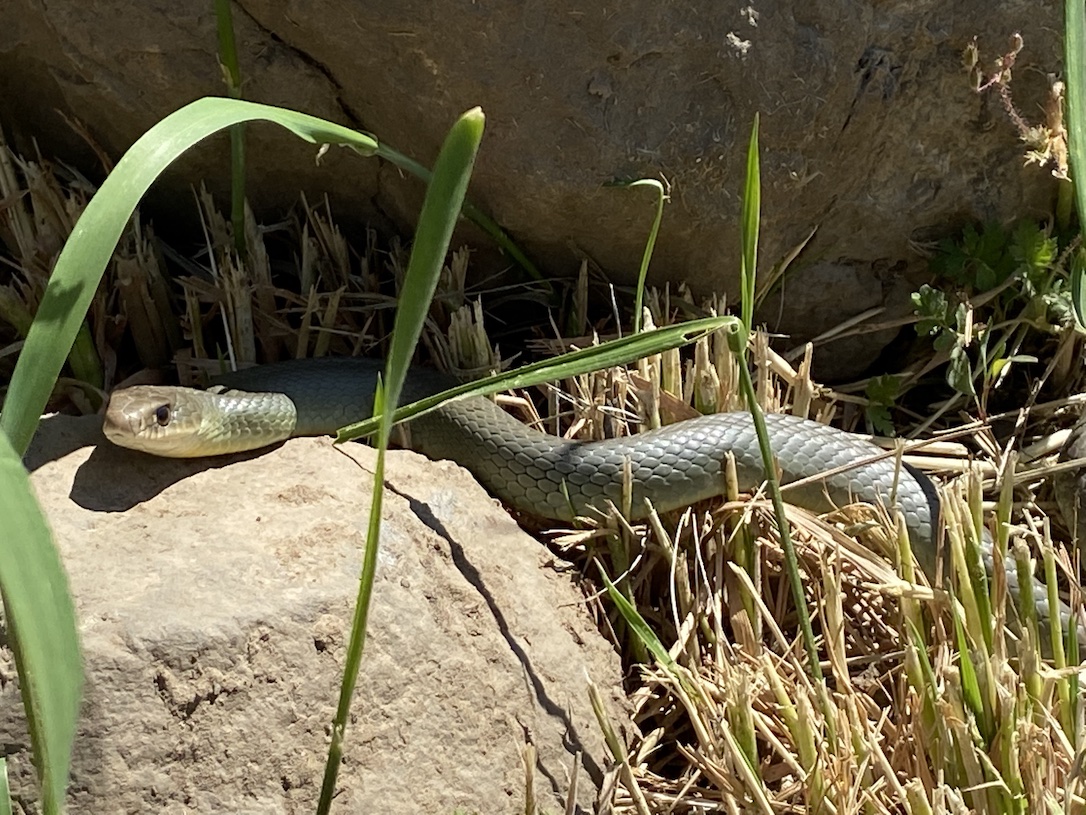
This ability is especially important when the chimps have access to outdoor areas such as Young’s Hill and the three greenhouses. Although they are enclosed in a mesh snake fence that prohibits easy entry, snakes and other wildlife occasionally find their way inside the perimeter and end up face-to-face with gangs of screaming chimpanzees. In these situations, caregivers need the chimps to leave the snake alone so it can be safely translocated back outside. Other scenarios that would also necessitate a recall include nearby wildfire, dangerously strong winds, a sudden drop in air quality, or an unexpected problem with the electrified fences.

The chimps in Jamie’s group mobbing a snake in 2018:
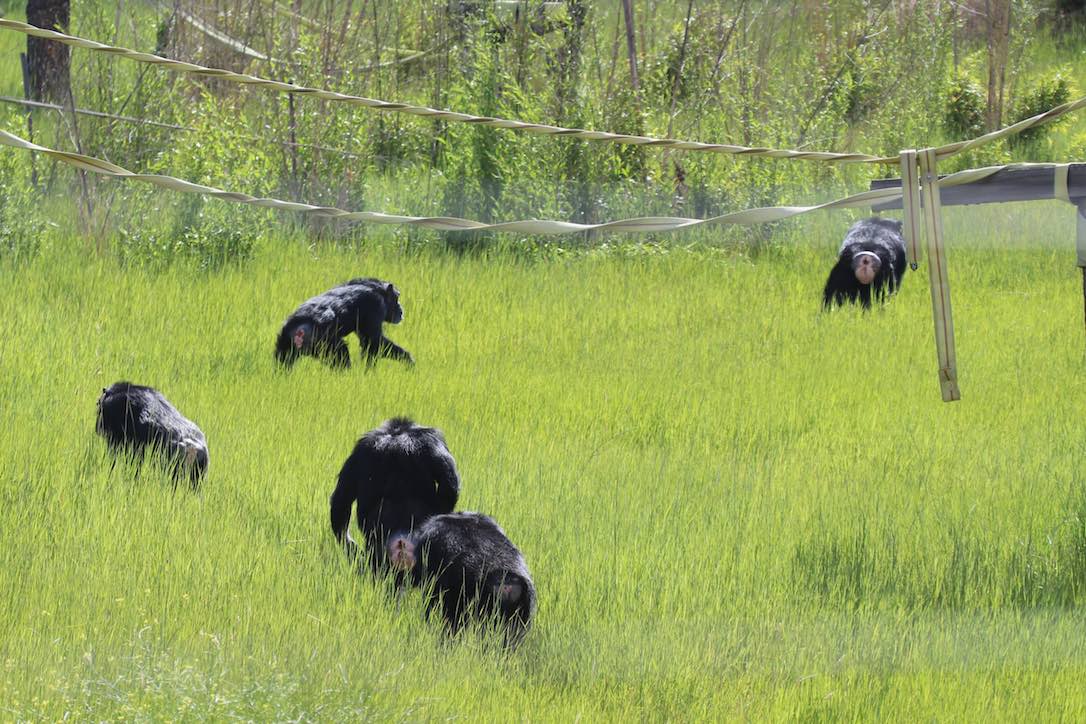
Caregiver Grace relocating a non-venomous snake last summer:
A non-venomous racer that Caregiver Chad relocated away from the Chimp House:
As with the behaviors mentioned in the other post, we encourage cooperative recall through the process of operant conditioning using only positive reinforcement. To initiate a recall, one caregiver rings a loud bell and yells “recall!” This combination of sounds serves as the cue for the desired behavior: shifting from the space they’re in into the space closest to the caregiver. When everyone chooses to shift into the preferred enclosure, a second caregiver closes the doors separating the areas. Once the doors are safely closed, the first caregiver marks that as the correct behavior using the clicker and rewards each chimp with a banana.
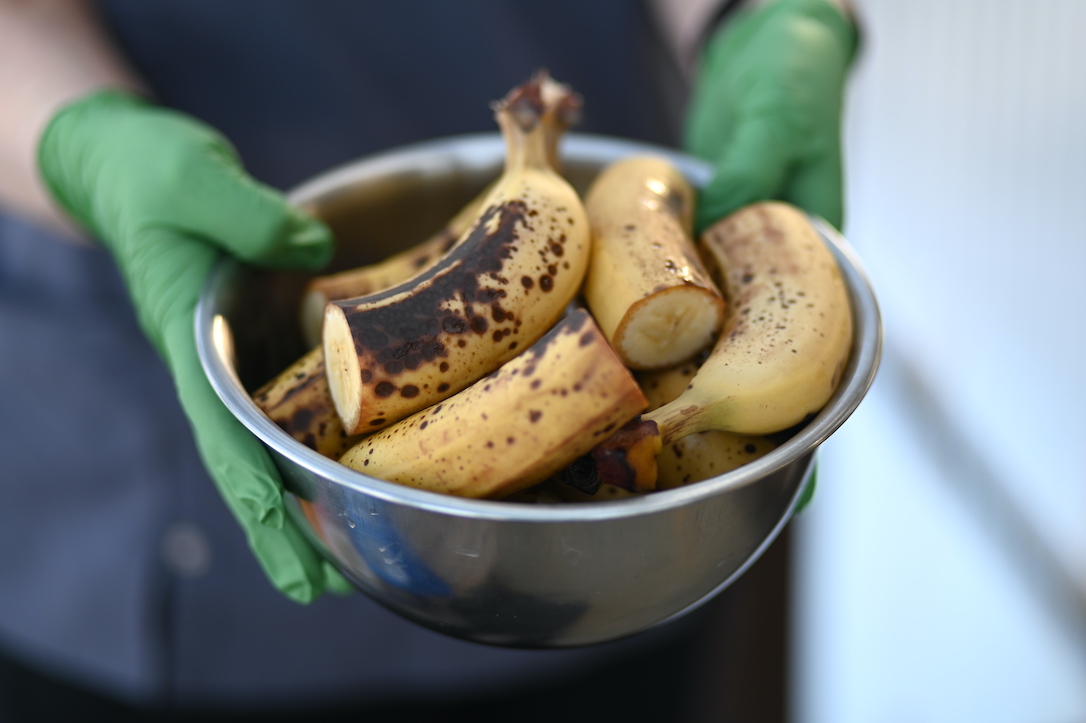
We give whole bananas every time to ensure the chimpanzees associate the cue and its corresponding behavior with the universally-loved food item. It’s likely that some individuals will occasionally choose not to participate in recalls, in which case we’ll have to “up the ante” with a reward of even higher value.

So far, we’ve had good success getting entire groups of chimpanzees to come in from their outdoor habitats. Earlier today, we asked the chimpanzees in Cy’s group to come into the playrooms so we could rescue a garter snake that had wandered into The Riverview Greenhouse. The entire squad came back inside without objections!

Lucky keeping an eye on the elusive serpent before the recall signal:

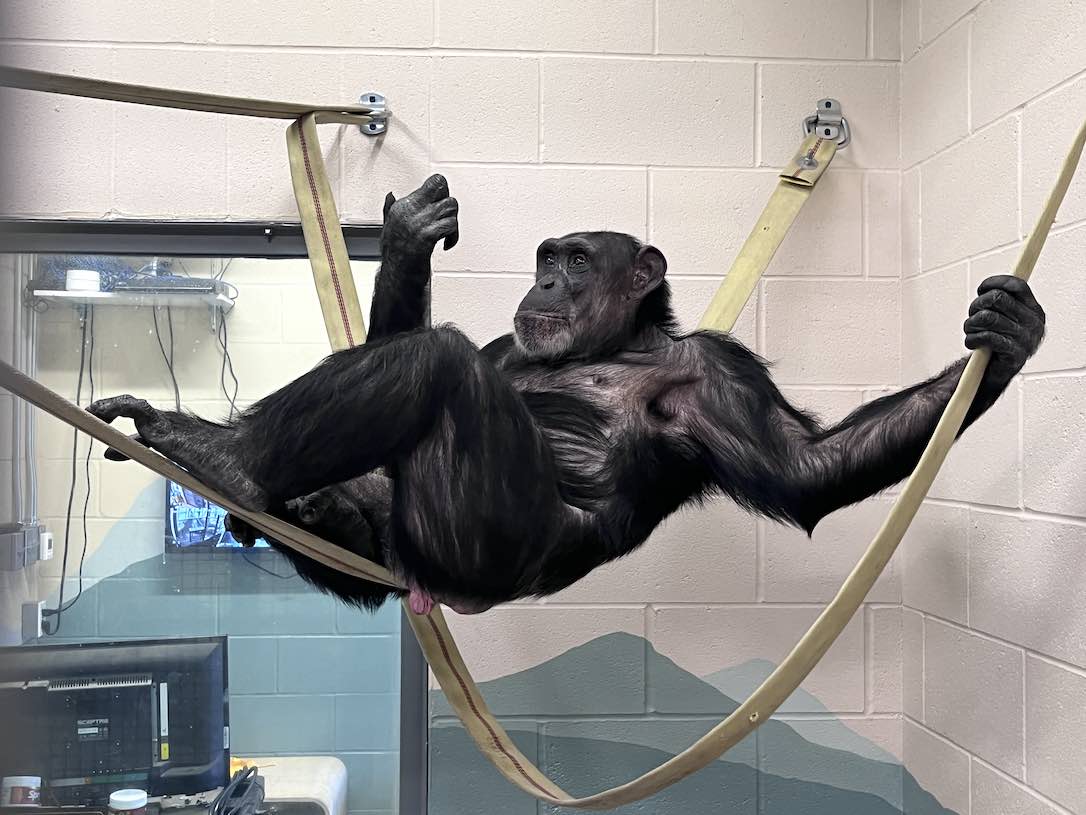
Willy B also received banana reward; he is still recovering from his recent procedure but heard the bell and probably would have cooperated if given the chance!

Willy watching the commotion while eating his complimentary snack:
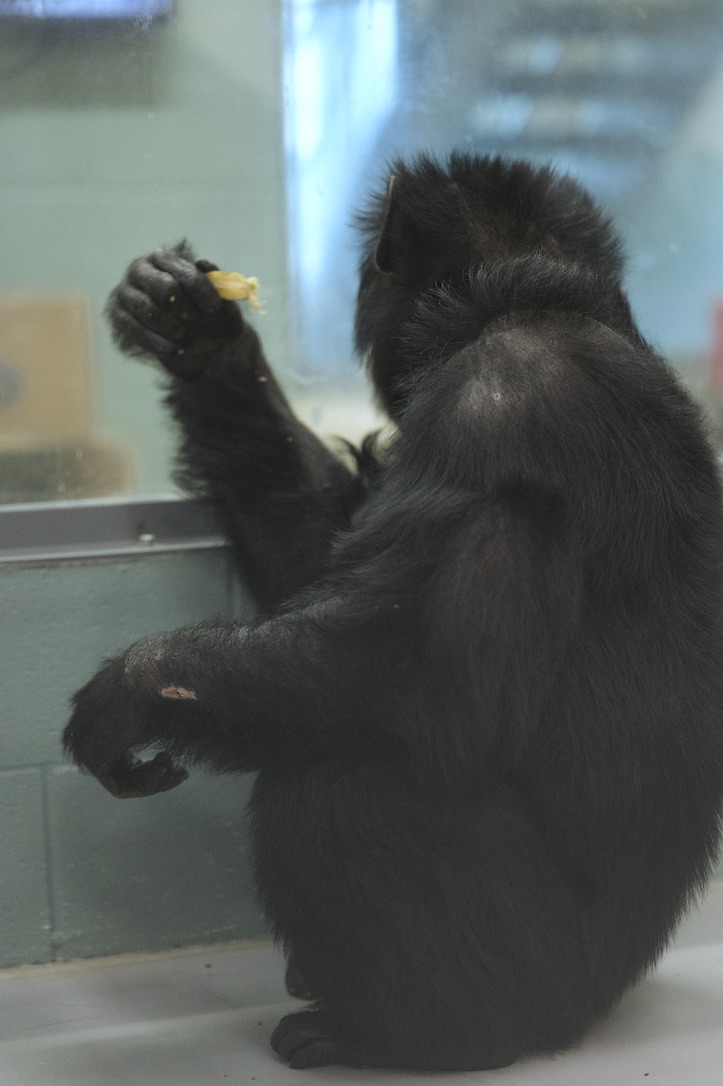
Of course, one way for a chimp to beat the system is to voluntarily stay close to the Chimp House, ready to receive a free banana for staying exactly where they already wanted to be.

Negra has perfected this art:

Filed Under: Food, Sanctuary, Training, Wildlife, Young's Hill Tagged With: Animal Welfare, chimp, chimpanzee, chimpanzee sanctuary, Chimpanzee Sanctuary Northwest, chimpanzees, csnw, recall training, Sanctuary

Gratitude

September 18, 2022 by Grace

A lot has happened over this last week.

Between Willy B’s procedure and our HOOT! fundraiser, we have a lot to be grateful for here at CSNW. Willy B has been recovering well in the front rooms of Phase 1, with visual access to the rest of his group members through multiple windows. The rest of Cy’s group have been checking up on him constantly and many have chosen to sit by the windows to join him in watching the many movies we have been playing for him. The stitches in his nose have been holding up really well (knock on wood) and he seems to be enjoying the enrichment we have been giving him to keep him busy (and to keep him from displaying against the howdy door and riling up his neighbors). He is currently watching Shrek and working on a hanging puzzle… Sunday Fun-day, amiright?!

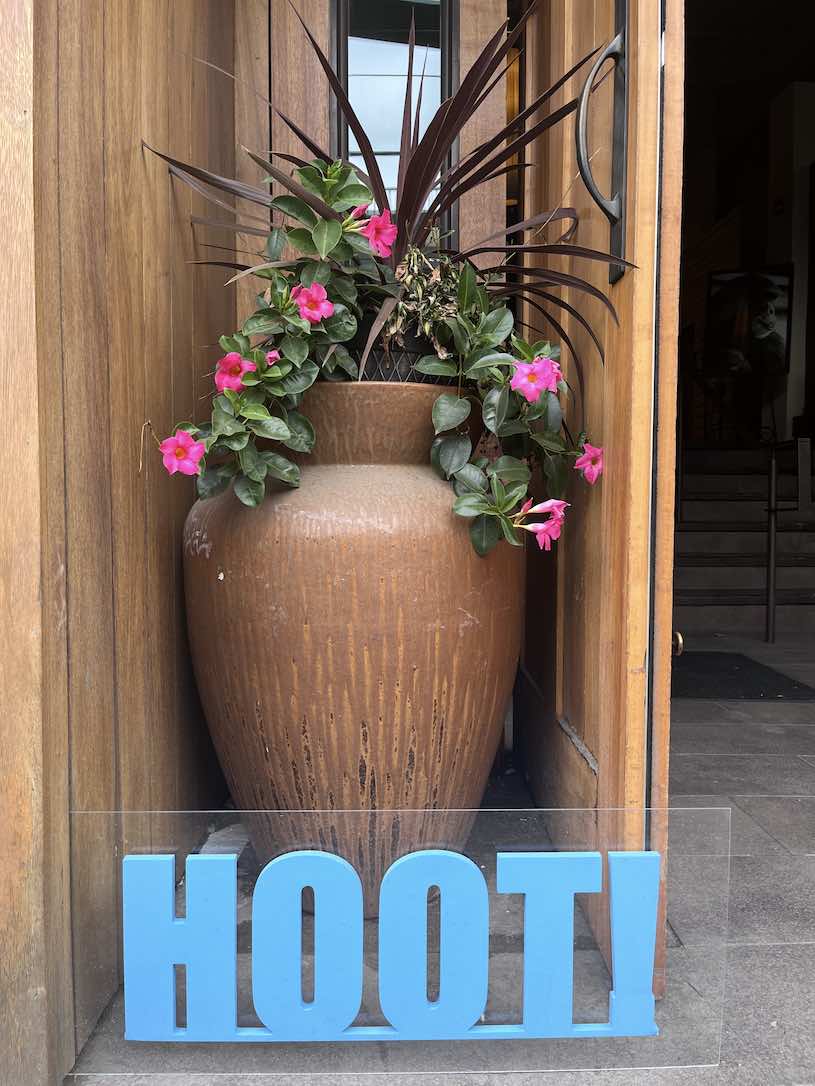
This past Friday was our signature annual fundraiser, HOOT!, and it was the first time it has been held in person for two years. It was my first time attending and I cannot say how heart warming it was to connect with our sponsors in-person and also virtually (via our Facebook live stream). I am always speechless when I think about the support we receive from so many people across the world. Being a part of an event where everyone is connected by the common goal of supporting CSNW brings this gratitude front and center, so I just want to take a moment to say a heartfelt thank you from all of the primates (and cattle) here at CSNW. Whether you have donated to HOOT!, connect with us via our daily blog, support us by being a Chimp Pal or Produce Patron, sending us items from our wish-lists, or supporting us another way, we can’t say thank you enough for allowing us to provide sustainable sanctuary for our residents.

Thank you.

Personally, I am mentally still processing all the events from the past week. I often spend a good amount of time reading outside of work, especially when work gets busier than normal, and often find that other authors have found words to express things that I am unable to voice. Excuse the cheesy-ness of the end of this blog, but a piece by Mary Oliver has really been on my mind lately. I’ve typed out a portion of it below…Maybe it will touch your heart, too.

The Messenger

My work is loving the world.

Here the sunflowers, there the hummingbird –

equal seekers of sweetness.

Here the quickening yeast; there the blue plums.

Here the clam deep in the speckled sand.

Are my boots old? Is my coat torn?

Am I no longer young and still not half-perfect? Let me

keep my mind on what matters, which is my work,

which is mostly standing still and learning to be astonished…

Which is mostly rejoicing, since all ingredients are here,

which is gratitude, to be given a mind and a heart

and these body-clothes,

a mouth with which to give shouts of joy…

telling them over, over and over, how it is

that we live forever.


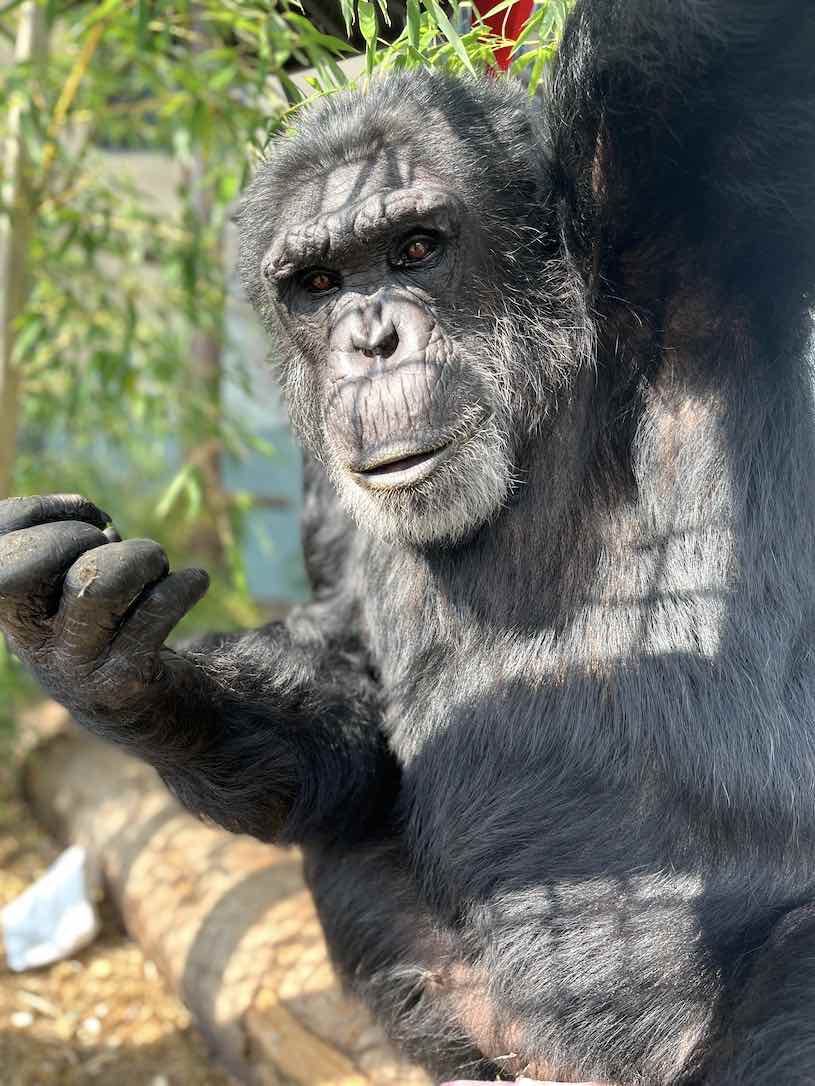
Photos above: Terry and Cy

Cy:

Dora:

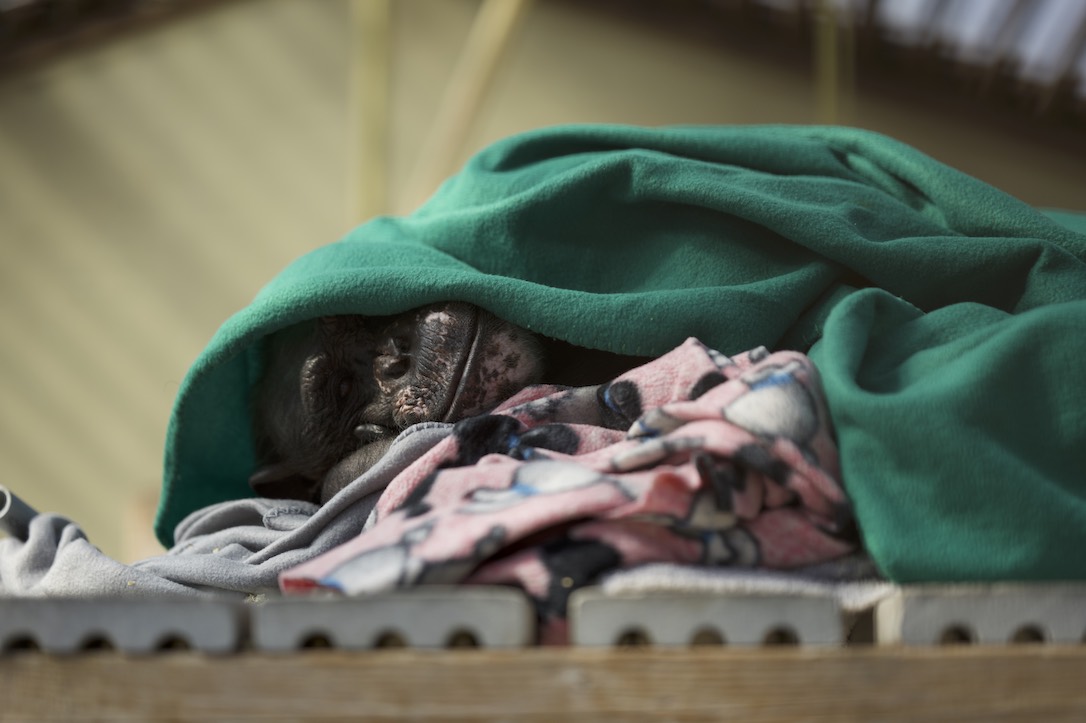
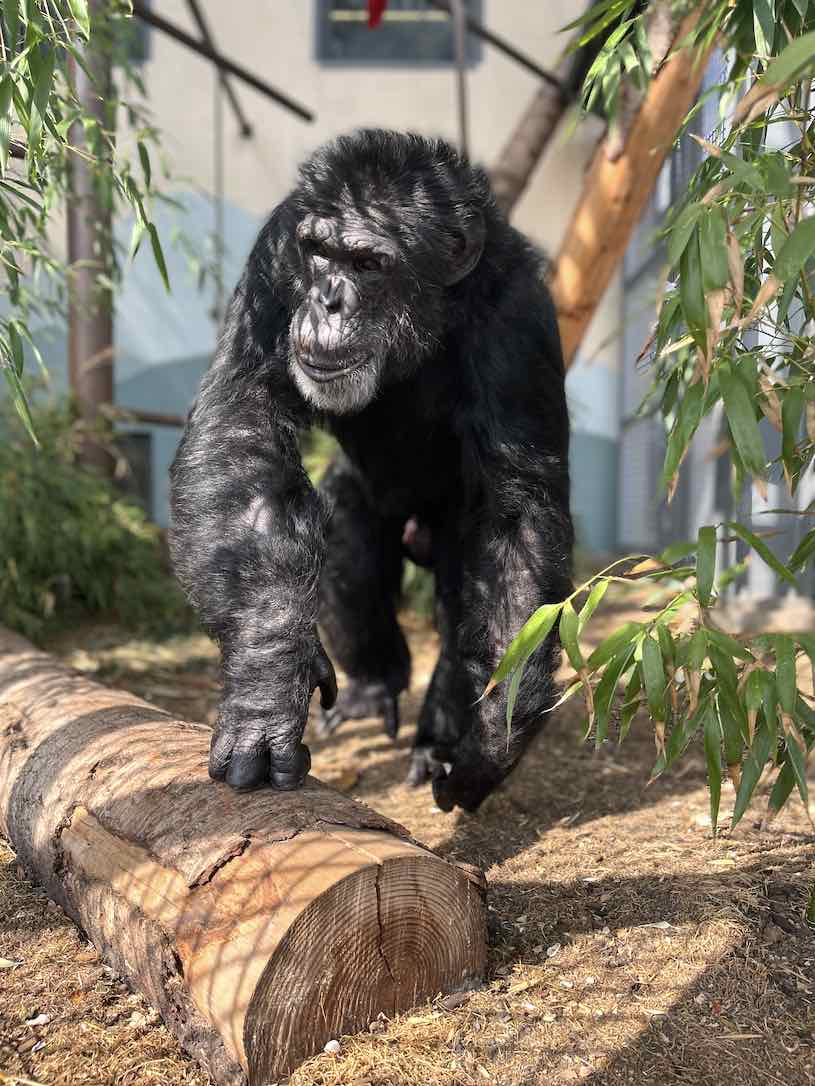
Negra, resting in the greenhouse:


Filed Under: Sanctuary Tagged With: chimp sanctuary, Chimpanzee Sanctuary Northwest, chimpanzees, Cle Elum, Enrichment, Negra, Sanctuary, Willy B

Ties to LEMSIP

September 17, 2022 by Jenna

Many of you may have noticed, several of our chimpanzees have a common origin story: LEMSIP.

Today, I wanted to scratch the surface on this topic. There is so much more to say about non-human primates in laboratories. Much of this blog is from online sources that I have found while researching LEMSIP, because my personal knowledge is limited. I was blown away by what I found.

LEMSIP stands for the Laboratory for Experimental Medicine and Surgery in Primates. LEMSIP was a research facility at New York University, beginning in 1965. The original goal was for LEMSIP to be a federally funded primate research center, although it remained a private laboratory until their closure. At one point, LEMSIP housed around 300 chimpanzees and nearly 300 monkeys, who were subjected to intensive biomedical research in areas such as reproduction, blood transfusions, hepatitis B, and HIV.

Ultimately, LEMSIP shut down in 1998. Many believe one of the contributing factors to the demise of the facility was the revision of caging requirements prescribed by the USDA, which would cost the University roughly $2 million to accommodate.

This made me think…

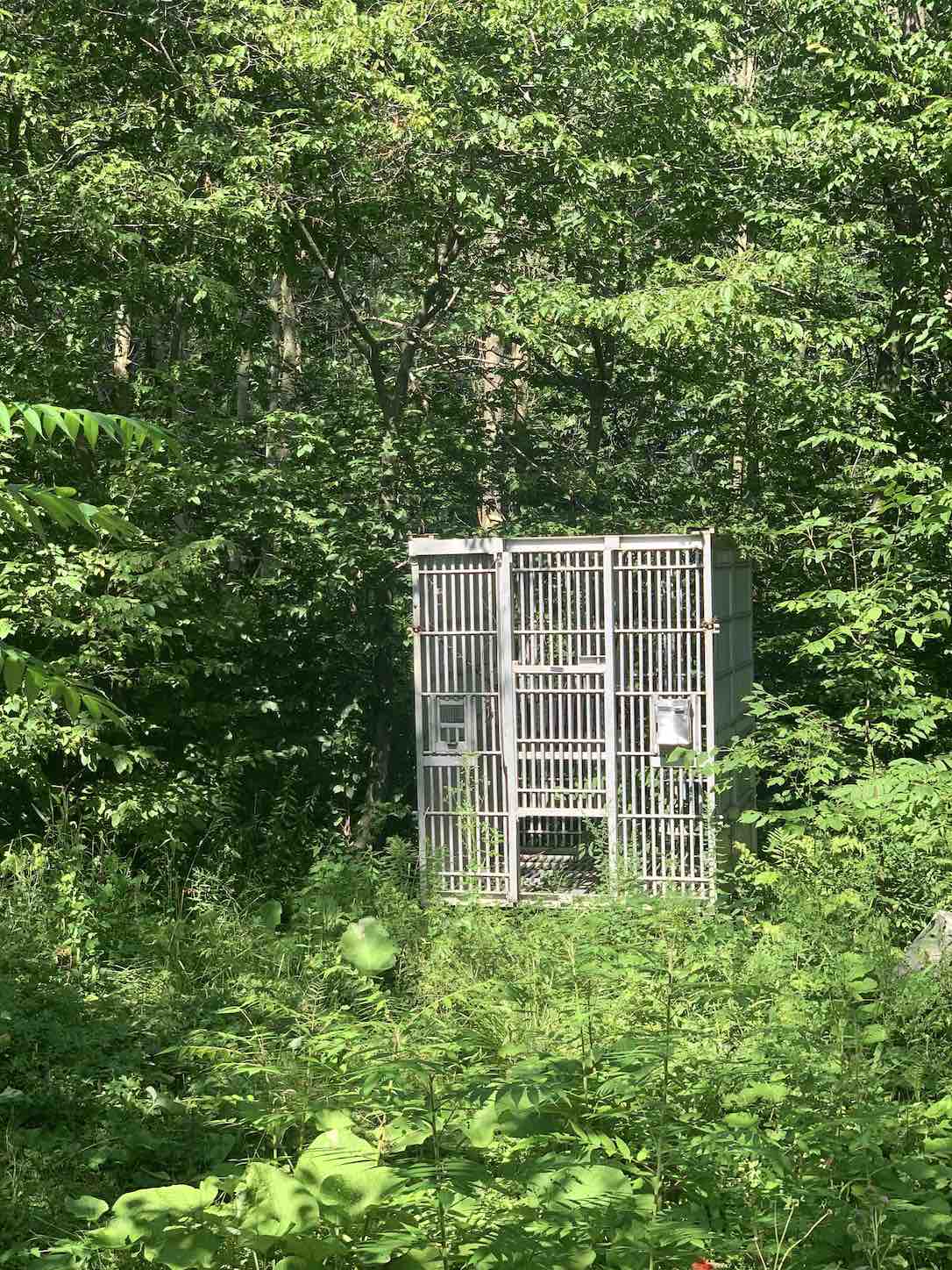
Back in 2019, I completed a summer internship at fellow sanctuary, Fauna Foundation, located in Canada. During that internship, I heard a lot about LEMSIP, because just like CSNW, many of their chimps had been at that laboratory. Although it has been over three years since my internship, I remember so vividly learning that this (pictured below) was the type of cage the chimps spent their lives in. The “home” they would not leave unless they were anesthetized and used for a biomedical research study.

Photo of cage from LEMSIP, which is on display at Fauna Foundation:

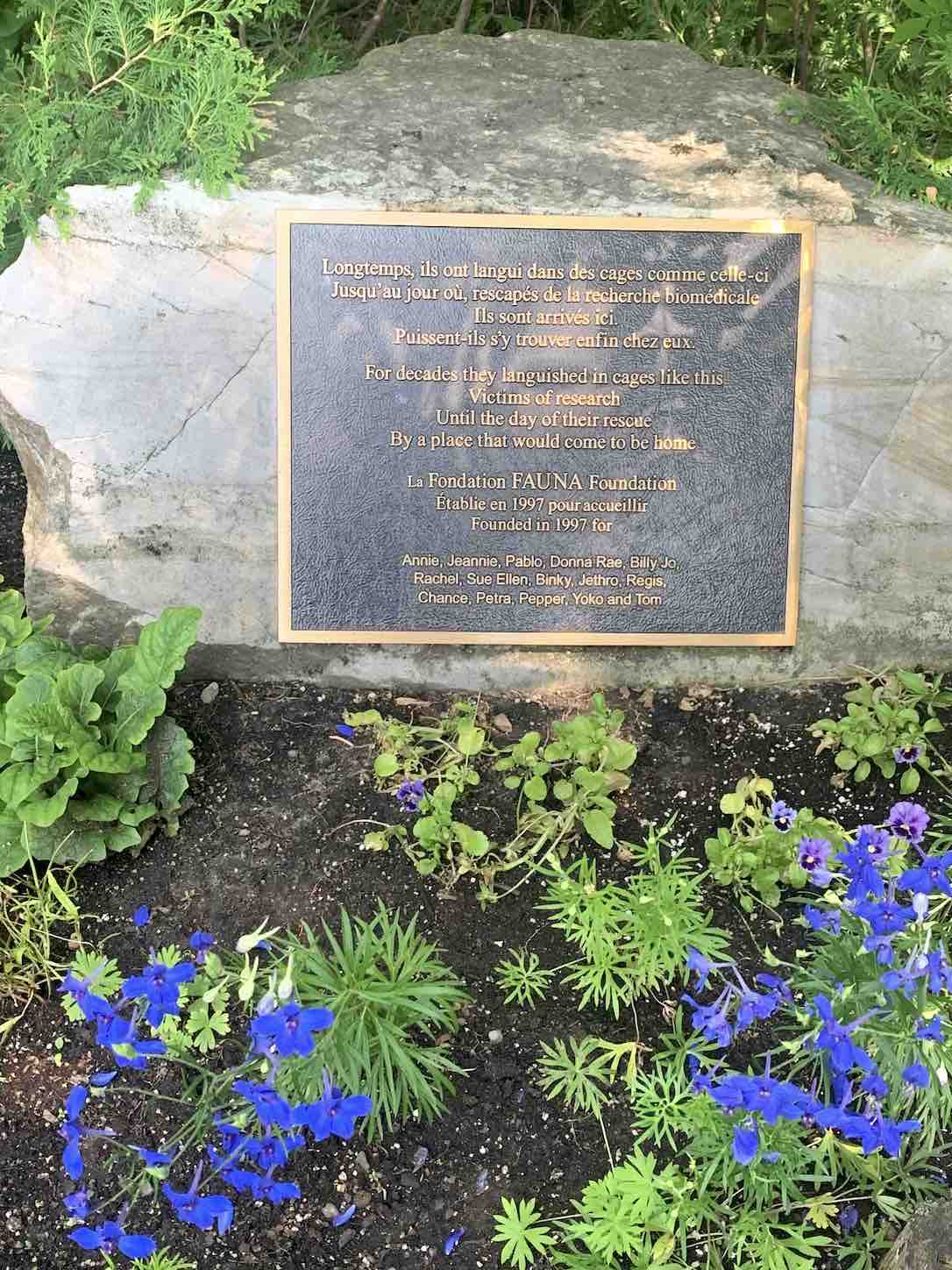
Plaque in front of cage:

“For decades they languished in cages like this

Victims of research

Until the day of their rescue

By a place that would come to be home

FAUNA Foundation

Founded in 1997 for

Annie, Jeannie, Pablo, Donna Rae, Billy Jo, Rachel, Sue Ellen, Binky, Jethro, Regis, Chance, Petra, Pepper, Yoko, and Tom”

At LEMSIP, the majority of the chimpanzees were housed singly in these small cages. It wasn’t uncommon for the chimps who were young enough, to be housed in pairs. But, that was short-lived as chimps grow quickly.

All of the cages hung above the floor. The founding director, Jan Moor-Jankowski, MD believed that “allowing feces and urine to fall out of the cages would maintain a healthier environment, opposed to hosing out the cages, creating dampness – a contributor to the widespread upper respiratory problems in captive primates.”

However, the design ultimately created a permanent foul stench from beneath the caging that the chimpanzees were forced to breathe in every single day.

Chimpanzees were denied any outdoor access because Moor-Jankowski believed that this would limit their germ exposure.

Adult chimpanzees were given little enrichment.

Infant chimpanzees were taken from their mothers and raised by human caregivers (in the “nursery”) to accustom them to being handled for procedures.

Chimpanzee mothers were bred repeatedly so more babies could go into research. None were allowed to raise their children past one year, if at all.

When NYU withheld the funds earmarked for increasing the size of the chimpanzees cages to comply with the updated regulations, Moor-Jankowski filed a complaint against his employer with the United States Department of Agriculture (USDA) highlighting the deficiencies.

In the early 1990s, the USDA charged NYU with 378 violations of the Animal Welfare Act at a separate university lab. The charges were in regard to water deprivation and other cruel treatment of monkeys used in addiction experiments. The charges stemmed from Moor-Jankowski having revealed information to the USDA about problems at that lab.

In 1995, NYU announced the sudden closure of LEMSIP and that all its primates will be sent to Coulston Foundation, a New Mexico-based toxicology laboratory. NYU made this placement decision despite knowing that the USDA had filed charges against Coulston for the negligent deaths of both chimpanzees and monkeys. Shortly after NYU’s announcement, Moor-Jankowski was fired from his director position of 30 years.

In 1997, around 100 chimpanzees were sent to Coulston Foundation, following the closure of LEMSIP.

However, James Mahoney, D.V.M., Ph.D, LEMSIP’s veterinarian managed to quietly place 109 chimpanzees and 100 monkeys in sanctuaries around North America. Those sanctuaries included Fauna Foundation, Wildlife Waystation, and the Primate Rescue Center.

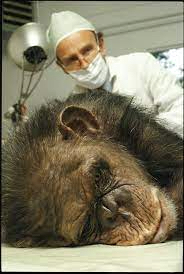
Picture of Dr. James Mahoney conducting a biomedical procedure at LEMSIP (Source: National Geographic)

Primate Rescue Center says Mahoney approached them asking, “How many chimpanzees can you make room for?”.

In 1998, Coulston Foundation was “awarded” 111 chimpanzees who were deemed “surplus” by the U.S. Air Force.

In 1999, the USDA settled three sets of charges against Coulston with a $100,000 fine and orders to restrict breeding and divest itself of 300 chimpanzees (half of their population) by 2002.

Coulston had many documented USDA welfare violations including temperatures in cages as high as 150 degrees, to botched medical procedures such as experimental spine surgery.

In 2002, most of the LEMSIP chimpanzees that were sent to Coulston years prior, were rescued by Save the Chimps, when it took over Coulston.

However, an unknown number of chimpanzees who remained incarcerated in lab cages, were transferred to the Alamogordo Primate Facility, which is owned by the National Institutes of Health (NIH) and operated under contract by Charles River Labs.

“Chimpanzees have not been used in invasive biomedical research – any research that causes injury, pain, or distress – in U.S. laboratories since 2015. But what to do with the former research chimps – and how to pay for their costly lifetime care – is a continuing conundrum.” – National Geographic

In 2015, the U.S. Fish and Wildlife Service listed captive chimps as endangered. This meant that research and experimentation could be done on chimps only if the institution could show the work will enhance the survival of chimps in the wild.

Today, five biomedical research facilities across the U.S. hold chimpanzees once used for research that was funded in some part by NIH.

With all of this said, these are all reasons why we do what we do at Chimpanzee Sanctuary Northwest and why sanctuaries are important. We have sixteen chimpanzees who were apart of the biomedical research industry. Their past lives were unfair, to put it simply. Although still in captivity, we hope what we do here everyday for our 16 chimpanzee residents helps make a difference in their lives.

**Special shout out to everyone involved in HOOT! last night. From attending the event in person, participating in the online auction from afar, or heck, even sharing our posts on Facebook…. As always, we appreciate your continued support for Chimpanzee Sanctuary Northwest. We wouldn’t be where we are without you!

Filed Under: Advocacy, Chimp histories, Chimpanzee, Chimpanzees in Biomedical Research Tagged With: animal protection, animal rescue, animal rights, Animal Welfare, chimpanzee, chimpanzee sanctuary, Chimpanzee Sanctuary Northwest, primate rescue

Thoughts From a Busy Day

September 14, 2022 by Grace

Today has been a bit of a day here at CSNW.

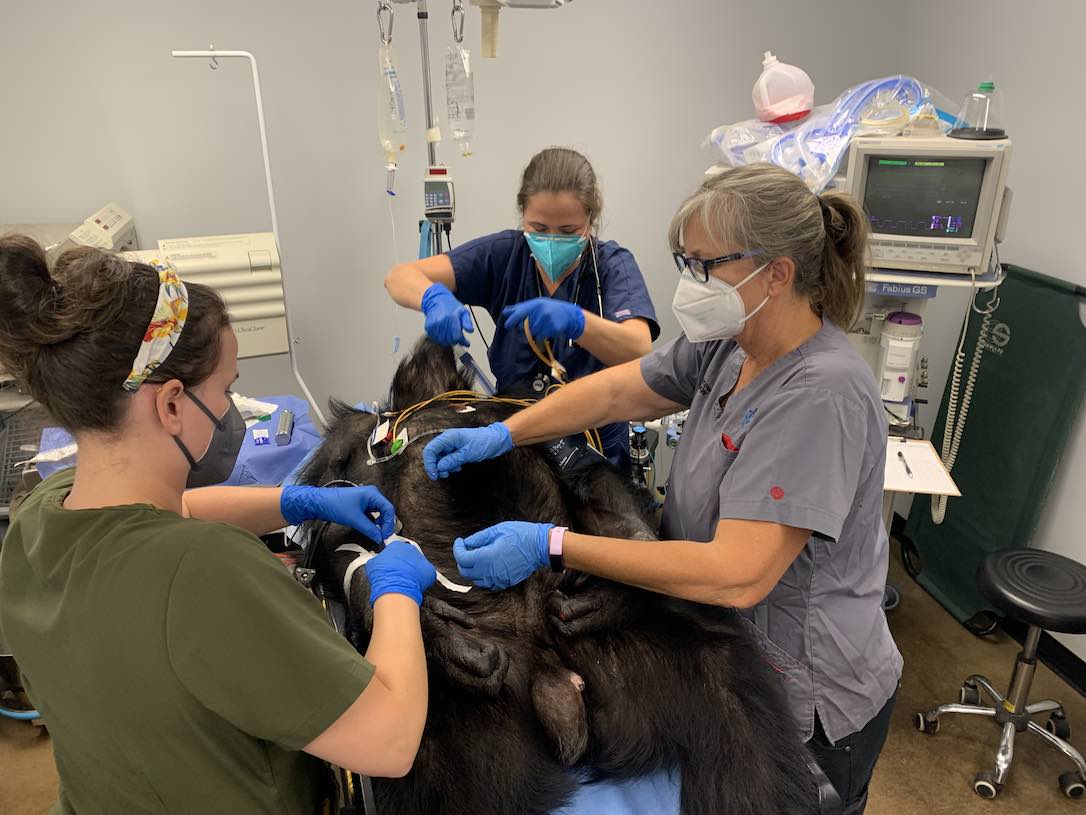
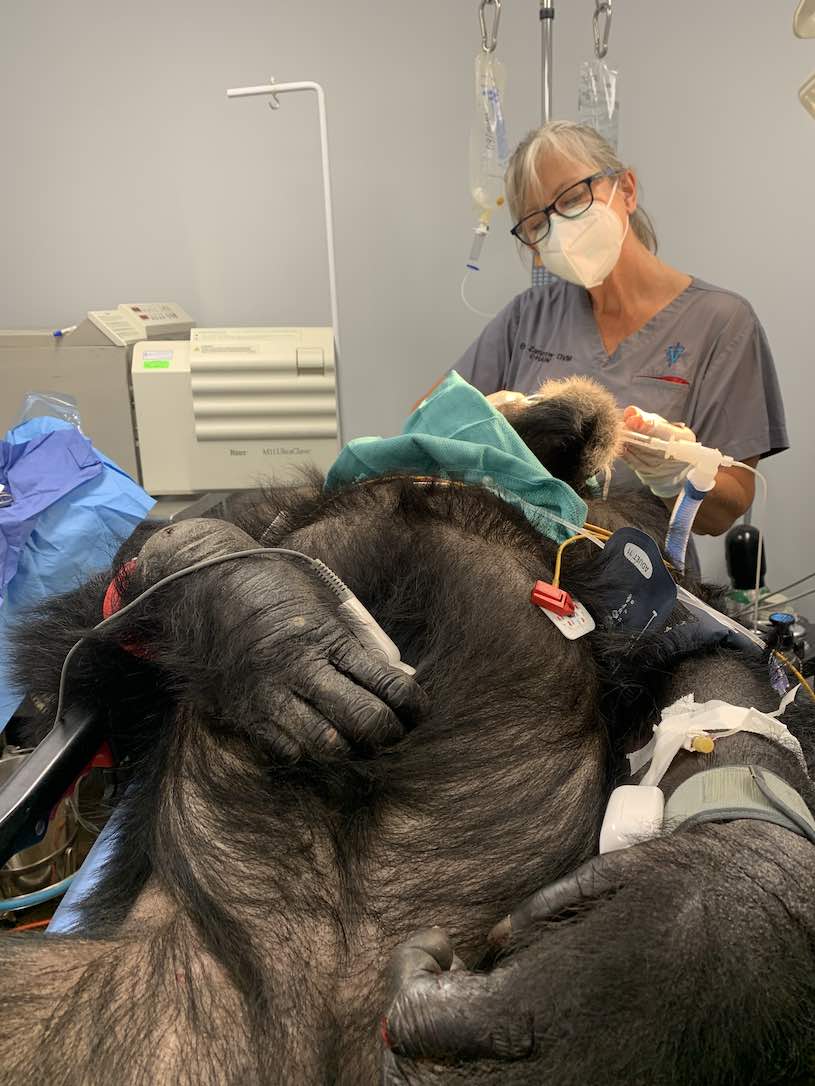
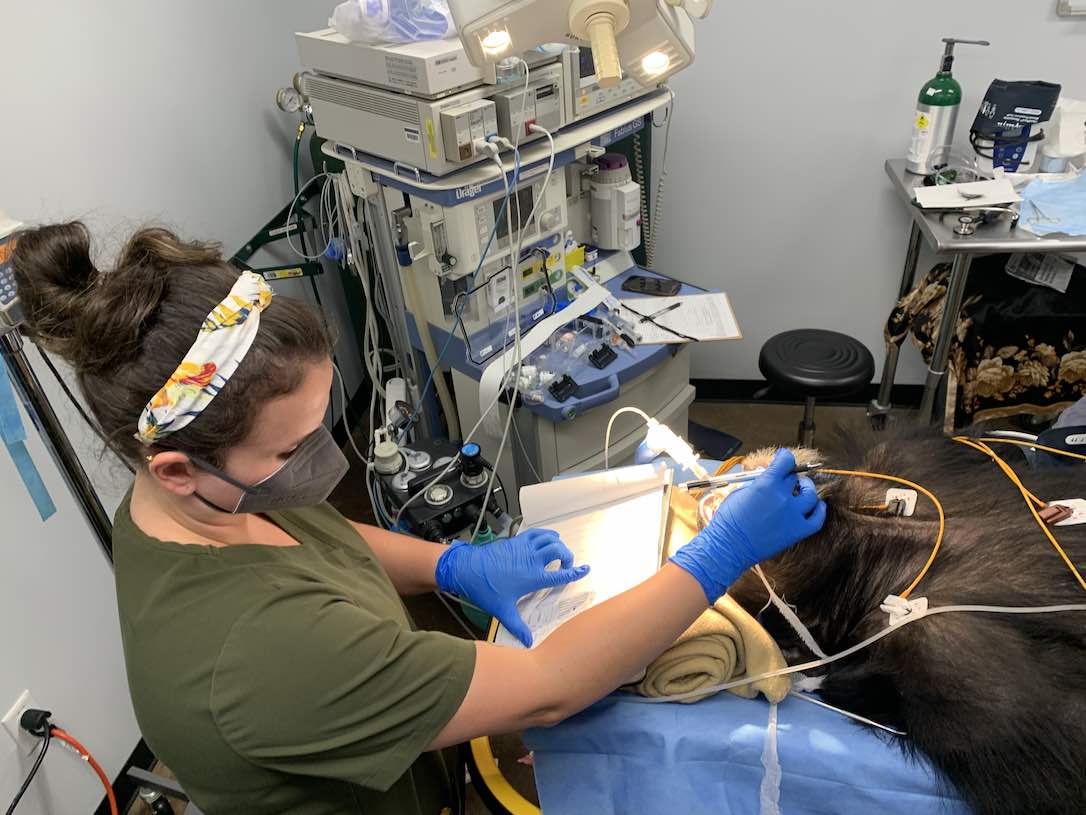
We woke up to messages from J.B. and Diana that there had been a kerfuffle between the members of Cy’s group in the early hours of the morning. Although Willy B required a trip to the vet clinic, everyone is doing OK. Willy acquired an injury to his right nostril and had to have a few stitches from Dr. Erin. He was a rock-star during the procedure and is recovering well. A special thank you to Mekenzie, CRNA, for stepping in to assist Dr. Erin and Sofia with his procedure!

Dr. Erin Zamzow (right), Mekenzie (center), Sofia (right), and Willy B (on the table).

Dr. Erin giving Willy B his stitches:

Sofia charting a dental exam:

Displaying, fighting, and resulting wounds are a common part of chimpanzee society. While it is hard to watch at times for us humans, and sometimes the displays are so loud that we have to cover our ears, it often is a lot of screaming and, thankfully, direct physical contact occurs less often. It does happen, though, and another key aspect of chimpanzee society is post-conflict reconciliation. This includes reassurance behaviors, grooming, and play. We were relieved to see a lot of this, especially between the guys, and there has been a lot of reassurance between the other eight chimps in Cy’s group throughout the day today. On the other side of the chimp house, Jamie’s group has spent a lot of today watching the construction on Young’s Hill. I briefly interrupted a grooming session between Jamie, Burrito, Jody, and Foxie before Jamie told me in no short order to go away.

Everyone is well.

There was a lot going on today, but all the stress related to something I’d been thinking about for a few days… Not about unexpected trips to the vet clinic, so stick with me. The other day we had our virtual tour of the sanctuary for VIP ticket holders to HOOT! and one of our supporters asked Diana and I what we find to be the most rewarding aspect of working at the sanctuary. I fumbled out some vague answer (I’m not good at speaking on the spot) and Diana answered about how rewarding it is to see all the people who are brought together by the sanctuary and, also, how rewarding it is to see the chimps form relationships with each other and choose to spend time together. This has stayed with me for a few days.

Sanctuary is a unique concept that often seems better defined by an emotion, rather than a written definition. I’m not biased at all, but CSNW embodies this emotion in every way. Working here is a combination of the heavy feeling of knowing that the chimps we care for do not belong in captivity, but we are also so lucky to have the opportunity to know them and to get to form deep connections with them. It’s watching individuals in Jamie’s group play, groom, and be goofy. It’s watching the newly integrated group of 9 form relationships with each other that they might not otherwise have had the opportunity to form. It’s giving them choice, connections, and a lifelong home.

There are so many connections that have been formed because of the chimps here at the sanctuary. Not only have we connected with supporters all over the globe, that we otherwise would never have known, but it has also brought myself and all of my fellow coworkers here to the foothills of the Cascade Mountains. Most all of us have left the places that we called home and our family members to move here and it has created a truly special space where we are all each others family. And days like today, that are more chaotic than most, this comfort keeps my anxiety at bay.

So, if I were to better answer the question posed earlier this week, I would say that the most rewarding thing about working here is the connections. Connections with coworkers, supporters, and (last but certainly not least) the chimps.

We already owe the chimps so much, but this should also be added to the list.

Also, don’t forget that our signature fundraiser HOOT! is coming up this Friday, September 16th! The online auction is live and you can place your bids now! Our annual fundraiser contributes a large portion of the funds that allow us to provide sustainable sanctuary and lifelong care for all of our residents. Click here for more and to help us reach our fundraising goal!

Bonus Photo

Honey B, chillin:

Filed Under: Sanctuary Tagged With: Animal Welfare, Chimpanzee Sanctuary Northwest, Sanctuary, Willy B

Don’t Be Suspicious… Don’t Be Suspicious

September 13, 2022 by Chad de Bree

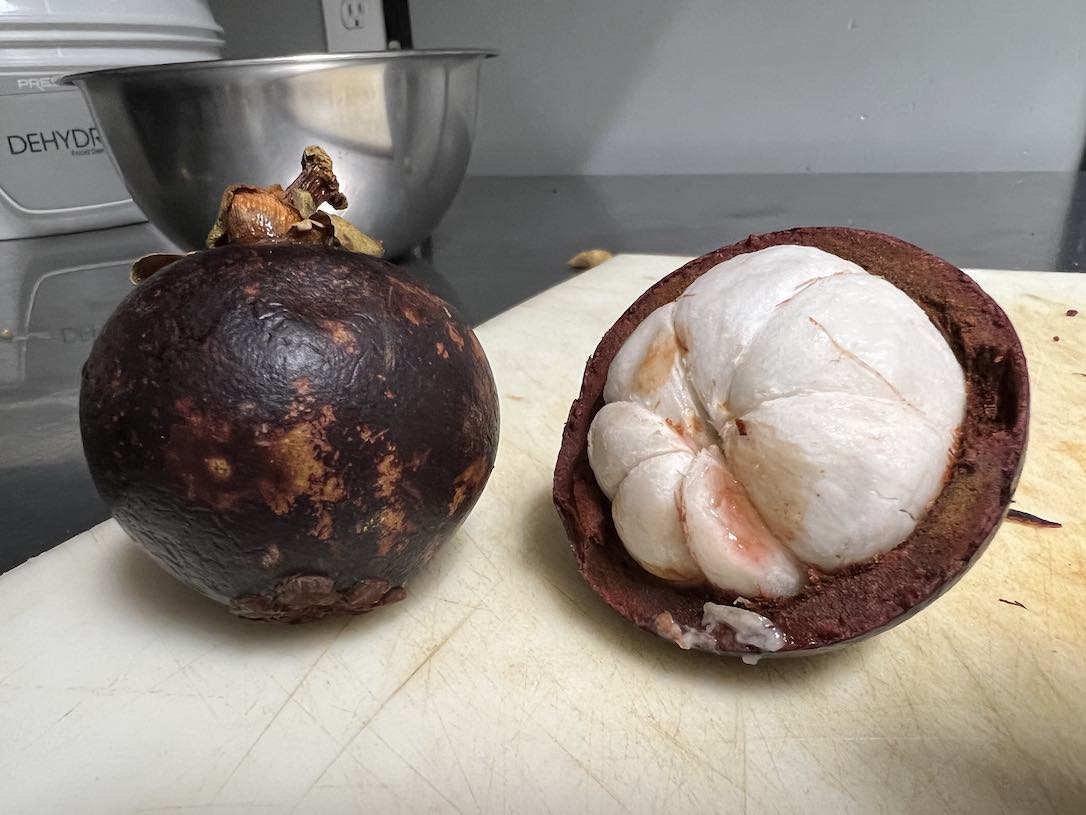
New foods for chimpanzees can either make them excited, or suspicious. Today, the chimpanzees were introduced to mangosteens. I know that some of you know about Annie’s allergy to mangoes. Don’t let the name of these super fruits confuse you. They are not related to mangoes. They are more closely related to things like starfruit and lychee, though they are really in their own class. The taste has been described as a combination of strawberries, peaches, pineapples, bananas, pomegranates, and lychees, among other things. Again, they really are in a class of their own and hard to describe.

Mangosteens are indigenous to Southeast Asia. Found in countries such as Indonesia, Malaysia, Singapore, and the Philippines, it is known as the “Queen of Fruits.” Besides being extremely tasty, there are also many health benefits to mangosteens. They are packed with antioxidants, anti-inflammatory properties, support blood sugar control, and some studies have found they may also help promote weight loss.

Overall, everyone in Foxie’s group loved them! Cy’s group, on the other hand, had mixed feelings. Some didn’t even bother to try them. Those who did try them, however, seemed to love them!

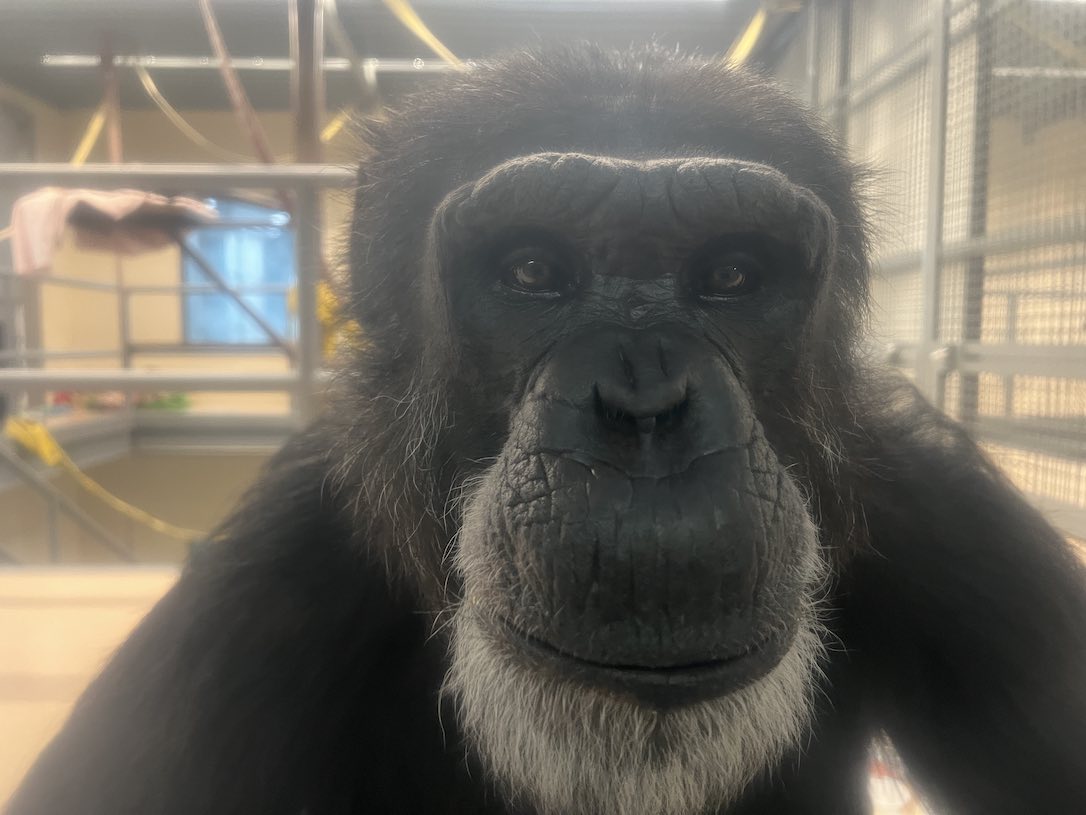
Bonus photo of Cy watching me as I was cleaning their mezzanine yesterday:

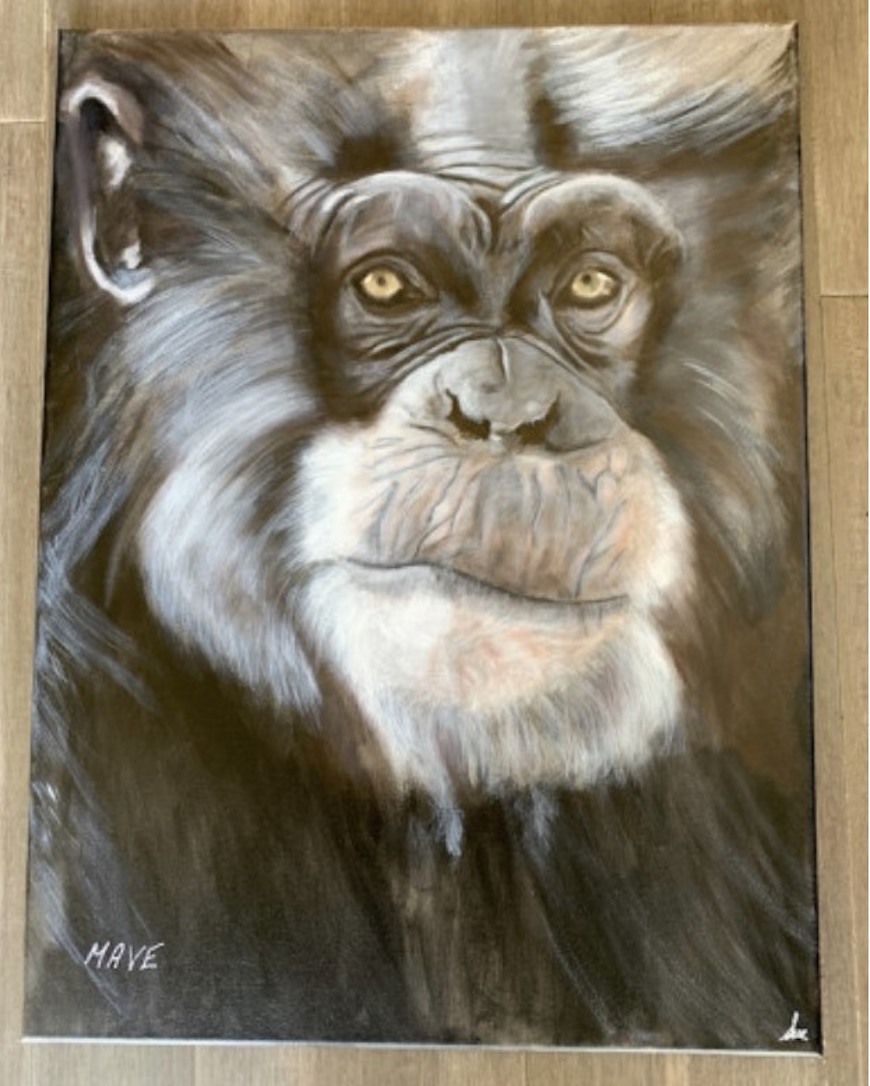
Also, don’t forget to check out the online auction items! You can begin to bid on the items you want now! And for those who are attending in person, you can start thinking about which items you are going to bid on! I’m quite partial, and biased, on this beautiful painting of Mave!

Filed Under: Food, Latest Videos, Sanctuary Tagged With: chimp, chimp enrichment, chimp sanctuary, chimpanzee, chimpanzee sanctuary, Chimpanzee Sanctuary Northwest, chimpanzees, chimps, Sanctuary

Graze Anatomy

September 12, 2022 by Anthony

Before I dive into today’s blog, I have an exciting update to share: The HOOT! 2022 online auction started today!

You can visit the online-only page to decide which amazing items to bid on. Tickets are still available for the live event which will be held on Friday, Sept. 16 at The Foundry by Herban Feast in Seattle! You can learn more about the event by clicking here and buy tickets here.

We caregivers also enjoy viewing (and occasionally bidding on) items that commemorate our favorite sanctuary residents. Although there are some great chimpanzee-themed items, I must admit that I am quite partial to the plush Cuddle Clone of the Jersey cow, Meredith.

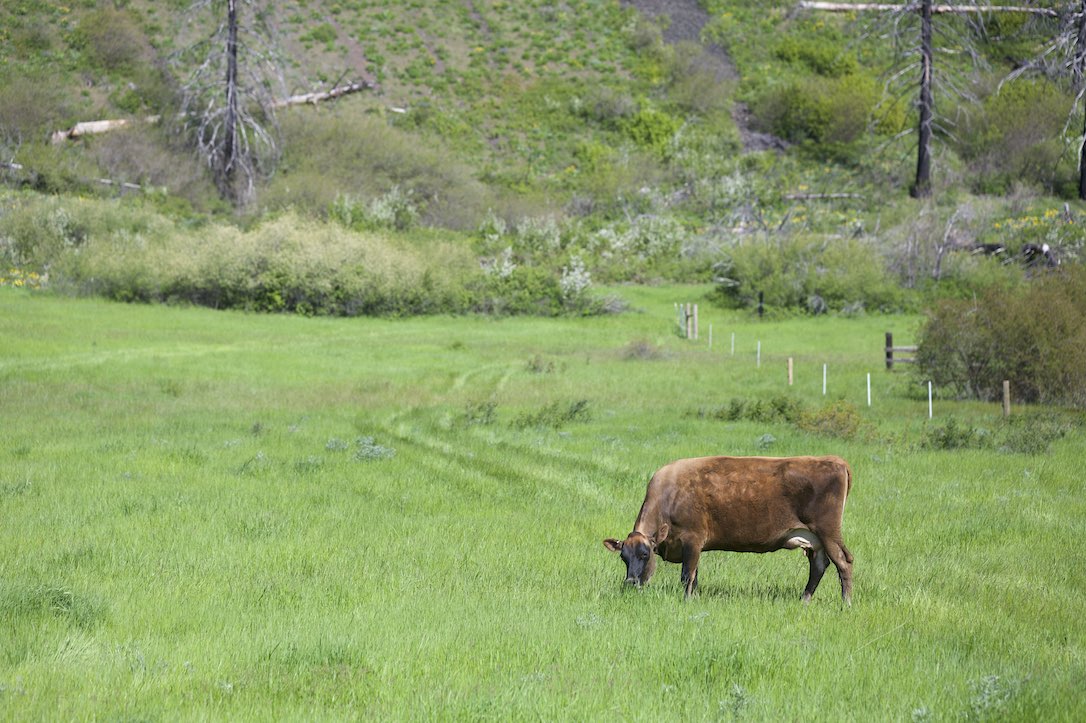
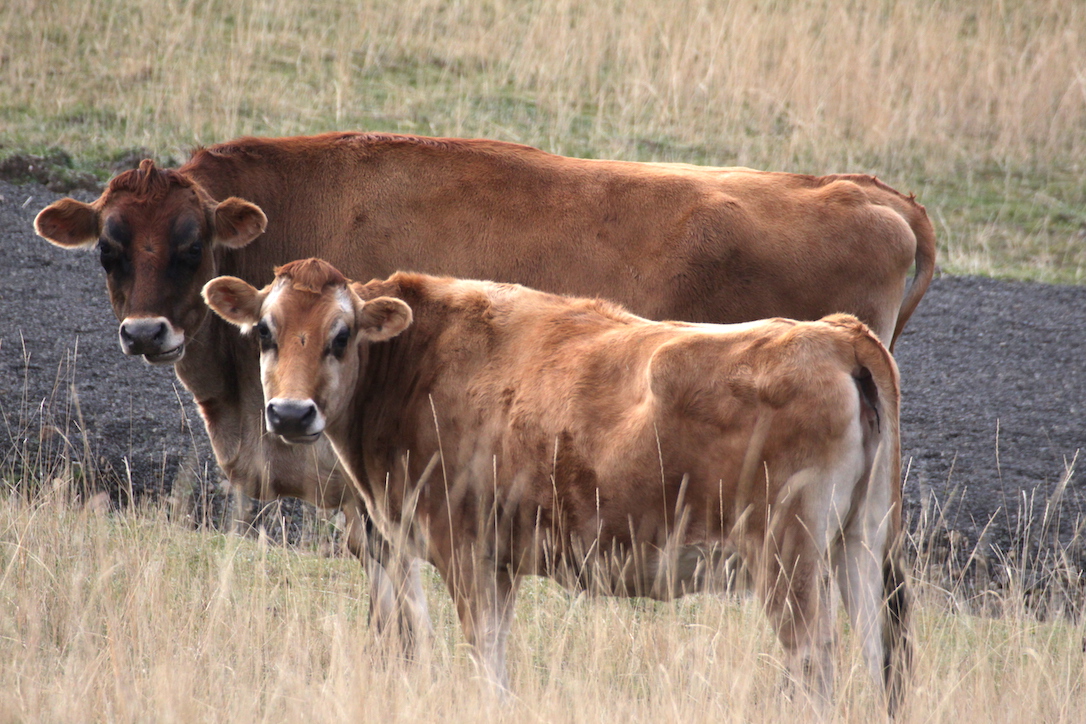
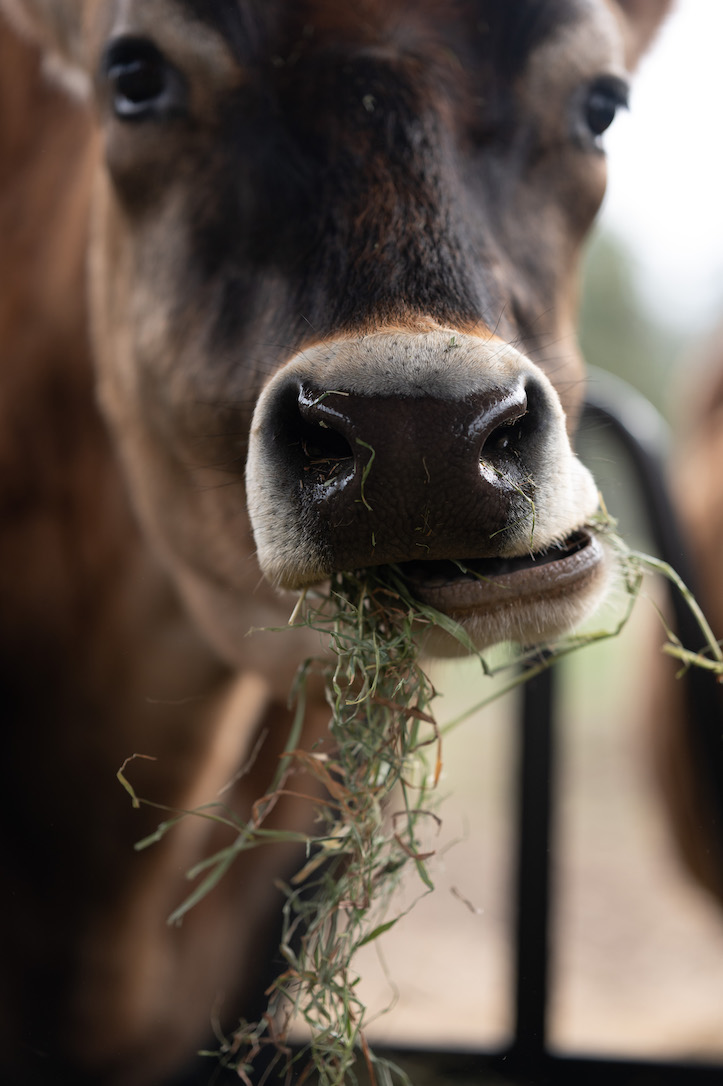
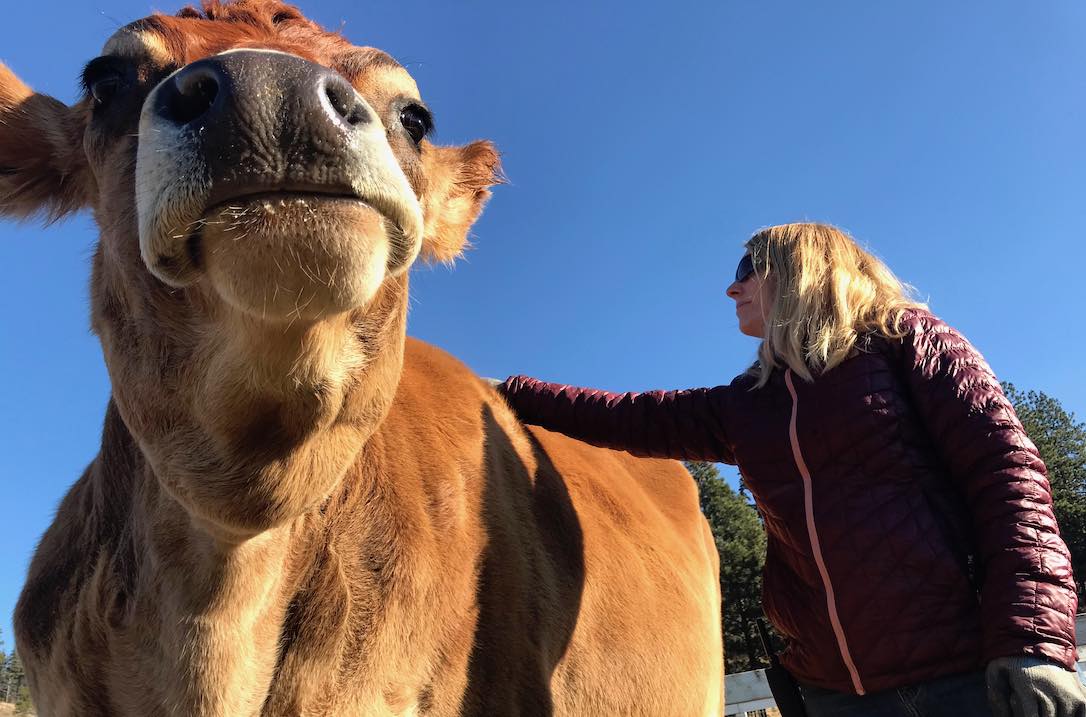
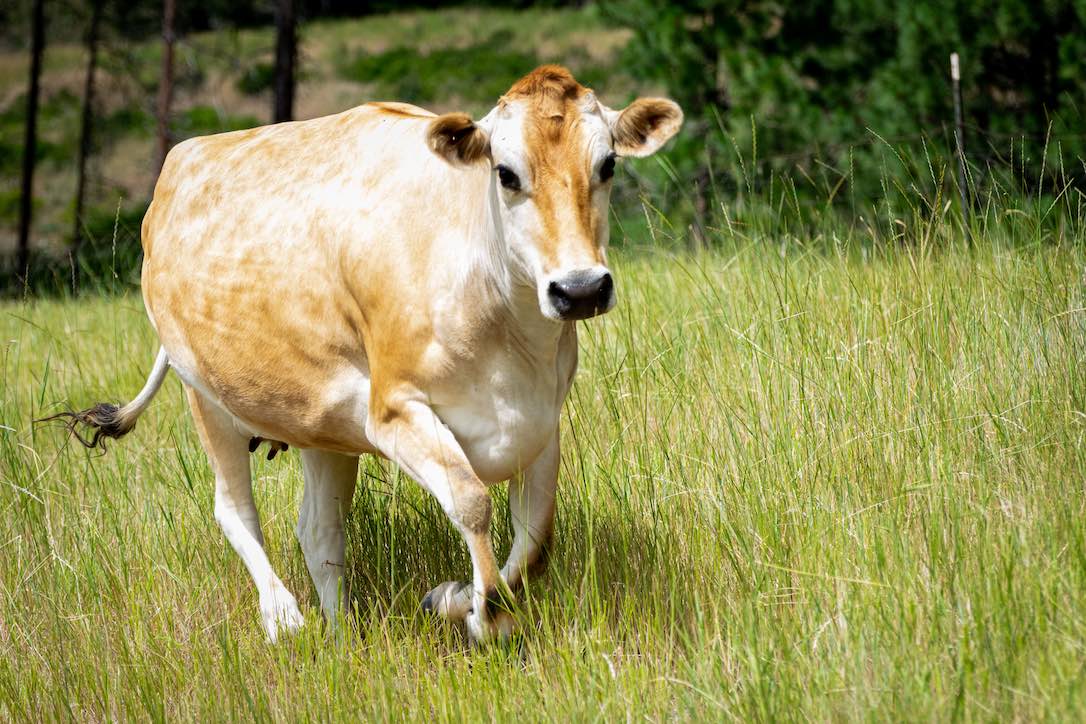
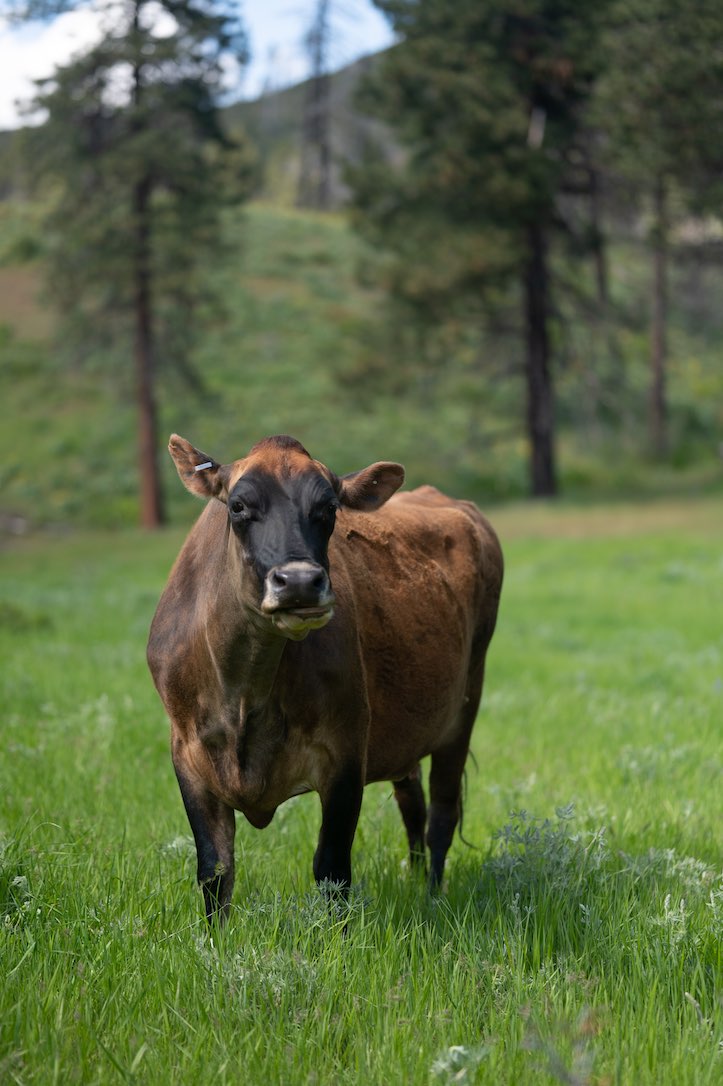
As many of you already know, the pastures that surround the sanctuary’s Chimp House provide a home to four rescued cattle: Betsy, Honey, Meredith and Nutmeg. This little herd helps the sanctuary by consuming vegetation that could potentially fuel wildfires. In turn, we give them food, water, shelter, enrichment, veterinary care, and everything else they need to thrive. Caring for these creatures is often quite different from the work we do with chimpanzees, so I’m taking a moment to share some interesting trivia about the sanctuary’s lovable, living lawnmowers.

  • Domestic cattle (Bos taurus) are often called bovines because they belong to the subfamily Bovinae. This group also includes bison, buffalo, yaks, and other species of wild cattle. Sheep, goats and antelope are their closest living relatives and belong in the same family: Bovidae.

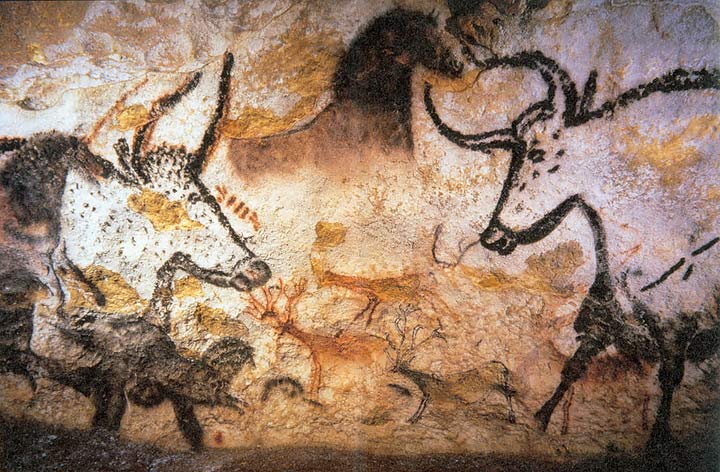
  • The ancestor of all living cattle is the extinct aurochs (B. primigenius). Aurochs once ranged across Eurasia and North Africa and were commonly depicted in prehistoric art (e.g. the Lascaux cave painting shown below). People across the Roman Empire commonly used them in bullfights, but they likely went extinct due to deforestation, over-hunting, and competition with domestic cattle. The last known aurochs cow lived in Poland and died in 1627.

  • Jersey cattle are specifically adapted to life on Jersey, one of the United Kingdom’s Channel Islands. The island’s human inhabitants carefully bred these cattle to yield milk with a high percentage of butterfat, and even prohibited the importation of foreign cattle in order to maintain this quality.
  • Jerseys are not the most popular dairy breed in North America. That title belongs to the black-and-white Holstein-Friesian, which are larger and produce more milk per cow.

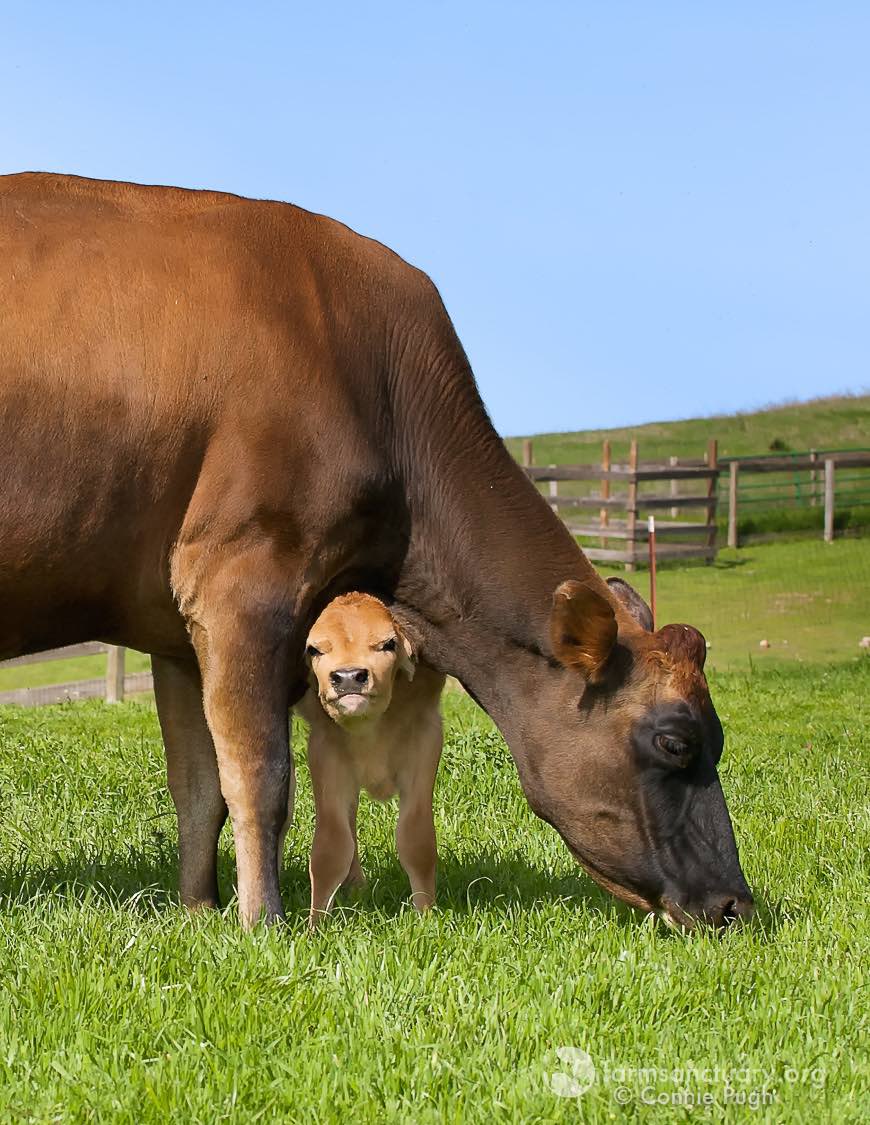
  • Newborn cattle are called calves (e.g. newborn Nutmeg with mother Betsy, shown in the Farm Sanctuary photograph above). Immature females are called heifers and are only considered cows after birthing their first calf. Calves gestate for nine months and typically remain dependent on their mother’s milk for ten months before naturally weaning.
  • Ranchers often castrate male calves so they don’t develop into adult bulls, which are difficult to house and manage. Young castrated males are called steers until they eventually mature into fully-grown oxen. Historically, humans utilized oxen as draught animals for pulling plows and carts. Even though they are a relatively small cattle breed (females are usually around 800 pounds), Jersey bulls and oxen can grow up to 1,800 pounds.

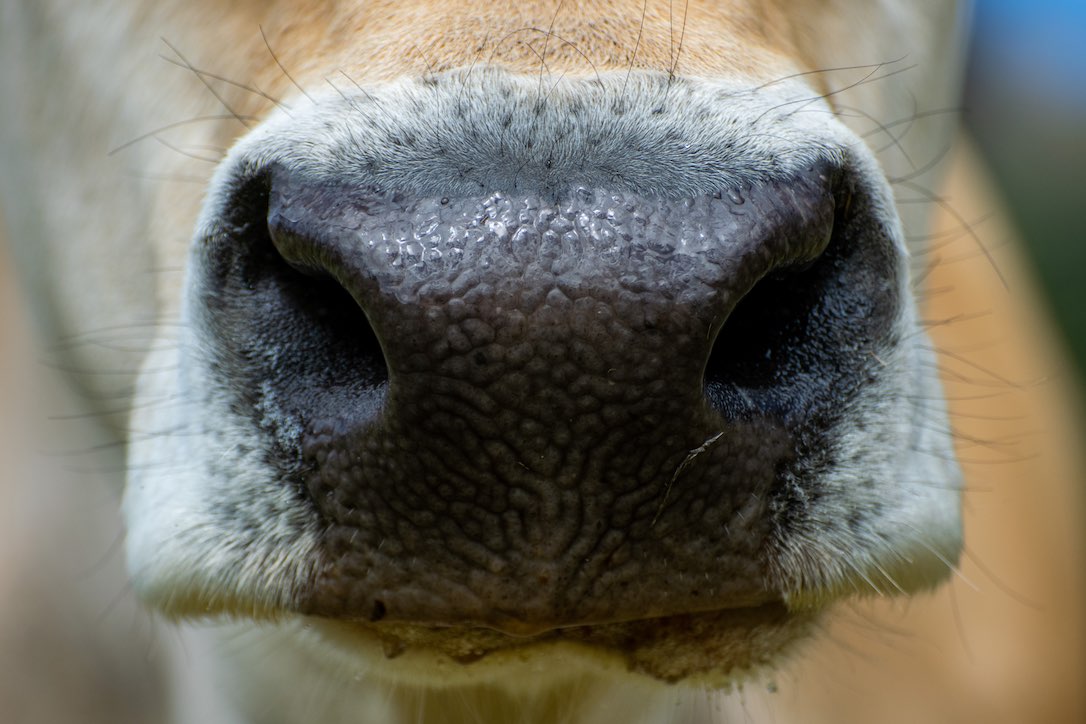
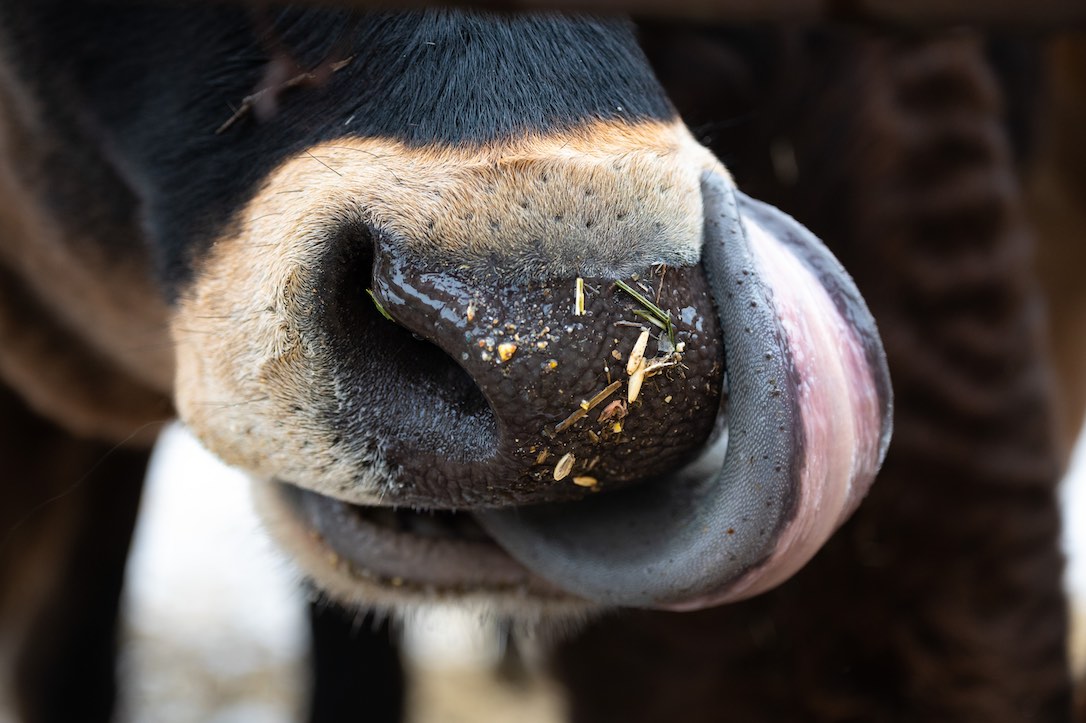
  • The glands on cattle noses make distinct patterns that are as unique as human fingerprints.

  • Cattle horns and hooves are bony structures encased in sheaths of keratin, the same protein that makes up human nails and hair. Hooves generally grow ⅕ -¼ of an inch each month. The hooves of domestic cattle must be trimmed periodically to prevent a variety of health issues (below).

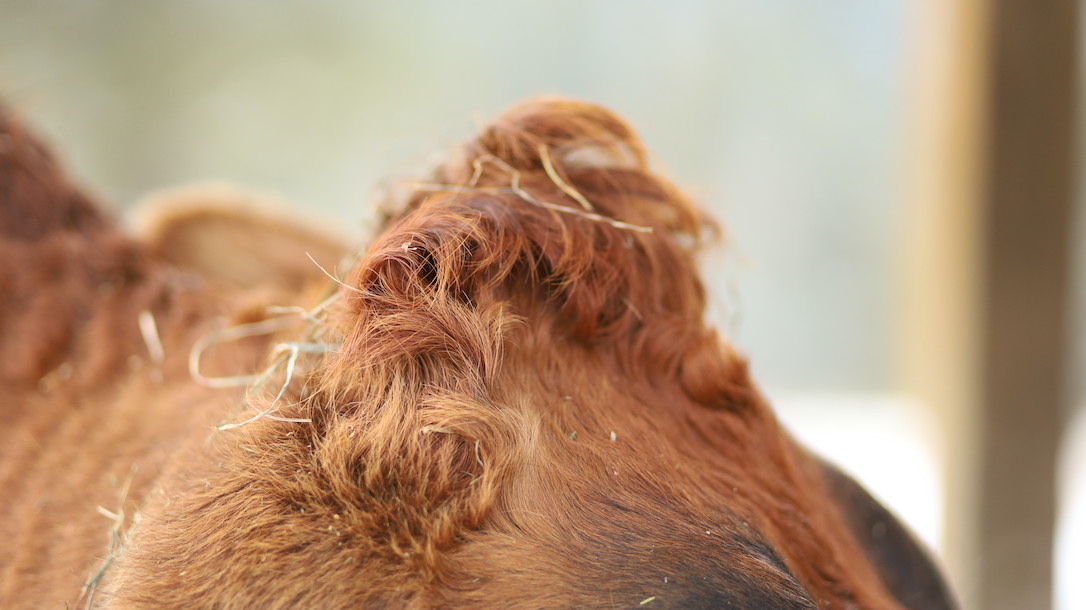
  • The common safety practice of horn removal is called polling. The remaining knob is called a poll and any subsequent horn growths are called scurs.

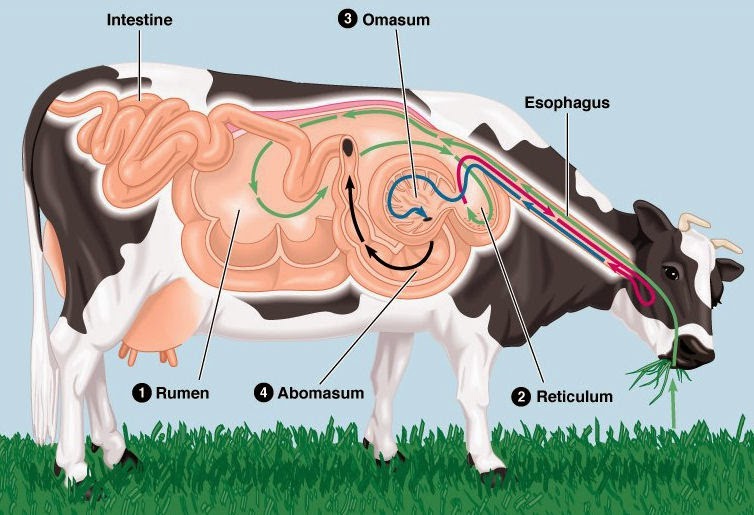
  • Cattle and other ruminants have a complex, multi-chambered stomach that specializes in breaking down fibrous plant matter. They do not have four stomachs. The chambers are called the rumen, reticulum, omasum and abomasum (diagram below)  . The rumen alone can hold up to 25 gallons of plant material. Each chamber contains a unique microbiome that is critical for proper digestion and overall health.

  • Cattle regurgitate chunks of semi-digested food called cud. They chew these again before re-ingesting them. This process is called “rumination” or “chewing the cud.” They chew in a conspicuous circular motion, grinding the forage against a leathery dental pad that they develop in place of upper incisors

  • Bovines are quite intelligent and have excellent long-term memories. Experiments show that cattle can discern between individual humans and learn to avoid humans who treat them roughly and trust humans who treat them kindly.

  • Cattle herds are complex societies that regularly split up and reunite (fission-fusion behavior). When not managed by humans, cattle form matriarchal hierarchies where bulls only associate for competition and breeding.

  • Domestic cattle can run up to 17 miles per hour (for short distances).

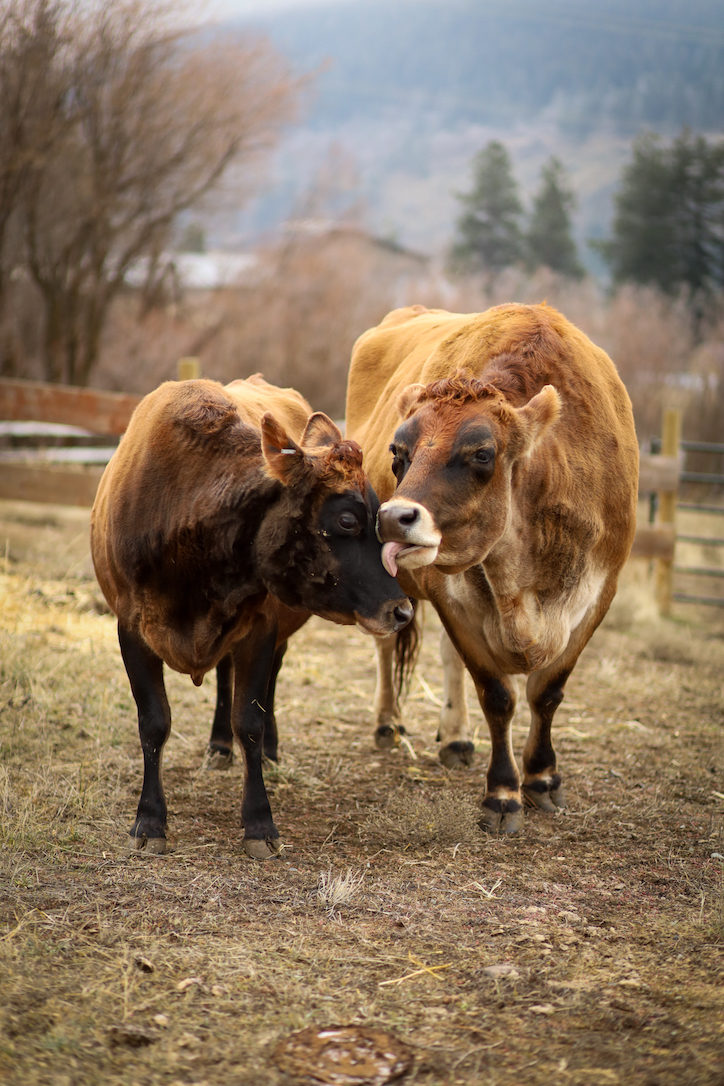
  • Cattle develop friendships with familiar individuals and reinforce their social bonds through grooming. Their preferred method of grooming is to lick each other with their raspy prehensile tongues (which also help them to grab food).

  • The USDA estimates the current global population of domestic cattle to be over one billion head (individuals), up 13.2 million from the previous year. These populations contribute significantly to anthropogenic climate change. The methane released from cattle ranches accounts for around 14% of global emissions.

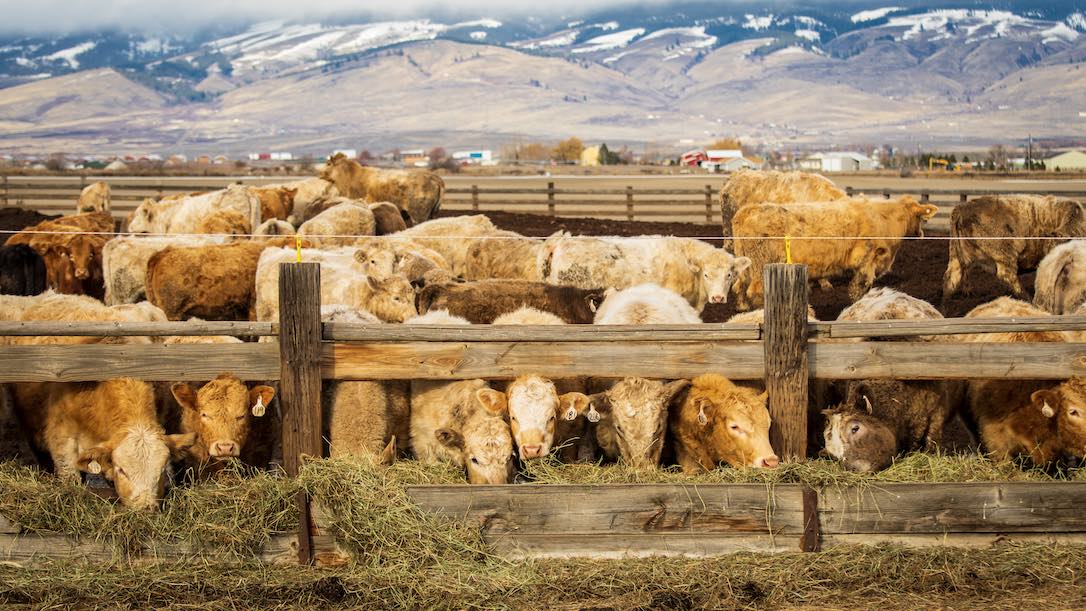
  • Red meat consumption peaked in 1976 and has fallen dramatically since, but the average American still consumes around 57.2 pounds of beef each year. Ranching remains a key industry in the communities near the sanctuary (below). Recently, the availability of plant-based meat substitutes, the rising costs of beef production, and the recent drought in the American West may all be contributing to this decline.

Now you’re all prepared to absolutely slay a Jeopardy category on the subject of bovines. You’re welcome.

Don’t forget to check out the HOOT! page to get your bovine collectibles and contribute to their sanctuary home!

Filed Under: Cattle, Farmed Animals, Fundraising Tagged With: animal rescue, animal rights, animal sanctuary, Animal Welfare, chimp, chimpanzee, chimpanzee sanctuary, Chimpanzee Sanctuary Northwest, cows, farm animals, jersey cattle, Sanctuary

The end of an eventful weekend!

September 11, 2022 by Jenna

We have had so much to celebrate this weekend!

Yesterday, Annie turned 48 years old AND our awesome caregiver, Kelsi, got married!

The chimp house has been full of play sessions, laughter, special treats, and relaxation. Check out today’s video to catch moments from our eventful weekend!

*Bonus* photos I have been saving from my phone:

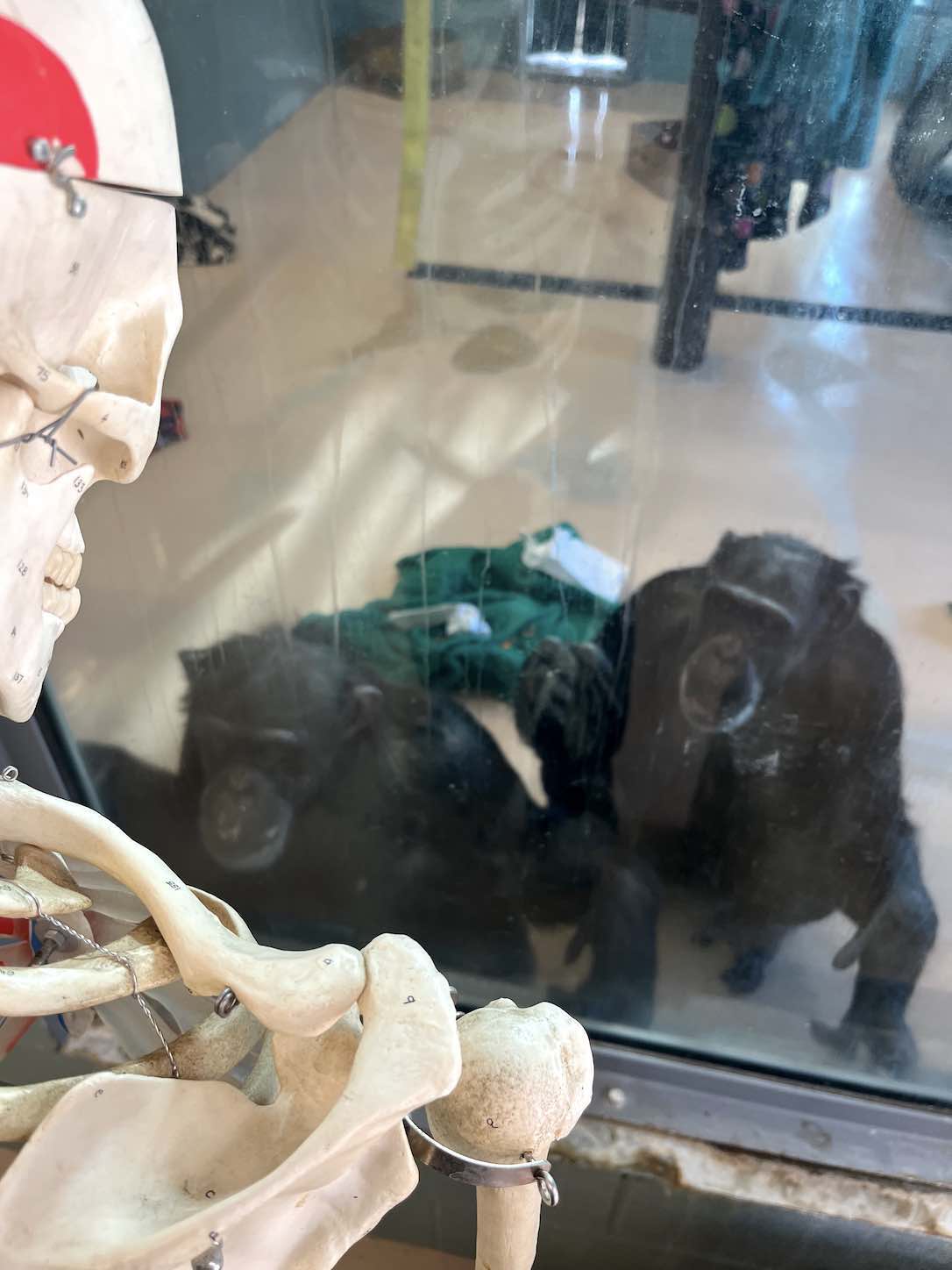
Dora (L) and Honey B (R) meet the skeleton for the first time:

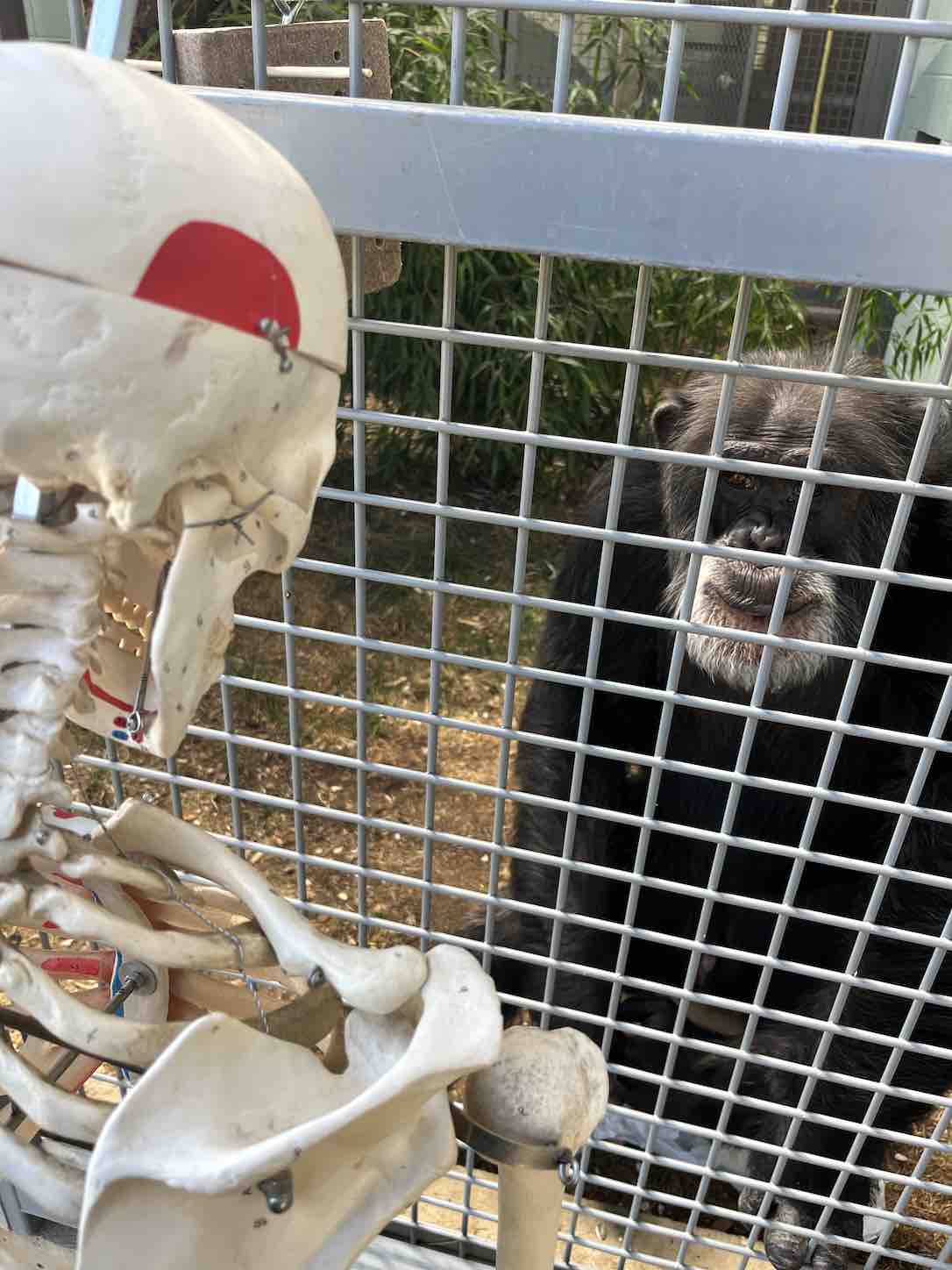
Gordo meeting the skeleton with a mouthful of water:

Foxie:

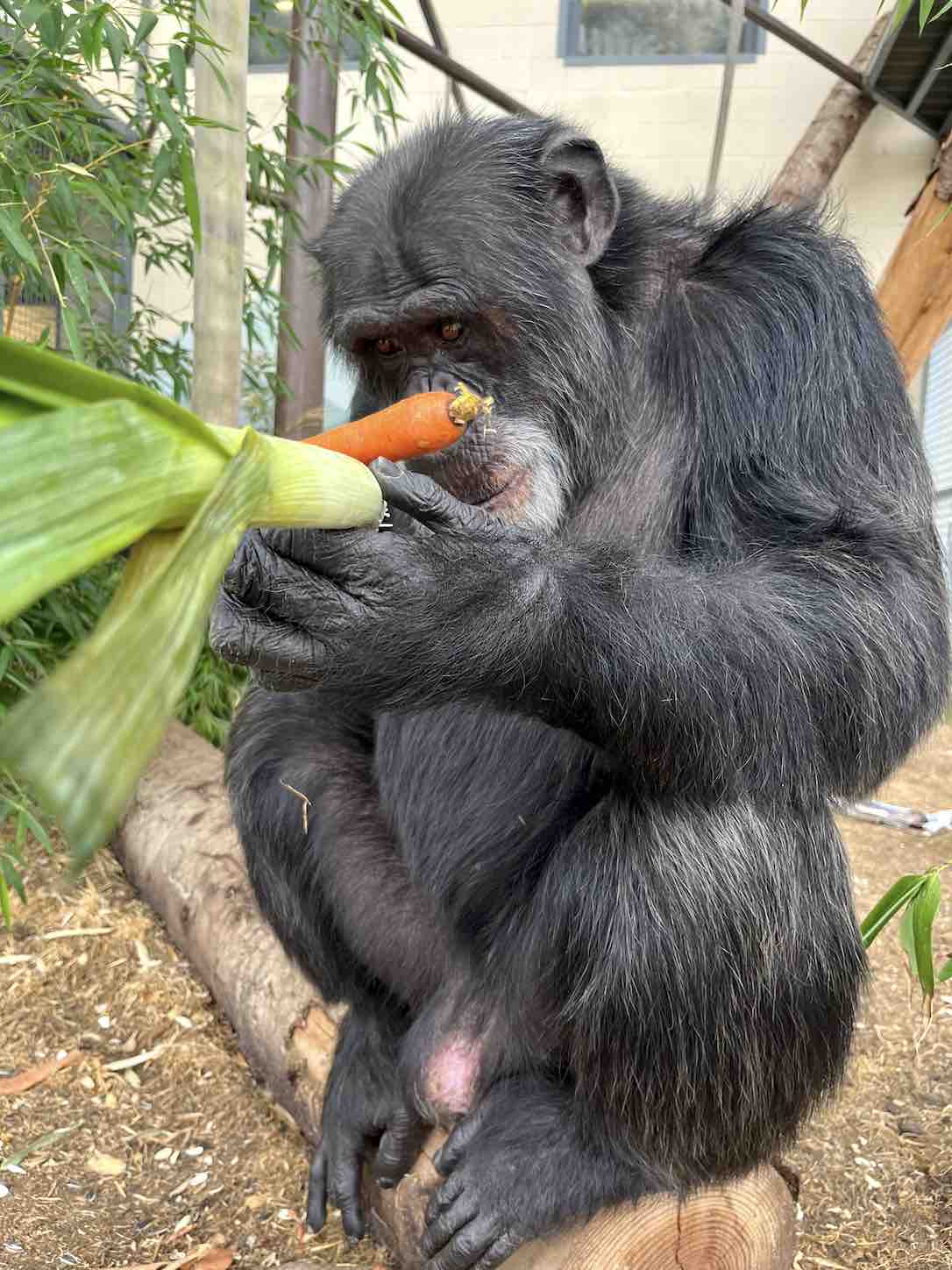
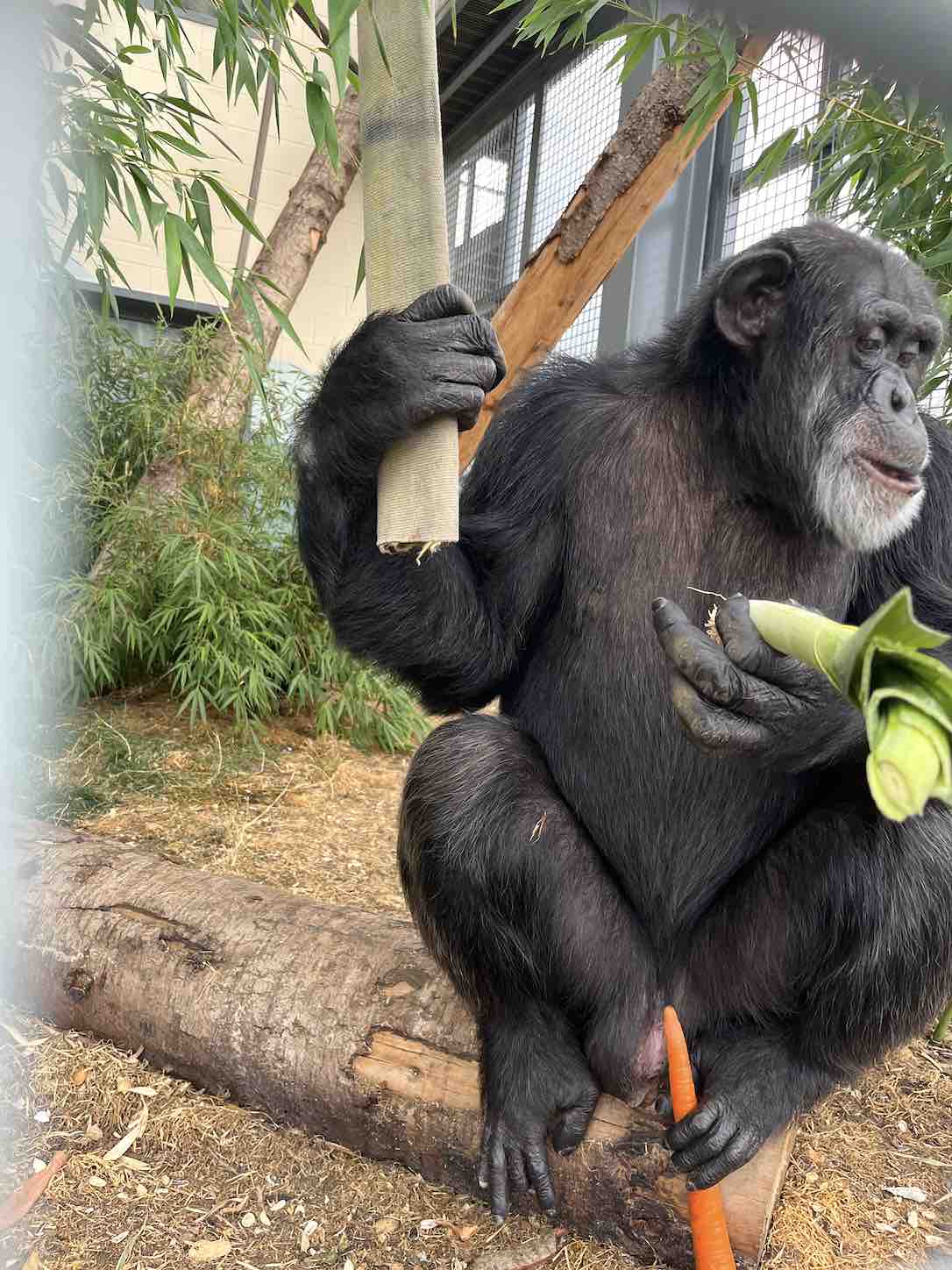
Gordo holding his carrot with his foot:
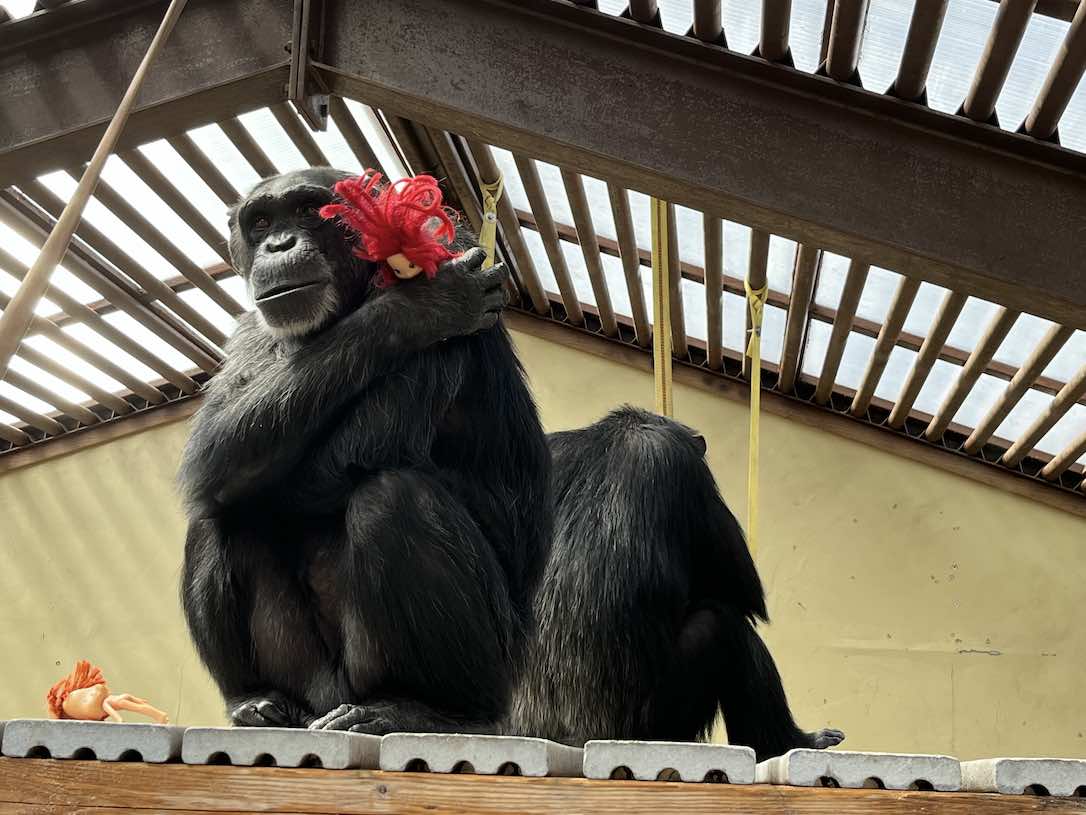
Gordo smelling said carrot:
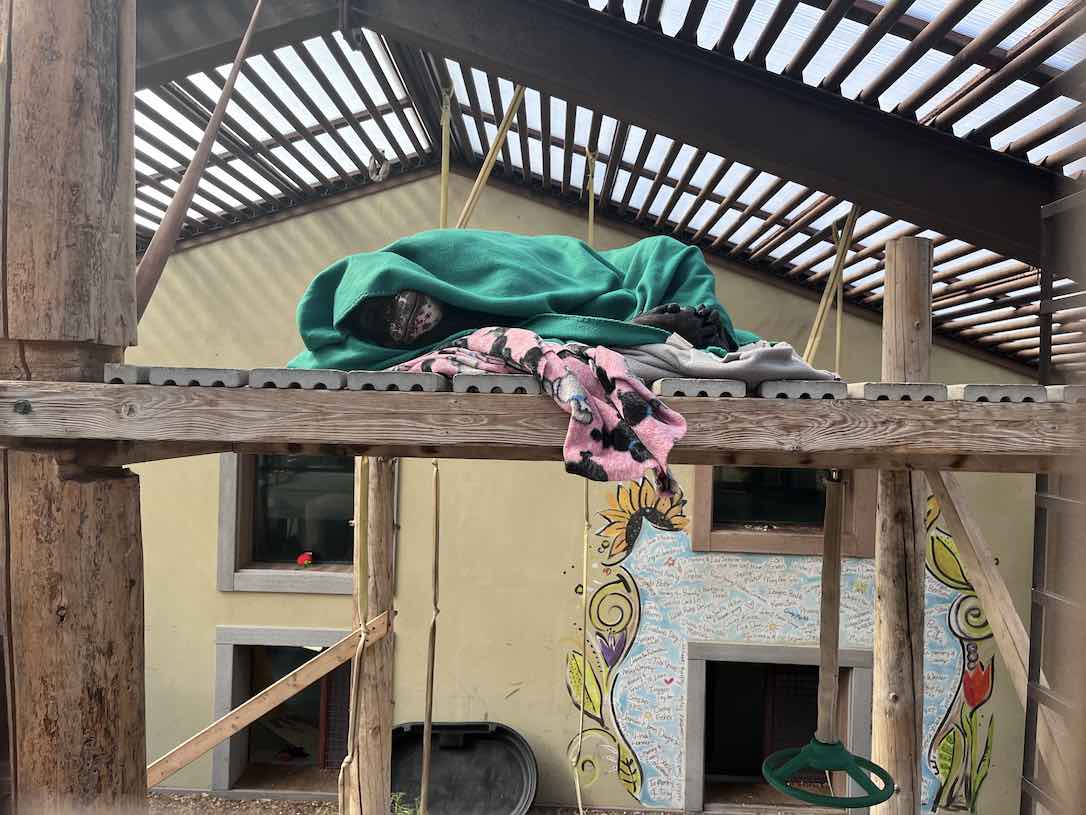
Negra’s nest:

Disclaimer: others may have contributed to the building of this nest. However, Negra claimed it!

Have a great week! 

Filed Under: Annie, Caregivers, Chimpanzee, Dora, Enrichment, Foxie, Gordo, Honey B, Negra, Nesting Tagged With: Animal Welfare, chimp sanctuary, chimpanzee, chimpanzee sanctuary, Chimpanzee Sanctuary Northwest

  • « Go to Previous Page
  • Page 1
  • Interim pages omitted …
  • Page 42
  • Page 43
  • Page 44
  • Page 45
  • Page 46
  • Interim pages omitted …
  • Page 610
  • Go to Next Page »

Primary Sidebar

Subscribe To the Blog and Get Notified of New Posts First!

Archives

Calendar of Blog Posts

June 2026
S M T W T F S
 123456
78910111213
14151617181920
21222324252627
282930  
« May    

Categories

SUBSCRIBE TO OUR NEWSLETTER

Footer

PO Box 952
Cle Elum, WA 98922
[email protected]
509-699-0728
501c3 registered charity
EIN: 68-0552915

Official DDAF Grantee

Menu

  • The Chimpanzees
  • Blog
  • About Us
  • You can help
  • Resources
  • Contact
  • Donate

Proud Member of

Connect With Us

Search

Copyright © 2026 Chimpanzee Sanctuary Northwest. All Rights Reserved. Site by Vegan Web Design