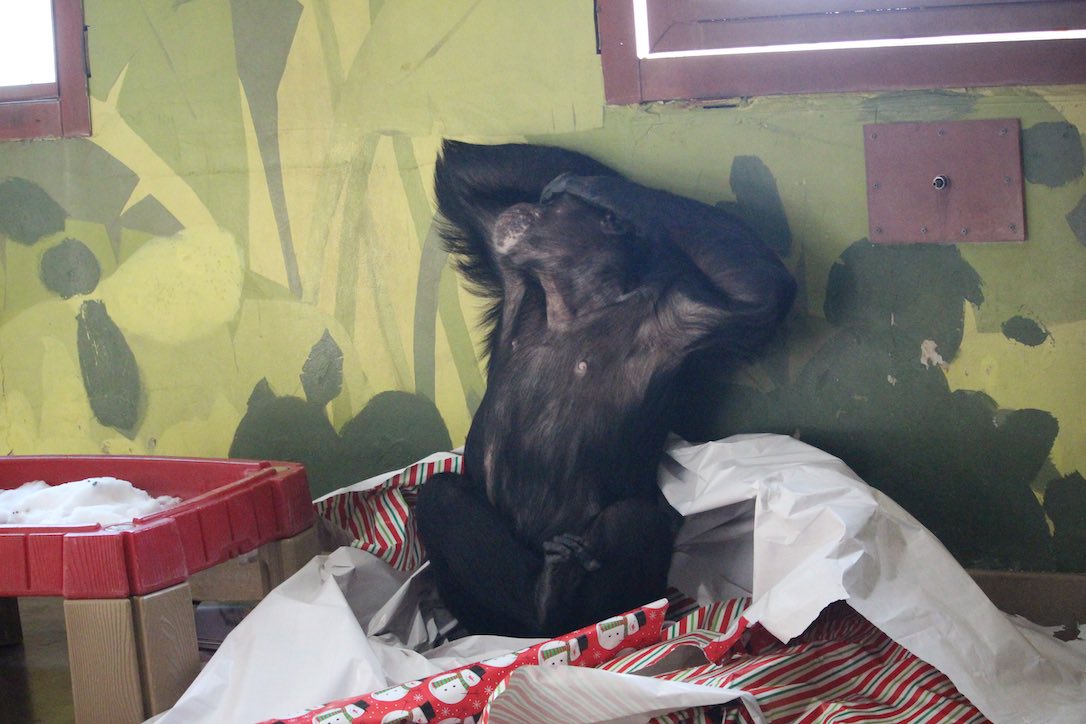
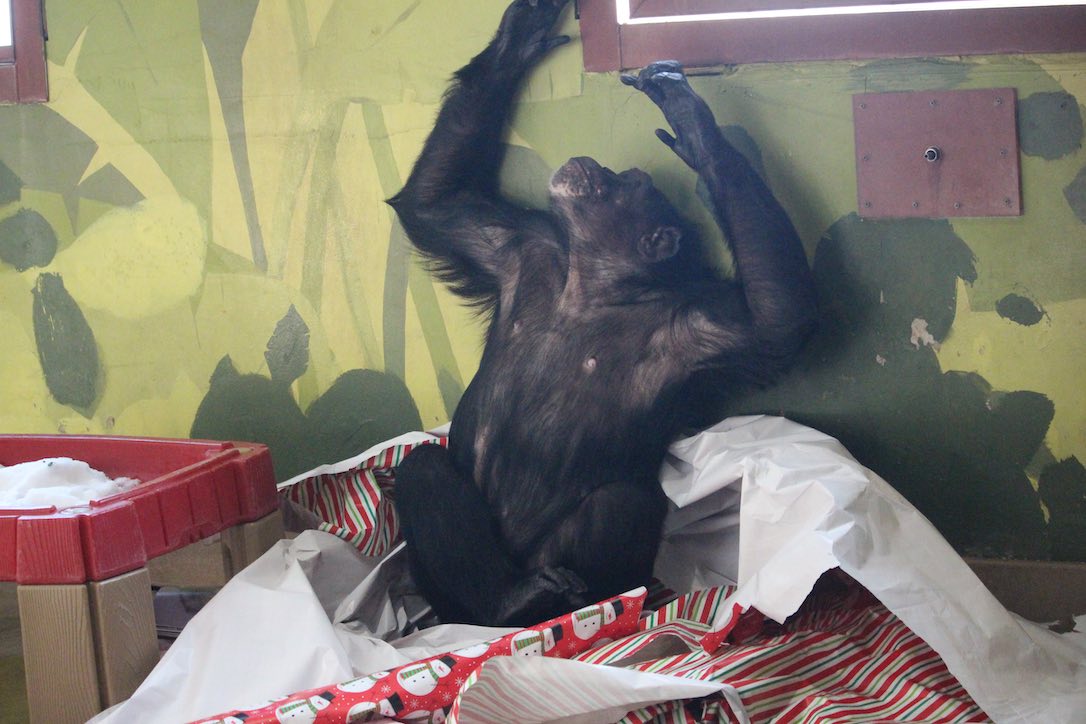
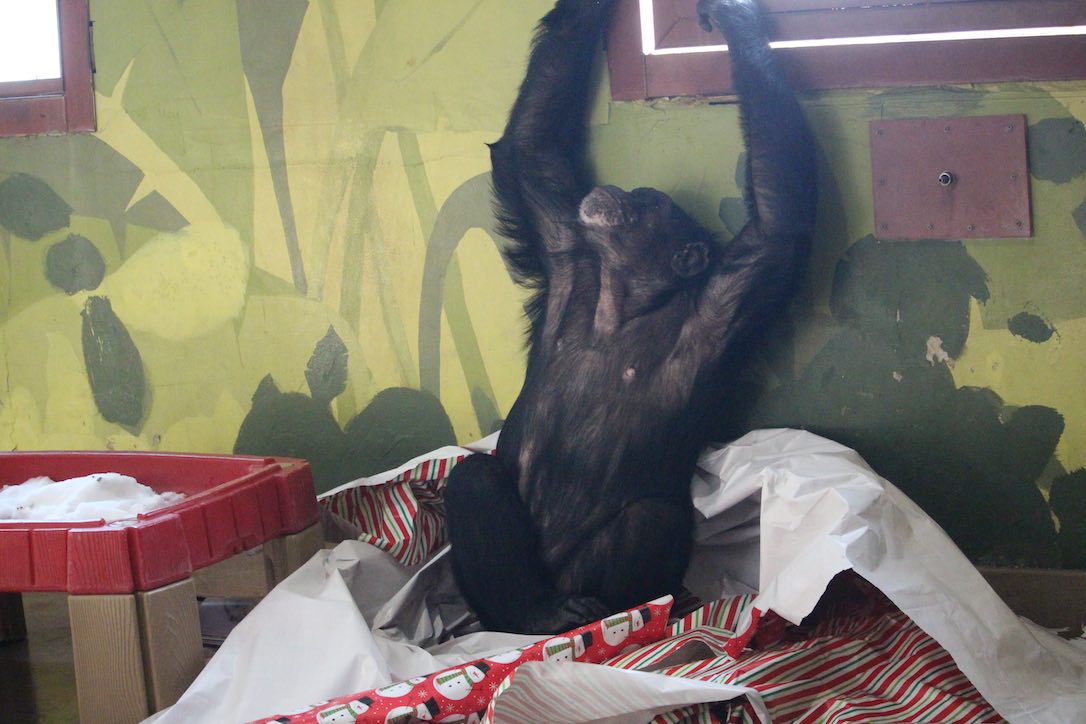
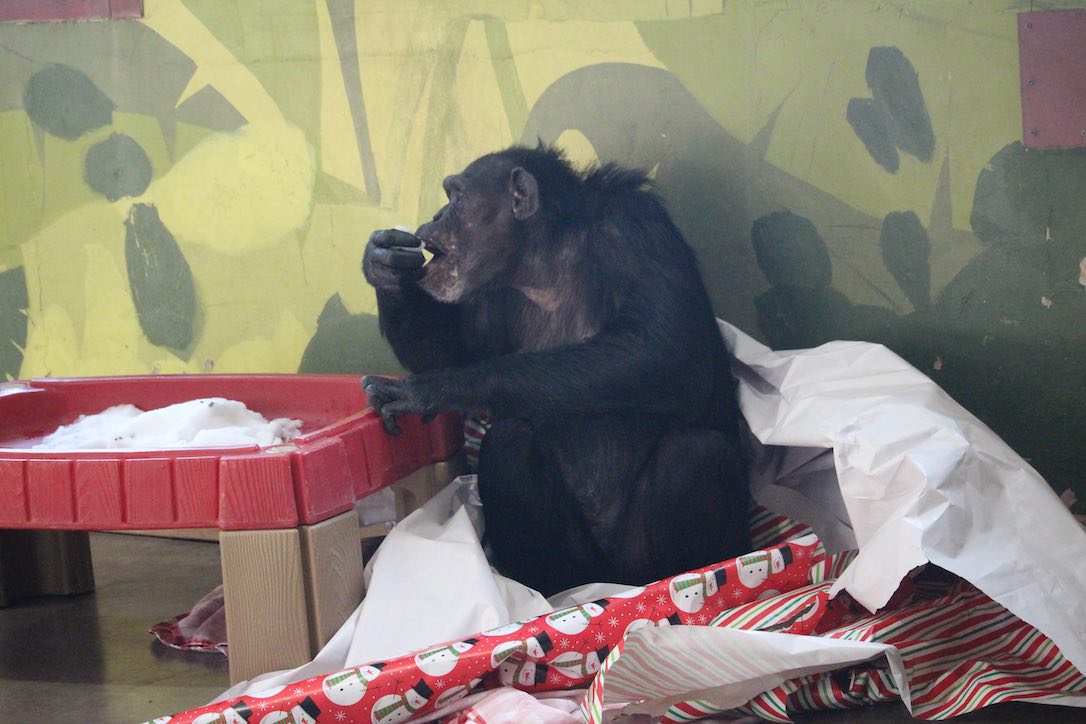
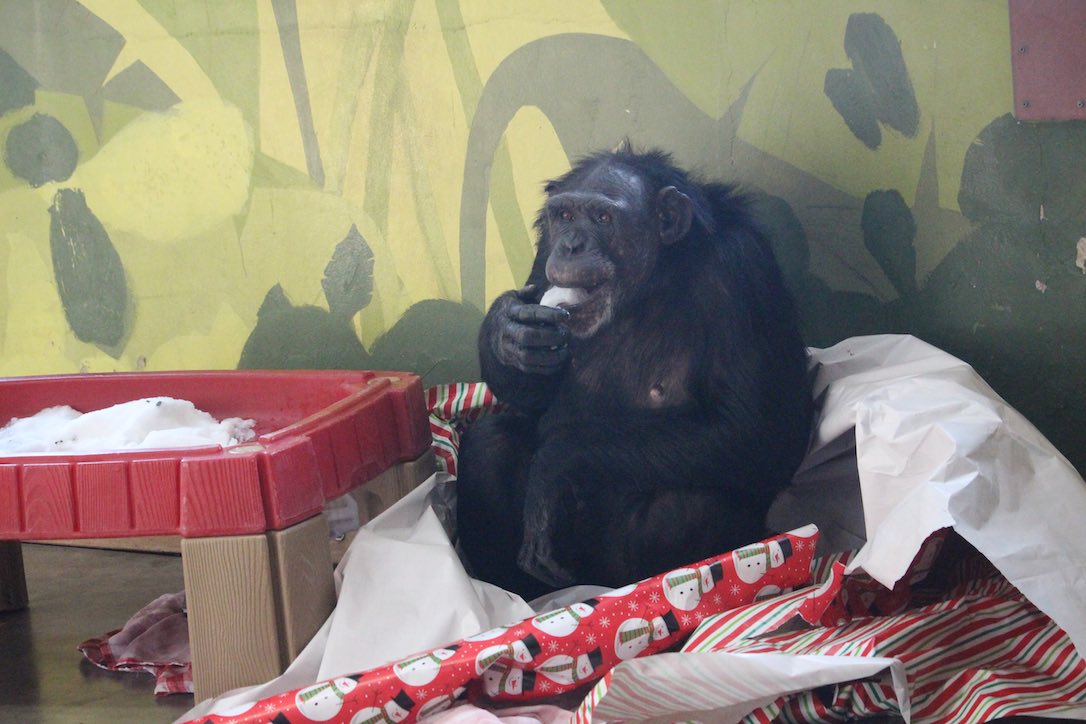
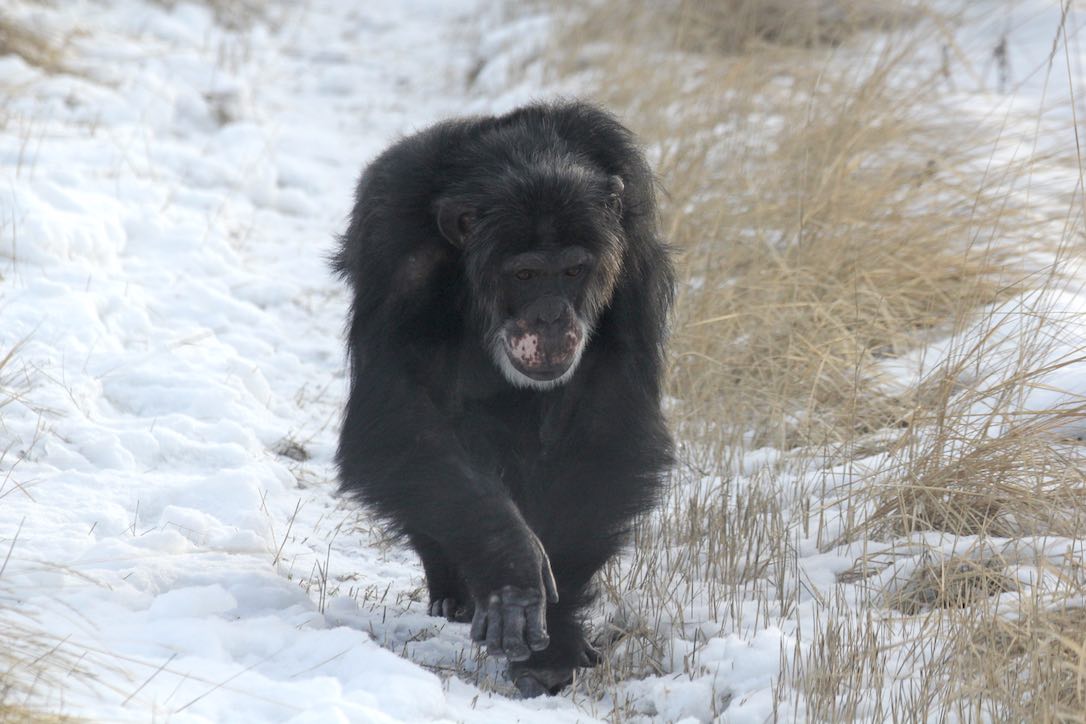
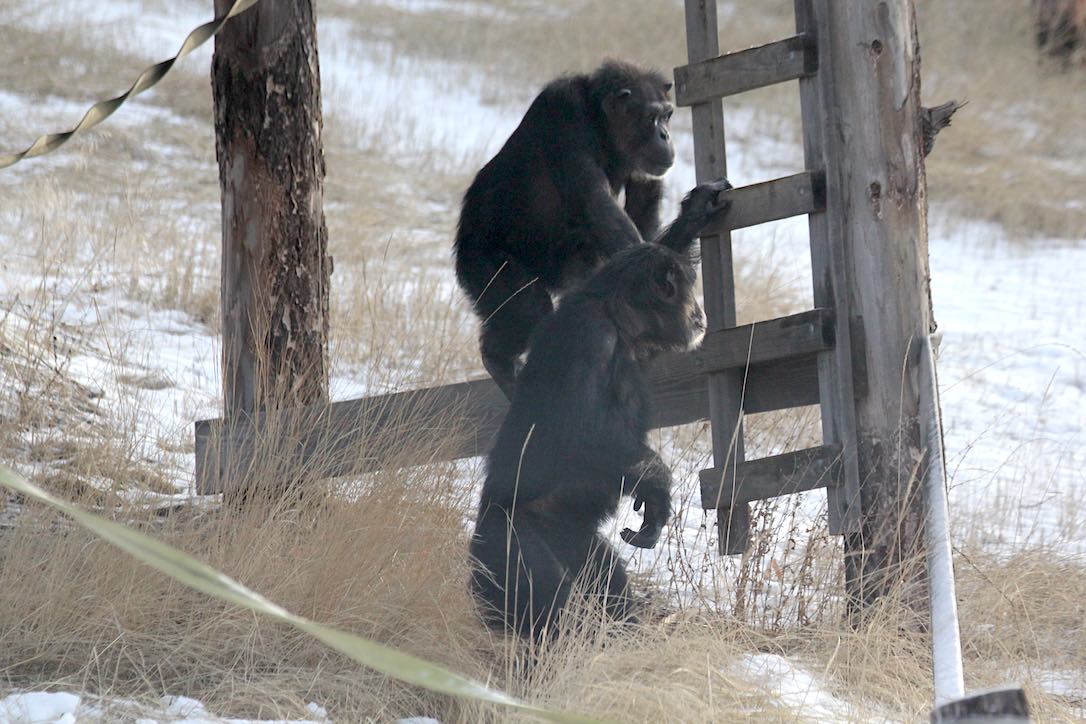
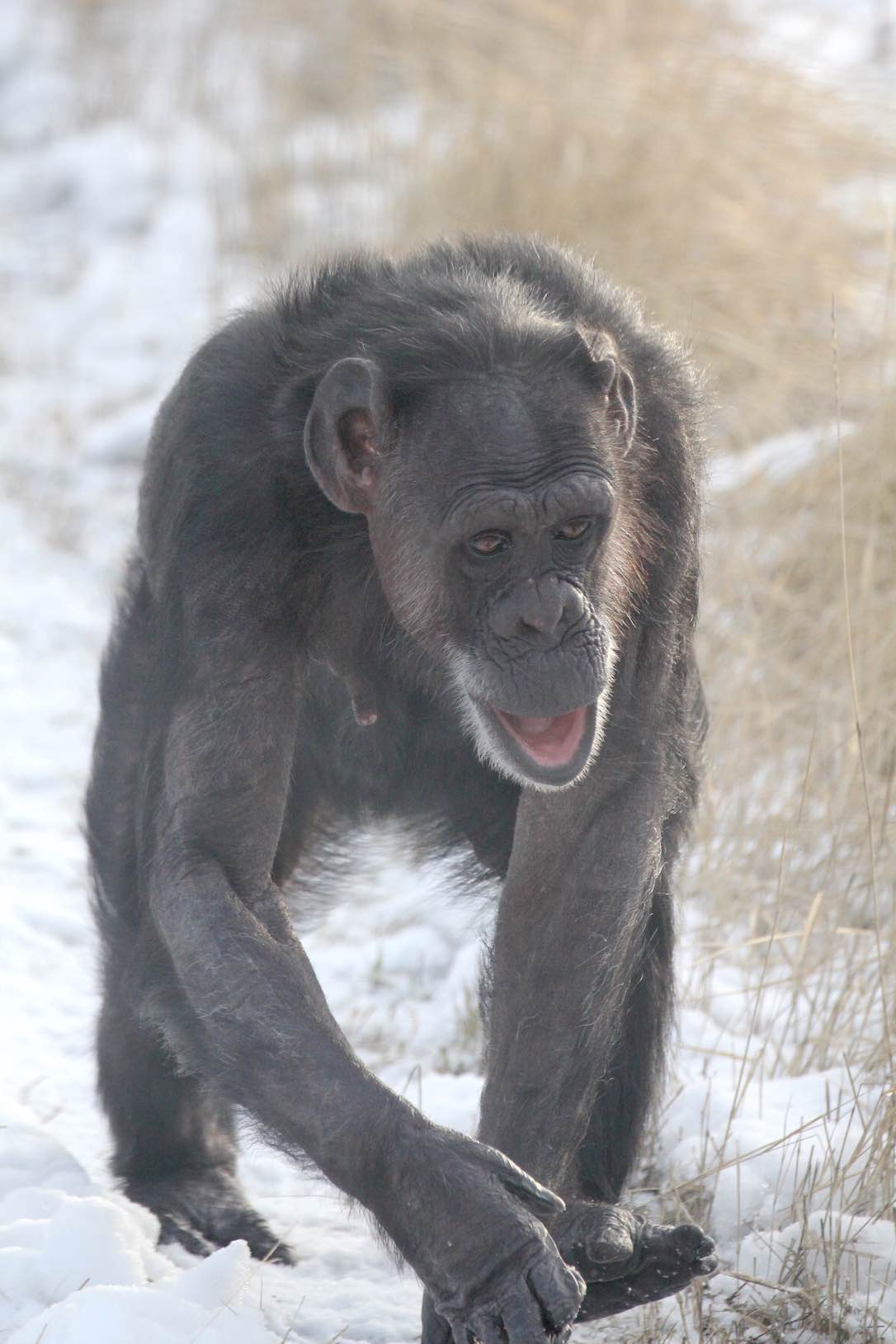
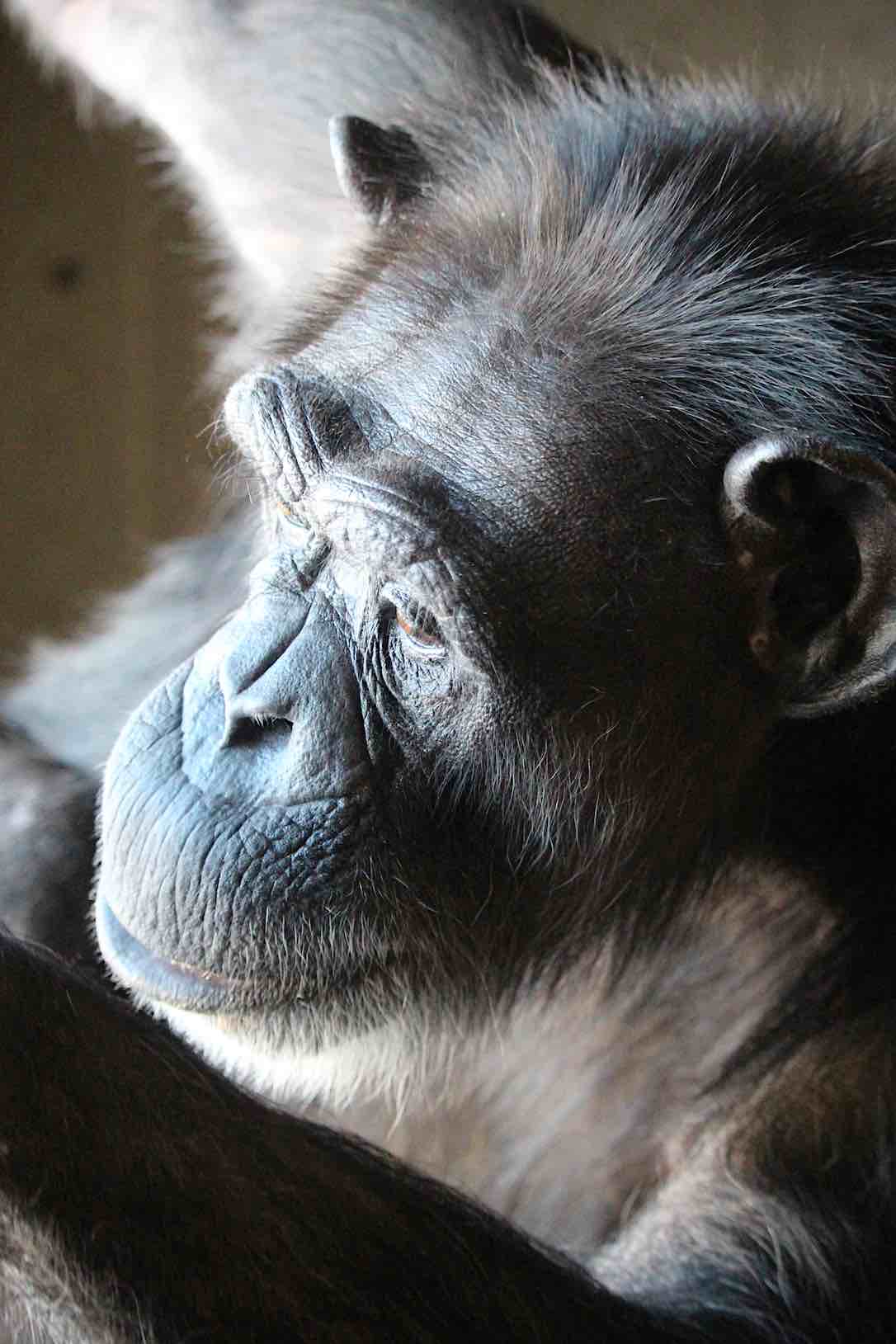
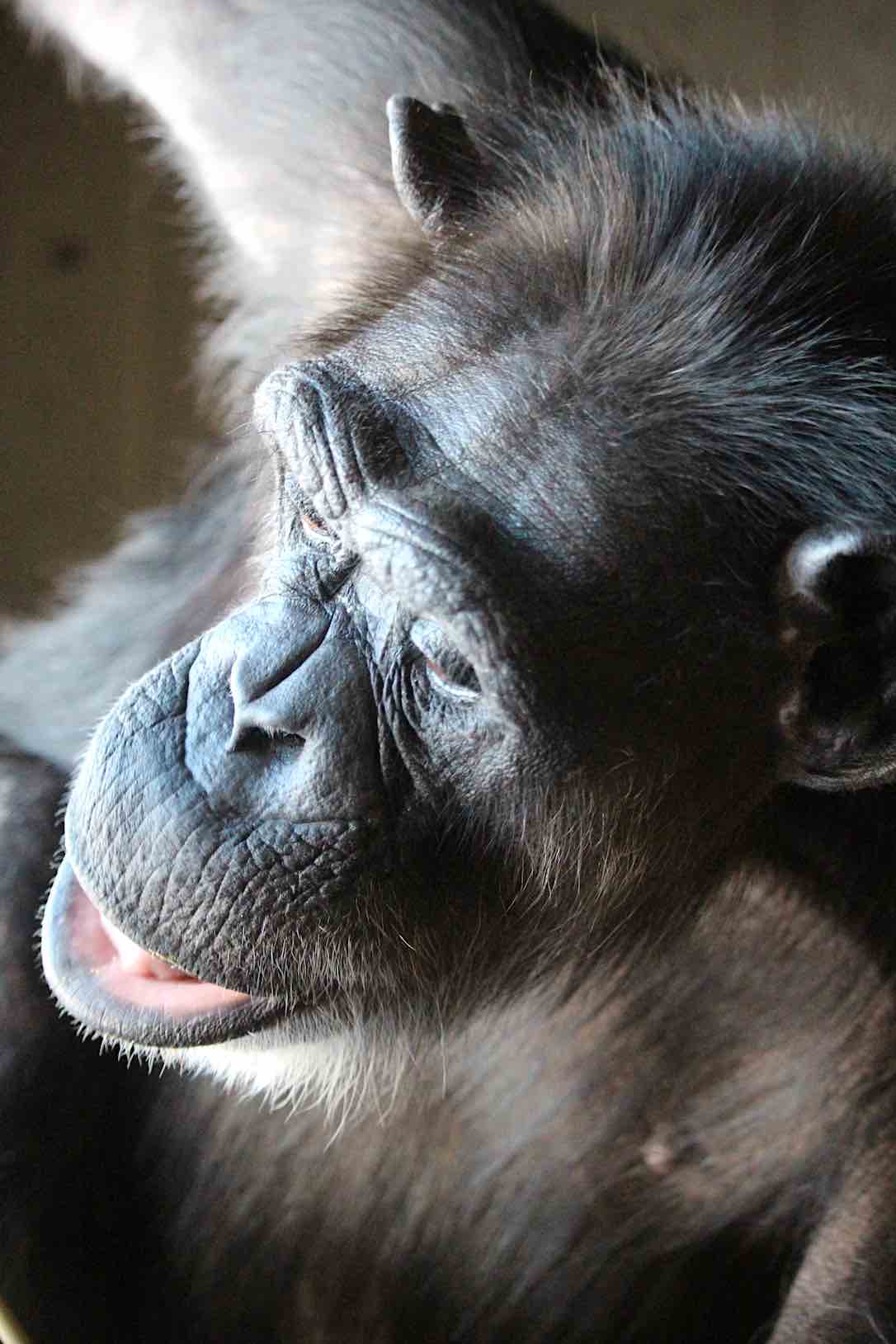
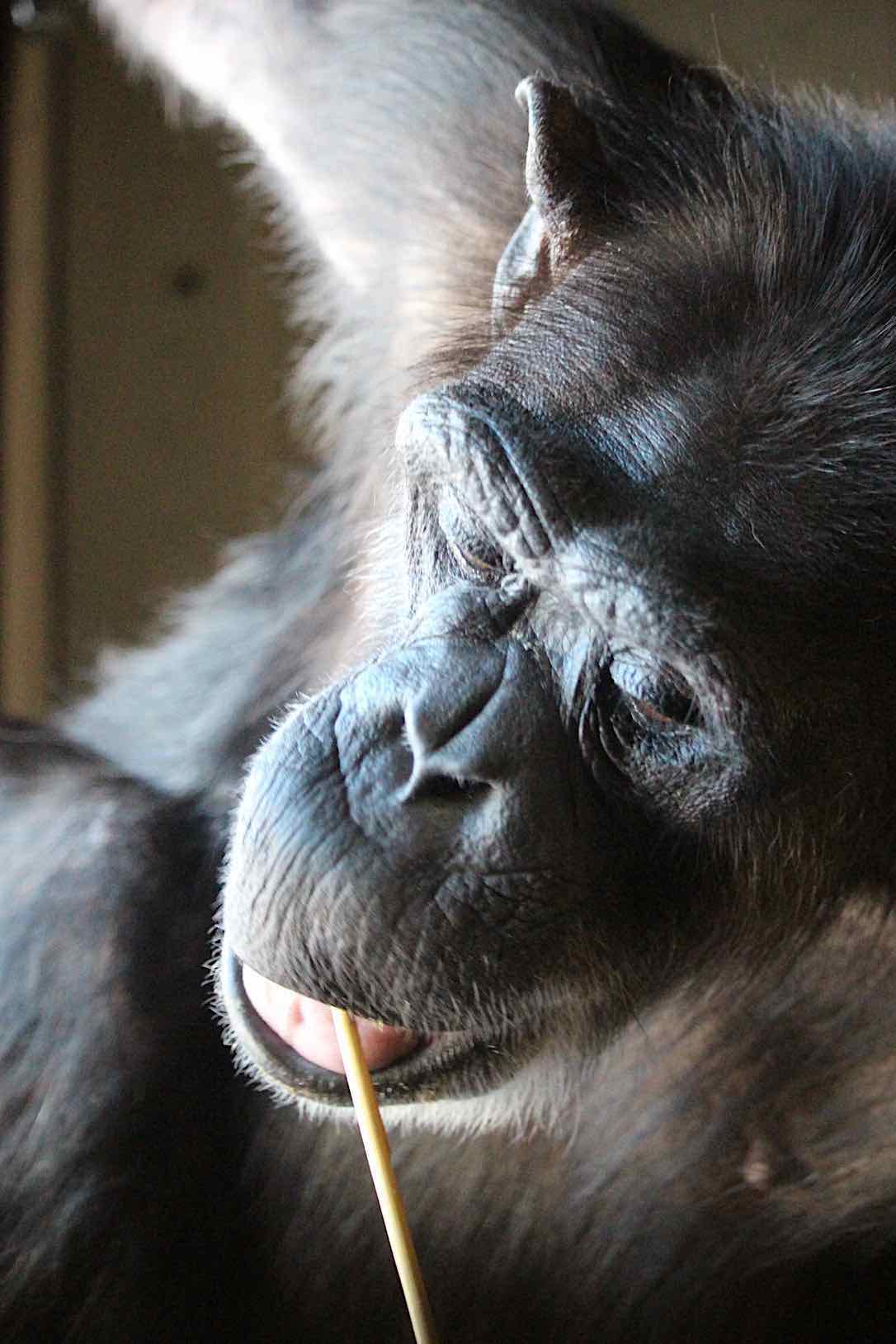
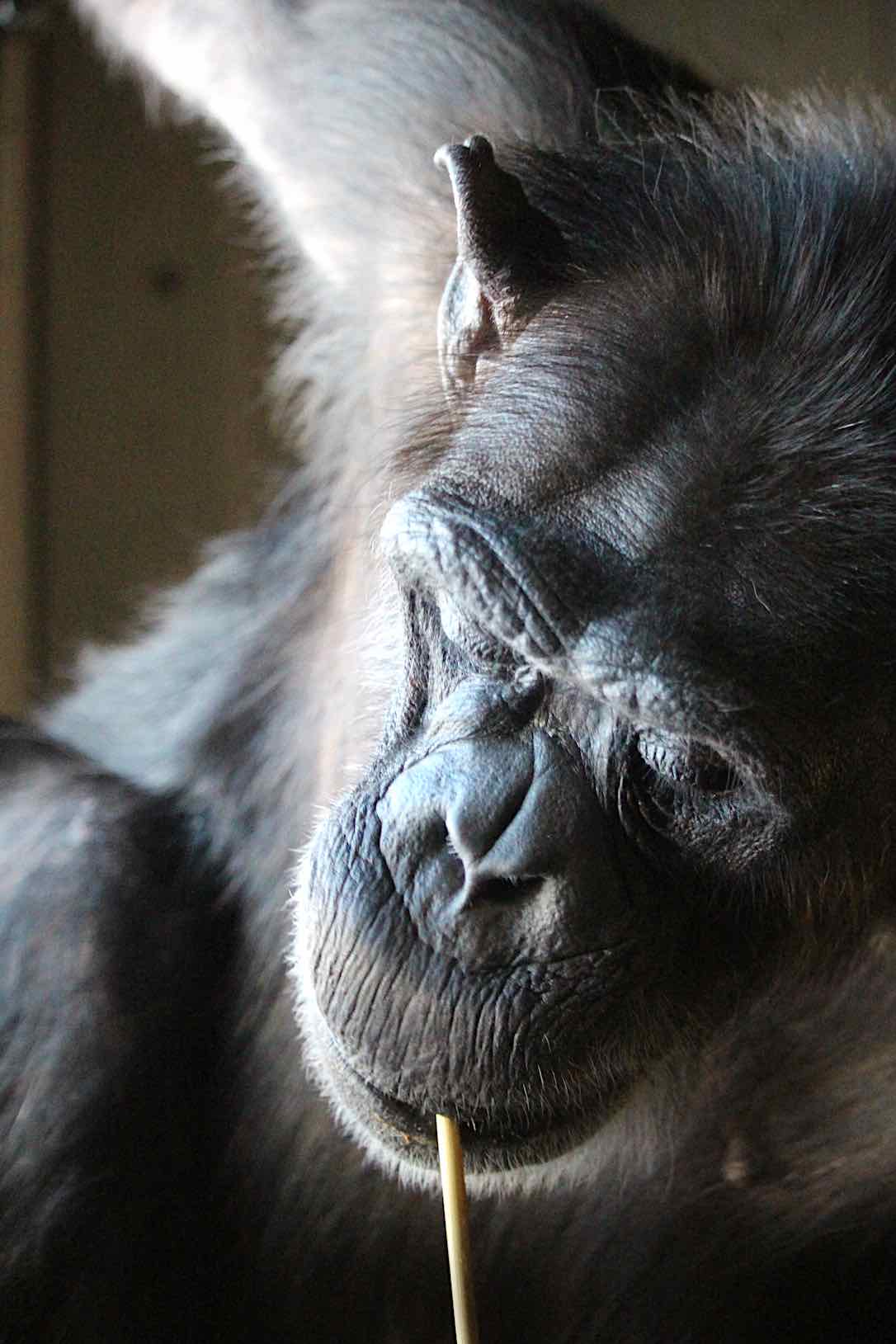
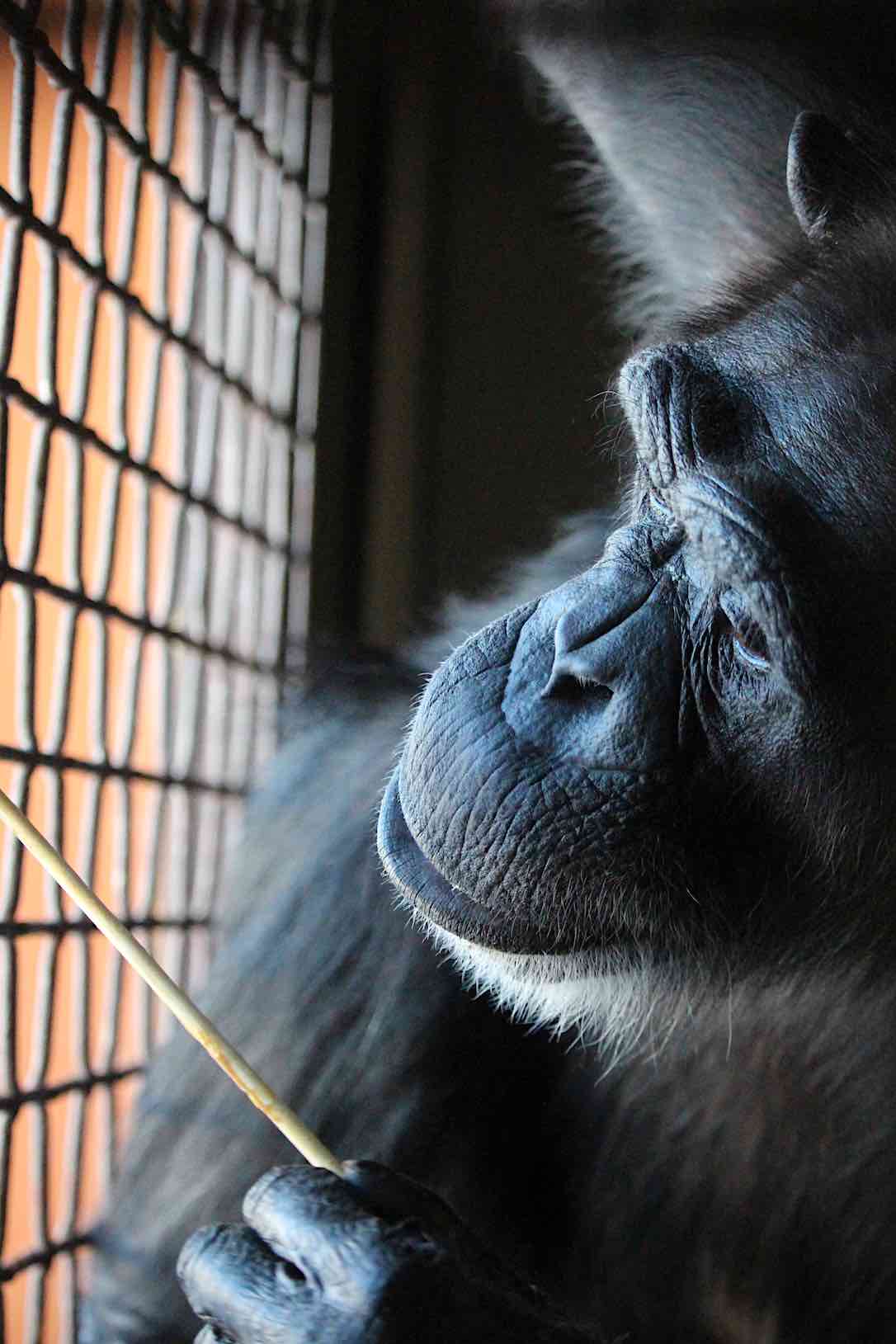
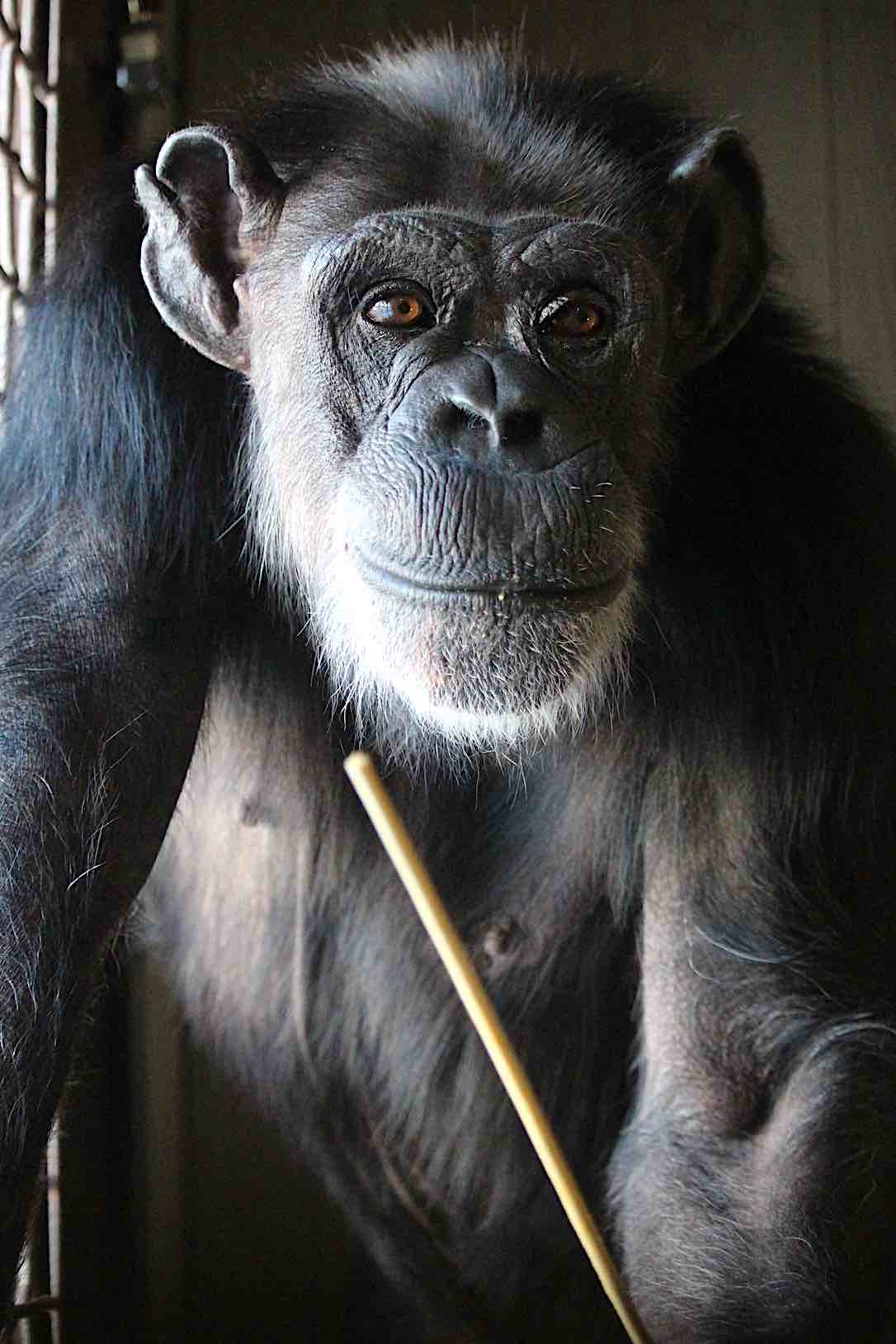
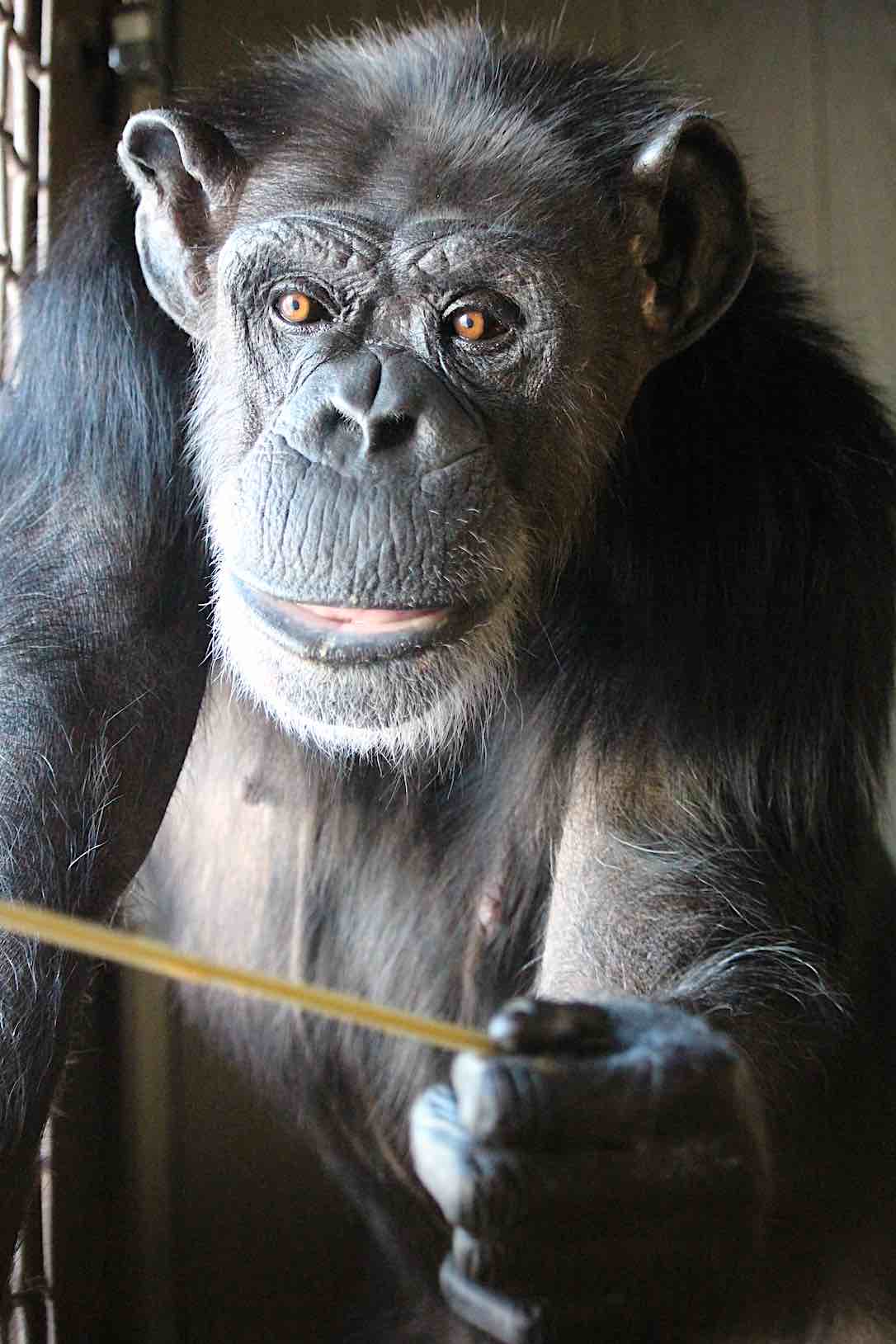
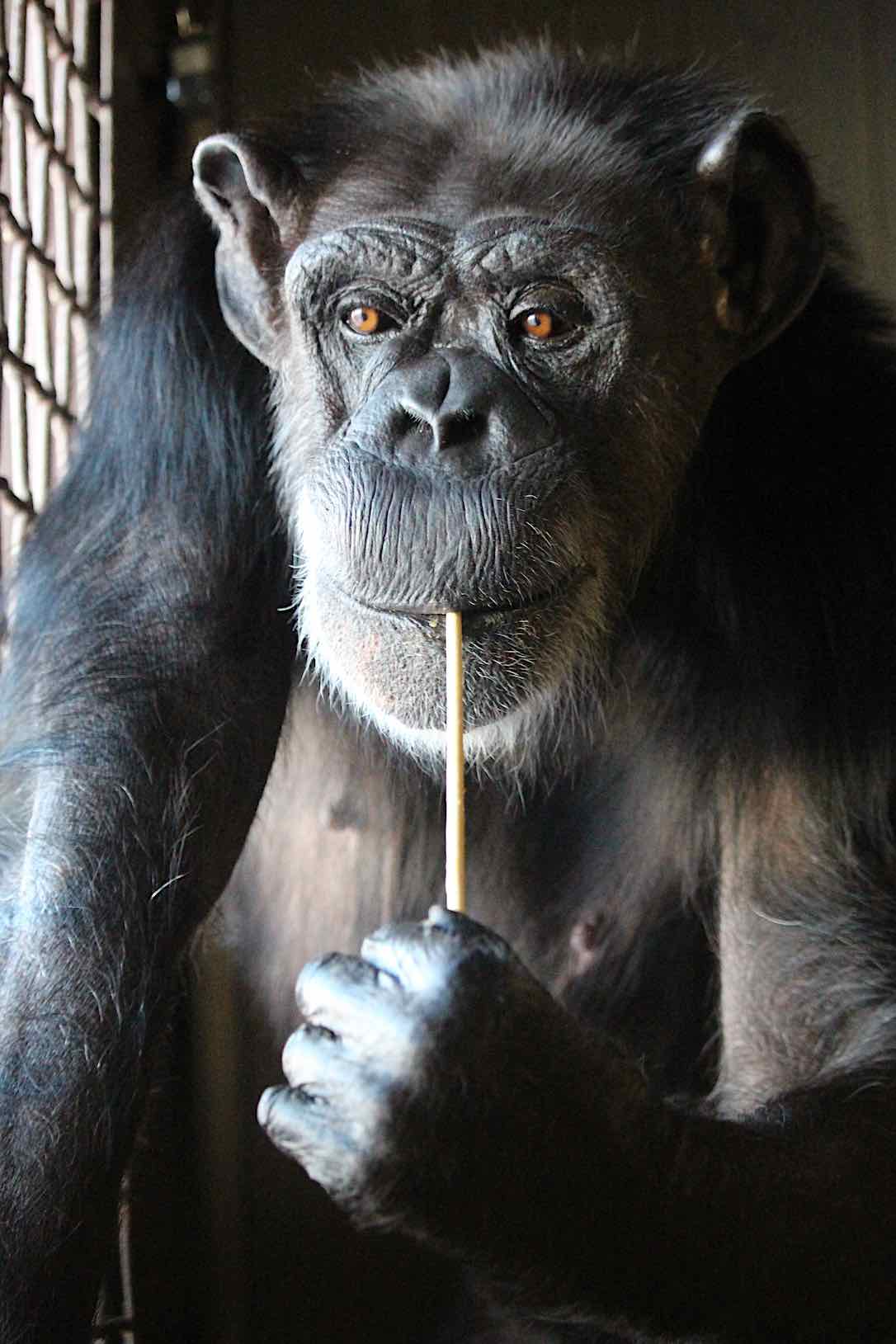
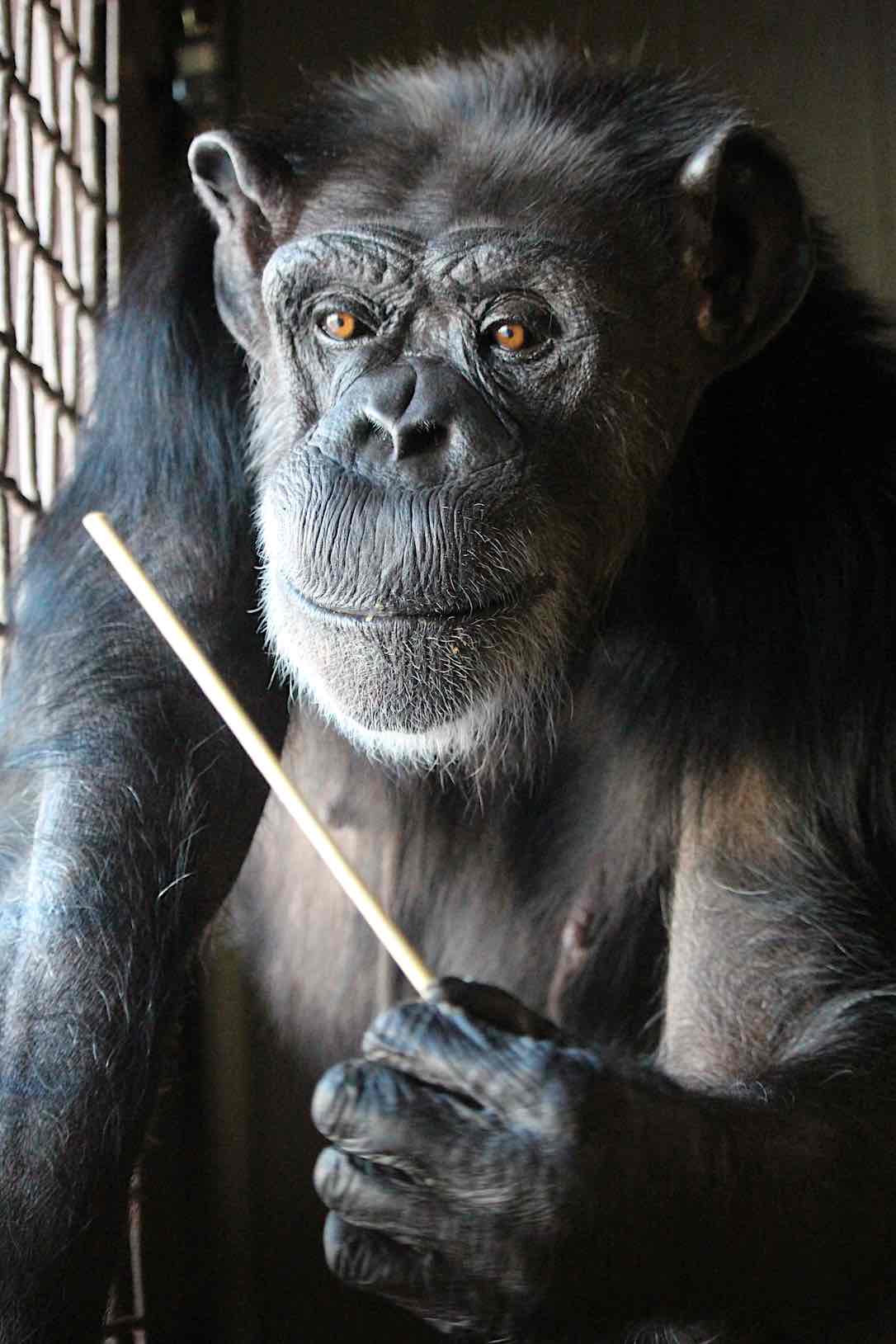
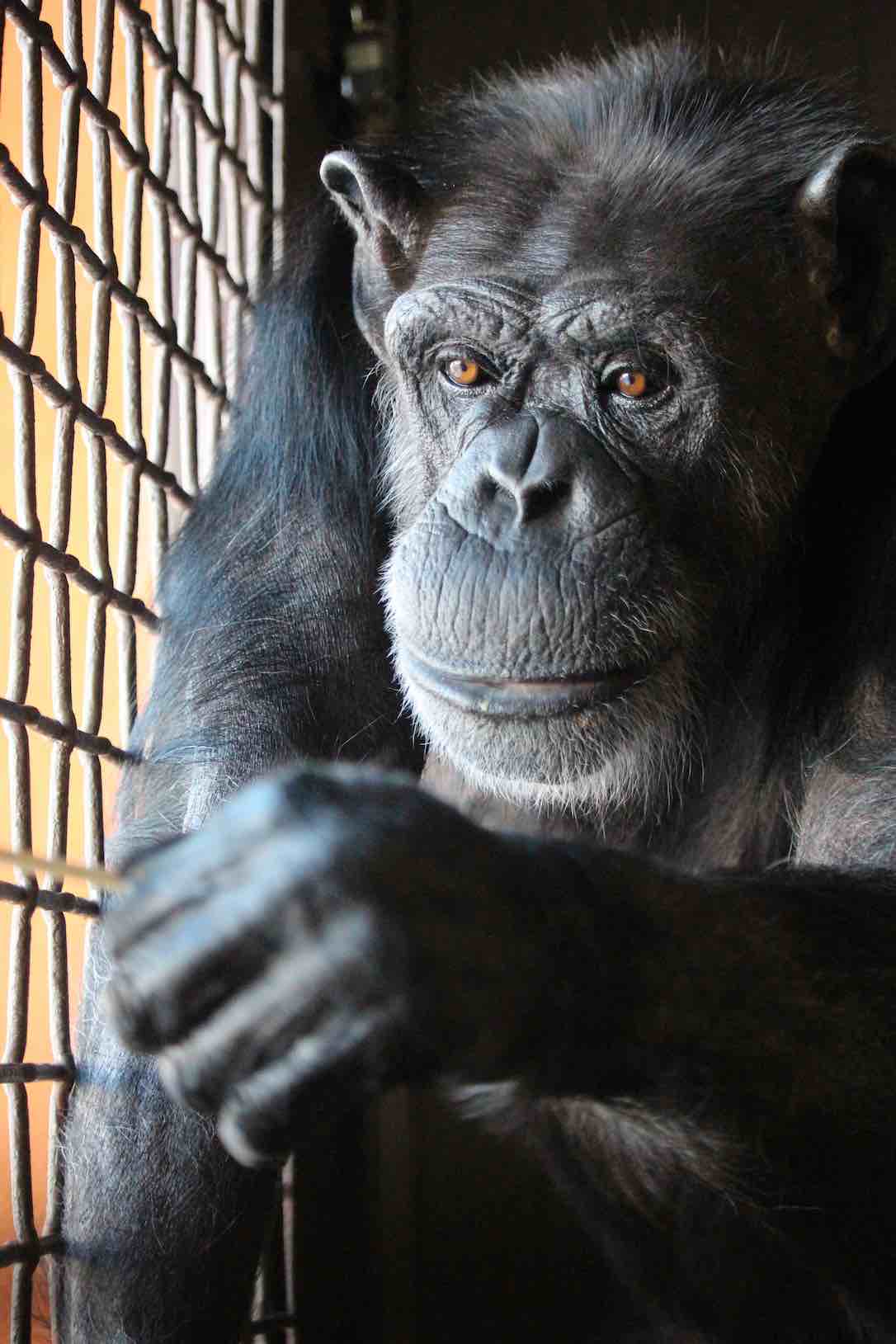
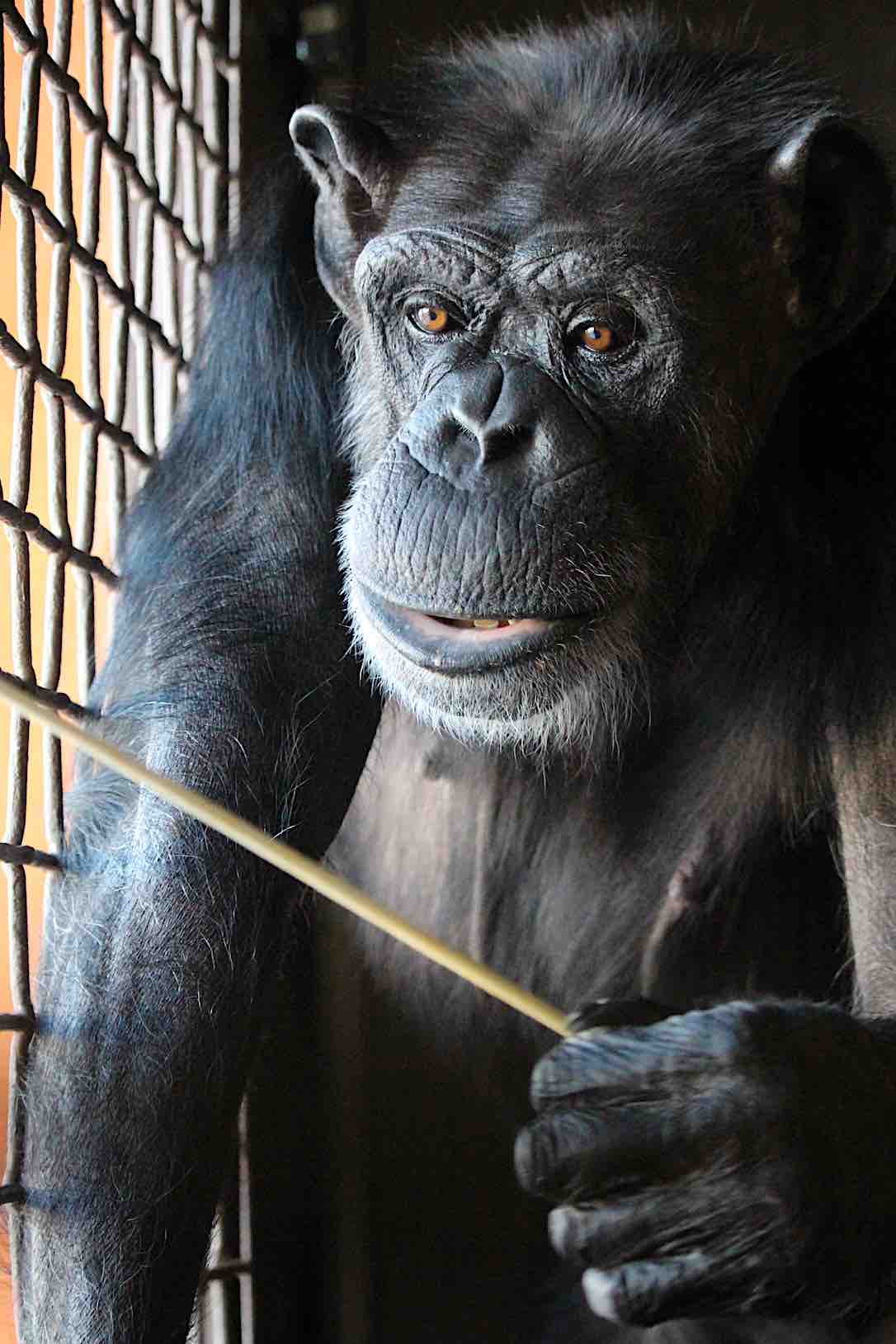
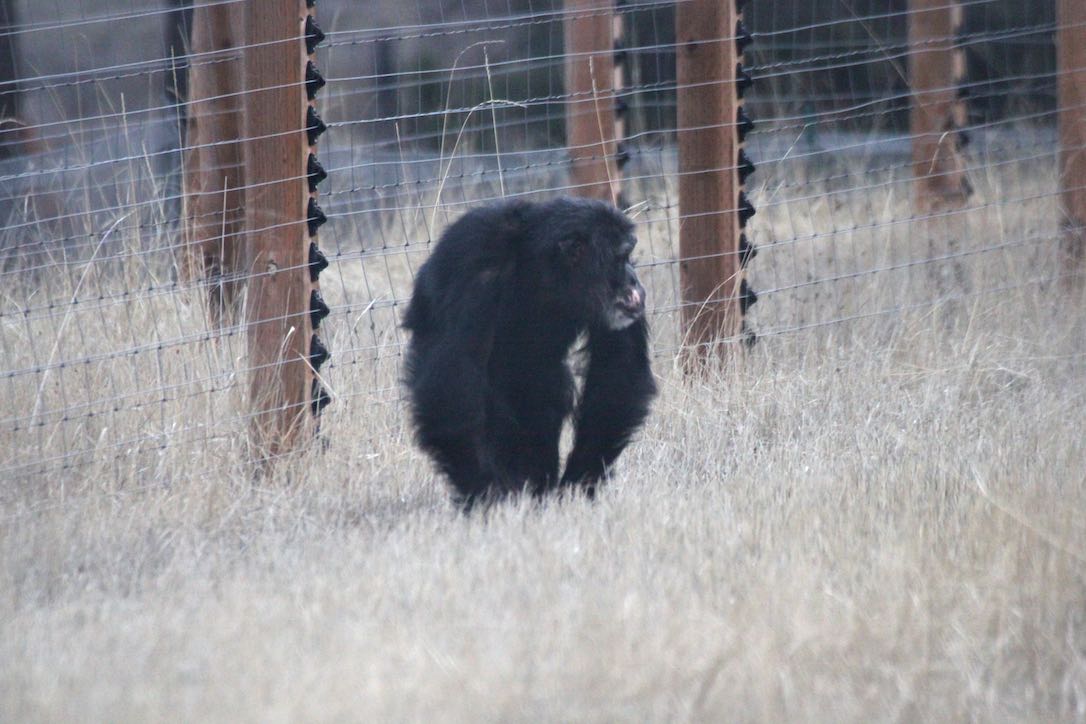
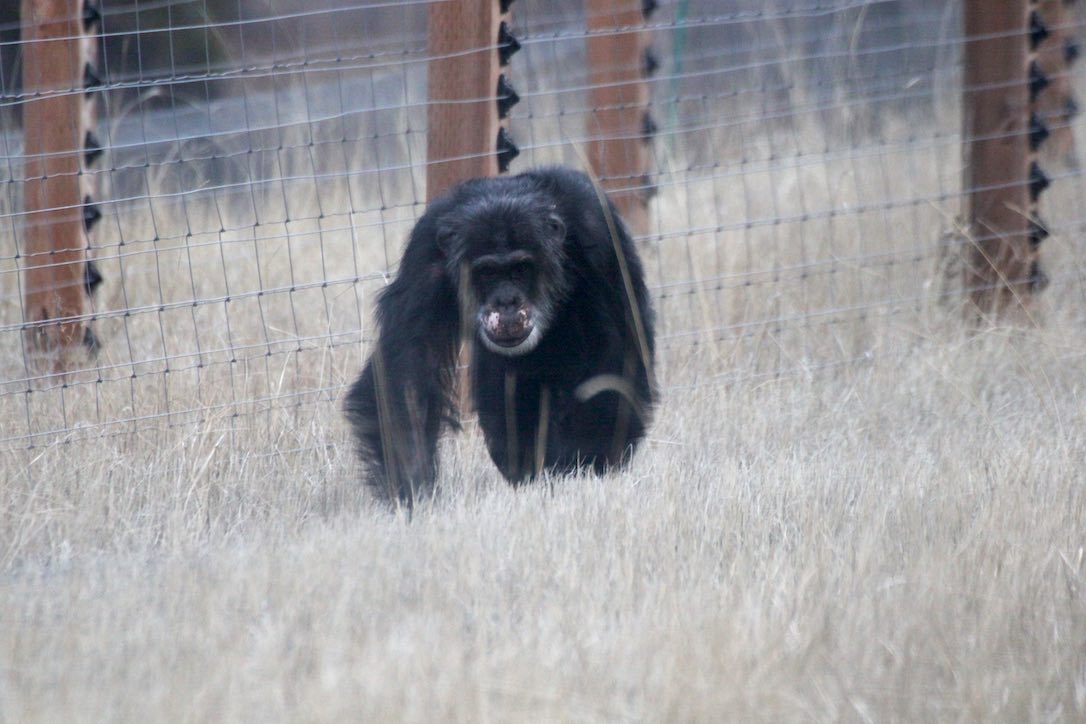
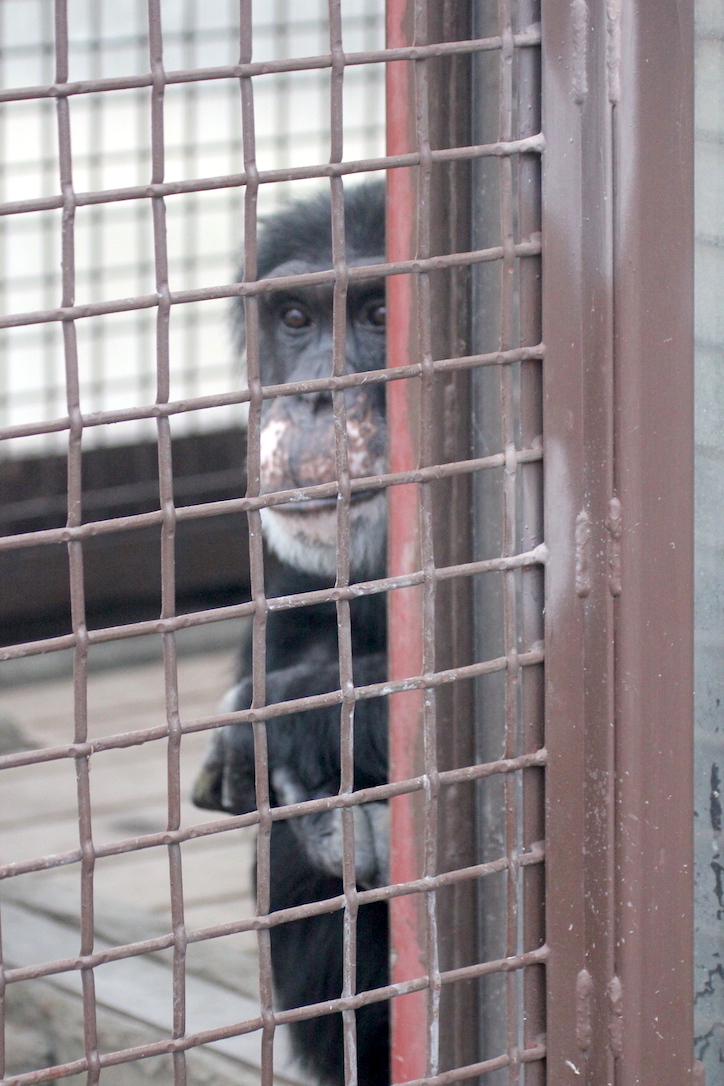
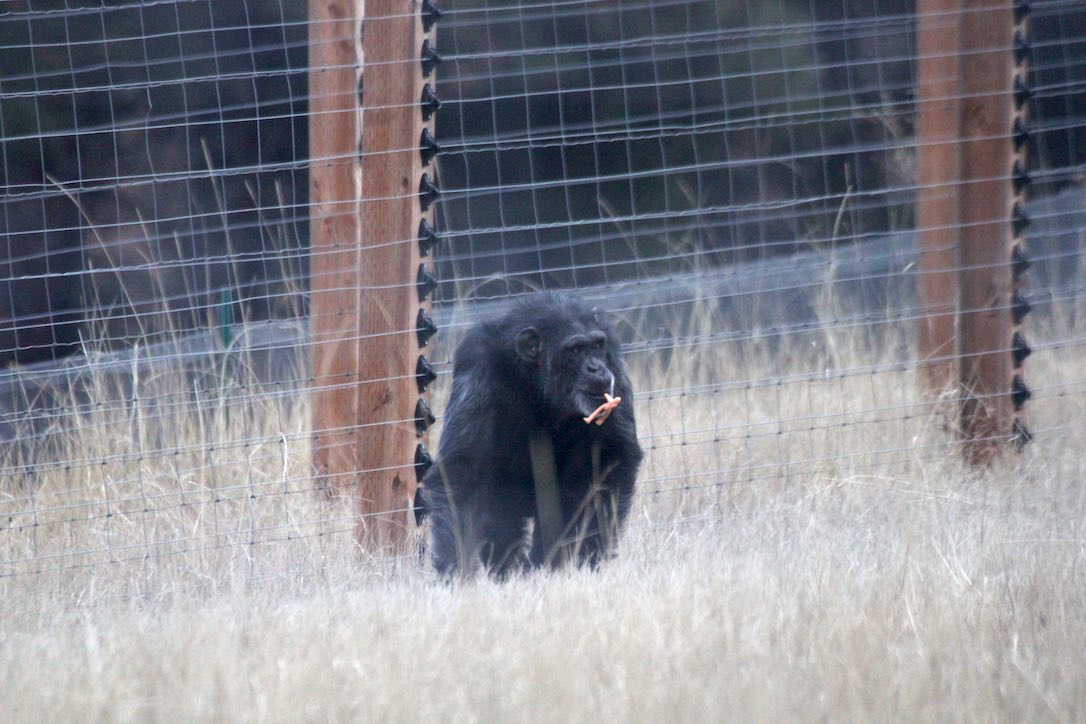
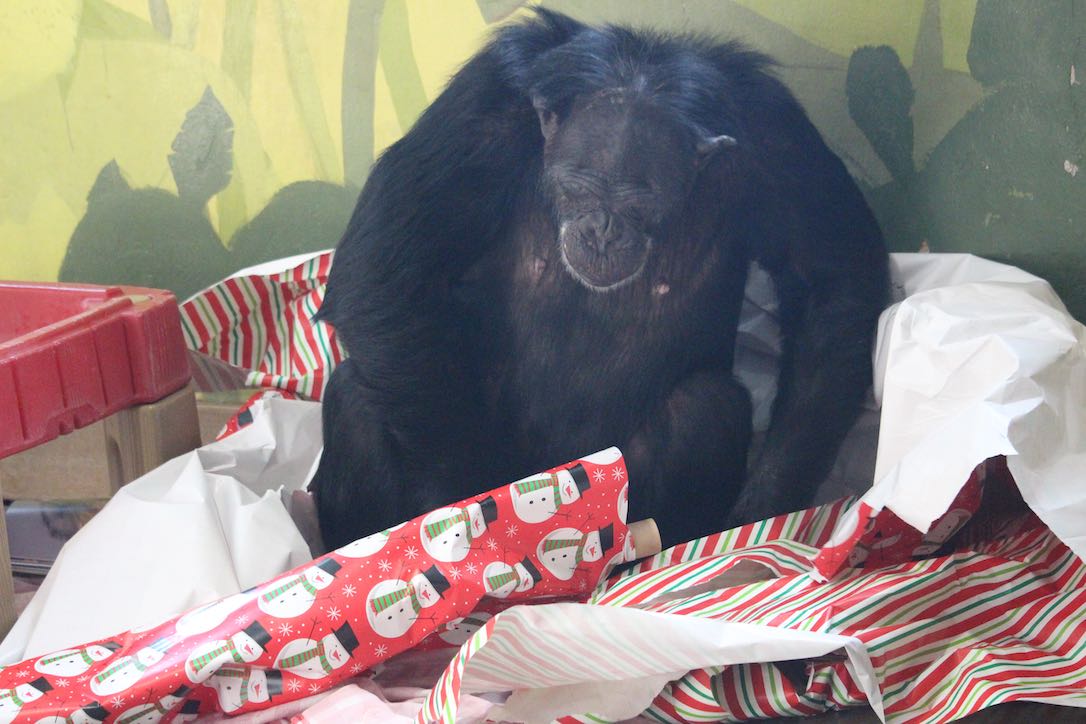
Jamie’s been in a bit of a mood today. She spent much of the morning pelting unsuspecting humans with snow. Eventually, though, she happily settled down in a huge wrapping paper nest and decided she’d rather eat snow than throw it (much to the humans’ relief).
Animal Welfare
Tis the Season
One frequently asked question we’re asked, well, frequently, is how the chimpanzees cope with snow. Snow is not a part of wild chimpanzees’ environment, to be clear.
However, save for maybe a few months as infants for Negra, Annie, and perhaps Jody, the seven chimpanzees here know nothing about the life and environment of wild chimpanzees. They grew up, for the most part, indoors. And for the last decade (at least) before coming to the sanctuary, they didn’t even have a window to look out.
So, to answer the question about how they cope with snow, I’d say they’ve adapted very well! As a rule, chimpanzees generally don’t like to get their feet wet. However, if the snow is not deep, the chimpanzees at CSNW go right outside, explore, and often collect some of the wintry treat to enjoy back in the greenhouse.
The visual of chimpanzees in snow is still sometimes strange; but they are, after all, honorary citizens of Cle Elum: Heart of the Cascades.
After ten years, a trek in the snow is probably just as normal as walking through the tall pasture grass and planted bamboo in the spring and summer.
And they look darn good against a backdrop of white.


Speaking of snow season, thank you to everyone who has donated so far in our year-end fundraising! I’ll have some more updates about that soon. I’ve been overwhelmed by all of the generosity from so many people. It really does a heart good to have the support of inspiring, amazing, and caring folks who are rooting for the Bring Them Home Expansion to continue as quickly as possible so we can provide a home for more chimpanzees!
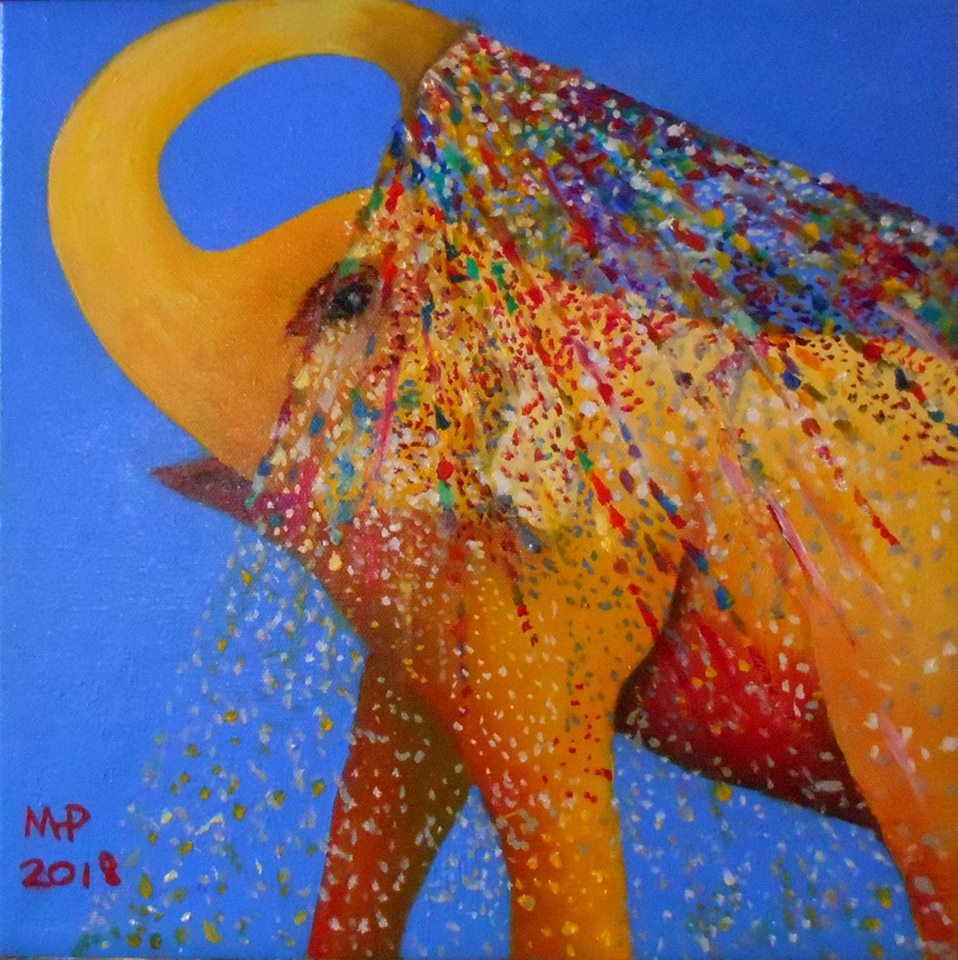
Did you know that artist and friend of the chimpanzees Maragaret H. Parkinson has a special offer of a painting to a lucky person who donates $1,000?! Check out the original 12×12″ oil painting “Rainbow Ele” ©️ 2018 below and get in touch ([email protected]) if you would like to take advantage of this truly amazing gift!

Casual Dining
This short video has it all: Missy and Burrito contentedly enjoying their lunch, lots of satisfying crunching sounds, and Missy peeling her carrot with her teeth like it’s no big deal.
Snow and peanut butter
Cold, wintery days always bring a change for the chimpanzees and while they always have the choice to go outside when they want, if it’s too wet or cold, they often prefer to keep their forays short and return to the warmth of the chimp house for indoor activities. As caregivers we’re always trying to stay a step ahead to meet their anticipated needs for any given day and knowing the chimps will probably be spending more time indoors sets our wheels turning on how to keep their active minds busy and engaged and how to jazz up their days.
We often utilize food puzzles during the day as an added activity and thought today was perfect for two chimp favorites: buckets of snow with a few raisins buried in them and dipper tubes with peanut butter. Dipper tubes are small PVC pipes that we screw into the caging from the outside and the chimps use their fingers or a tool to get the contents out. Kind of like indoor mini termite mounds minus the termites. 🙂
Beautiful Annie was quite enjoying her peanut butter “termites”:
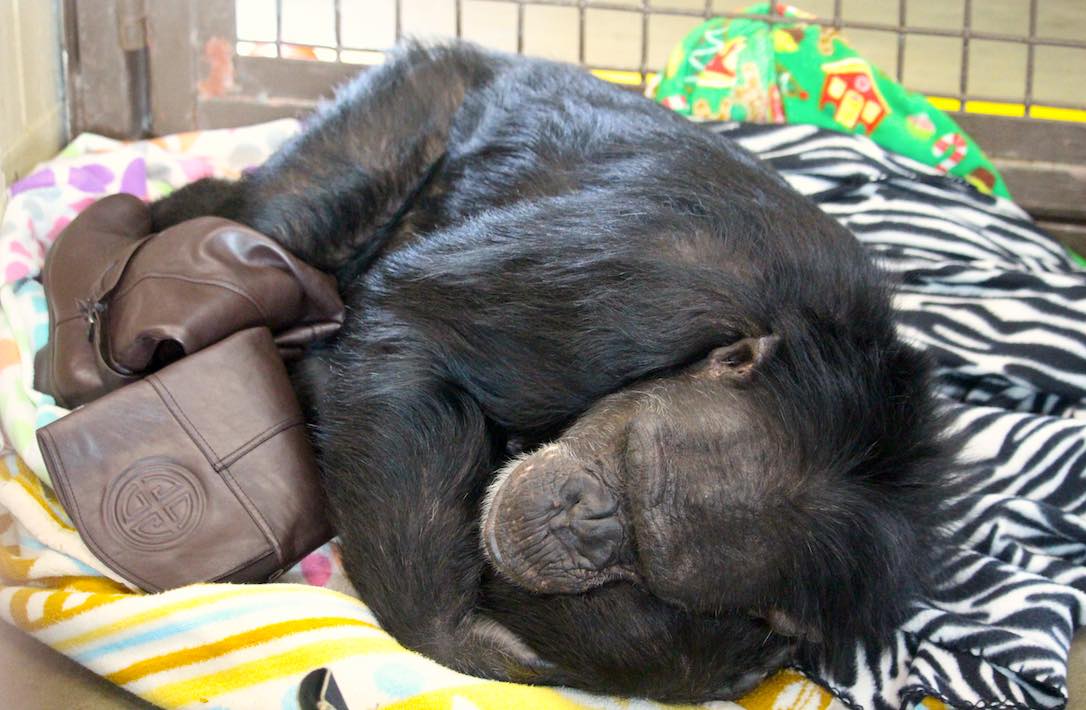
Bonus photo of Jamie napping:
Who’s in charge here?!
If you read the recent article about the sanctuary published first in the Pacific NW Magazine of the Seattle Times, you probably noticed that my role was written about in the beginning of the piece. It was a really good article and also explained the founding of the sanctuary and the host of volunteers and other staff who have made the sanctuary possible.
There’s a sentence in there that begins, “Diana and her team…” and that has been making me think about our unique structure here, so I thought I’d explain it and attempt to compare our system to the fluid roles that we also see within the group of chimpanzees.
Before getting to the less interesting human side of things, here’s a little story from today that illustrates the dynamic hierarchy of the chimpanzees:
When I opened the door to give the chimpanzees access to Young’s Hill (their large outdoor habitat) this morning, Jody led a charge up the hill, with Missy and Foxie following:

Jamie, who we refer to as the boss of the group, was nowhere to be seen. I suspected she was keeping a close watch over staff member Anna and volunteers Alan and Jonathan, who were hard at work cleaning the playroom.
Moments later, Annie joined the chimp trekkers. The four quickly disappeared into the grass and bamboo on the hill, Jody still leading the way.
Burrito then started after the group:

Being a male chimpanzee you might assume that he is the default leader – that’s certainly the way it is for chimpanzee groups in the wild. But captivity is not the wild, and male chimpanzees do not automatically take the dominant positions, especially chimpanzees like Burrito who were raised by humans rather than in a chimpanzee family.
If you saw him tear through the playroom with other chimpanzees scattering to get out of his way, though, you would naturally assume he’s got some sort of pull over the group.
After an already hesitant start and with the four females out of sight, he decided to turn back:

playfully stomping as he passed me

Then he awaited the return of the wanderers from the shelter of the greenhouse:

Several minutes passed before I saw Foxie emerge solo, aside from the headless doll she was carrying in her mouth:

I decided to take my leave at that point to check on the cleaning progress and say hello to Jamie, who was indeed watching the human cleaning procession, and Negra, the queen of the group appropriately napping within her throne of blankets.
If you had taken that snapshot of the group, you might assume that Jody was the leader. And perhaps she was in that moment. Chimpanzee hierarchies are not as linear as you might first assume.
In fact, the social network of the seven chimpanzees was studied by Jake Funkhouser, former Central Washington University Primate Behavior and Ecology master’s student and current biological anthropology PhD student at Washington University in St Louis.
To quote from his published Plos One paper, “Our results indicate that the conventional methods used to calculate individuals’ dominance rank may be inadequate to wholly depict the group’s social relationships in this captive sanctuary population.”
And so, I now submit that a similar conclusion could be made about the human roles at Chimpanzee Sanctuary Northwest. First, rather than one person in the executive director position, which is more typical of both for-profits and non-profits, J.B. and I currently serve as co-directors, dividing up the various tasks that are required to oversee the daily operation of the organization. Are we then the bosses?
Well, no… like other registered non-profits, our bosses are all of the members of the Board of Directors. So, are they ultimately in charge?
I suppose it depends on the way you look at it. Actually the board and co-directors collectively answer to the donors as a whole, because they/you are who enable the sanctuary to continue to exist. Donors also have some legal avenues to pursue if they feel their donations have not been used to advance the mission of the organization. Okay, so the donors are the ultimate bosses?
Well… being a sanctuary, we consider the chimpanzees themselves to be our ultimate bosses. After all, we are specifically here to serve them.
Then, take a look at our staffing hierarchy – each of the five full-time and one part-time staff members (this includes J.B. and myself), have various duties outside of the chimp house.
As for our chimp house roles, however, we are on equal standing because we rotate days in the role of what we call “lead caregiver.” That means that if I’m “second staff” on a day when Anna is lead, she’s in charge of the chimp house, I defer to her decisions, and I’m here to support her. We have this structure mostly because we’re a small staff (or “tiny sanctuary in Washington” to quote the Pacific NW Magazine article) and rotating the lead role just makes us all able to function and get more done.
I think the structure also directly benefits the chimpanzees because each of us are able to both develop relationships with the chimpanzees and have a say in their care.
We also have a committee made up of board members and outside members called the Direct Care Committee that takes on high-level policy issues specifically related to the medical care and overall well-being of the chimpanzees.
So, who’s in charge of Chimpanzee Sanctuary Northwest?
It really all just depends. But it’s true we definitely are a team. You included.
I am acutely aware of the role of donors right now because of our year-end fundraising, which highlights the largest single donation pledged in the history of the sanctuary (I still can’t believe it!) and our largest fundraising goal ever.
Thank you to everyone who has already given and is rooting for the sanctuary to have many more bosses in various forms in the near future.
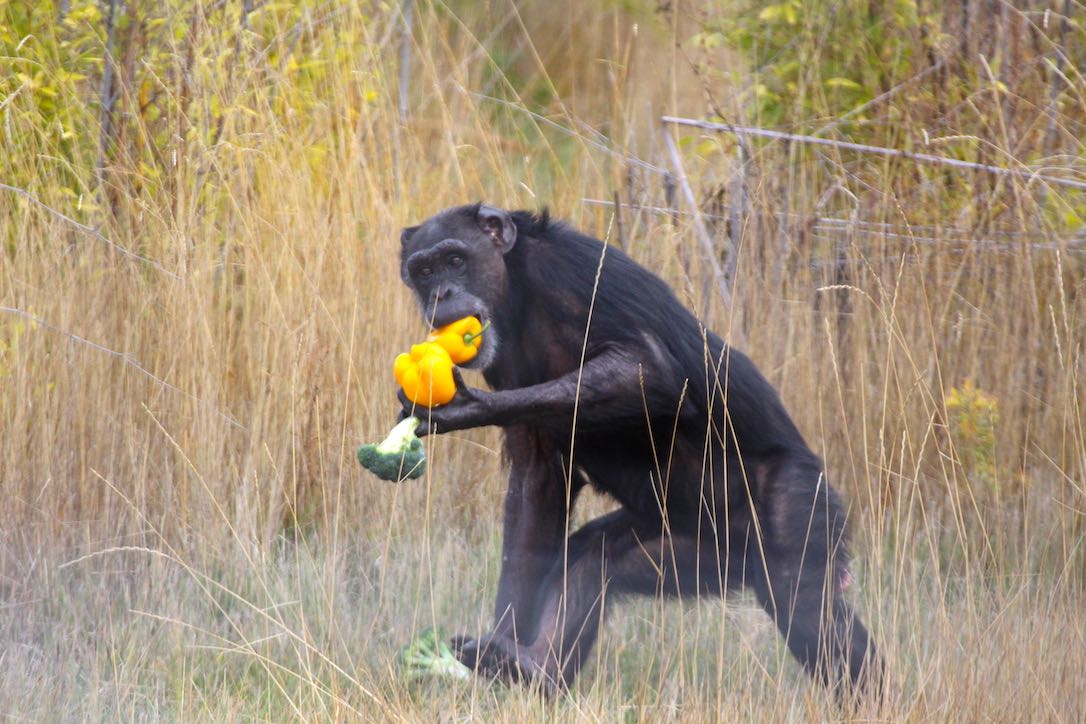
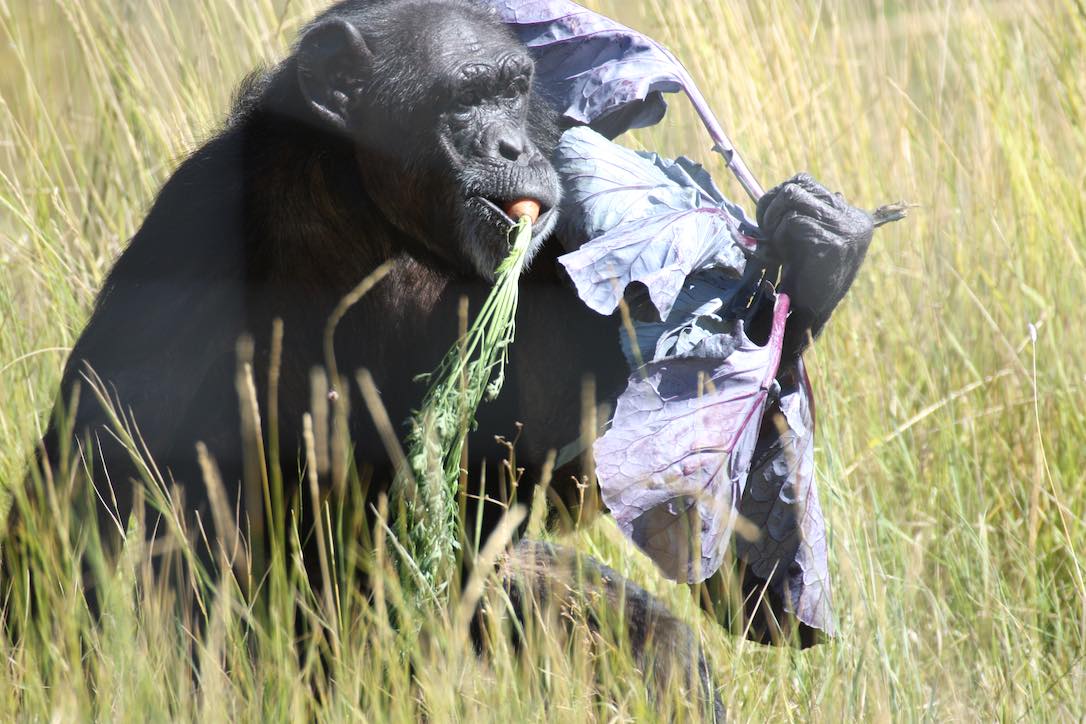
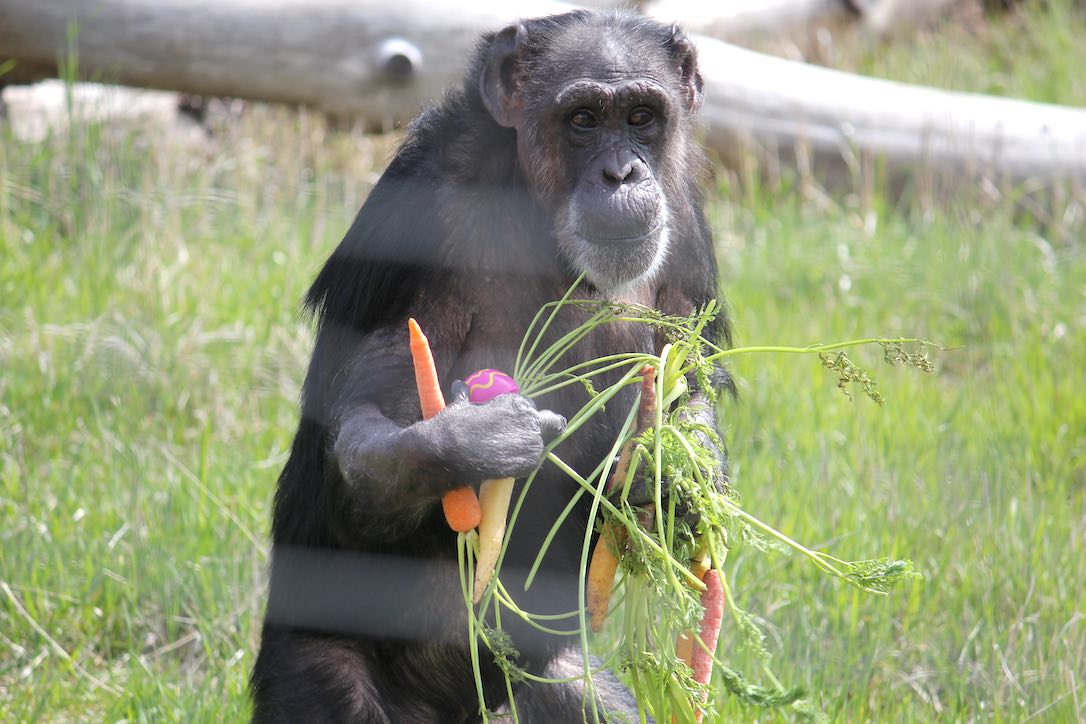
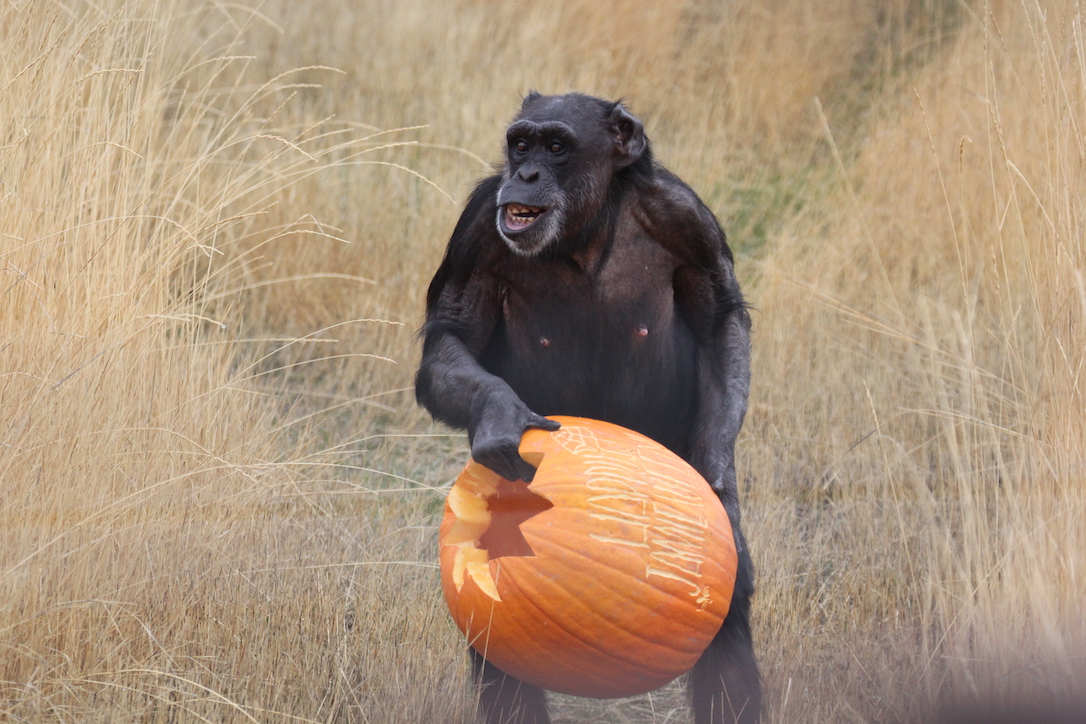
Jody’s armfuls, a retrospective
There’s just something satisfying about watching Jody carrying her loot back to the greenhouse.


Then and Now
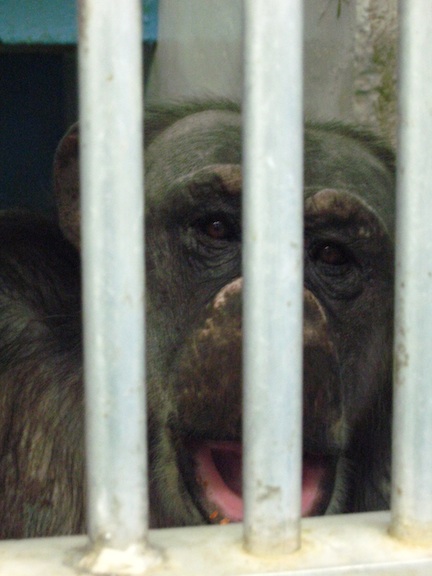
Negra in the lab:
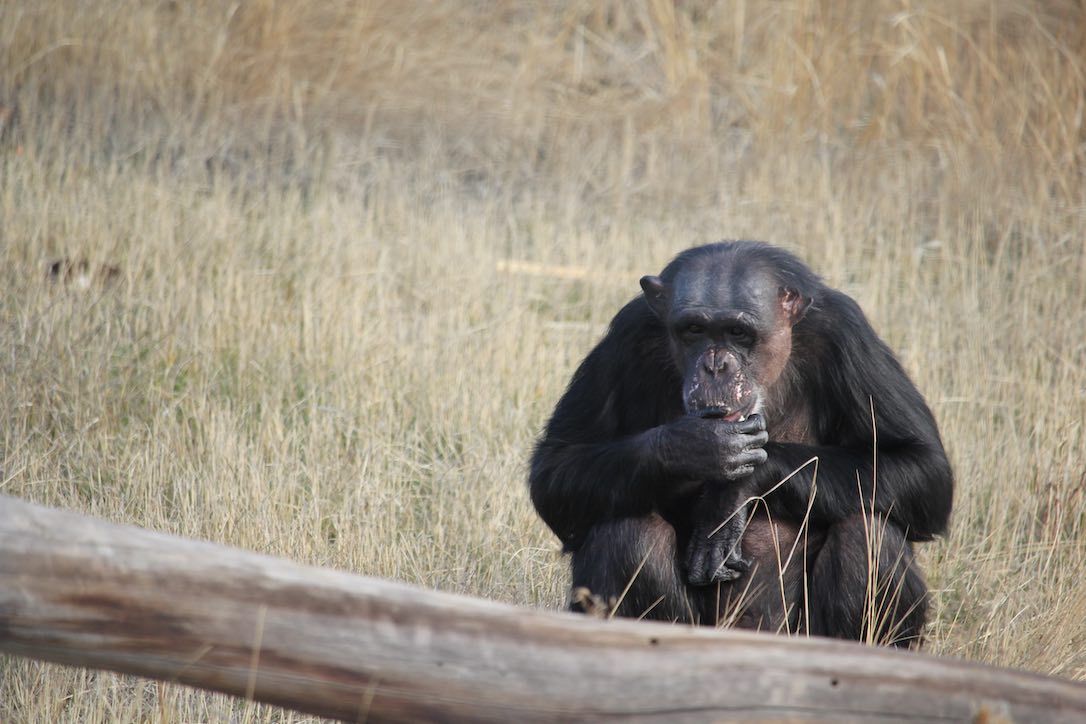
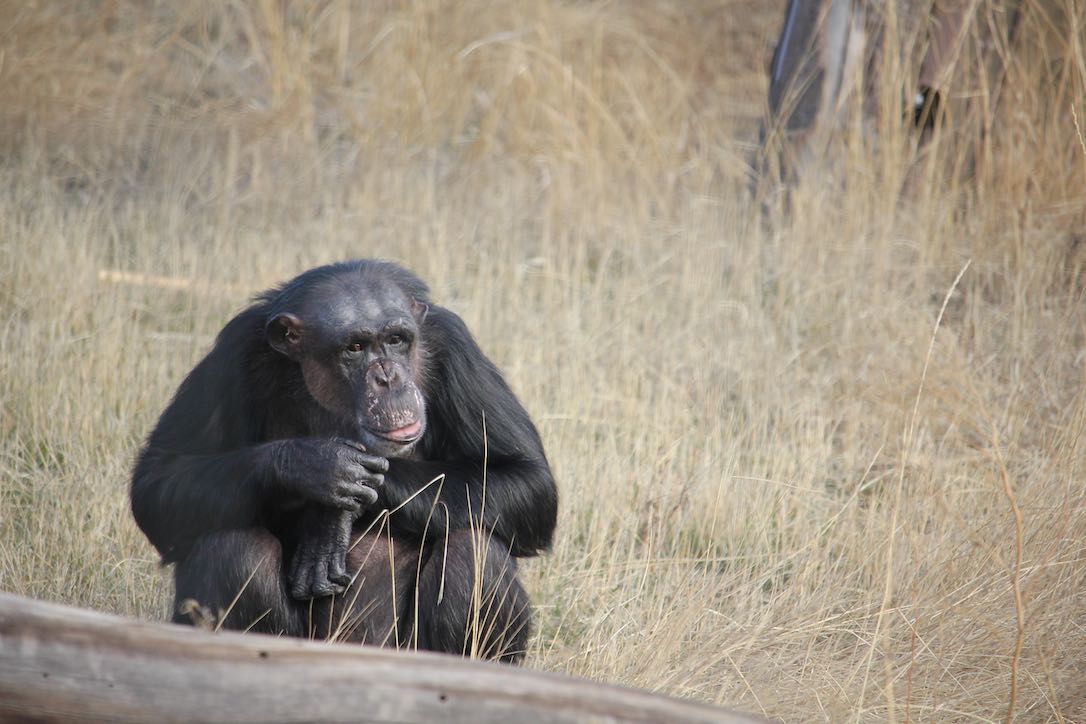
Negra today:
Sanctuary has given Negra peace, safety, and dignity. She now knows the sensation of the sun on her back, of curling up with a mountain of warm blankets, and of being loved.
There are currently hundreds of pre-sanctuary Negras who have no idea that there’s another kind of life. Help us bring them home by donating toward our year-end fundraising goal! We’re so grateful for your help.