Monkeys, specifically monkeys who are being used in biomedical research, have been in the news frequently lately.
A few years ago, I wrote about a truck carrying 100 monkeys that overturned in Pennsylvania, spilling crates of primates onto a highway. I would not have guessed then that “escaped lab monkeys” would become almost commonplace in the years following that incident.
Late last year, 43 young female rhesus macaques at Alpha Genesis Primate Research Center in Yemassee, South Carolina left their cages and the perimeter fence of the facility when a gate was left open. Some of them survived for months outside, with the last one captured in January.
More recently, on October 28th, a pickup truck pulling a trailer containing 21 crated macaques overturned in rural Mississippi. The initial news reports indicated that no one claimed ownership of these monkeys who were apparently being transported from one facility to another. Finally, almost a week after the crash, PreLabs, LLC released a statement confirming that the monkeys belonged to them.
In that statement, they also cleared up misinformation that had been spread about the health status of the monkeys. Apparently, the county sheriff initially described the monkeys as dangerous and carrying diseases based on what the driver of the truck told him. Citizens took this warning to heart–two of the monkeys were shot and killed when residents spotted them.
I want to first raise the question of whether it’s even appropriate to describe any of these monkeys as “escaped” when their being “loose” was the result of errors or accidents on the part of human beings. Virtually nothing in their lives has been their choice, including ending up on the side of a highway. In a very interesting in-depth New Yorker article focused on the Yemassee Alpha Genesis facility, the author shares the opposite point, characterizing monkeys in captivity as being preoccupied with getting out of the cages they are confined to, so there’s certainly different ways of looking at the volition of the monkeys who end up in the news as escapees.
Though there has been an uptick in these incidents in the last few years, lab monkeys on the loose is not an entirely new phenomenon.
There is a colony of vervet monkeys living freely today in Florida who were genetically traced to monkeys originally from Africa who “escaped” from the Dania Chimpanzee Farm in the 1940s where they were being sold for biomedical and military research.
The recent incidents have shined a light on a the industry using monkeys in invasive research, which is a good thing. People are asking where these monkeys are coming from and how are they being used within these facilities. There have been investigations into how the demand for monkeys in the United States for medical testing has led to the illegal capture of monkeys from the wild. The solution from within the industry to this problem has been a call to increase the breeding of monkeys within the U.S., but the proposed construction of new breeding facilities has thankfully been met with push-back.
Things are changing.
In April, the FDA announced that it will phase out all animal testing for certain drugs and therapies, replacing animal testing with more sophisticated methods. And just last week, the CDC announced it will no longer use monkeys in the research that it conducts.
It’s important to note that the FDA announcement is significant and unprecedented, but still cautious in its approach and it doesn’t equate to the end of animal testing for all drugs.
The CDC announcement appears to impact 200 macaques reportedly currently in use by the CDC. That’s a very small number of monkeys compared to the tens of thousands being used across other government agencies and private institutions, but it is indicative of the shift that is happening.
It’s an open question where these monkeys being used by the CDC would go, though the article states that Peaceable Primate Sanctuary was contacted by the agency and is willing to work on a solution, given enough funding.
As I said back in 2022, we will be providing a home for monkeys in the future, like other sanctuaries are now. And maybe, just maybe, that day when we can all celebrate the last monkeys in biomedical research in the U.S. going to their sanctuary home will come much sooner than I dreamed.
This photo J.B. took today of a rainbow over Jody’s statue seemed to be the perfect visual accompaniment to this news.

I will bet you anything that there’s a rhesus macaque named Jody in a lab right now who was used as a breeder and research subject.
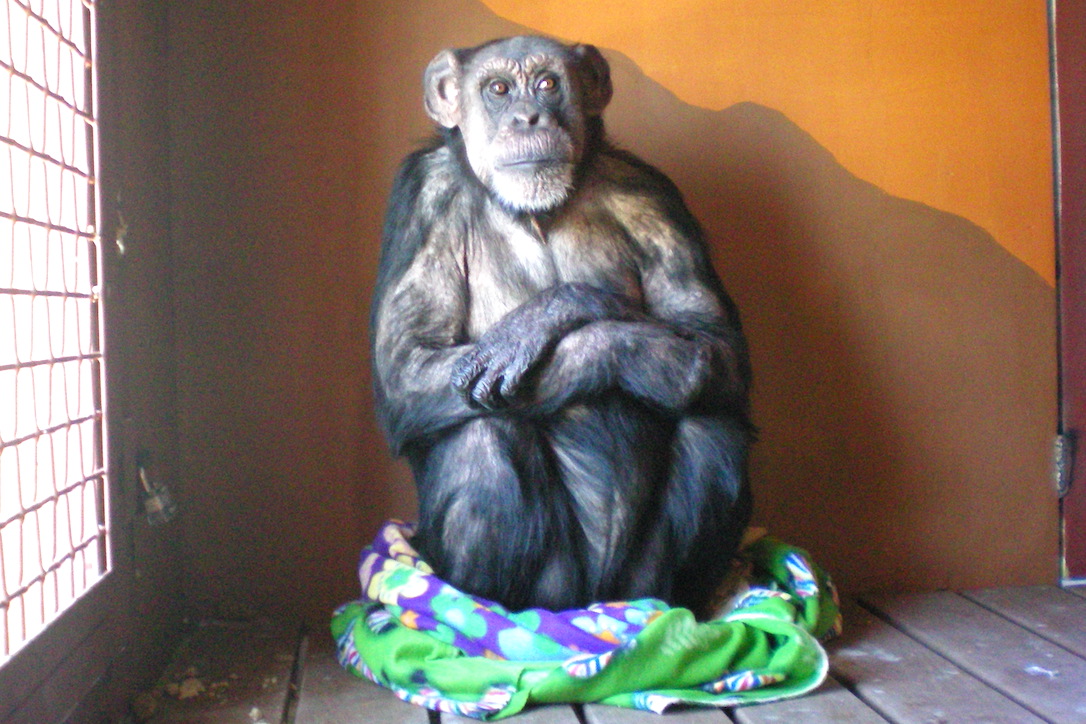
She deserves sixteen years of sanctuary life just like our Jody had.