• Skip to main content
  • Skip to primary sidebar
  • Skip to footer

Chimpanzee Sanctuary Northwest

Hope. Love. Home. Sanctuary

  • Our Family
    • The Chimpanzees
    • The Cattle
  • Blog
  • About Us
    • Visiting the Sanctuary
    • Philosophy
      • FAQs
      • Mission, Vision & Goals
      • Privacy Policy
    • The Humans
      • Staff
      • Board of Directors
      • Founder
    • Annual Reports
    • The Future of CSNW
    • CSNW In The News
  • You can help
    • Donate
      • Become a Chimpanzee Pal
      • Sponsor A Day
      • Transfer Stock
      • Be A Produce Patron
      • Be a Bovine Buddy
      • Give from your IRA
      • Personalized Stones
      • Bring Them Home Campaign
    • Leave A Legacy
    • Employment Opportunities
    • Volunteer
    • See Our Wish List
    • Events
  • Resources
    • About Chimpanzees
    • Enrichment Database
    • Advocacy
      • Advocacy Action Center
      • Apes in Entertainment
        • Trainers
        • Role of the AHA
        • Greeting Cards
      • Chimpanzees as Pets
      • Roadside Zoos
      • Chimpanzees in Biomedical Research
      • Conservation
        • African Apes
        • Orangutans
  • Shop
    • Merchandise Store
  • Contact
  • DONATE NOW

fights

Q&A: Why Cy is Missing a Finger and Other Notes on Chimpanzee Aggression

December 29, 2025 by J.B.

Recently, we invited you to submit your questions. Joshua wanted to know: Why does Cy have only three fingers and a thumb on his left hand?

The short answer?
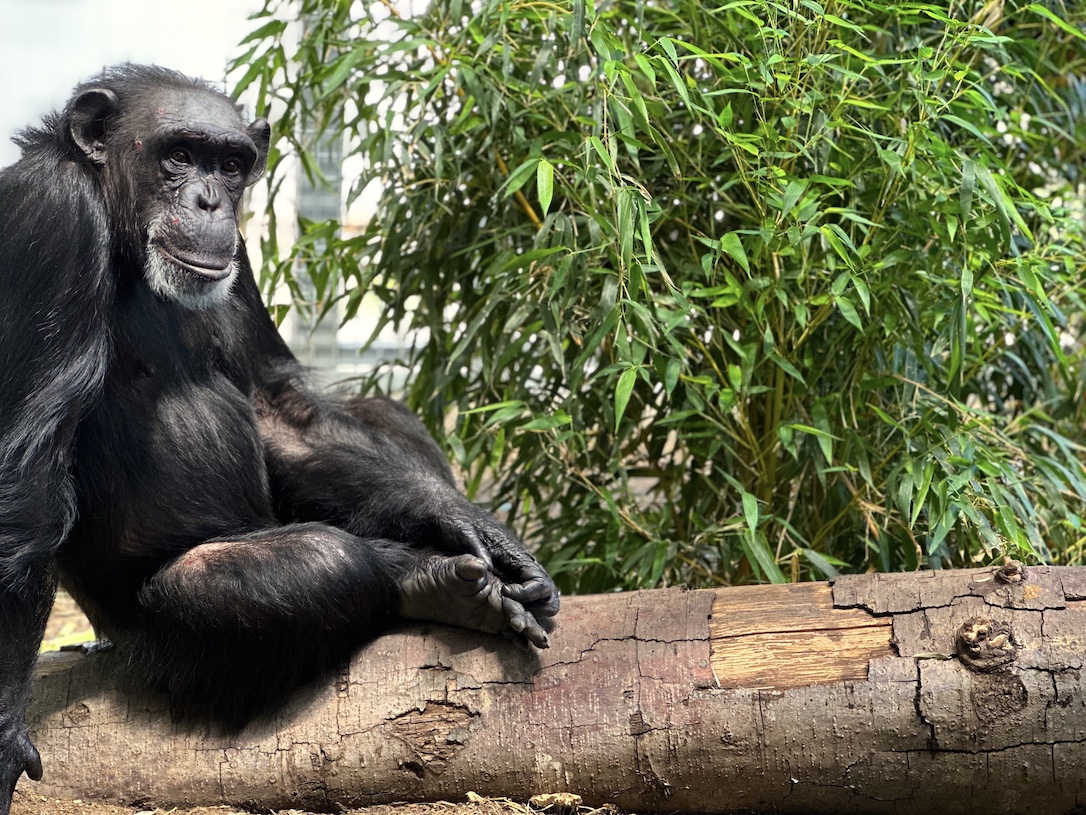
“No regrets.” – Rayne

As far as we’ve been told, Rayne bit off or severely injured the third digit of Cy’s left hand at some point during their time at their previous home in California. As to why she did it (if the accusations are indeed true), we need to step back a bit.

Chimpanzees can be incredibly aggressive. And I don’t mean traumatized research chimpanzees can be aggressive or chimpanzees kept in captivity can be aggressive. I mean that natural selection has endowed all chimpanzees, to varying degrees, with a capacity for aggression and a tendency to utilize it to achieve certain ends. In other words, it’s a normal part of being a social chimpanzee—a tiny fraction of their overall behavior, to be sure, but an important one.

When discussing aggression in chimps, we typically differentiate between intergroup and intragroup aggression. Intergroup aggression, or the violence directed at chimpanzees in other communities, has the distinction of being far more lethal. These attacks, often the result of stealthy raids into neighboring communities, are understood to be part of an evolutionary strategy to guard or gain access to territory (and thus resources such as food or potential mates). Intragroup aggression, on the other hand, tends to be a way that chimpanzees—particularly late adolescent and adult males—determine rank or status within the community. Lethal aggression does occur within communities (often in the form of infanticide or the overthrow of the alpha male) but at about half the rate of that between groups.

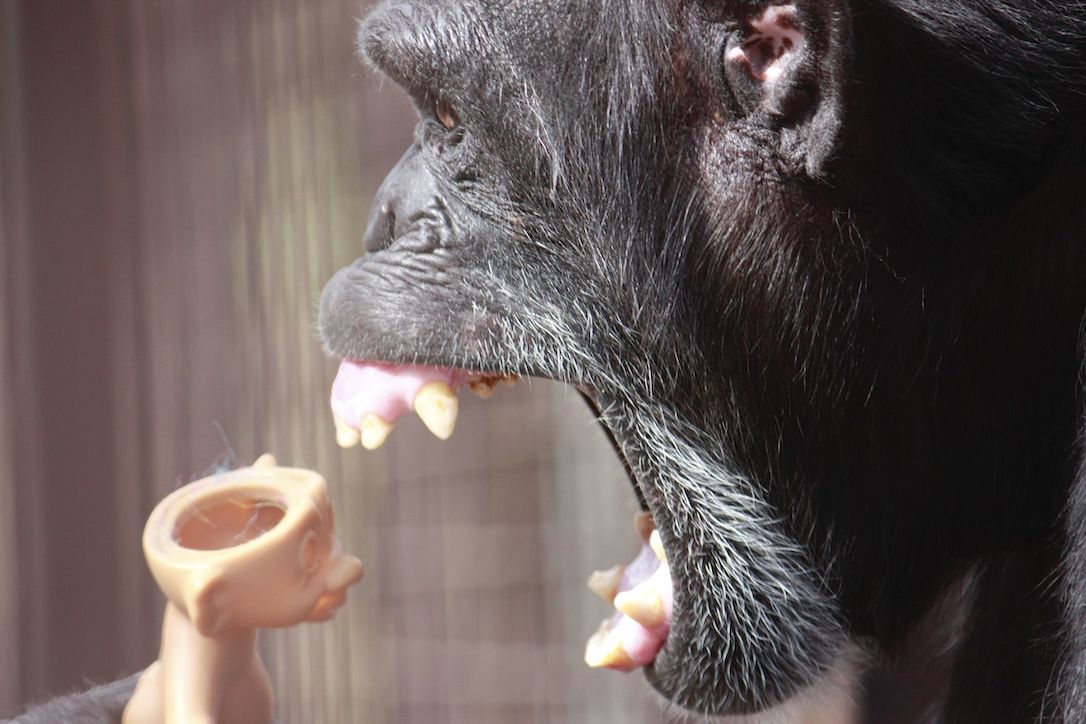
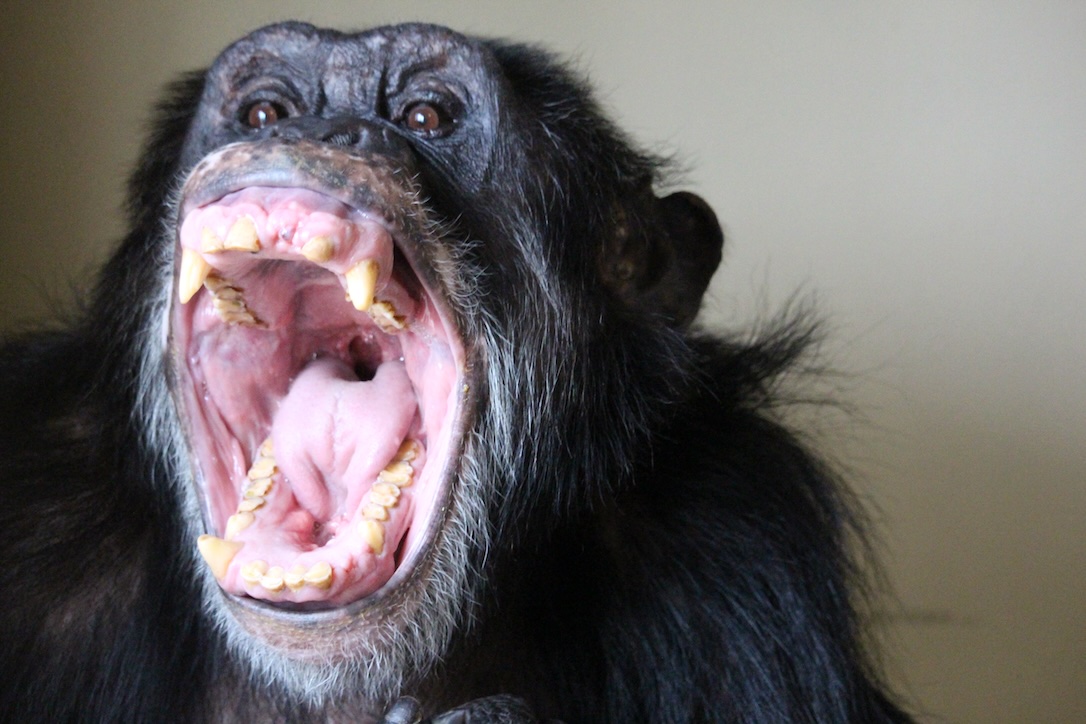
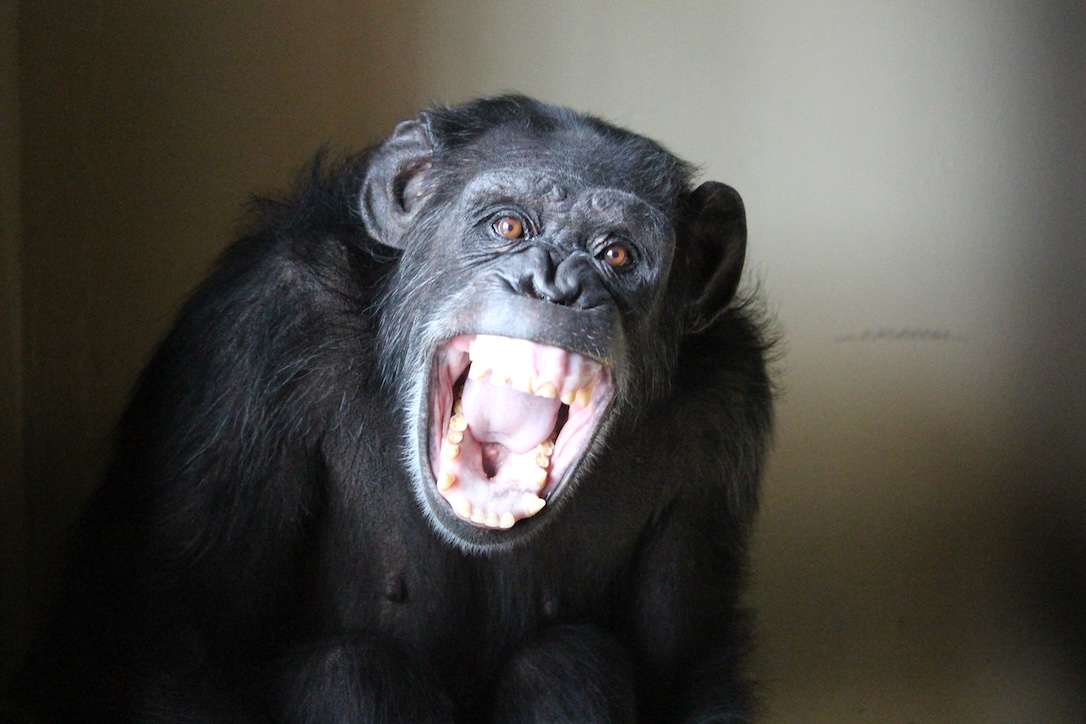
It’s almost impossible to describe to someone who doesn’t work with chimps just how violent chimpanzee fights can be. Their strength, speed, and agility are literally superhuman. Their screams and cries are deafening. And they can be seemingly ruthless, quite often ganging up on more vulnerable chimps. While their muscular arms and legs are used to grapple and pin, their ultimate weapons of choice are their large teeth and powerful jaws, which open wide enough to accommodate most any body part of an intended victim—though they usually select ears, fingers, toes, and, in cases of more extreme violence, genitalia.
Life for captive chimpanzees is very different from that of their wild counterparts. They don’t have the same kind of territories to defend, nor do they have the potential to acquire new resources by raiding and killing. But natural selection doesn’t typically endow us with knowledge of why we behave the way we do; instead we’re simply primed to behave in ways that tended to benefit our ancestors (humans are no exception to this). And captive chimpanzees are often presented with situations that stoke those very same intergroup prejudices—most notably, during social introductions. When we are integrating groups—or even riskier, adding a single chimpanzee to an established group—we have to overcome that same hostility toward outsiders that drives wild chimpanzees to attack and kill their neighbors. And this is where we may see the most severe forms of aggression. At CSNW, it once lead to a conflict in which one participant, Honey B, had to have her toe amputated, and another, Burrito, had to be castrated due to the severity of the wound to his scrotum. Neither injury was lethal, though in Burrito’s case it was largely because of timely veterinary intervention. In a way you could say that we’re fortunate, because chimpanzees have died in similar circumstances at many accredited zoos and sanctuaries. These are the stories that don’t always make it to social media, but instead are shared by keepers and caregivers over drinks at a conference hotel bar, finding comfort in others that understand what it is like to work in this crazy field.
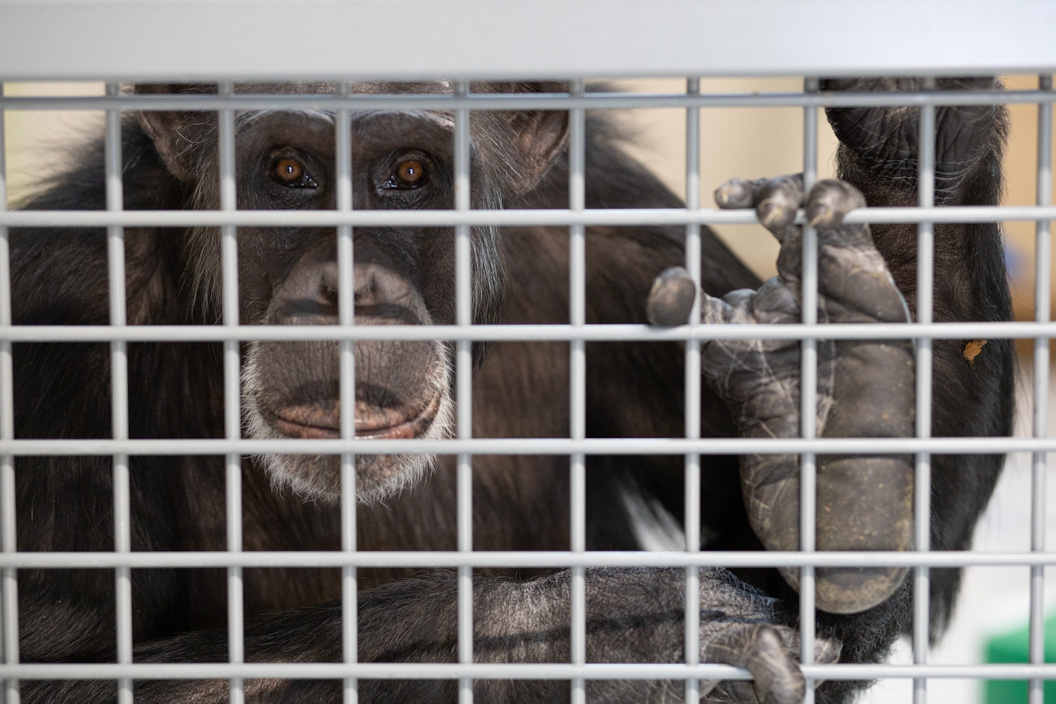
Honey B

More often, we are witnessing the almost commonplace kind of aggression that serves to establish rank, form coalitions, and settle scores. Chimps, like humans, are status-seekers. Status may come with tangible benefits, but status itself is an intrinsic benefit, one that is apparently worth fighting for. Because this form of aggression serves to clarify relative dominance, we tend to see somewhat less of it in stable groups and more in groups that are newly formed, lacking a strong leader, or undergoing a leadership transition. It also appears to be more common in groups with unusual compositions (in terms of age, sex, etc.) or ones with chimps that lack social experience. Regardless, wherever there are two or more chimpanzees, there will be at least the occasional fight. One study at an accredited zoo found that their chimpanzees were wounded in fights ten times per year on average. Thankfully, along with their superhuman fighting abilities, chimps possess a superhuman ability to heal and an equally superhuman tolerance for pain.

Jamie’s group has been together for over 18 years now. You’d think that they would have achieved some level of stability after all this time. But they epitomize the problem with a lack of leadership and atypical rearing. When they arrived from the lab, we did a quick inventory of missing ears and digits: Negra was missing half an ear, Annie’s ear was torn almost in two, Burrito was missing a fingertip, Missy was missing most of a pinky, and Jody was missing toes (though at least one was said to have been severed by a guillotine cage door). Those are just the ones I can think of off the top of my head. We do the same inventory of every group that we rescue, and relatively few adult chimpanzees arrive at sanctuary with all ears and digits fully intact—unless they, like George, lived largely alone.
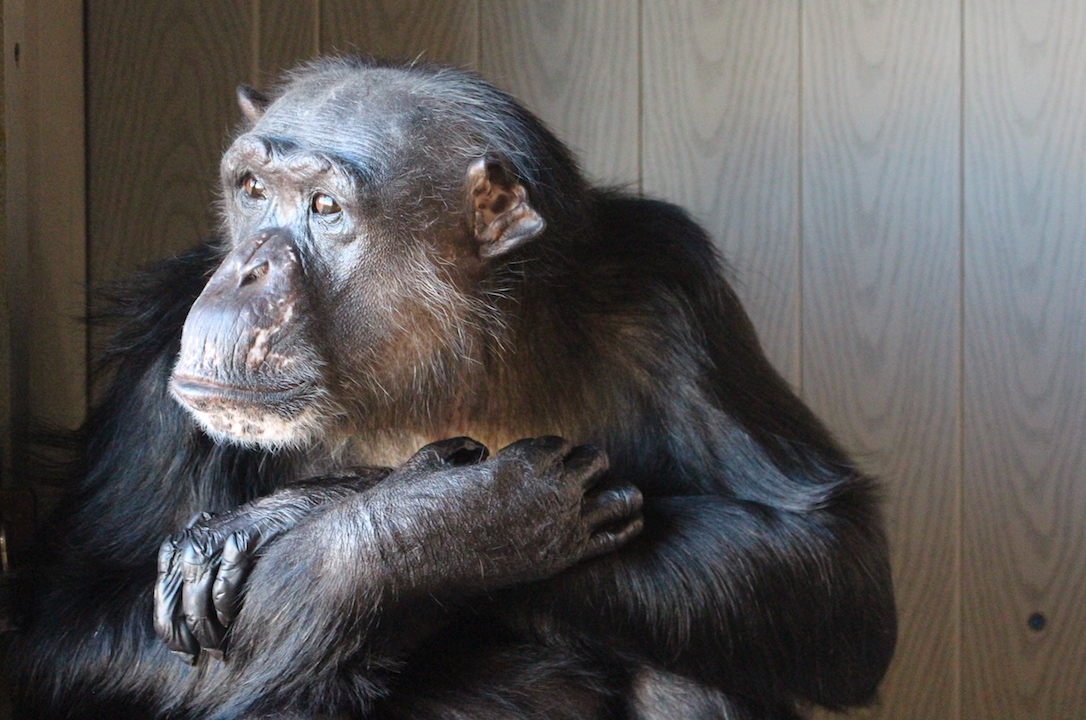
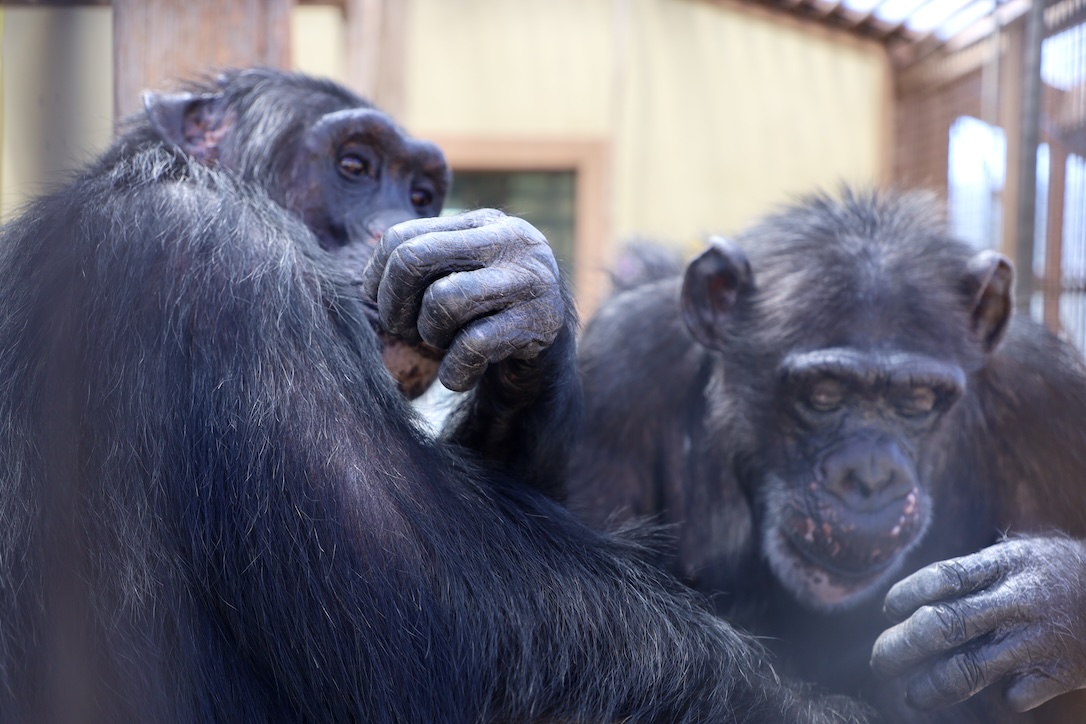
Negra
Missy (R)

We’ve done our fair share of repairs and amputations here at the sanctuary, beyond those of Burrito and Honey B. One morning, the chimp house was perfectly still until a shriek erupted from Front Room 4. We looked over to see Burrito fleeing and Foxie sitting there in shock, a chunk of her ear laying on the bench beside her.
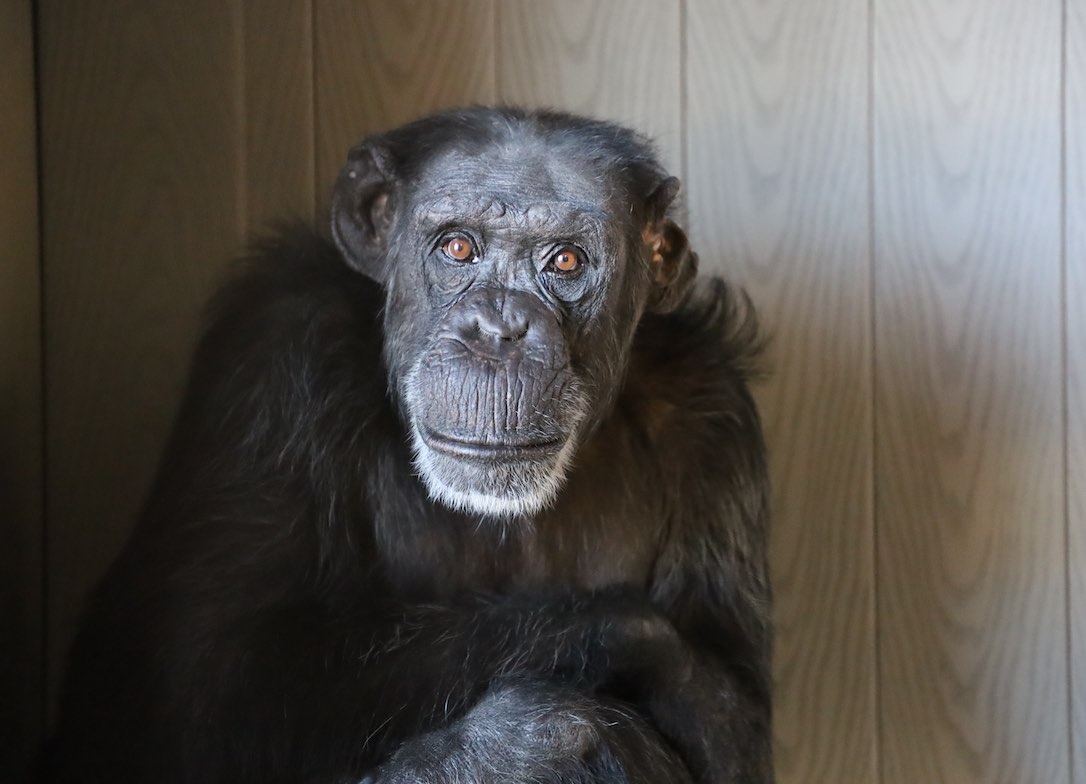
There’s a trap that I try to steer people clear of (and one that I have to try to avoid myself), which is to assume that every action that a chimpanzee takes is part of a grand Machiavellian drama; that each squabble is a deft maneuver towards some strategic aim. Did Burrito bite Foxie’s ear off because he wanted to outrank her? Was he trying to form an alliance with Jamie, who has positioned herself as Foxie’s chief antagonist? Possibly. That kind of thing certainly happens. But again, we have to bear in mind that the algorithm of natural selection has in many cases done most of the calculations for us in advance, and has left us with some rather dumb emotions to carry out all the work. Status might ultimately bring more food and more mating opportunities, but we start fights because we’re pissed. We overcompensate because we’re insecure. We anger others because we are socially inept. We gang up on the weak because we crave power. We ostracize those who are different because we want to belong. In other words, we can describe chimpanzee behavior in terms of ultimate causes, but as socially savvy as chimps are—and they are very savvy—the proximate cause for any given fight or injury is likely that they are bundles of emotions, both noble and ignoble, with the strength of several humans and teeth like railroad spikes.

As for Cy’s finger, I certainly don’t know what happened, but knowing him now, I’d be willing to place a bet: Rayne was going after someone she was mad at and Cy was injured trying to stop the fight. That’s the other thing about chimp fights, at least in captivity—they rarely end as they began and the chimp with the most injuries was probably not involved at the start.

Filed Under: Chimpanzee Behavior, Cy Tagged With: aggression, amputation, chimpanzee, conflict, fights, northwest, rescue, Sanctuary, wounding

They Always Do

December 12, 2022 by Anthony

Winter here on the eastern slopes of the Cascades can be difficult. We go to work in the dark and return home in the same. The wind stings, the cold air bites. Thick mats of snow and ice cover the landscape. Wintry conditions turn scenic drives across the mountain passes into foggy, wet, anxiety-inducing ordeals.

Yet, we carry on.

We play in the snow with friends, take our vitamin D supplements, struggle to keep our houseplants alive, finally read the books we bought in a frenzy over the summer, stay in touch with friends and family, exercise in some loud building under fluorescent lighting, and make the most of the relatively warm days when we get them.

Eventually, the days start feeling longer again. The wind stings a little less, the temperatures rise a little. The snow melts to reveal the wet dirt underneath. We begin to make plans for the coming weeks without worries of getting stranded, spinning out, or missing a flight. One day at a time. Suddenly, we find ourselves standing in an elk-trodden meadow of balsamroot and lupine watching the spring thunderstorms roll by.

From last week into this past weekend, the chimpanzees have had quite a bit of drama and it’s been a challenge to navigate. But, as Diana and Jenna pointed out in their respective blog posts, there has also been a lot of rest, recovery, and reconciliation going on. Chimps are great at filling the intervals between conflicts with productive, calming activities: building nests, grooming companions, playing chase with caregivers, foraging on some greens you found on the Hill, etc. Perhaps the best way to get you and your loved ones through hard times is just to give someone a breathy pant, eat an icicle, pile up some blankets, take a nap, and move forward. As someone told me recently, why worry about the whole necklace when you can just keep putting beads on the string?

Cy’s group, the chimpanzees who have been fighting the most frequently lately, have actually been relatively peaceful for much of their tenure as an integrated social group. It wasn’t always that way; we can all remember last spring when their union was so new and fragile that we gave them nonstop supervision, around the clock, for weeks on end. If you had visited me in the foyer one of those nights and told me those new relationships would continue to grow and thrive for six months before enduring a rough patch like this one, I would have been ecstatic.

Yes, there are tough times that seem like they will never end…

…but they always do.

~~~~~~~~~~~~~~~~~~~~~~~~~~~~~~~~~~~~~~~

The distant glow of sunrise over the Chimp House front entrance at 4:44am on June 23, 2022. It wasn’t an unusually important day, but I have this photo from my overnight shift that I have never posted here before. I looked back at my notes from that morning. The chimps slept relatively peacefully after a string of tumultuous nights.

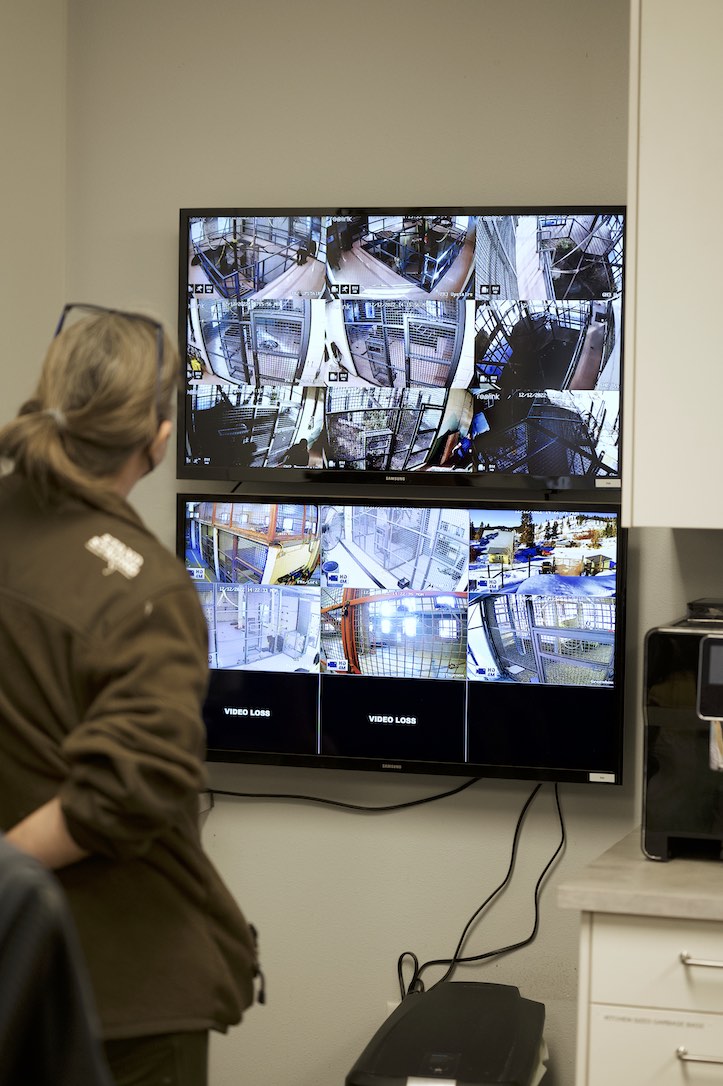
Dr. Erin watching the chimpanzees via the security cameras:

Gordo taking a moment to relax today in the playroom:

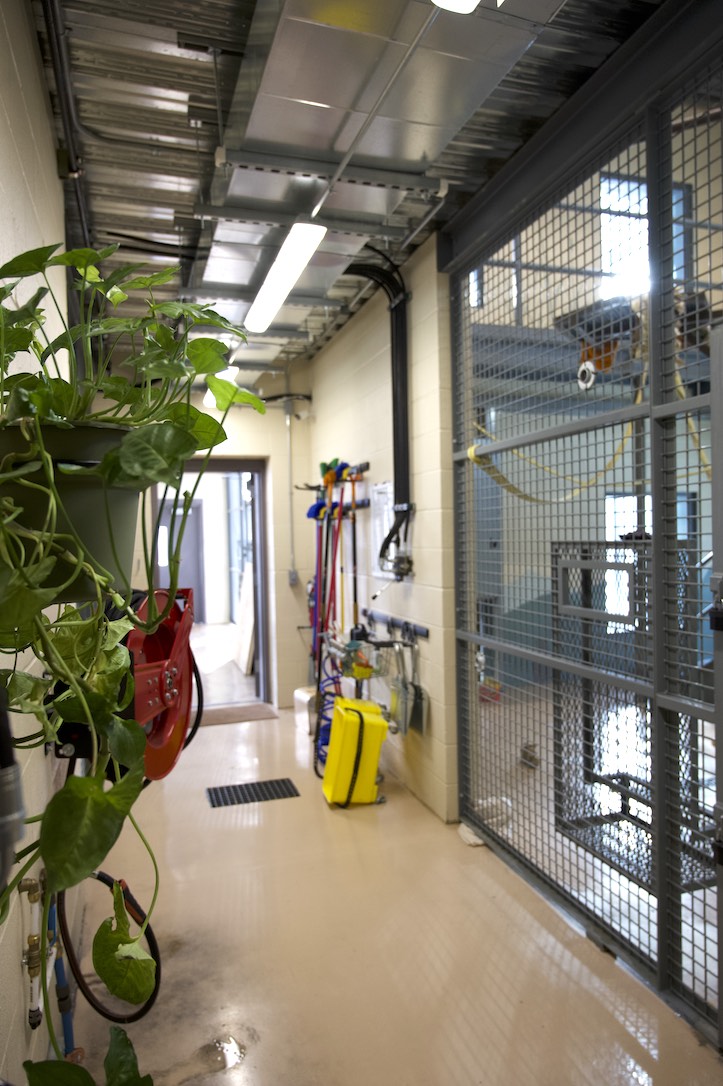
The hallway between the Lupine and Marmot Mountain playrooms after a day of cleaning:

Jamie peering down from atop a platform (where she had made a humongous nest):

The shovel that now lives outside the greenhouse door (which keeps getting blocked in with ice).

Filed Under: Chimpanzee Behavior, Fights, Introductions, Sanctuary Tagged With: building, conflict, drama, fights, foyer, growth, improvements, overnights, progress, relationships, snow, tension, Willy B, winter

Who’s in charge?

January 15, 2016 by J.B.

One of the first things you realize when you begin working with chimps is that you are not in charge. We humans may have larger brains, but believe me, the chimps are just not that impressed.

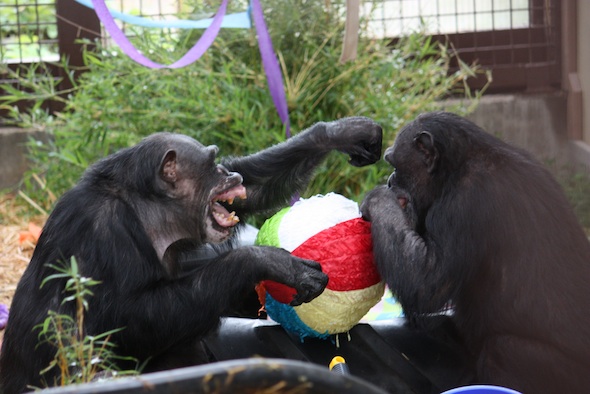
web Jamie outside close up serious sheet over shoulders_MG_5804

On a good day, they graciously allow us into their world as friends or playmates. On a bad day, we are unwilling participants (usually the victim) in their constantly unfolding social dramas. But most of the time we are merely spectators, forced to watch impotently from the sidelines.

Fights are a good example of this. If you’ve worked with chimps for a while, you can forget what it was like to witness your first fight – the piercing screams, bodies leaping and rolling and flailing across the enclosure, the huge canine teeth bared for all to see. The first time you see it, you wonder if anyone will come out alive. But after a while, you get used to it, and you start to differentiate between regular squabbles and the more serious fights based on the tenor of the screams alone. You get so immune to it, in fact, that during minor fights you don’t even bother looking up from your computer until you notice a new volunteer breaking out in tears and wondering how a group of people so heartless and unsympathetic could have ever been placed in charge of a sanctuary.

web_Negra_fear_grimace_take_pinata_from_jody_GH_jb_IMG_3615

The thing is, even if we wanted to intervene in a fight, there’s not a whole lot we could do. When chimps are fighting, they are intensely focused on the task at hand. When the potential for a life-threatening fight is high, as the case may be during social introductions, caregivers might try to break up a fight by spraying the chimps with a hose or firing a CO2 extinguisher into the air with the hope that the noise will distract them just long enough to get them separated. But most of the time, all we can do is stand by and assess the damage.

We often joke that it’s the chimps that run the sanctuary, not us, but there’s more than a bit of truth to that idea. Within these walls, we have no choice sometimes but to play by their rules.

Filed Under: Chimpanzee Behavior Tagged With: caregiving, chimpanzee, fights, northwest, rescue, Sanctuary

Primary Sidebar

Subscribe To the Blog and Get Notified of New Posts First!

Archives

Calendar of Blog Posts

June 2026
S M T W T F S
 123456
78910111213
14151617181920
21222324252627
282930  
« May    

Categories

SUBSCRIBE TO OUR NEWSLETTER

Footer

PO Box 952
Cle Elum, WA 98922
[email protected]
509-699-0728
501c3 registered charity
EIN: 68-0552915

Official DDAF Grantee

Menu

  • The Chimpanzees
  • Blog
  • About Us
  • You can help
  • Resources
  • Contact
  • Donate

Proud Member of

Connect With Us

Search

Copyright © 2026 Chimpanzee Sanctuary Northwest. All Rights Reserved. Site by Vegan Web Design