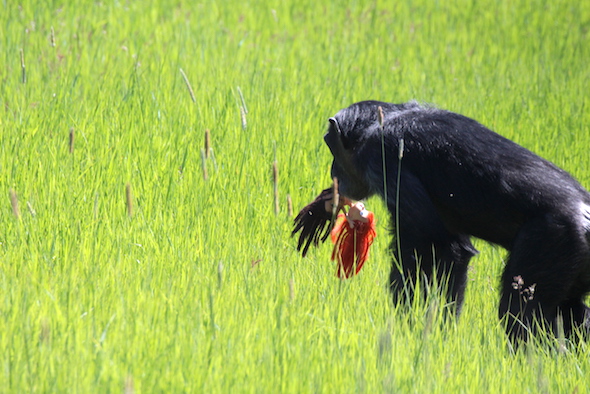
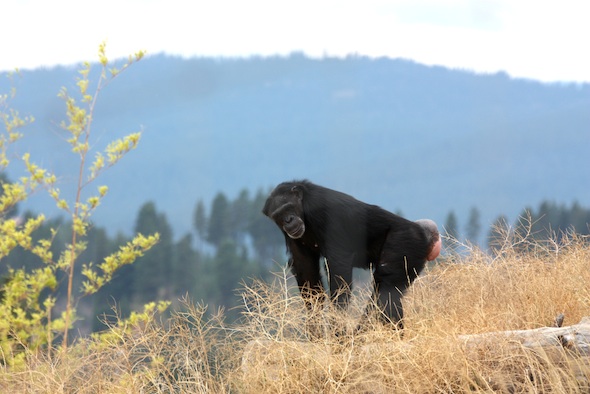
Whenever we drive the Gator (our farm utility vehicle), Jamie excitedly challenges us to a drag race. Exercise, enrichment, and a nice little rest for the staff!
The gift of knowing Foxie
I’ve met very few people in my life capable of spreading joy as infectiously as Foxie. Even the act of saying her name coaxes your mouth into a tiny smile. That so much happiness can come from a life rooted in so much tragedy is nothing short of a miracle.

How to get away with anything
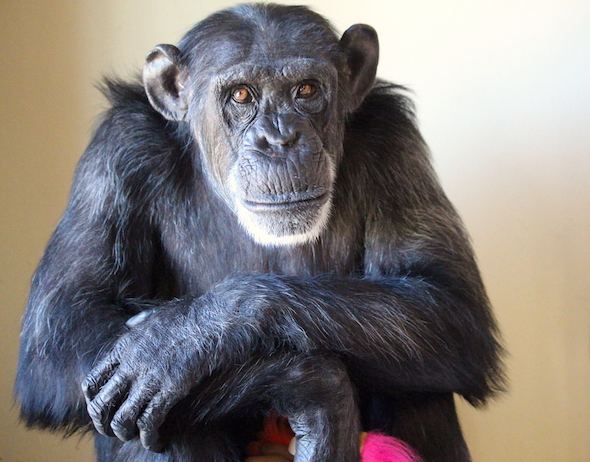
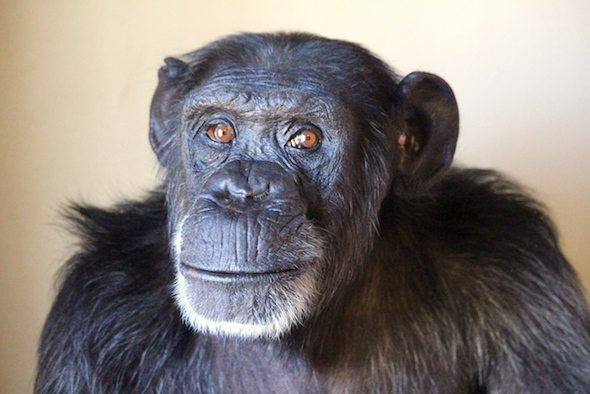
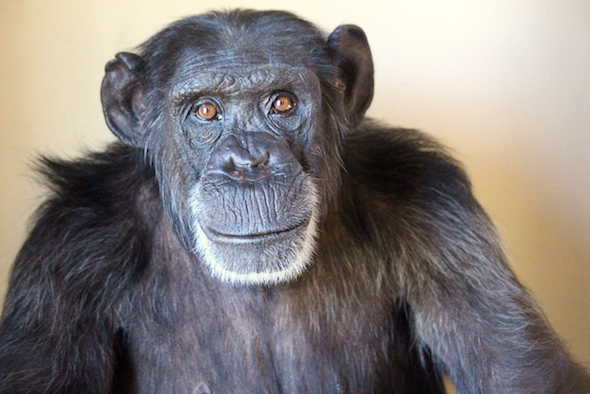
Burrito has seen a lot in his 34 years – he was born in a laboratory, raised as a pet, shipped off to a circus, and then put back into Hepatitis vaccine research for two decades. But perhaps his biggest challenge came when he was finally able to join a social group.
Chimpanzees who were raised by humans typically struggle to fit in with other chimps. It’s like being dropped off in another country where you can’t speak the language and don’t understand the laws.
Because of this, Burrito is always getting in trouble with his group mates. But with a face like this, and the ability to turn on the charm when necessary, no one can stay mad for long.
Animal Sanctuary Caregiver Day
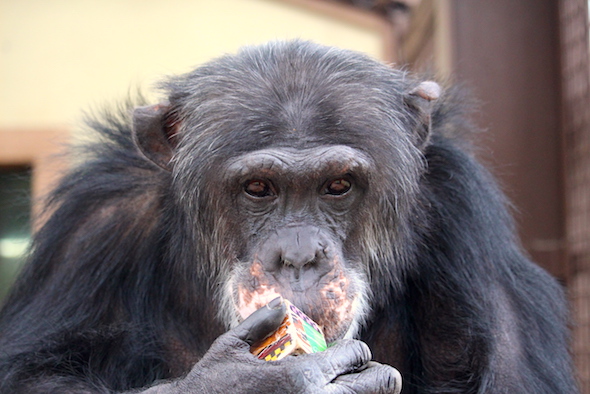
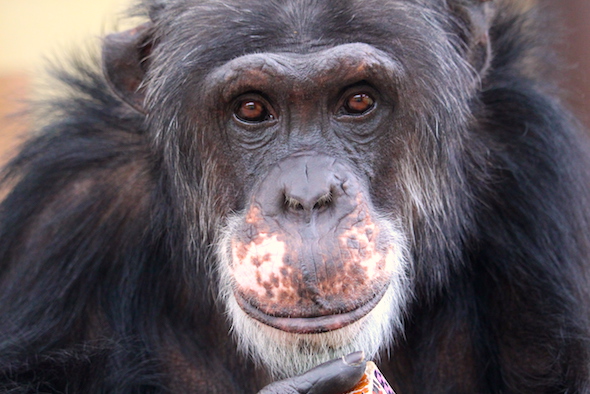
Caregivers are the heart and soul of every animal sanctuary. To recognize their vital contribution to the well being of thousands of rescued animals around the world, the North American Primate Sanctuary Alliance has teamed up with the Global Federation of Animal Sanctuaries to create a day in their honor. Today, we are proud to celebrate the first annual Animal Sanctuary Caregiver Day!
Here at CSNW, it’s impossible to overstate the love, dedication, and commitment that our caregivers demonstrate every day. Every moment of playfulness we share on this blog, every picture of contentment you see, is the product of thousands of hours of hard work by CSNW’s caregiver crew.
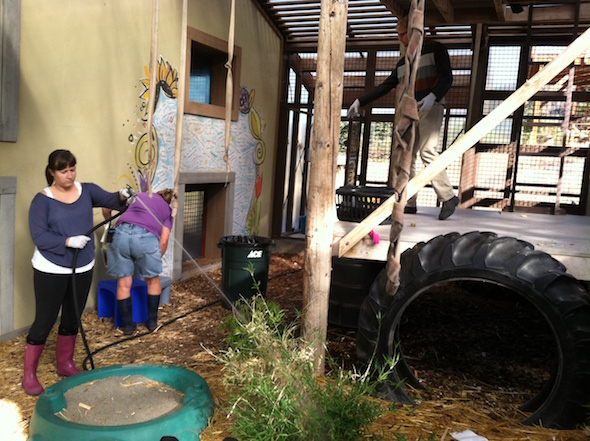
The staff and volunteer caregivers clean for five hours a day, seven days a week. It is a never-ending job.
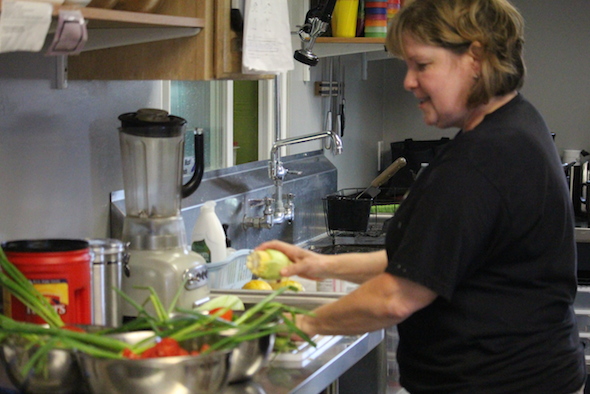
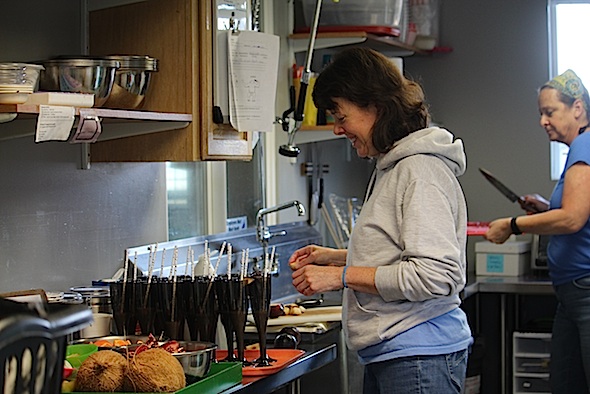
They prepare the chimps’ many meals, forages, and food puzzles each day.
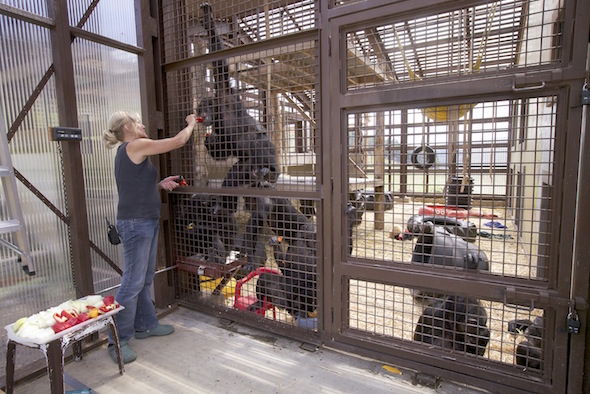
They invest countless hours in training so that they can help serve those meals safely.
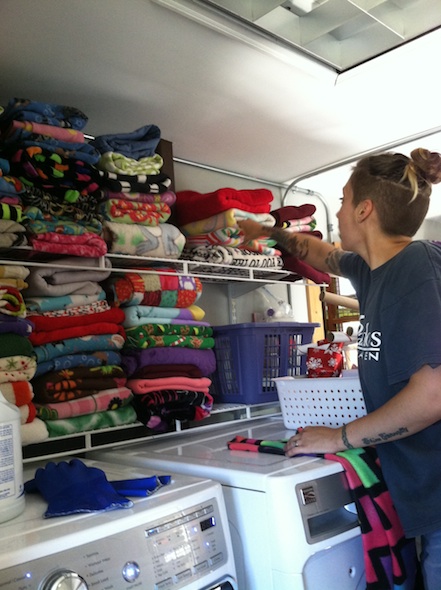
They wash and fold 70 or more blankets a day so the chimps can build fresh, clean nests.
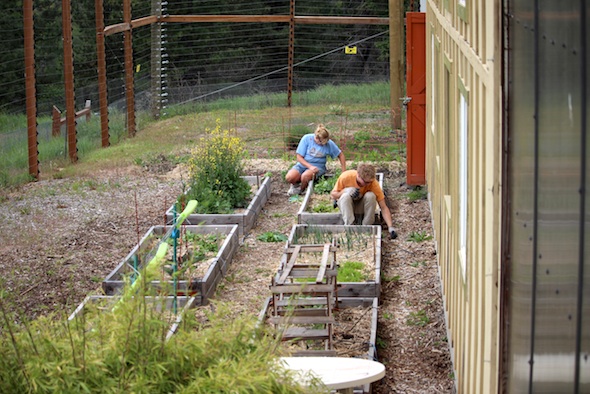
They plant gardens and tend to them throughout the summer so that they chimps will have the freshest produce possible.
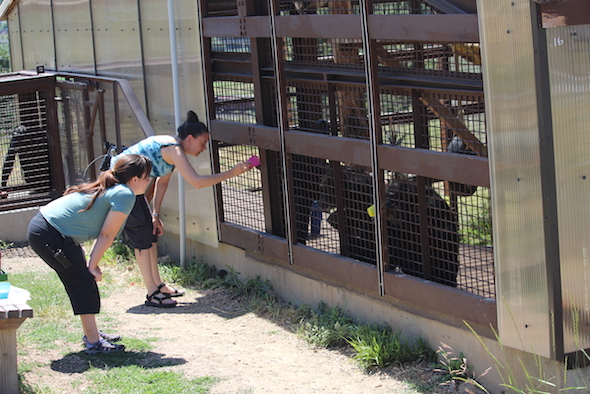
They throw parties for the chimps to keep life exciting and interesting.
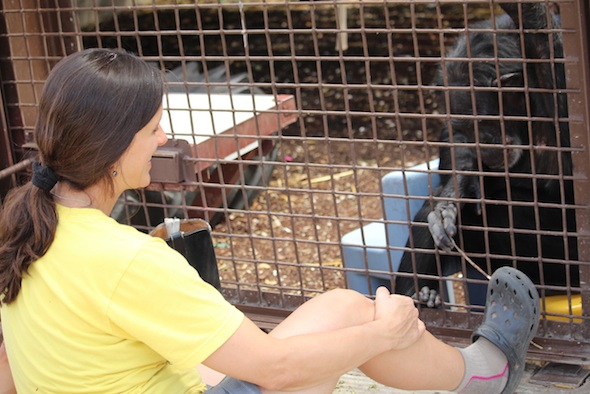
They spend countless hours building trust and developing friendships.
They tend to wounds and ensure that medications are administered daily.
They engage in hundreds of hours of positive reinforcement training so that the chimps learn to cooperate with physical exams.
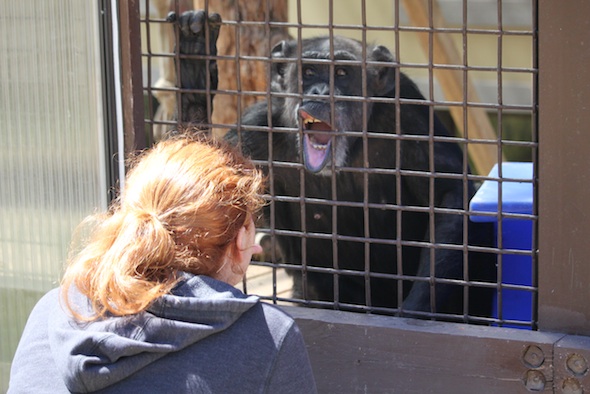
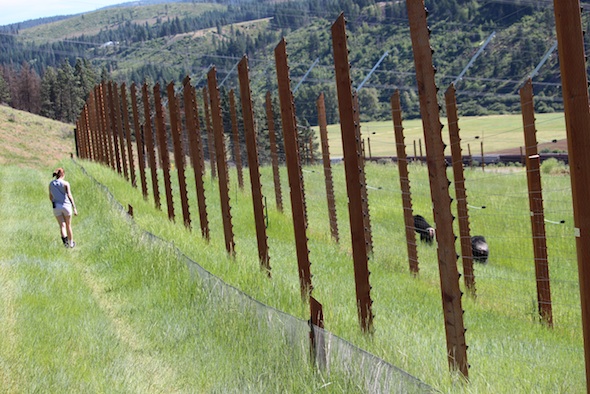
They walk for miles around Young’s Hill in the blazing sun and the pouring rain to keep Jamie and her friends company.
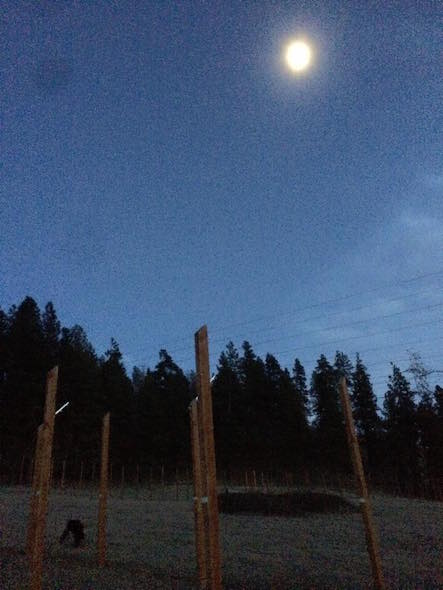
They work weekends and holidays because the chimps never take a day off from needing our care. And when Jamie insists on staying out all night and walking in the moonlight, they are there too – even when they might rather be home in bed.
Caring for chimpanzees is hard work. It’s physically demanding and, at times, emotionally draining. But it can also be unbelievably rewarding. We are lucky to be surrounded and supported by people who find fulfillment in working hard for the benefit of others; people who measure success by the amount of good they can do for the animals who so desperately need our help.
To Elizabeth, Katelyn, and Anna, who dedicate their lives to the Cle Elum Seven, to the dozens of selfless volunteers and interns who give up their free time to serve these deserving chimpanzees, and to sanctuary caregivers around the world: Thank you for all you do and Happy Animal Sanctuary Caregiver Day!
Save
Keeping Busy
Jamie spent over twenty years in barren laboratory cages with nothing to do. These days, she is almost never idle…when she’s not playing with her chimpanzee friends or patrolling her two-acre enclosure, she invents projects for herself with the dozens of enrichment items set out for her each day.
Thank you, Keri!
We’re sad to announce that caregiver and master-of-all-things-enrichment, Keri Heniff, is stepping down from her role as a part-time staff member at CSNW. The good news, however, is that she’s not really going anywhere – Keri will continue to make the long drive from Leavenworth to care for the Cle Elum Seven as a volunteer. We’ll just see her a little less often.
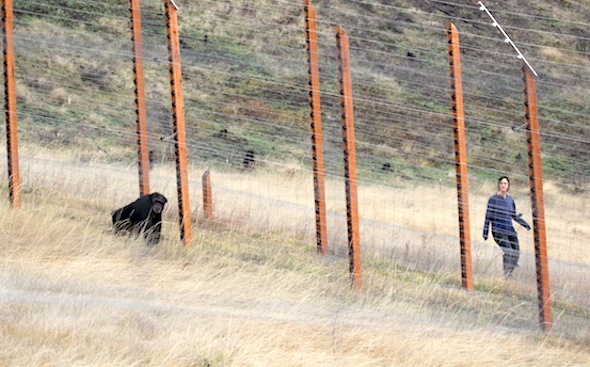
Keri has been a true friend to the chimps and an indispensable member of the team here at CSNW. So even though we’re not really losing her, I hope you’ll join me in taking this moment to thank her for her hard work, her dedication, and her devotion to the chimps.
And by the way, Keri, Jamie has made it clear that the boots will fit the same whether you are a staff member or a volunteer and she expects the same number of walks when you are here.
We’re looking forward to introducing you to CSNW’s newest staff member, Kelsi, in June when she completes her cross-continental journey from Quebec.
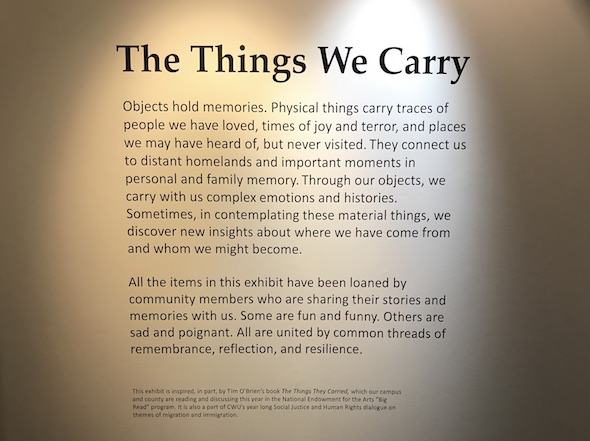
The Things We Carry
A few months ago, Chimpanzee Sanctuary Northwest was invited to contribute to an exhibit in the Museum of Culture and Environment at Central Washington University. The exhibit, entitled “The Things We Carry,” would feature objects of significance to the members of our local community.
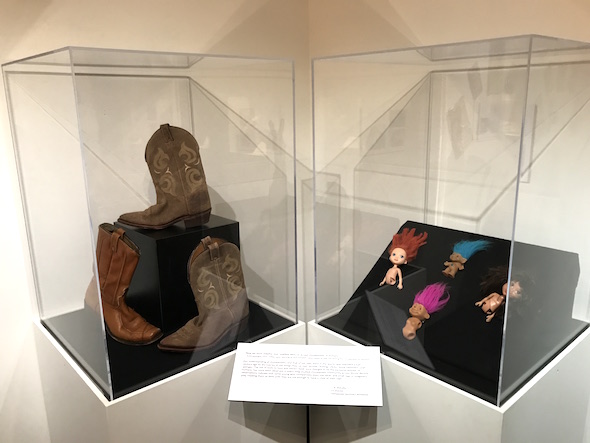
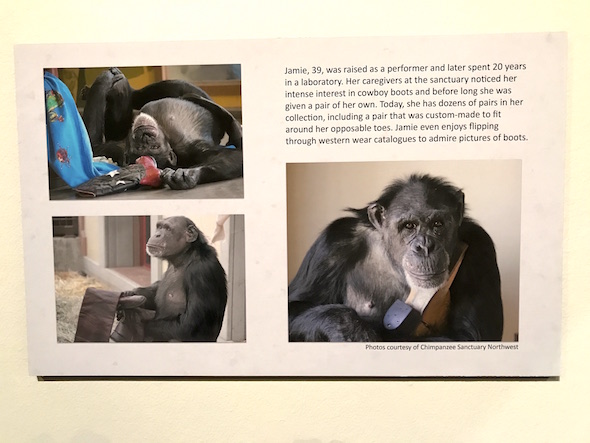
Our community, of course, includes seven chimpanzees, and you’d be hard pressed to find objects of greater significance to their owners than the boots and dolls carried by Jamie and Foxie.
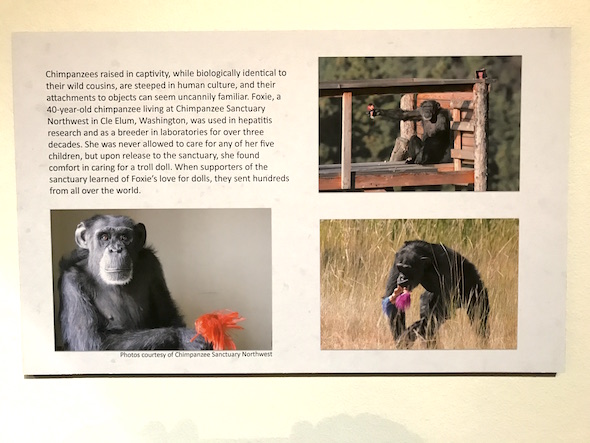
During the opening reception for the exhibit, Dr. Jessica Mayhew, who is both a professor in the Primate Behavior and Ecology program at CWU and a CSNW volunteer, provided some very moving remarks on the installation:
When you have the opportunity to go in and experience the exhibit, you’ll see some objects that undoubtedly look familiar to you. A pillowcase, a toddler’s dress, empty bags of potato chips. Also encased are some cowboy boots and dolls. Cowboy boots in this region are common, and many of us can surely remember the various iterations of Troll dolls beginning in the 1960s.
But what’s special about these boots and these dolls, is that the objects do not belong to humans, they belong to two chimpanzees from Chimpanzee Sanctuary Northwest: Jamie and Foxie. Jamie and Foxie are only two of seven chimpanzees residing at CSNW, and they are not the only chimpanzees that carry objects, but their object carrying has become iconic, picked up in popular news stories across the US and globally.
As a primatologist, I have watched my fair share of object manipulation, tool creation, and object play in macaques, in capuchins, in the large-bodied apes. Jane Goodall first described tool use in chimpanzees in 1960, when she observed David Greybeard termite fish with a piece of grass. We’ve been grappling with the implications of those observations ever since.
Objects occupy a wide functional range in the lives of primates. Some are used in the acquisition and processing of food – capuchin monkeys carry large, hard hammer stones up from nearby riverbeds to their nut cracking sites; chimpanzees have been observed to carry sticks, stems, and sturdy grasses from one location in their home range to termite and ant nests, where they know they will not find suitable fishing materials. Objects do not always have to be inanimate: mother primates regularly carry their infants, most often on their backs, but sometimes on the chest, which can make walking a bit of a challenge. Still other objects are used in ways that we have only begun to observe and decipher: stone handling in multiple macaque species, log and rock cradling in chimpanzees.
But there is something different when the object is one that’s familiar to us; one that may have played a large role in our childhood, like dolls or action figures, or is an object that is perhaps a part of the larger cultural fabric of a place, like cowboy boots. When familiar objects are put into hands that are a little less familiar, it makes the divide between human and non-human a little bit narrower.
There are 7 chimpanzees at CSNW, all of them very much individuals, all of them vibrant and compelling; they were known as “The Buckshire Seven”, because they were housed at the Buckshire Corporation in a windowless basement, and spent the majority of their lives leased out for various biomedical studies. Jamie was born in captivity around 1977, and she spent the first nine years of her life in the entertainment industry before entering into the biomedical realm. Foxie, on the other hand, was born into the biomedical industry in 1976: she was used in vaccine trials, she was used as a breeder. Each time she gave birth, her infant was carried away by humans.
This group became “The Cle Elum Seven” when they moved to sanctuary in 2008. Jamie has spent the last nine years of her life, taking chimpanzee patrols around the property with her human friends, who are always in boots. Foxie has no shortage of dolls to carry with her, and no risk of them not being there each day.The exhibit description tells us that, “Objects hold memories. Physical things carry traces of people we have loved, times of joy and terror, and places we may have heard of, but never visited. They connect us to distant homelands and important moments in personal and family memory. Through our objects, we carry with us complex emotions and histories. Sometimes, in contemplating these material things, we discover new insights about where we have come from and whom we might become.”
Maybe Jamie’s very specific love of cowboy boots comes from her early days reared with humans. Maybe Foxie’s love of dolls comes from never fully experiencing motherhood. Maybe, I’ll leave that for them to know, ultimately. But I will say that these objects serve as reminders for us, as onlookers, for where these chimpanzees have been and for what humans have done to them. They are powerful expressions of both great sadness and great silliness. But they also serve as symbols of hope, that circumstances can change, that life can be better and full of kindness and compassion.
The exhibit title, “The Things We Carry” seems all the more fitting now with the inclusion of these artifacts from our closest relatives. This is a community-curated exhibition. Not just this local community of humans with stories to tell, and memories to conjure, but the deep roots shared by humans and our closest kin. Indeed, we are all carrying physical, emotional, and metaphorical things.