• Skip to main content
  • Skip to primary sidebar
  • Skip to footer

Chimpanzee Sanctuary Northwest

Hope. Love. Home. Sanctuary

  • Our Family
    • The Chimpanzees
    • The Cattle
  • Blog
  • About Us
    • Visiting the Sanctuary
    • Philosophy
      • FAQs
      • Mission, Vision & Goals
      • Privacy Policy
    • The Humans
      • Staff
      • Board of Directors
      • Founder
    • Annual Reports
    • The Future of CSNW
    • CSNW In The News
  • You can help
    • Donate
      • Become a Chimpanzee Pal
      • Sponsor A Day
      • Transfer Stock
      • Be A Produce Patron
      • Be a Bovine Buddy
      • Give from your IRA
      • Personalized Stones
      • Bring Them Home Campaign
    • Leave A Legacy
    • Employment Opportunities
    • Volunteer
    • See Our Wish List
    • Events
  • Resources
    • About Chimpanzees
    • Enrichment Database
    • Advocacy
      • Advocacy Action Center
      • Apes in Entertainment
        • Trainers
        • Role of the AHA
        • Greeting Cards
      • Chimpanzees as Pets
      • Roadside Zoos
      • Chimpanzees in Biomedical Research
      • Conservation
        • African Apes
        • Orangutans
  • Shop
    • Merchandise Store
  • Contact
  • DONATE NOW

Diana

Jody Feeling Better

August 25, 2018 by Diana

Yesterday was the day after Jody’s eyelid repair surgery. She spent most of the day sleeping off the anesthesia after making a giant nest. Yesterday she wasn’t so interested in food or drinks, but was taking sips of water.

I know that chimpanzees are known for their quick healing and tough spirits, but even I was surprised what a difference a night made for Jody. This morning, the swelling around her eye had gone down considerably, and she was alert, active, and hungry! She was especially happy to be offered some lychees that an old friend brought her and was eager to dig into some pineapple. She took a little smoothie too:
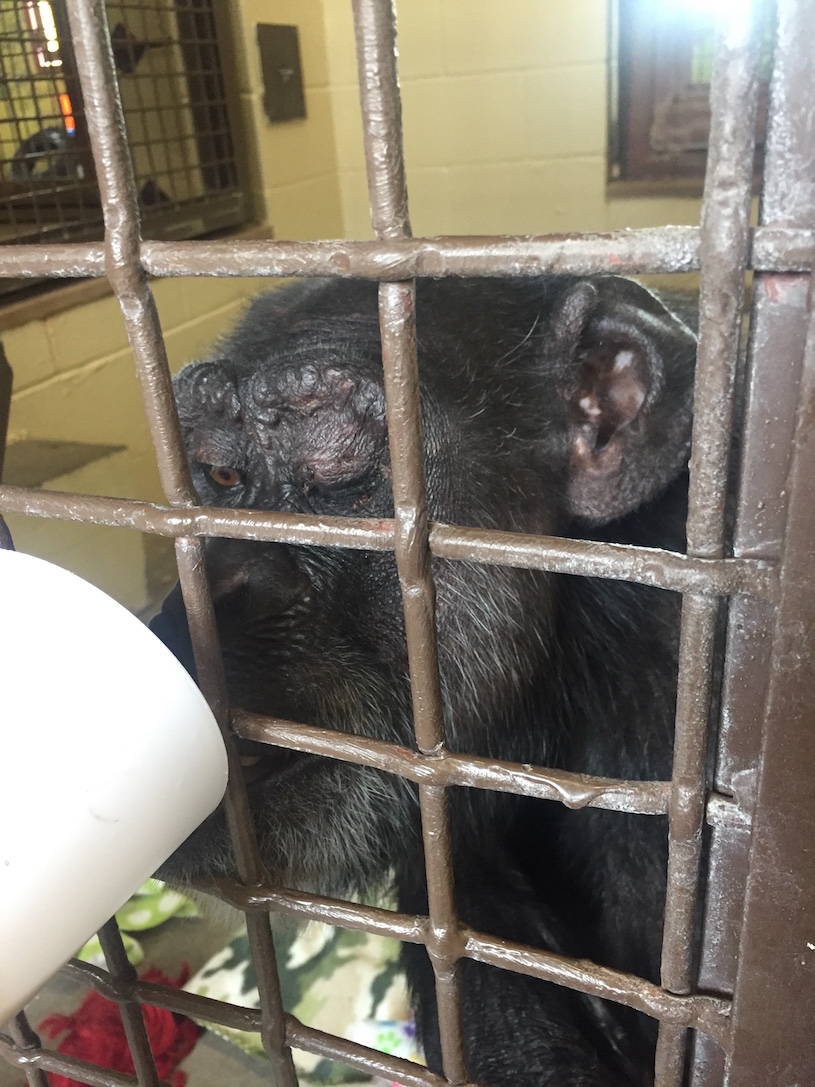
It was also clear that she was very interested in being back with the rest of the chimpanzees:
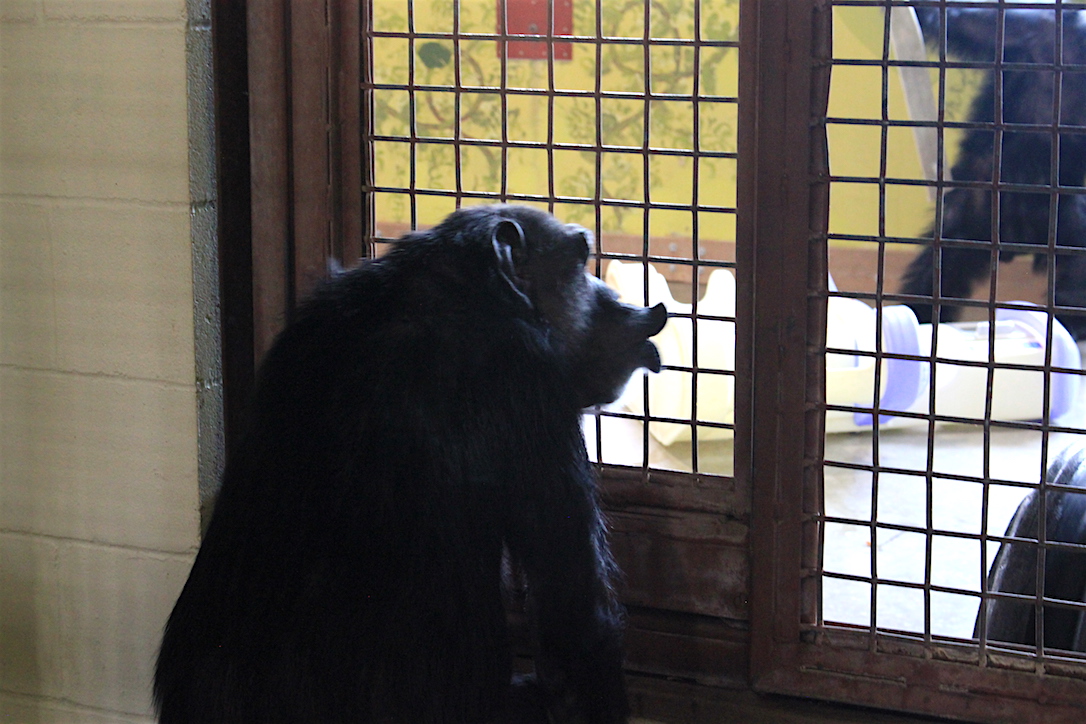
Dr. Erin Zamzow came to assess things and decided it would be best to give her another day of healing on her own without the drama and focused attention of the other chimps.

Jody decided maybe another day alone wasn’t so bad…
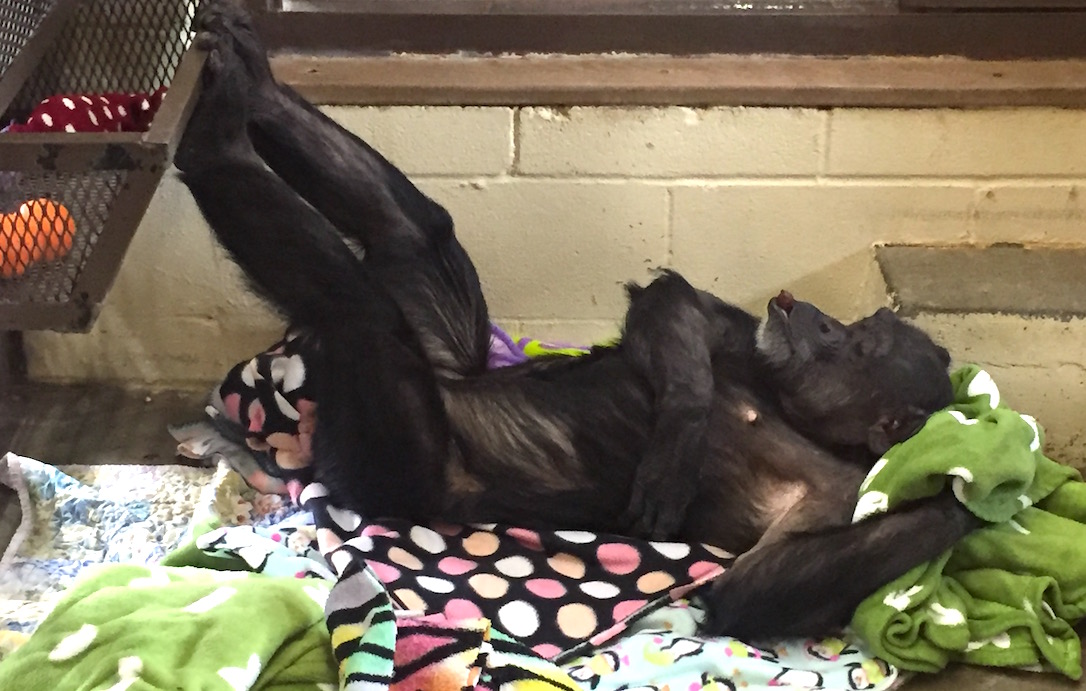
Her friends still got to visit her while she was in her private quarters. She and Foxie played a little game of tag:
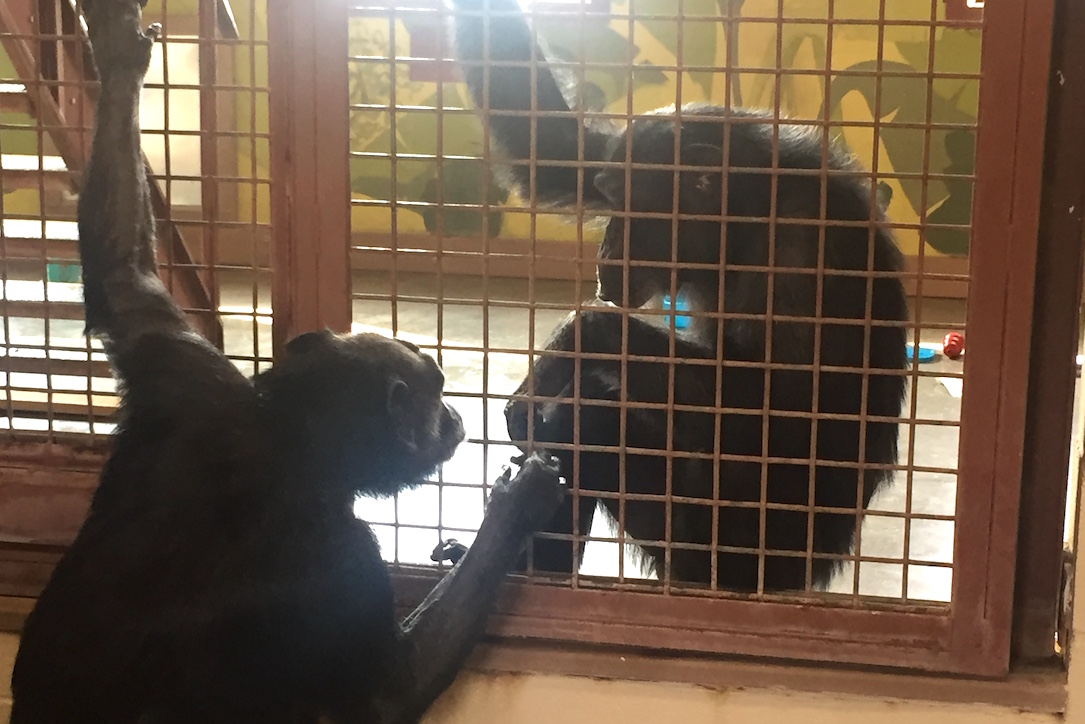
and Burrito gave her a kiss:
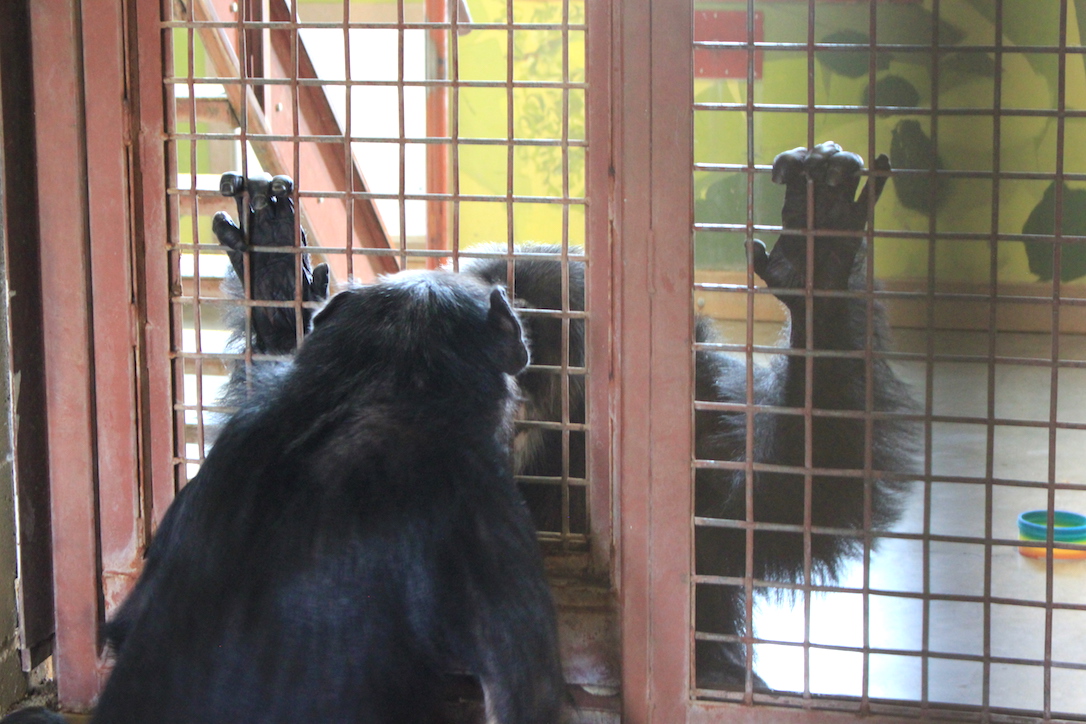
We made sure that Jody had lots of food puzzles and other interesting things to do and that the other chimpanzees were able to go about their daily activities, like Missy running:
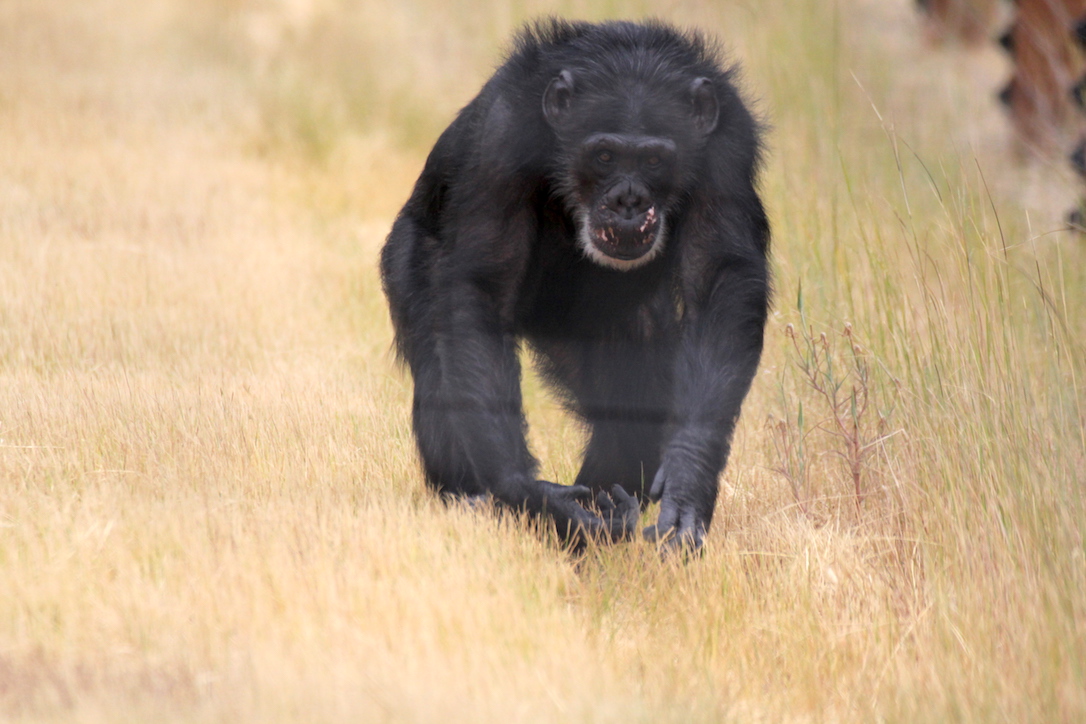
Jamie hanging out in the tunnel on the hill:
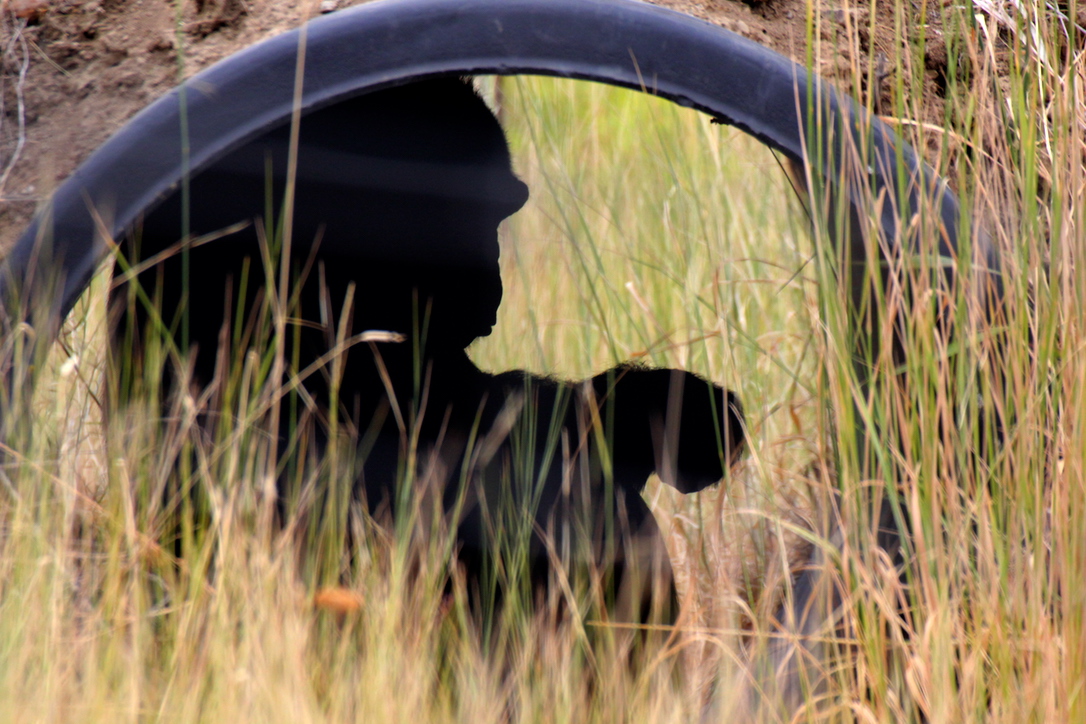
and Burrito allowing me to photograph his handsome self:
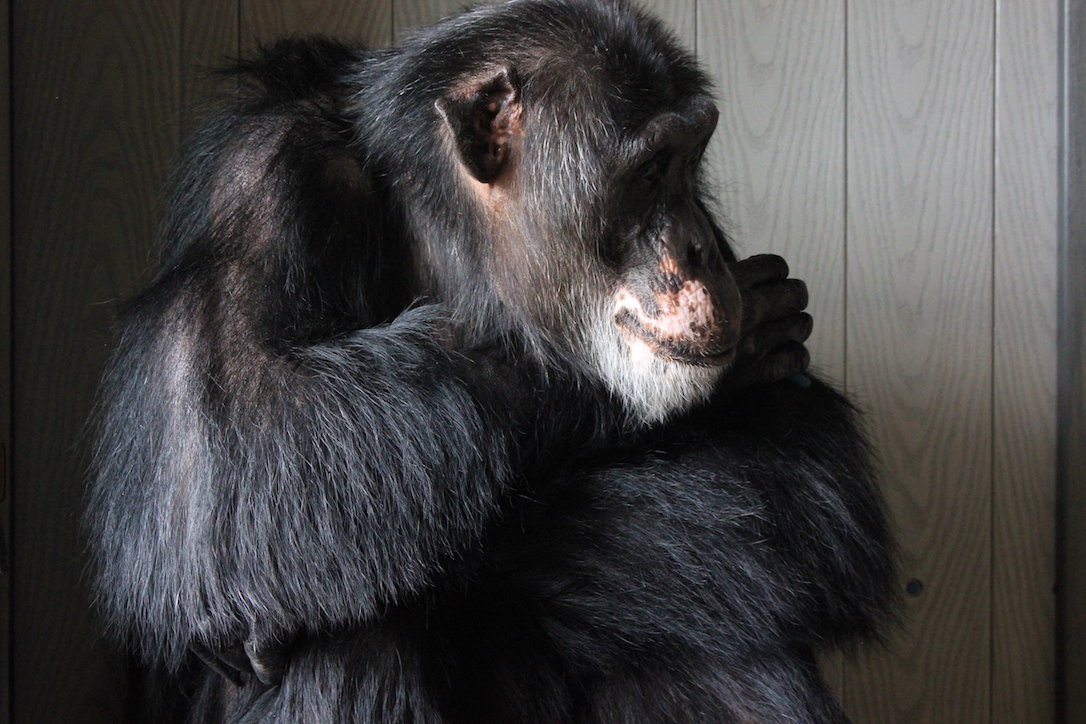
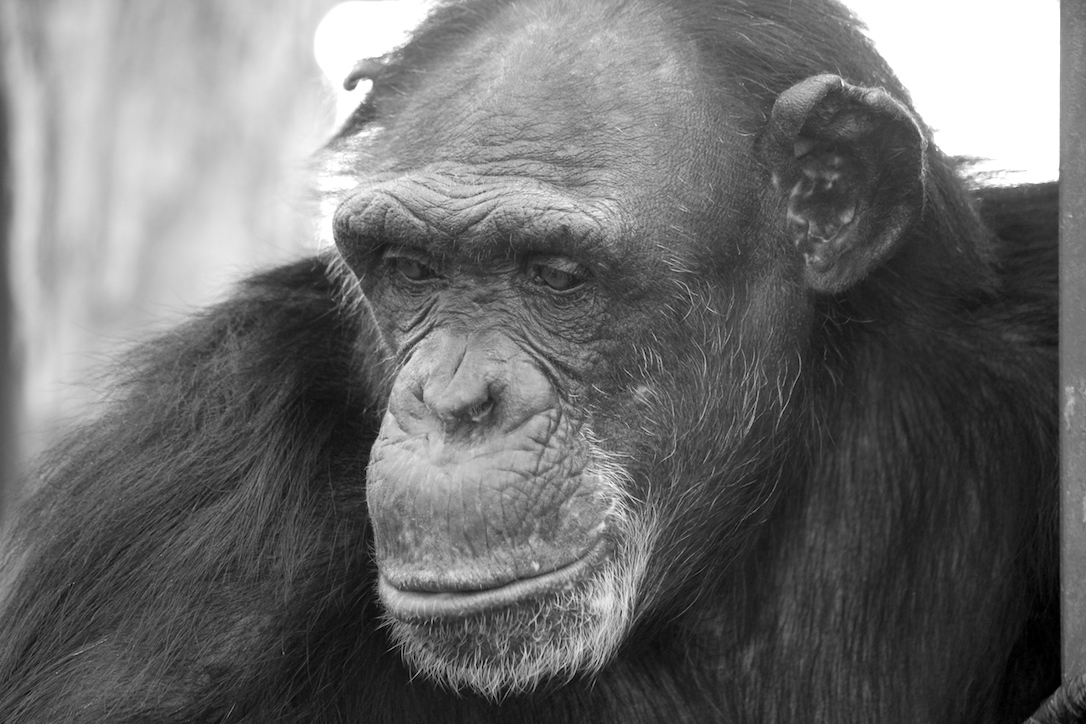
 

Filed Under: Burrito, Foxie, Jody Tagged With: animal rescue, Animal Welfare, chimpanzee rescue, chimpanzee retirement, chimpanzee sanctuary, Chimpanzee Sanctuary Northwest, chimpanzees, Cle Elum Seven, Nesting

The many shades of Jamie

August 18, 2018 by Diana

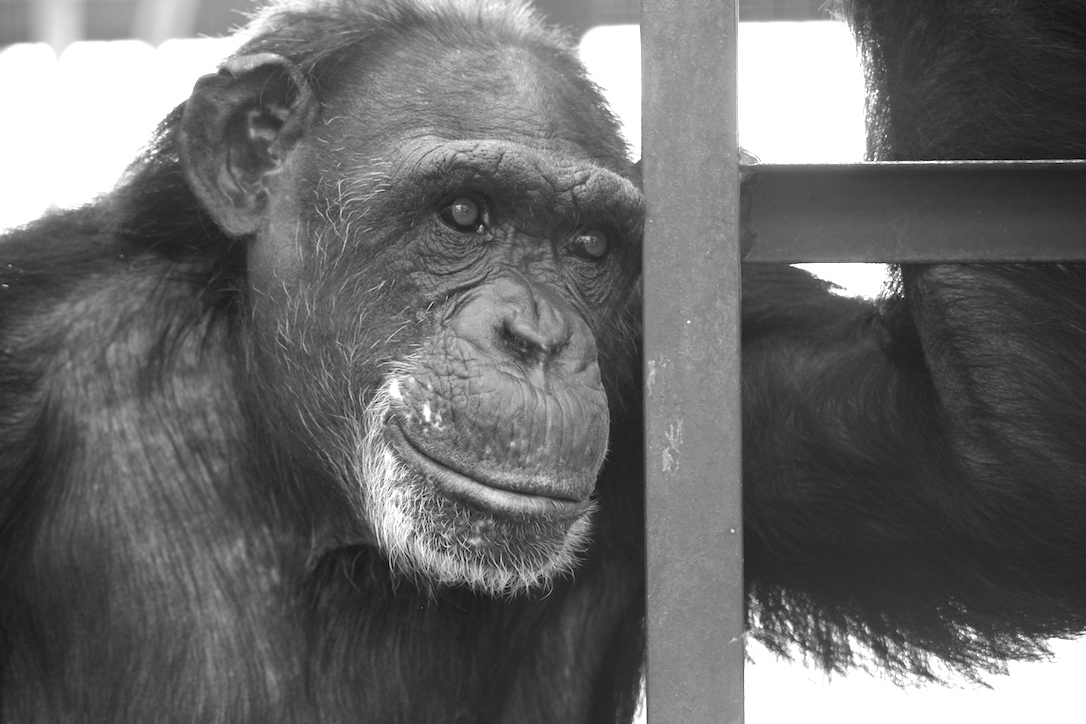
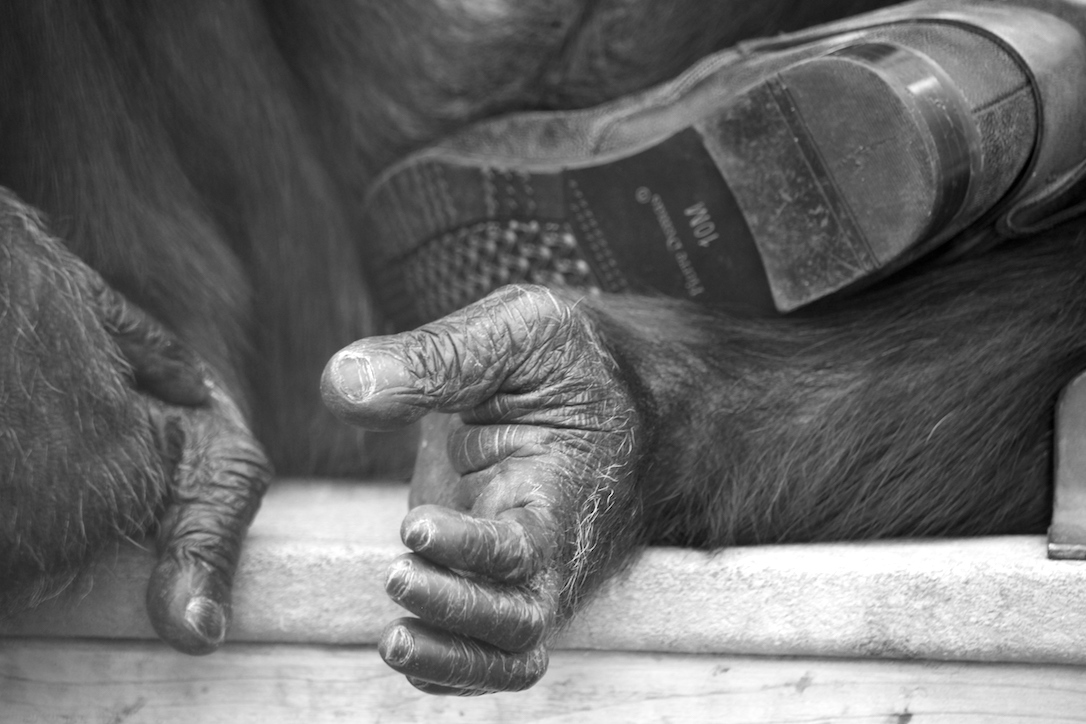
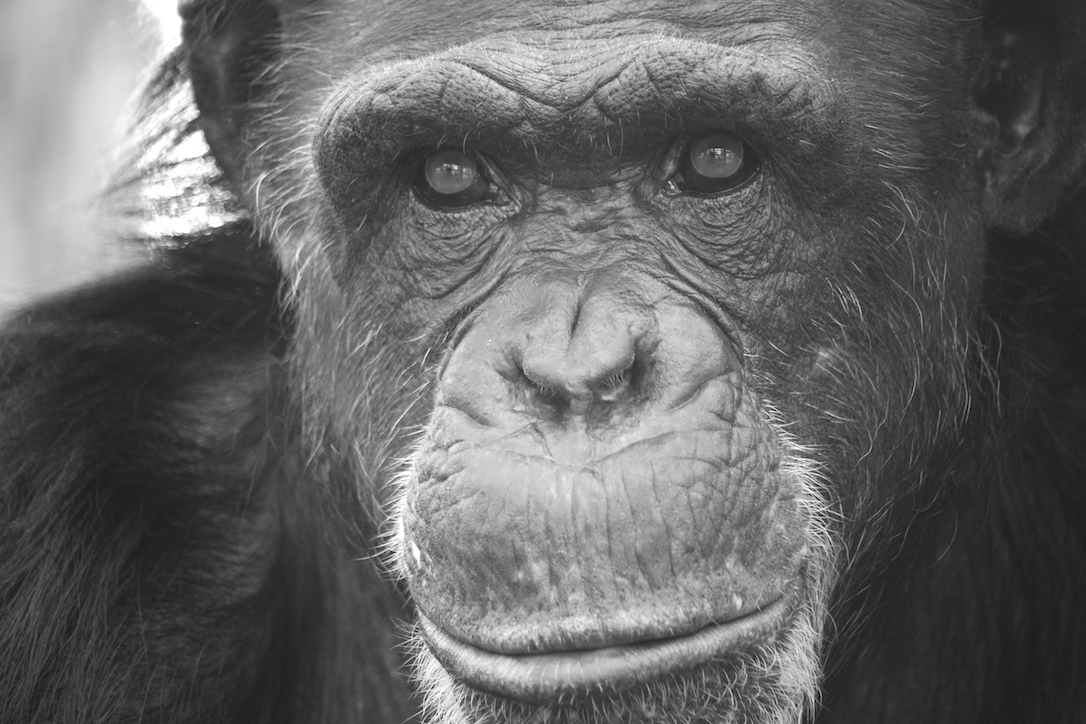
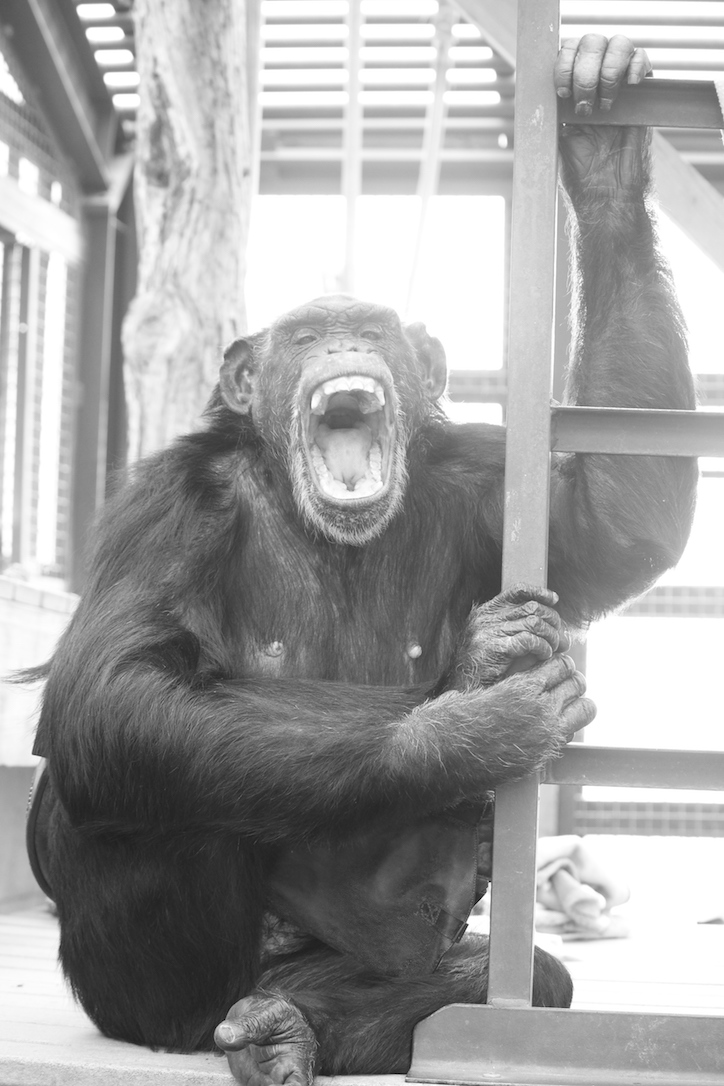
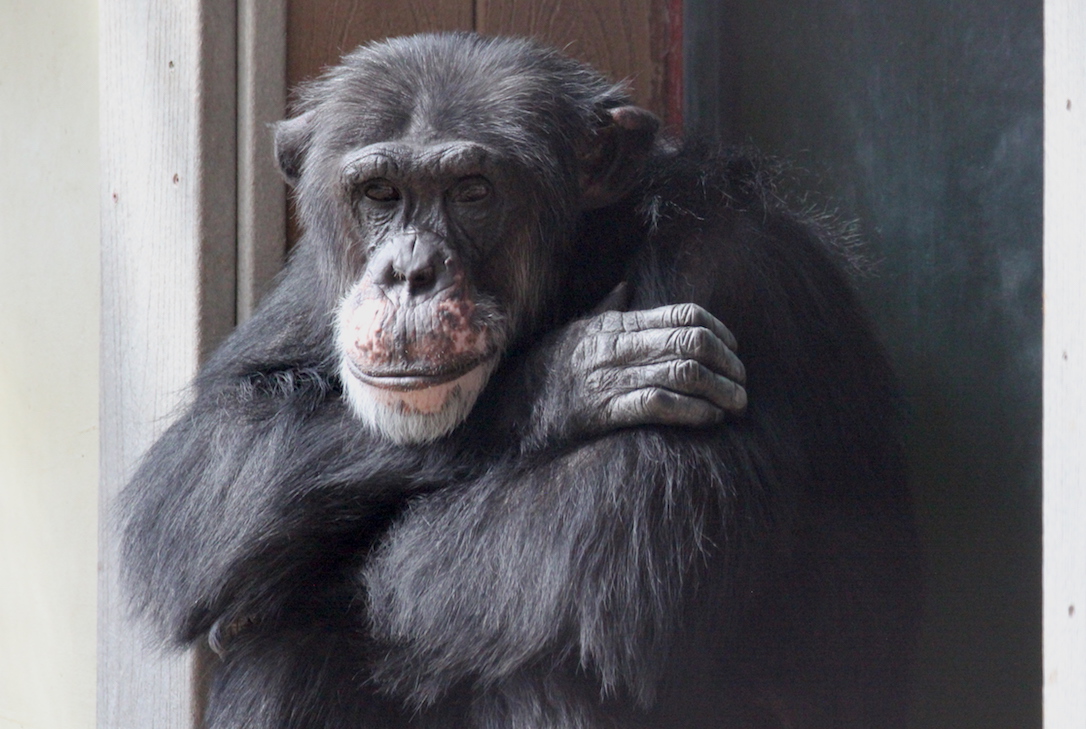
Jamie is intense, capable, determined, moody, stubborn, and on occasion sweet and silly.


This one is more of an outtake:

Filed Under: Boots, Jamie Tagged With: animal protection, animal rescue, Animal Welfare, black and white, chimpanzee, chimpanzee retirement, chimpanzee sanctuary, Chimpanzee Sanctuary Northwest, Jamie, photography, primate protection, primate rescue

Sparking an Idea

August 11, 2018 by Diana

There’s so much that happens at the sanctuary that we often have stories or tidbits we want to share on the blog that get “bumped” for something else noteworthy, heartwarming, or amazing (all of these adjectives describe yesterday’s post about Negra! My heart will remain full after that experience for a very long time to come).

Here’s one of those stories that got bumped for something else, but I still wanted to share it because I’ve been thinking about it ever since.

A couple of weeks ago, J.B. found a small wasp nest (sans wasps) and brought it into the office. I was working in the chimp house that day, and he suggested that I give it to one of the chimpanzees who likes to eat wasp larvae. The known connoisseurs of wasp larvae currently are Jamie, Missy, and Jody. Always eager to please the boss, I first offered it to Jamie. When I presented it to her and pointed out the holes that were filled in with grubs, I’m positive she recognized what it was, but, to my surprise, she did not gesture for me to give it to her. So I said, “Okay, Jamie, I’m going to give it to someone else.” She remained where she was and let me leave without a protest.

I found Jody lying in a pile of blankets in one of the front rooms. When I showed her the wasp nest, she leapt out of bed and put her lips up to the caging so I could give it to her. She was extremely happy with this unexpected gift and took it back to her nest with a contented low moan. Jody was probably grateful for this wasp-free (and therefore sting-free) nest, given her experience last month.

Several hours later, Jamie indicated that she wanted to go on a walk. As per the routine, I donned some boots and headed out to join her on the opposite side of the fence. She did not continue along the perimeter path, however. Instead, she made a beeline for the structure we call Negra’s cabin.

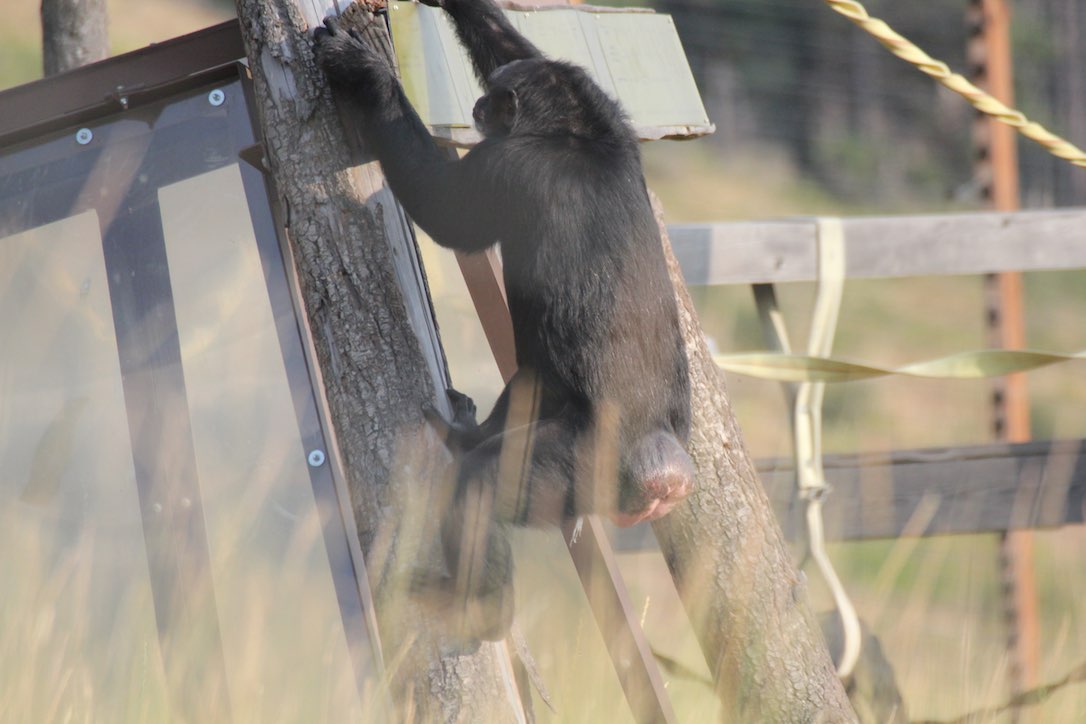
I watched her with curiosity as she climbed to the top and then sort of swung into the cabin, reaching with her right hand. I had no idea what she was doing until she slithered down the cabin support log and I saw her pick up something from the ground. That’s when I figured out that she had removed a wasp nest and was collecting the spoils.

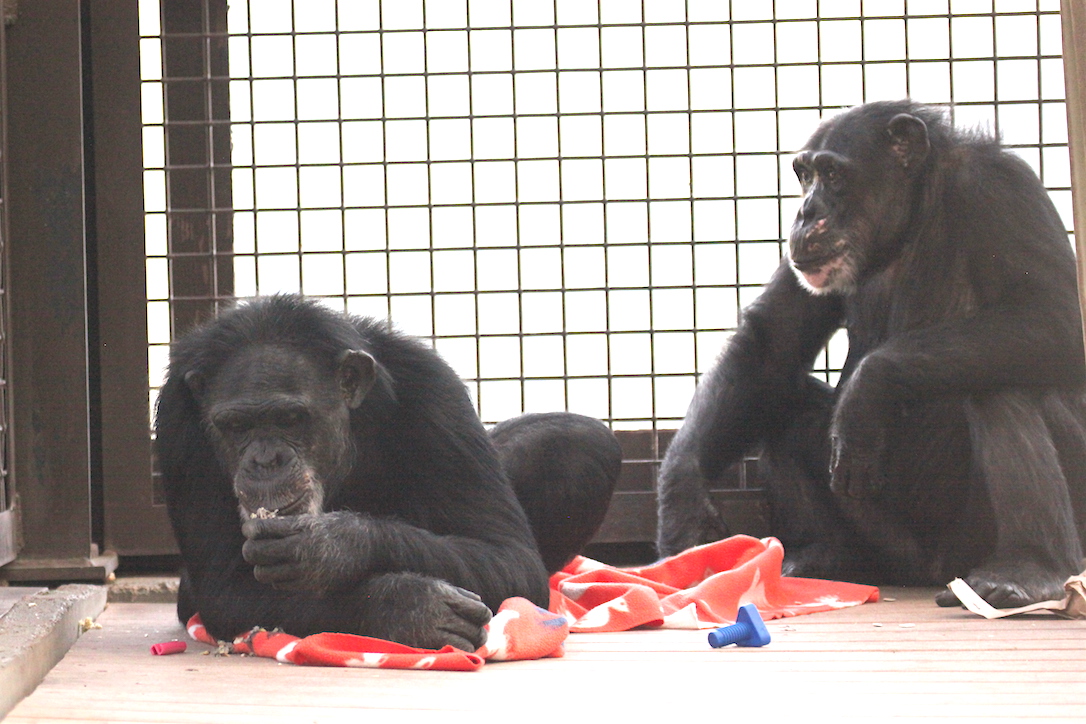
Rather than resuming the walk, she headed back to the greenhouse. When I caught up with her, I found Jamie enjoying her treasure and Missy sitting next to her, ready for anything Jamie might drop or discard.

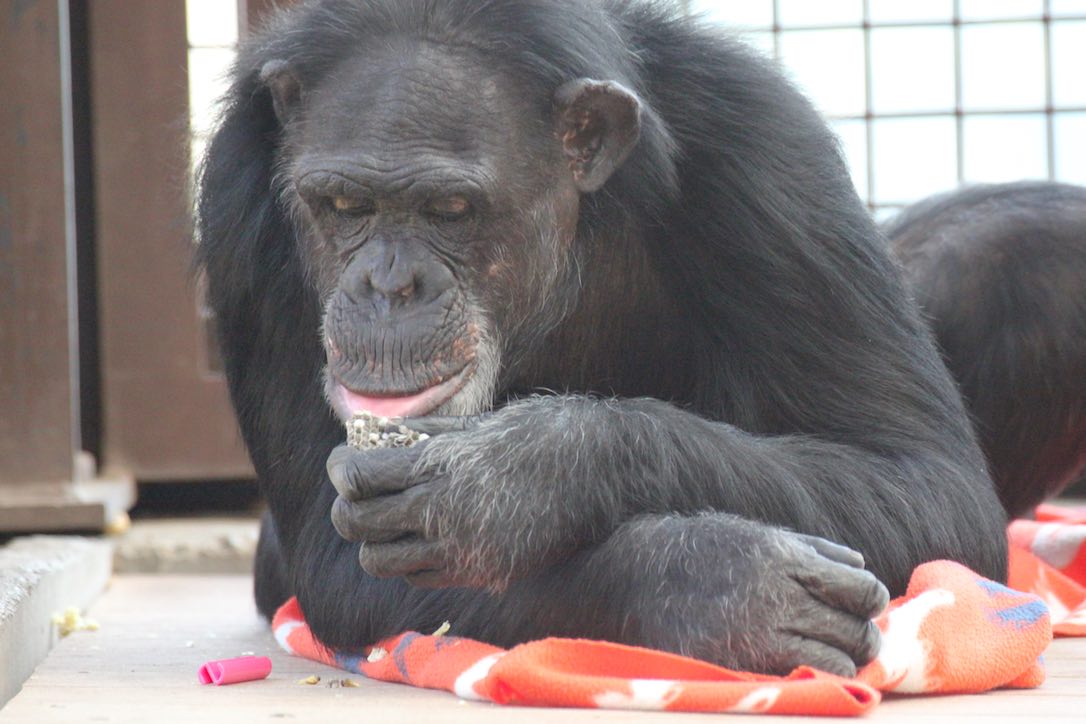
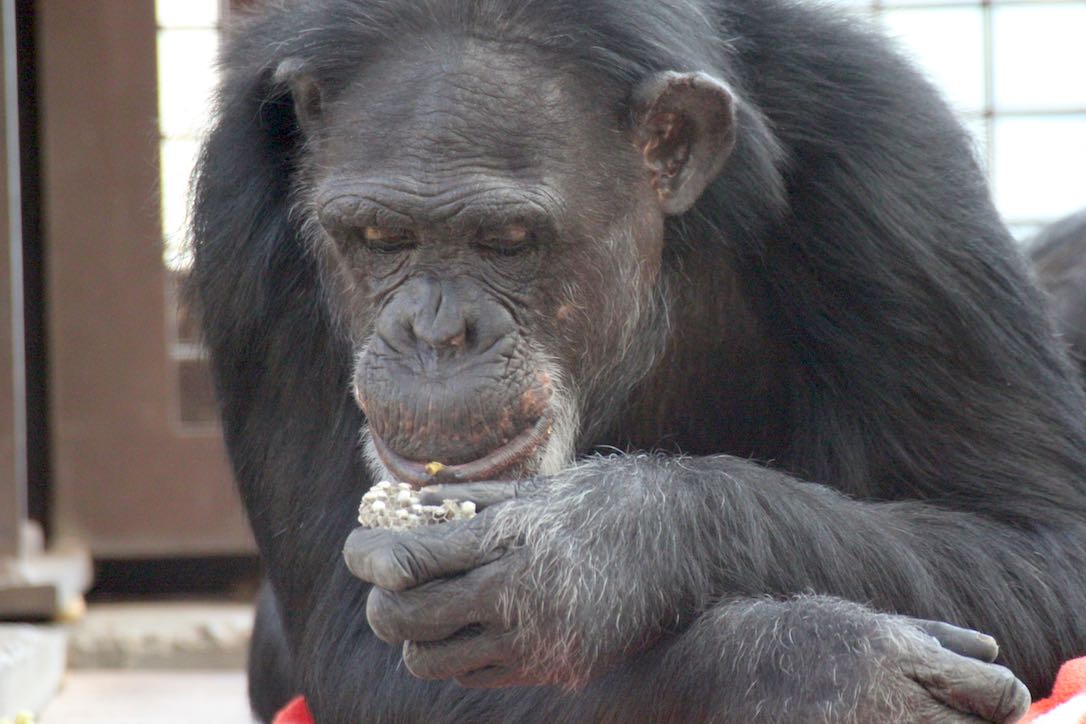
The wasp nest that Jamie had captured was at least three times the size of the one that I had offered her earlier. She meticulously broke it apart piece by piece with her lips, eating the larvae one by one.

There are three things that I love about this incident and the way Jamie works:

Number One: She rejected the free larvae offered earlier and instead worked to obtain larvae on her own. This is somewhat typical of Jamie – she likes puzzles and will chose to work to get food instead of having it handed to her, though I’ve never seen her reject an unexpected gift of food.

Number Two: This is a bit speculative, but I believe that showing Jamie the nest earlier in the day sparked the idea of her hunting for a nest of her own – maybe in that moment she thought about where she could get a better specimen than the puny thing I was offering. She didn’t run out to find a nest right away, though, she waited until the evening hours when nothing else was going on and she was looking for a bit of adventure.

Number Three: I’m always thrilled when the chimpanzees do something that they figured out on their own and show off their chimpanzee foraging skills. As we’ve written before, we humans didn’t recognize wasp nests as having potential food, particularly for this group of chimpanzees that grew up far away from their natural habitat and had never shown an interest in eating anything in the insect realm.

It’s a reminder that they are intelligent wild beings who inherited a particular skill set that allowed their species to survive in a variety of environments across equatorial Africa.

Jamie may like boots and blankets, but she also likes wasp larvae. And she’s perfectly capable of finding it on her own, thank you very much.

Filed Under: Chimpanzee Behavior, Enrichment, Food, Intelligence, Jamie, Missy, Sanctuary Tagged With: animal protection, animal rescue, Animal Welfare, chimp enrichment, chimpanzee, chimpanzee rescue, chimpanzee retirement, chimpanzee sanctuary, Chimpanzee Sanctuary Northwest, Enrichment, Sanctuary

Chimpanzees and Cattails?

August 4, 2018 by Diana

The Cle Elum Seven chimpanzees and their relationship with cattails goes way back. In fact, I can’t think about cattails without thinking about Burrito covered in cattail fluff way back in 2008.

We have a couple of big ponds and some wetland areas around the property and the cattails look just beautiful right now, so Anna chopped some down to add to the chimps lunch forage on the hill today.

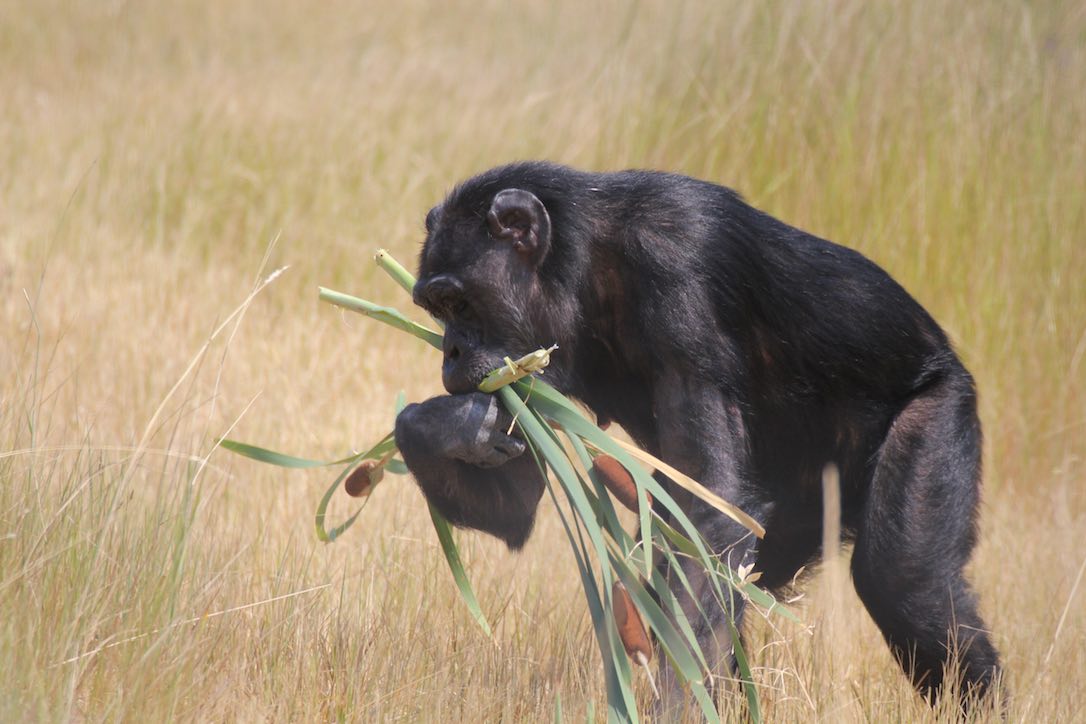
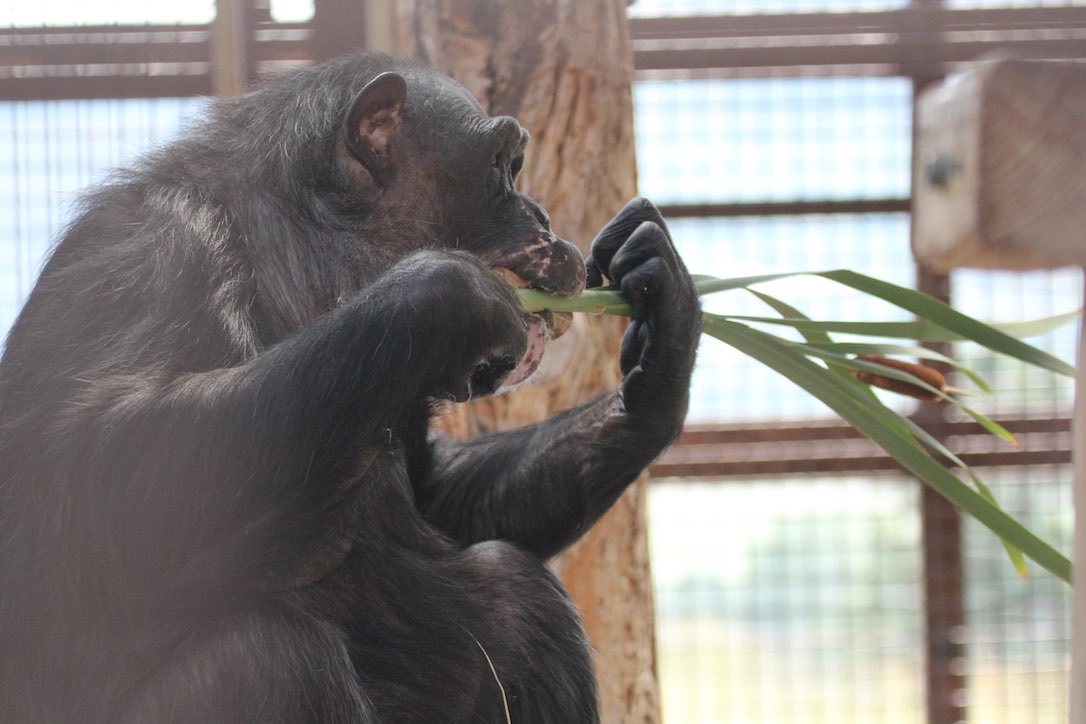
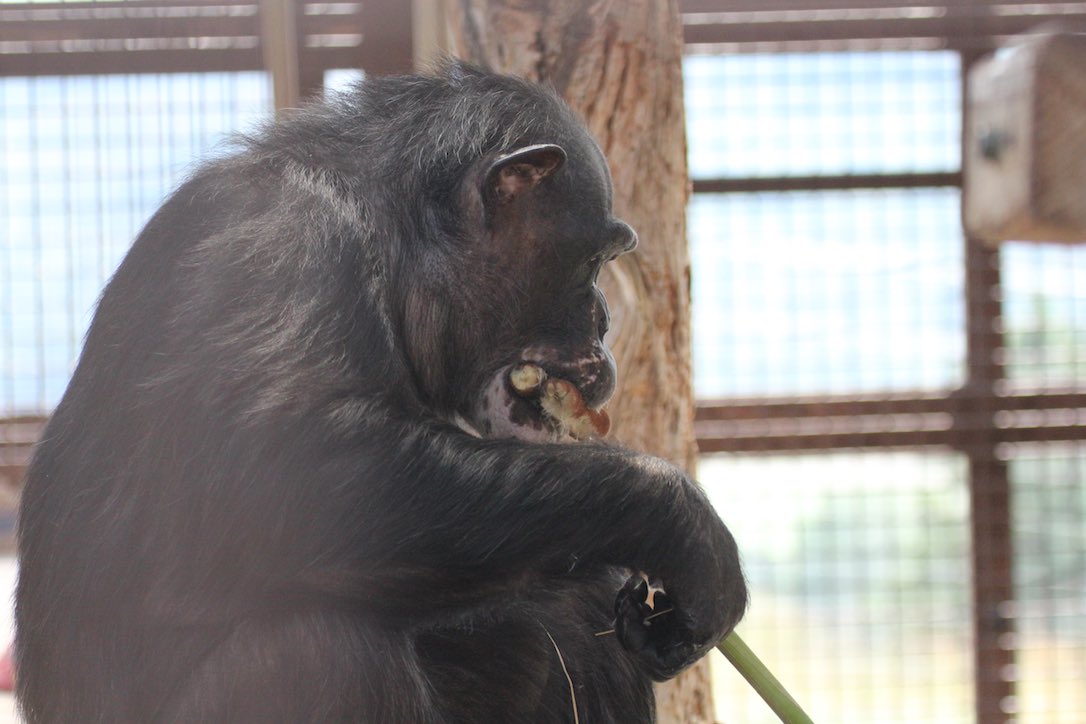
Jody in particular likes fresh cattails and she eats both the long green leaves and the brown flowers that remind me of corn dogs. After foraging for the lunch veggies, Jody collected as many cattails as her mouth could carry and headed for the greenhouse.


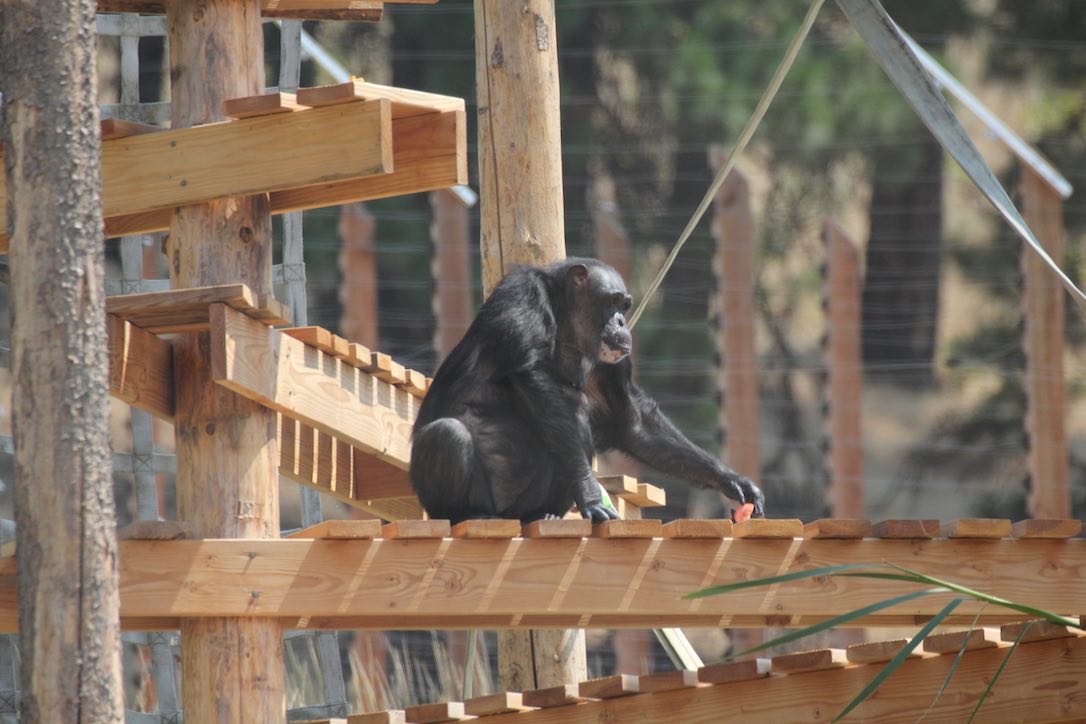
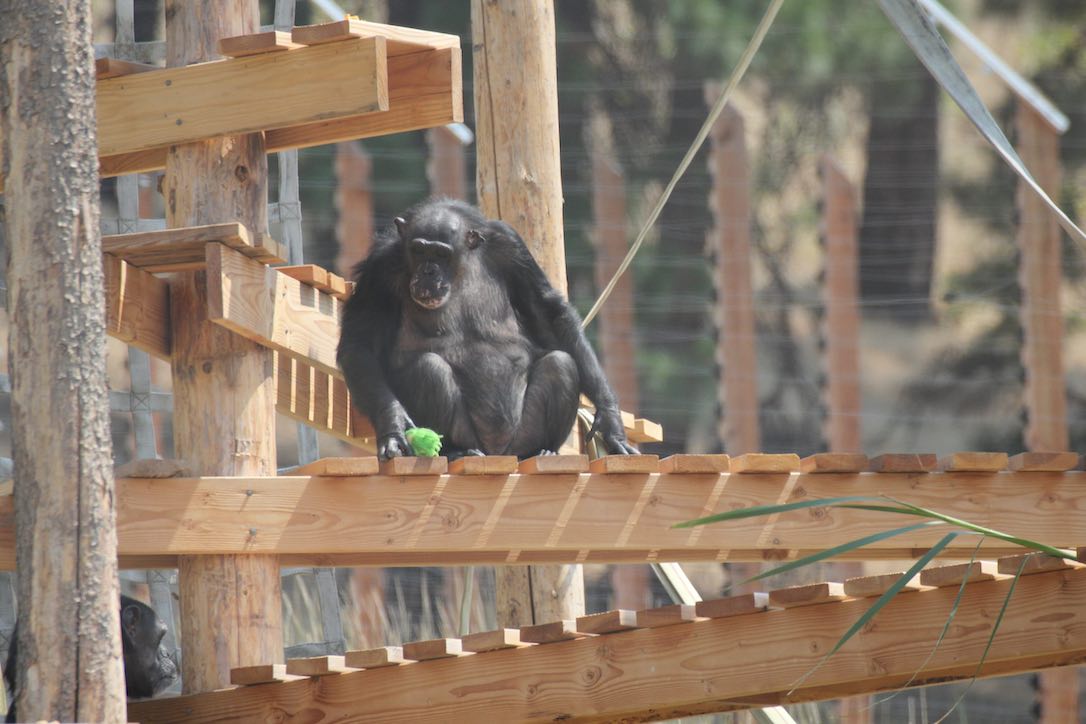
Meanwhile, Negra had the escher structure to herself and was enjoying all of the food I had scattered from top to bottom.

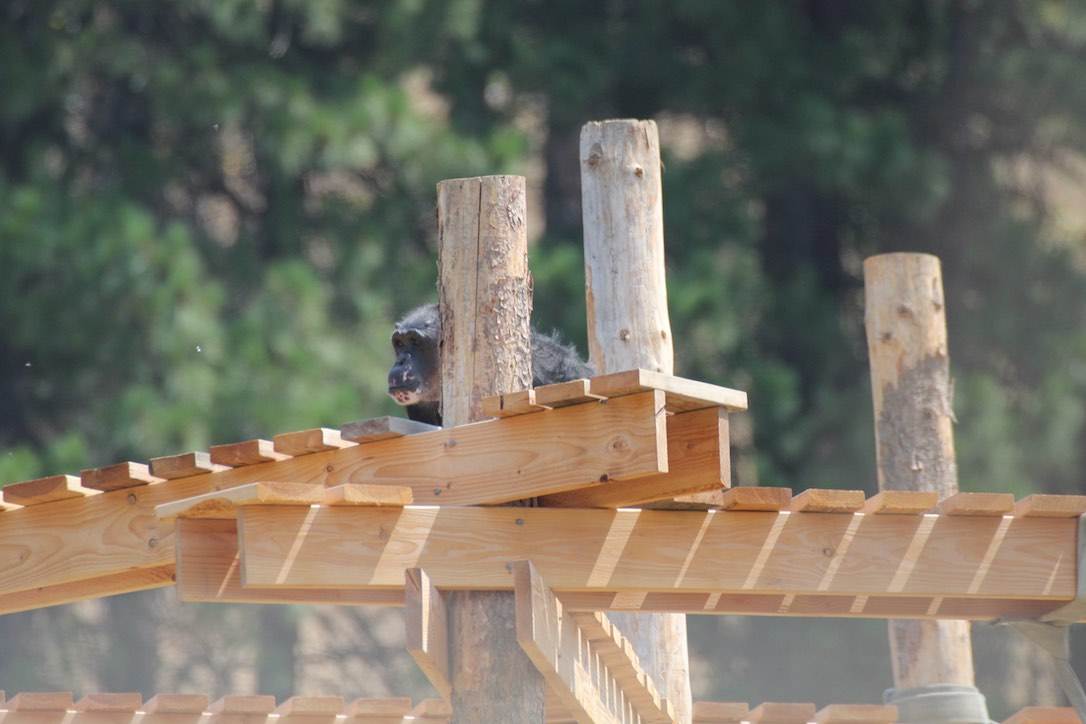
In fact, Negra climbed up higher than I’ve ever seen her go before!


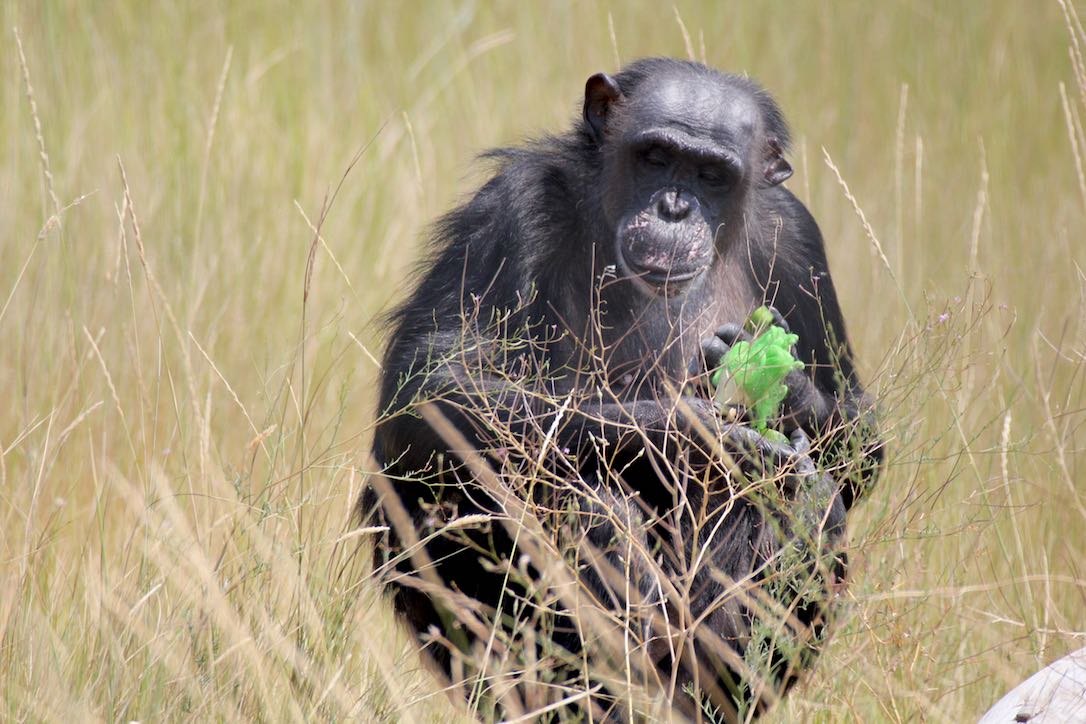
Today, Negra brought a friend with her on her adventures – a green-haired Strawbery Shortcake doll.


After a good long time foraging, Negra too went back to the greenhouse. When she spotted Jody’s cattails, she decided she should take a couple. Being the Queen, Jody allowed this theft to happen.

Negra really has been a new chimpanzee lately. Not the food-stealing – that’s been part of her repertoire for a while, but climbing up high and staying out on the hill for a long time is new. She’s also been very playful with us caregivers. There is absolutely nothing better in this world than seeing Negra laugh and be happy and relaxed. She just continues to remind us that everyone grows into themselves on their own timescale. Welcome to the sanctuary, New Negra.

Filed Under: Chimpanzee Behavior, Jody, Negra, Sanctuary, Young's Hill Tagged With: animal protection, Animal Welfare, cattails, chimp, chimp enrichment, chimpanzee, chimpanzee rescue, chimpanzee retirement, Chimpanzee Sanctuary Northwest, chimpanzees, Cle Elum Seven, Enrichment, Jody, Negra, Sanctuary

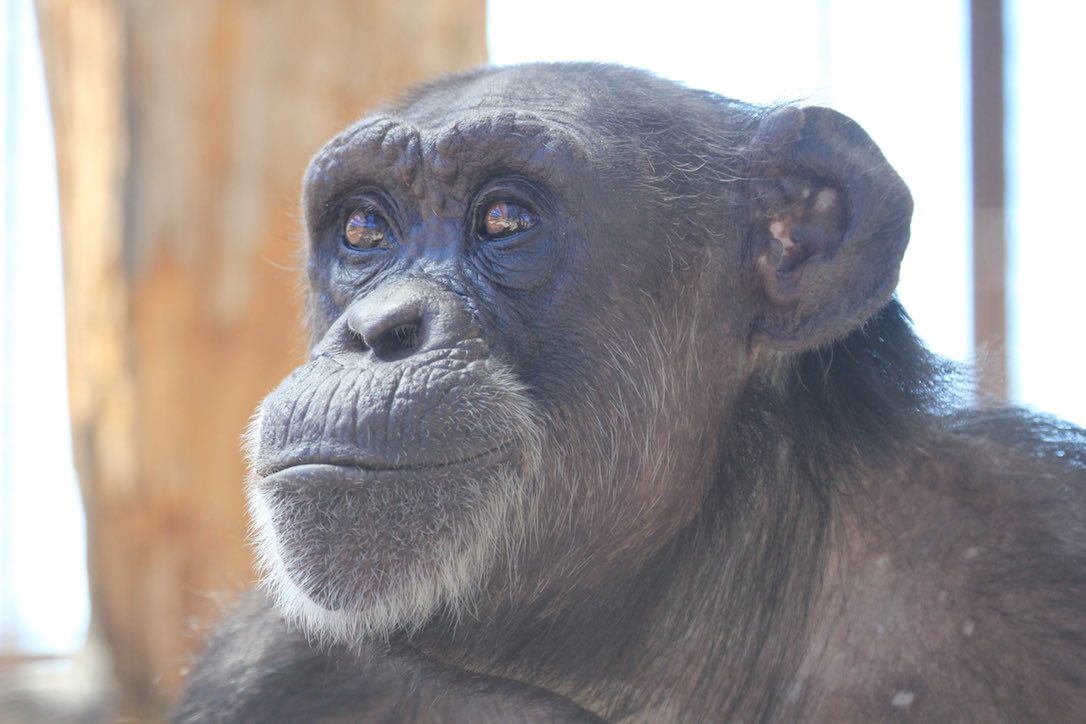
The Beauty of Jody

July 28, 2018 by Diana

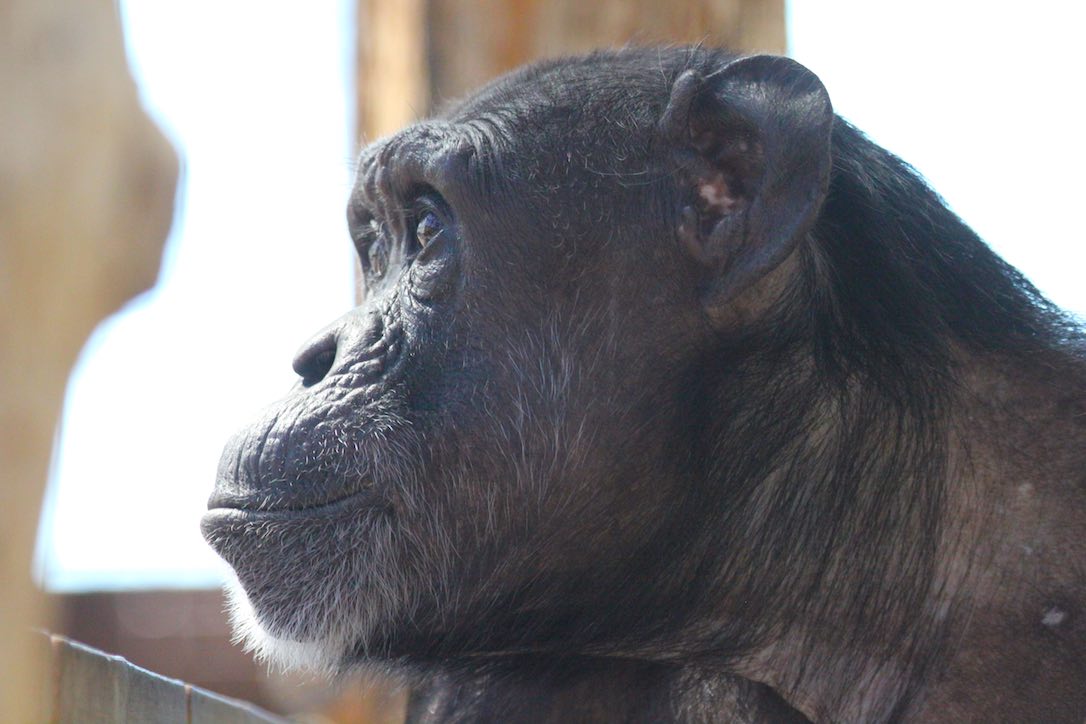
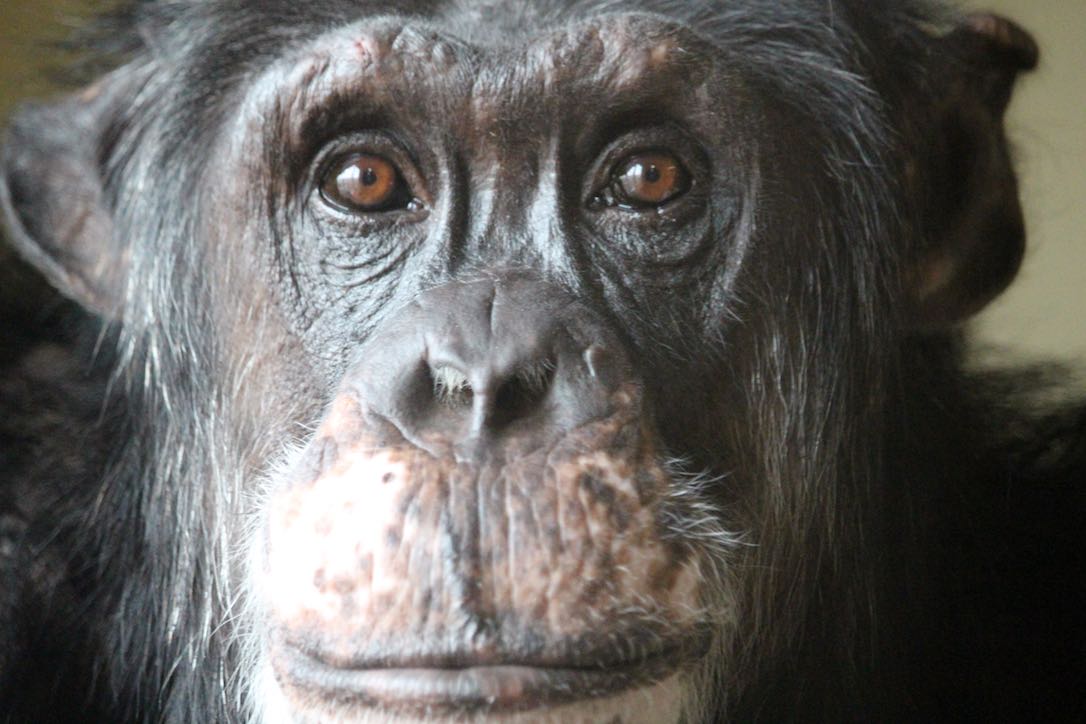
I have been periodically looking at these photos of Jody on the computer in the chimp house throughout the day today. They just fill my heart with love for her.

All of the chimpanzees are so different from one another in so many ways and each one has qualities that pull you into their personalities.

I admire the way that Jody approaches life in a self-assured way and knows what she wants out of any given situation. She often does her own thing with her confident flair, but at the same time she’s the watchful den-mother of the group.

She has the greatest vocalizations – her happy chimpanzee low-moan we refer to as her “dinosaur noises” because they are so drawn out, and she is the most likely to give a good-night grunt from her nest at the end of the day.

Her big round eyes seem capable of taking in more than anyone’s, and there’s almost always a glimmer of hope or anticipation in them.


Filed Under: Jody Tagged With: Animal Welfare, biomedical research, chimp, chimpanzee, Jody, northwest, rescue, Sanctuary

Cubby Holes

July 21, 2018 by Diana

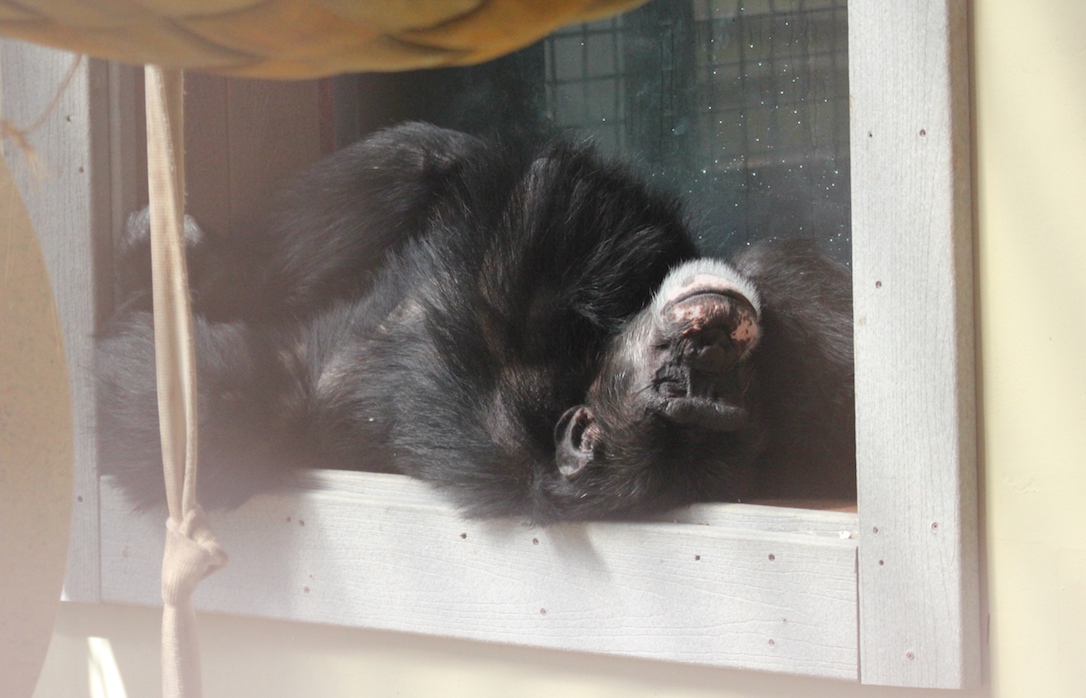
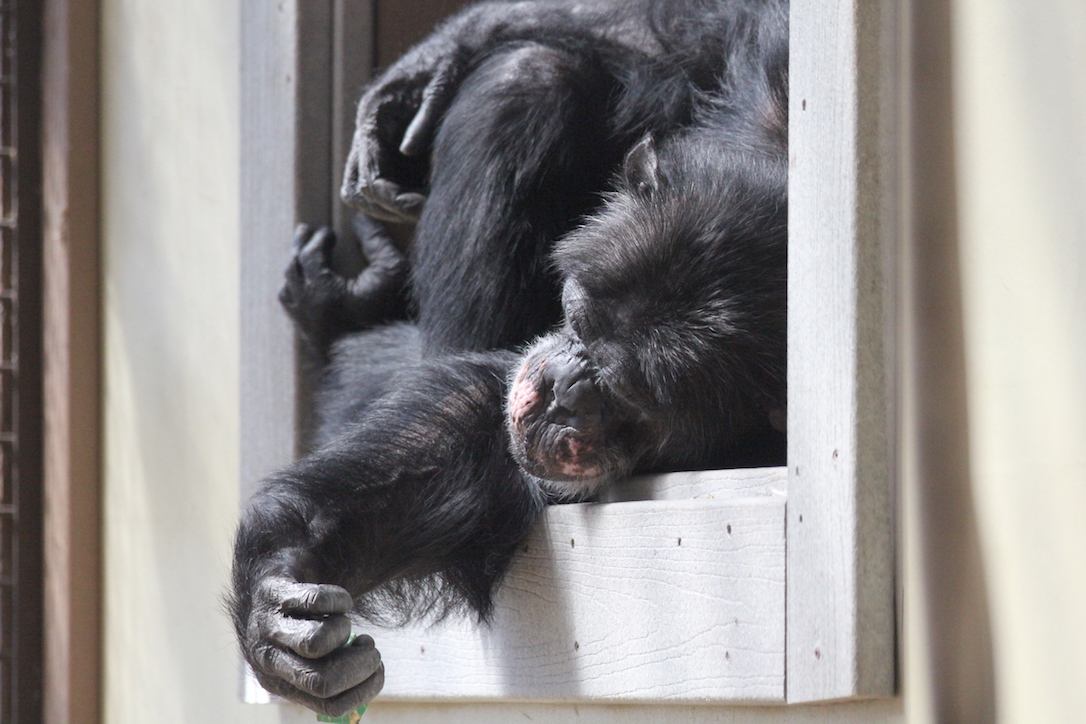
Way back in 2010, we replaced a bunch of caged windows with chimp-proof glass. On the greenhouse (what we used to call the outdoor area) side of things, this created deep window sills that the chimpanzees appreciated right away.

Below is a flashback video from when the windows were first installed in 2010. You can see that the chimps were still working on getting the hang of navigating the space using the hanging fire hose.


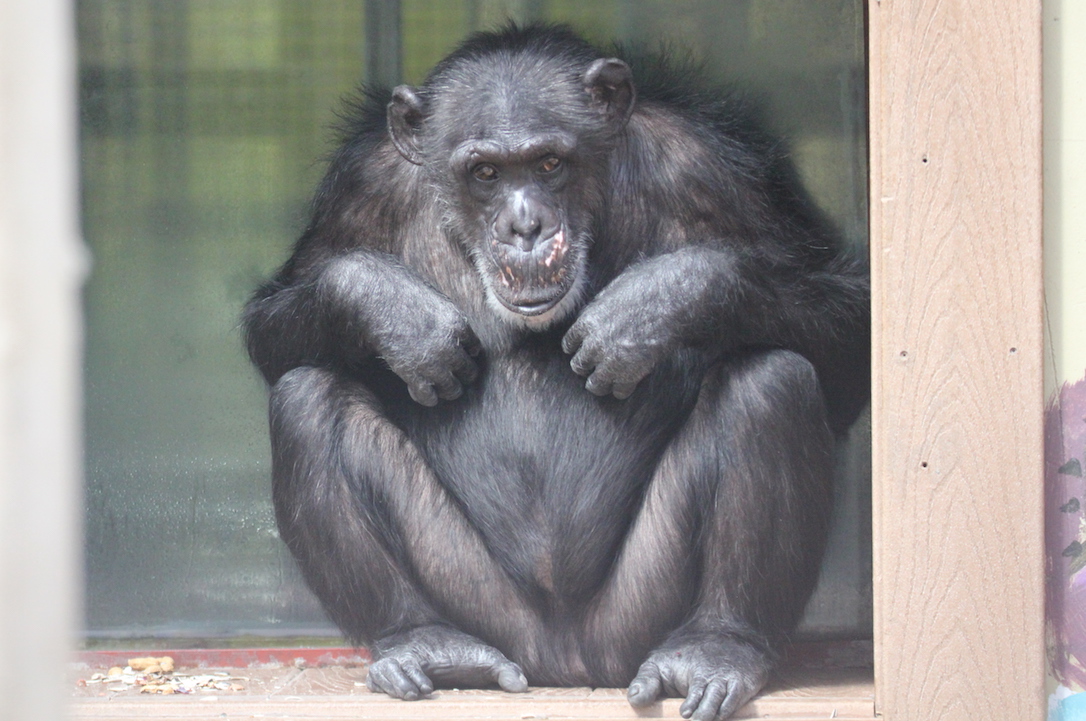
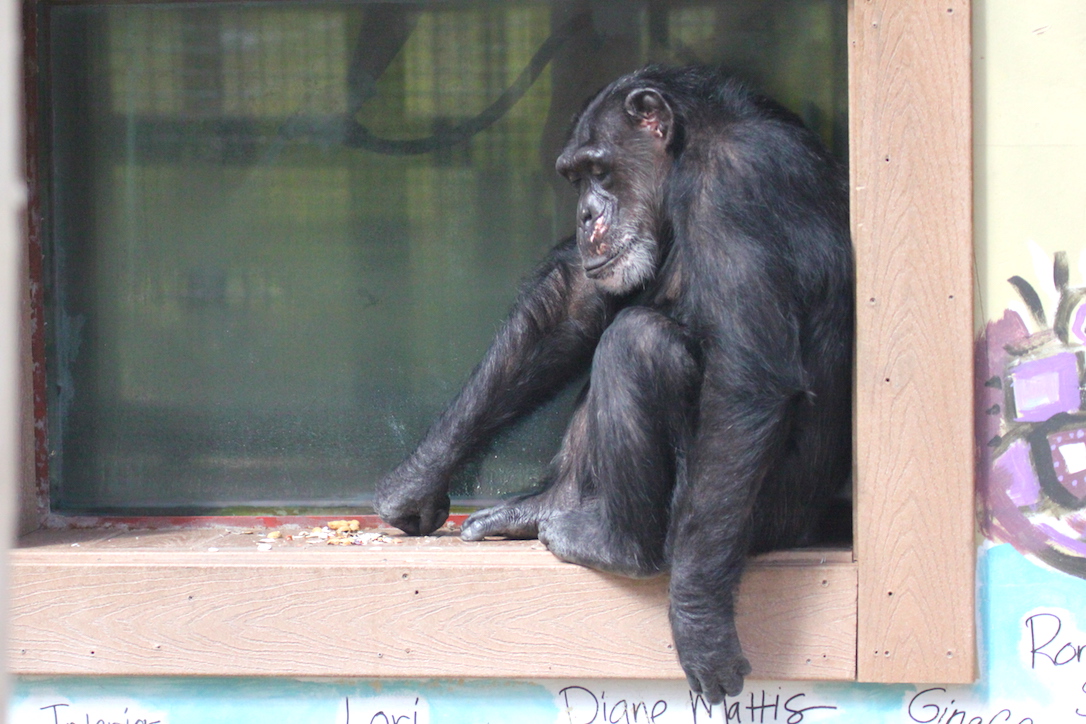
Today, Burrito and Missy were each in their own cubby. The frames are tall enough for chimpanzees to sit in them:


Missy can even sit upright in the smallest of the windows that looks into the playroom loft:


Missy was using her private cubby time to sift through some nut and seed shells:


While Burrito decided to get REALLY comfortable in his sill:


Filed Under: Burrito, Enrichment, Missy, Sanctuary Tagged With: animal protection, animal rescue, Animal Welfare, chimp enrichment, chimpanzee, chimpanzee rescue, chimpanzee retirement, Chimpanzee Sanctuary Northwest, Enrichment, Sanctuary

Advocacy on #WorldChimpanzeeDay

July 14, 2018 by Diana

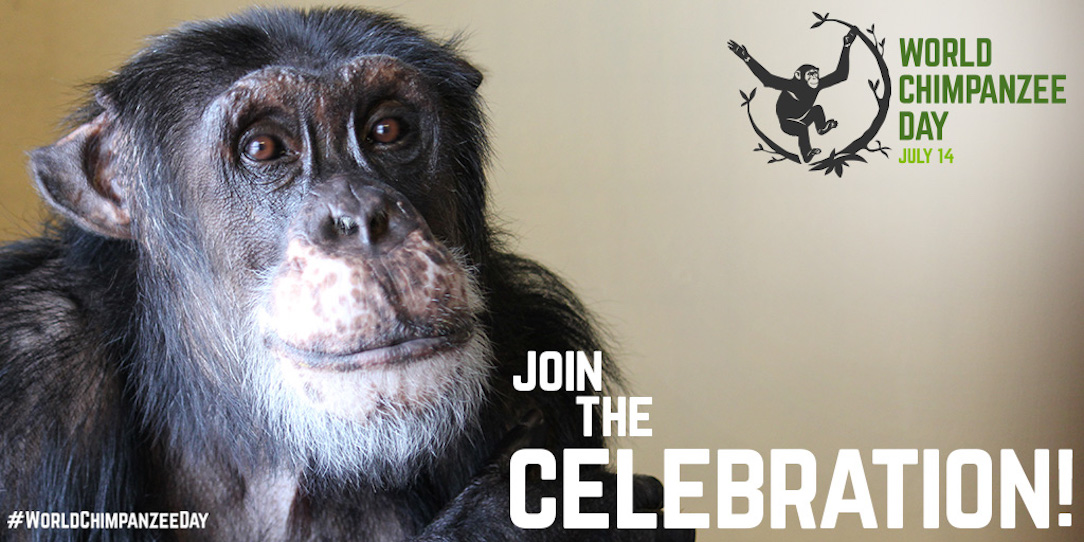
Today is the first #WorldChimpanzeeDay, a day to celebrate our closest living evolutionary cousins and an opportunity to raise awareness about the vital need for worldwide participation in their care, protection, and conservation in the wild and in the captivity.

So, in addition to celebrating the seven chimpanzees at CSNW, as we do everyday, I would like to share my personal evolution of knowledge and understanding about chimpanzees in captivity. For as long as I can remember, I’ve been fascinated by and drawn to all of the great apes. In college, I had a shrine of sorts on my wall with photos of gorillas, orangutans, and chimpanzees. One of the photos I had was a postcard of a chimpanzee who was probably four years old, wearing clothing and balancing on a tightrope. I thought it was adorable.

A few years later, I pursued my interest in great apes and ended up at Central Washington University’s Chimpanzee and Human Communication Institute. The head of the program, Dr. Roger Fouts, had recently published a book called Next of Kin, which expanded my view of chimpanzees and, for the first time, made me really think about the plight of chimpanzees in captivity and my own unquestioning amusement and delight when I saw photos of chimpanzees dressed in clothing or performing in some way.

Sitting face to face with a chimpanzee (with a safe barrier in between) was an even more powerful and humbling experience. It was immediately evident that chimpanzees have a keen sense of autonomy. They are incredibly smart and social and they have their own interests and desires.

Then I began to learn more about who they were as a species and came to the conclusion that literally no captive situation can provide chimpanzees with the socially and emotionally rich environment they would experience in the wild in Africa. The only reason there are so many chimpanzees in captivity now is because humans desired to put them there. No chimpanzee has ever volunteered to be torn from their family and forced to serve whatever purpose humans had in mind.

I share this personal experience of my own rather slow revelations because I understand both what draws people in when they see images of baby chimpanzees and how a little bit of knowledge can transform that initial “awww” reaction into a series of questions that includes: “Where is that chimpanzee’s mother?”, Where is the chimp living? (sanctuary, zoo, in the wild, in a human home)”, and “Is she or he doing something on command for the camera?”.

Sometimes it’s not possible to get immediate answers to these questions, and I’ve learned it’s important not to assume that a news organization or someone posting on social media is providing accurate information.

That brings me to a video of a young chimpanzee supposedly being reunited with a human couple that he had known as an infant. This video went viral last week and was shared on numerous national television news channels and/or their corresponding online sites, including Anderson Cooper and the Today Show, as well as dozens of local stations. I get it. The video is heartwarming and makes you want to share this “feel good” moment. But when you start to ask those questions about this video, you’ll quickly see that the chimpanzee, Limbani, was not “rescued” as those sharing the video claim. He is not living in a sanctuary, he is not living with other chimpanzees, and we don’t know where his mother is (we’ve asked). He’s living with humans 24/7 who put clothing on him and make money by having people pay to have their photo taken with him.

Limbani is living at the Zoological Wildlife Foundation (ZWF), a name that might make you think it’s a nonprofit organization with laudable aspirations. This is far from the truth. They confirmed with us that they are a for-profit business. Anyone can pay $200 to spend two minutes in a hands-on encounter with Limbani. For $700 people can spend ten minutes with this baby chimpanzee. Limbani is one of many exotic animals they have available for these “pay to play” encounters – they have the price schedule and the animals laid out very clearly on their website. Most of the animals are babies, of course, which means they are breeding more and more exotic animals into a lifetime of captivity. This is very similar to an organization called The Institute for Greatly Endangered and Rare Species (TIGERS). You’ve probably seen their videos and photos of an orangutan with a dog and a baby chimpanzee with a baby white tiger.

ZWF claims that their desire is to educate the public and help conserve endangered species. They even take donations directly from their website, which is confusing because they are not themselves a nonprofit. As a nonprofit, Chimpanzee Sanctuary Northwest is a public organization, our financial records must be publicly available, and we are obligated to spend funds towards our mission. If we are not following the rules or if a donor feels we’ve misused their money, they can appeal to the government to investigate. We are also accredited by the Global Federation of Animal Sanctuaries. The money that is given to ZWF can be spent however they like and there is no transparency or oversight required.

It’s up to everyone to speak out about this. Just like individual views like my own, societal views on animals are evolving. Most people in the US no longer find it acceptable that whales and dolphins are kept in aquariums where they perform for crowds of people (did you know it’s also World Orca Day!). The Ringling Brothers stopped using elephants in their circuses because the public became educated about the sad lives the elephants in traveling shows led. It’s beyond time for chimpanzees like Limbani to be given the same consideration.

You can spread the word whenever you see videos and photos of chimpanzees. First, ask some questions and try to get the facts of how the chimpanzee is living. Then share the facts with anyone passing along the exploitative images, including the media outlets and your friends and family.

Read about roadside zoos on our website to learn how to spot these pseudo-sanctuaries that are attempting to pose as conservation organizations or actual sanctuaries.

The North American Primate Sanctuary Alliance put out an excellent letter about this latest video of Limbani (it’s not the first video of Limbani that’s gone viral), which you can read and download here on the NAPSA website. The Dodo also published a story about the video this morning. You might want to use the hashtag #whereslimbanismom when posting about this video. We asked ZWF on instragram repeatedly about his mom and they only responded by saying that she lived in a “private sanctuary.”

Please educate others and share information in a polite way – you just never know who will be ready to have their heart opened, and opening hearts leads to changing minds.

Burrito, who was raised a pet for a year, then spent two years with a trainer before being sold into biomedical research, thanks you.


Filed Under: Advocacy, Apes in Entertainment, Burrito, Featured Post, Sanctuary Tagged With: animal protection, Animal Welfare, chimpanzee rescue, chimpanzee retirement, chimpanzee sanctuary, Chimpanzee Sanctuary Northwest, limbani, the institute of greatly endangered and rare species, tigers, zoological wildlife foundation, zwf

  • « Go to Previous Page
  • Page 1
  • Interim pages omitted …
  • Page 56
  • Page 57
  • Page 58
  • Page 59
  • Page 60
  • Interim pages omitted …
  • Page 196
  • Go to Next Page »

Primary Sidebar

Subscribe To the Blog and Get Notified of New Posts First!

Archives

Calendar of Blog Posts

June 2026
S M T W T F S
 123456
78910111213
14151617181920
21222324252627
282930  
« May    

Categories

SUBSCRIBE TO OUR NEWSLETTER

Footer

PO Box 952
Cle Elum, WA 98922
[email protected]
509-699-0728
501c3 registered charity
EIN: 68-0552915

Official DDAF Grantee

Menu

  • The Chimpanzees
  • Blog
  • About Us
  • You can help
  • Resources
  • Contact
  • Donate

Proud Member of

Connect With Us

Search

Copyright © 2026 Chimpanzee Sanctuary Northwest. All Rights Reserved. Site by Vegan Web Design