• Skip to main content
  • Skip to primary sidebar
  • Skip to footer

Chimpanzee Sanctuary Northwest

Hope. Love. Home. Sanctuary

  • Our Family
    • The Chimpanzees
    • The Cattle
  • Blog
  • About Us
    • Visiting the Sanctuary
    • Philosophy
      • FAQs
      • Mission, Vision & Goals
      • Privacy Policy
    • The Humans
      • Staff
      • Board of Directors
      • Founder
    • Annual Reports
    • The Future of CSNW
    • CSNW In The News
  • You can help
    • Donate
      • Become a Chimpanzee Pal
      • Sponsor A Day
      • Transfer Stock
      • Be A Produce Patron
      • Be a Bovine Buddy
      • Give from your IRA
      • Personalized Stones
      • Bring Them Home Campaign
    • Leave A Legacy
    • Employment Opportunities
    • Volunteer
    • See Our Wish List
    • Events
  • Resources
    • About Chimpanzees
    • Enrichment Database
    • Advocacy
      • Advocacy Action Center
      • Apes in Entertainment
        • Trainers
        • Role of the AHA
        • Greeting Cards
      • Chimpanzees as Pets
      • Roadside Zoos
      • Chimpanzees in Biomedical Research
      • Conservation
        • African Apes
        • Orangutans
  • Shop
    • Merchandise Store
  • Contact
  • DONATE NOW

Debbie

More ways to follow us

February 25, 2014 by Debbie

If you are on Facebook, you’ve probably seen a few pictures posted from our new Instagram account. If you have Instagram, please start following us @chimpsanctuary! Today, I posted this picture, with the caption “Guess who?” And I’d like to pose that question to our blog readers as well. So, go ahead and guess! After you figure it out, I will post more pictures of that chimp later today!

UPDATE: It’s Burrito 🙂 Scroll down to see his pretty cute face.
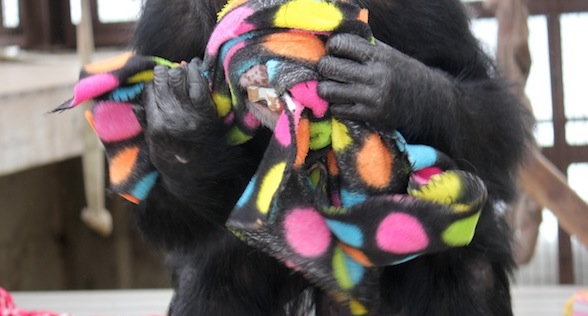
web-guess_who

If you aren’t on Facebook or Instagram, but you regularly read the blog, you might have noticed on the right hand sidebar that there’s a new link to a page called News on Apes. This is simply a feed of news stories (with links to the original articles) all in one place for any issue apes are facing in the news. If something noteworthy comes out on chimps in entertainment or biomedical research, or conservation issues for wild gorillas, chimps, and orangutans—we will post it there. Subscribe to get an email notification any time we post a link to a new article, to stay updated on what is going on with apes around the world.
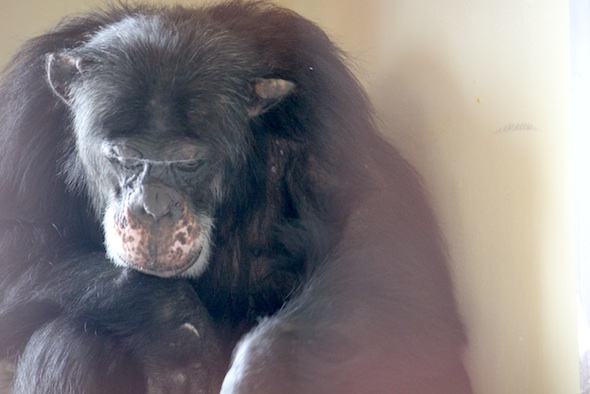
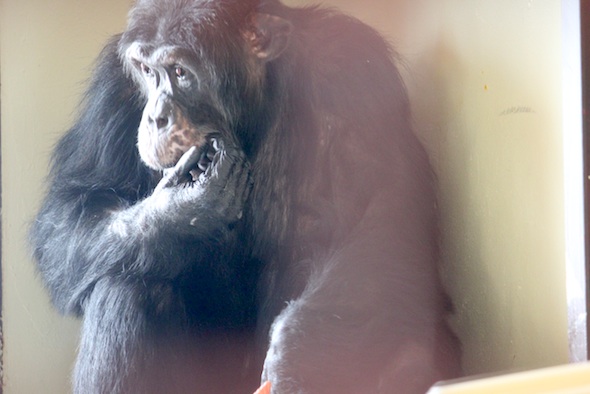
web_Burrito_chin_on_hand_sit_on_bench_FR_ls_IMG_9107

web_Burrito_bite_hand_look_toward_window_FR_ls_IMG_9110

Filed Under: Advocacy, Burrito, Play, Sanctuary Tagged With: advocacy, animal protection, animal rescue, animal rights, apes, Cle Elum Seven, conservation, csnw, eyes on apes, instagram, News, Sanctuary

Why are orangutans endangered in the wild?

February 18, 2014 by Debbie

This guest blog is by Rich Zimmerman, Executive Director of Orangutan Outreach. Rich helped facilitate getting CSNW an iPad as part of their Apps for Apes program! He is our first guest blogger to tell us information about our red ape cousins in Asia. Rich’s experience is in helping raise awareness and funds for the projects in the field. He has accompanied a few rescue missions in Borneo but his work is mainly in New York and online—advocating on behalf of orangutans, promoting the cause and communicating the critical need to help them before it’s too late.

—

What inspired you to work with orangutans?

I’ve loved orangutans since I was a child. I went in a different direction professionally and it was only later in life—when I realized just how perilously close the orangutans were to extinction in the wild—that I decided I needed to do something to help them. After traveling to Indonesia and seeing the utter devastation to their forests and the rescue center cages full of hundreds of orphaned and displaced orangutans staring out with such sadness and desperation in their eyes, I decided to dedicate my life to helping them. I created Orangutan Outreach in 2007 as a way to raise awareness of the crisis facing wild orangutans and to raise funds for the rescue projects in Borneo and Sumatra.

Can you tell us a brief story about an individual orangutan that was personally affected by human encroachment?

Every orangutan in every rescue center has been affected by human encroachment. Whenever there is a conflict, the human always wins. Orangutans—and elephants, rhinos, tigers, monkey, you name it—always fall victim to the constant expansion of human settlement and the destruction of their habitat by logging, palm oil, and mining companies. Every baby in a rescue center was torn off his or her dying mother. These innocent babies are traumatized—just as any human baby would be if pulled from its mother. And for each infant confiscated and brought to a rehabilitation center, it’s estimated that anywhere from four to nine did not survive. It’s horrific what is being done to these creatures… for no fault of their own they are being wiped out of existence by humans.

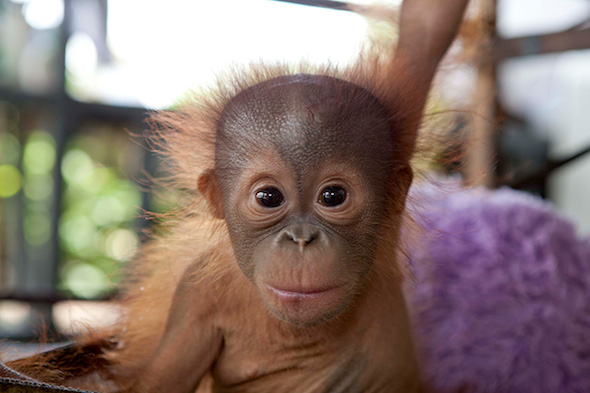
Let me tell you two quick stories. The first is Rickina, who was rescued by our partners International Animal Rescue (IAR) when she was less than a year old. When they confiscated her she has a gaping machete wound in her skull—obviously received when the poachers killer her mother. The wound was fresh. Rickina is now doing really well—thanks to the expert care of the team at IAR Ketapang. She is quite famous online—with more than 350,000 views of her video on YouTube.

OrangutanOutreach-IAR-rickina
Baby Orangutan Rickina is being cared for at IAR Ketapang (and can be adopted!). Photo © International Animal Rescue.

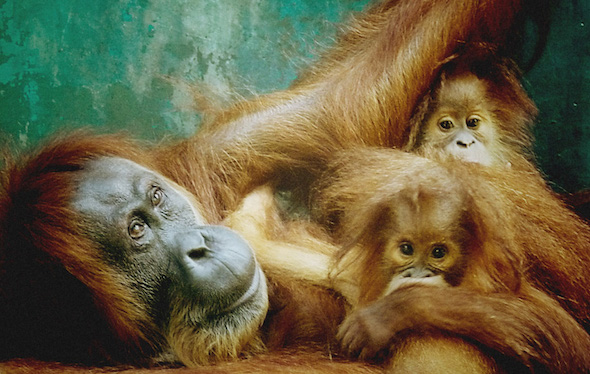
Another amazing story is Gober, a blind, older female orangutan being cared for by our partners Sumatran Orangutan Conservation Programme (SOCP). When she was caught eating fruit in the garden of a local villager she was going to be killed. Instead she was rescued and brought to the SOCP quarantine center. She had cataracts and could barely see. She was housed in a cage next to a younger male orangutan (named Leuser) who had been shot with a pellet gun more than a hundred times by local villagers. He was totally blind and the fact that he’d even survived is testament to the phenomenal will to live of orangutans. Well, orangutans never cease to amaze… nine months later Gober gave birth to beautiful twins, Ganteng and Ginting. Twins are extremely rare among orangutans—which makes sense given the fact that in the wild they spend their lives high up in the treetops. Imagine trying to move around in the canopy carrying two babies! Gober had successful cataract surgery and her sight has been partially restored. Hopefully she and the twins will be released back into the wild later this year!

OrangutanOutreach-SOCP-gober
Gober & the Twins are being cared for by SOCP (and can be adopted!) Photo © Sumatran Orangutan Conservation Programme.

Why are orangutans endangered in the wild?

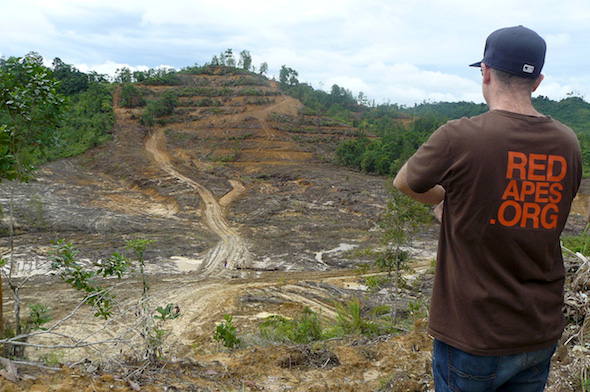
The expansionary activities of the timber, mining and palm oil industries have led to a catastrophic decrease in wild orangutan populations. Palm oil has been the main contributor to the orangutan genocide in the last decade. Around 90% of the global supply of palm oil comes from Indonesia & Malaysia and this has come at a tremendous cost for biodiversity. Indonesian forests are being burned to the ground—releasing so much carbon into the atmosphere that Indonesia now ranks only behind China and US in carbon emissions—and it is barely industrialized. The UNEP estimates that the forests of Indonesia are being cleared at a rate of six football fields per minute, every minute of every day.

The palm oil industry is guilty of truly heinous ecological atrocities. The forests of Borneo and Sumatra are the only place where these gentle, intelligent creatures live, and the cultivation of palm oil has directly led to the brutal deaths of thousands of individuals as the industry has expanded into previously undisturbed areas of rainforest at an alarming rate.

When the forest is cleared, adult orangutans are killed on sight. These peaceful, sentient beings who share approximately 97% of our DNA are shot, macheted, beaten, burned, mutilated, tortured and often eaten. Babies are literally torn off their dying mothers so they can be sold on the black market as illegal pets to wealthy families who see them as status symbols of their own power and prestige. This has been documented time and again.

OrangutanOutreach-deforestation-1200w
Surveying deforestation in West Kalimantan (Indonesian Borneo). Photo © Orangutan Outreach

Have you seen any recovery of wild orphaned orangutans (e.g. is reintroduction possible)?

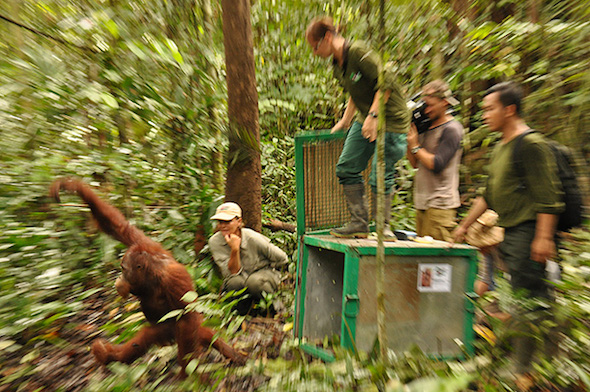
Reintroduction is very possible! Over the last year and a half, our partners at BOS have released more than 100 rehabilitated orangutans into a safe and secure forest deep in the heart of Borneo—far away from bulldozers and oil palm companies. And the population is flourishing! While there has been one death reported there have been multiple births recorded by the post-release monitoring team. The cycle of life continues in the forest for the world’s first re-created orangutan population. It takes roughly 250-300 individuals to create a stable population so there are many releases to go before the forest has reached carrying capacity according to strict IUCN guidelines. What BOS needs now is to find more forests to release more orangutans. There are still around 600 orangutans being cared for at the Nyaru Menteng Facility. They also have orangutans in East Kalimantan who are gradually being released into a separate forest. IAR is doing the same in West Kalimantan. They’ve been able to release orangutans from their excellent new facility in Ketapang. SOCP has a successful release program in Northern Sumatra. All these projects and programs are ongoing—and are only possible due to the generosity of donors.

OrangutanOutreach-BOS-Releases
BOS Nyaru Menteng Orangutan Release Photo © Borneo Orangutan Survival Foundation.

Filed Under: Advocacy, Sanctuary Tagged With: advocacy, animal protection, animal rescue, animal rights, apps for apes, chimp sanctuary, Chimpanzee Sanctuary Northwest, csnw, free-living orangutans, orangutan, orangutan outreach, primate protection, primate rescue, rehabilitation, rescue, Sanctuary, wild orangutans

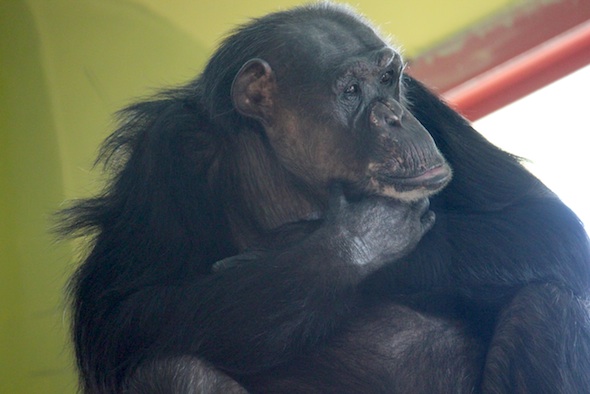
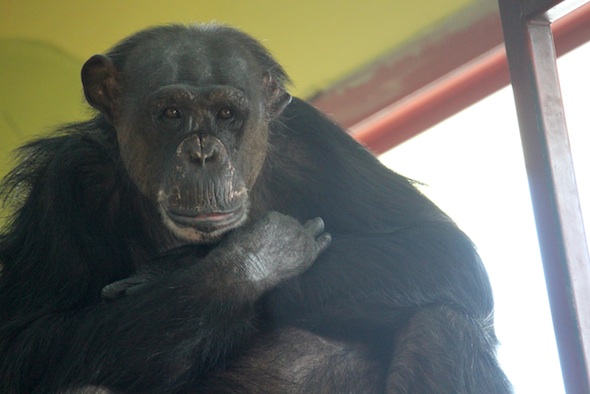
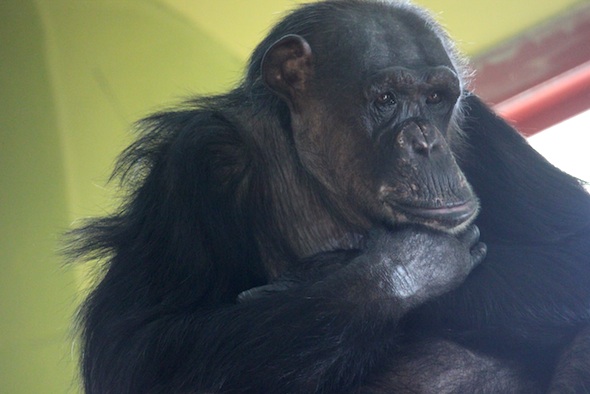
Deep in thought

February 11, 2014 by Debbie

I wonder what Negra is thinking about.

web_Negra_sit_on_bridge_chin_on_hands_look_out_window_PR_ek_IMG_8667

web_Negra_sit_on_bridge_chin_on_hands_PR_ek_IMG_8664

web_Negra_sit_on_bridge_chin_on_hands_PR_ek_IMG_8669

Probably night bags.

Filed Under: Negra, Sanctuary Tagged With: animal protection, animal rescue, animal rights, Animal Welfare, chimp enrichment, chimpanzee, chimpanzee sanctuary, Chimpanzee Sanctuary Northwest, Cle Elum 7, Cle Elum Seven, csnw, Negra, Sanctuary

Jamie’s new favorite boots

February 6, 2014 by Debbie

Jamie loves all her boots, but she definitely has some that are the center of her attention for awhile. I think of it like when I get a new song or album, I listen to it over and over until I’m sick of it—but I still like it and will want to listen to it again someday. Jamie’s songs on repeat right now are the boots she got from Bill last week. She can’t get enough of them! As soon as we try to wash them, she wants them back immediately, even if they are wet. And she’s asked JB to wear them around the hill, even when they are wet. Of course he is happy to oblige—anything to keep the boss in a good mood. I have a feeling these boots will be her favorite for awhile.

web_Jamie_hold_hug_new_boots_from_Bill_Jackson_GH_ek_IMG_8051

web_Jamie_hold_new_boots_from_Bill_Jackson_GH_ek_IMG_8059

Filed Under: Boots, Enrichment, Jamie, Sanctuary Tagged With: boots, chimp, chimp sanctuary, Cle Elum Seven, csnw, Enrichment, Jamie

Unintentional Enrichment

February 4, 2014 by Debbie

Enrichment comes in many forms—food enrichment, social enrichment, object enrichment, and structural enrichment—but sometimes the most enriching things are completely unintentional. Nearly two years ago, JB took out the extremely heavy drain covers we used to have and exchanged them for lightweight covers. They are much easier to handle for the humans, but also much more likely the chimps could get it. However, the covers are durable and pose no danger to the chimps, so the risk of them grabbing it versus practically breaking our backs every time we had to lift the heavy drain cover was worth it!

After JB put in the new covers, we took bets on when the chimps (particularly Jamie) would get it. I guessed about 20 minutes after they had access to the playroom. Diana guessed that night while the humans were away, and JB guessed within 48 hours. We were all wrong! Twenty-three months was the actual answer. We didn’t see how she got it, but when we came into the chimp area a few days ago, Jamie had removed the drain cover, finally.

After removing it, she proceeded to clean it with some scraps of paper. Annie was very interested in watching her—I’m sure they know it is something they aren’t really supposed to have. (Kind of like this time we played keep-away with a laundry basket).

You’ll notice in the video that there is quite a mess in the playroom—it was the day after the Lunar New Year party, so there was a lot to clean up. Once breakfast was brought out, Jamie dropped the drain cover and exited the playroom so we could enter to retrieve it and clean up the party. As far as I am aware she hasn’t bothered to get the drain cover since, but it certainly was enriching for her that morning.

Filed Under: Enrichment, Jamie, Sanctuary Tagged With: animal protection, animal rescue, animal rights, Animal Welfare, chimp enrichment, chimpanzee, chimpanzee rescue, Chimpanzee Sanctuary Northwest, Enrichment, Jamie, Sanctuary

Missy interrupts Annie making a nest

January 28, 2014 by Debbie

Missy is Annie’s best friend, but she is more dominant on the chimp hierarchy. Today she took Annie’s place in a huge paper nest Annie built (called “displacement”), but Annie didn’t get upset—instead, she started to play.

Filed Under: Annie, Missy, Nesting, Play, Sanctuary Tagged With: animal protection, animal rescue, animal rights, Animal Welfare, Annie, chimp, chimp sanctuary, chimpanzee, chimpanzee rescue, chimpanzee retirement, chimpanzee sanctuary, Chimpanzee Sanctuary Northwest, Cle Elum 7, Cle Elum Seven, csnw, Missy, Nesting, Play, Sanctuary

Stability

January 24, 2014 by Debbie

We often mention on the blog the changes that we observe in the chimpanzees and how we’ve seen them grow over the past five and a half years. There’s no doubt that they are still coming into their own, after living the majority of their lives in lab cages and having no control over their choices and no ability to predict what could happen next.

One of the tragic things about captivity is that the chimps are entirely dependent on us caregivers—we provide food, blankets, enrichment, and we shift the doors between their enclosures. For this reason, it is very important to have a routine so that the chimpanzees can have expectations, and can make decisions based on what they know will happen next. This is what is truly the epitome of being in a sanctuary.

Through these choices, we really see the chimpanzees develop their idiosyncratic likes and dislikes, and we see them grow and change over time. Foxie used to only want to play with trolls, and then some time ago she expanded to nurturing Dora dolls (though she still loves trolls). Jamie has a extreme love for boots, but recently it’s been more fashion boots that she prefers over cowgirl boots (her old favorite). Missy loves socks and slinkys, Burrito loves to have wooden toys to bite on, Annie loves to rub water on her face, Jody likes edible flowers and soapy bubbles, and Negra likes peanuts and nesting.

Having choices has allowed the chimps to relax, enjoy the sunshine, friends, good food, and space to run—and that has made them so much healthier and stronger than they ever were in the lab. See for yourself, check out the before and after photos of each of the chimps on their story pages here.

Although we see so many wonderful changes in the chimpanzees due to all the choice they have now, there are some things that never change. I was looking back through some old blog posts from this time in 2008, before the chimpanzees arrived. Diana’s first impressions of the chimps were spot-on and still six years later, they enjoy the same things she predicted they would when they came to CSNW. She talked about Jamie and choices, Negra and nesting, and Missy and Annie’s close friendship and their desire to play, play, play. These are things that the chimpanzees love to do everyday, but unlike in the lab, they are able to fully appreciate and express their preferences.

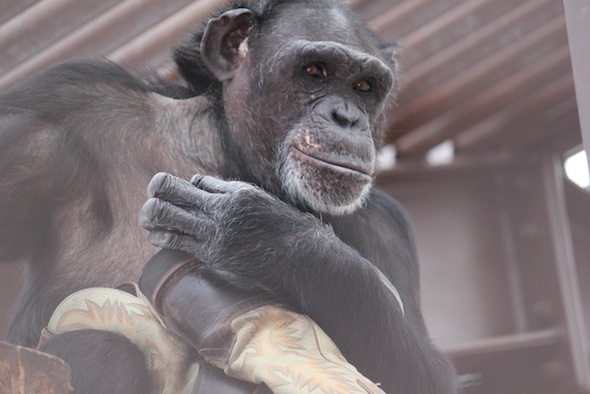
Today, the enrichment theme was “grooming day.” Jamie had lots of enrichment to choose from. Boots, scarves, emery boards, scrub brushes, trolls, pillows, blankets, paper, and even a toothbrush. Out of all of that, she chose to make a big nest out of a tube of exam table paper. (Thanks, Carol!)

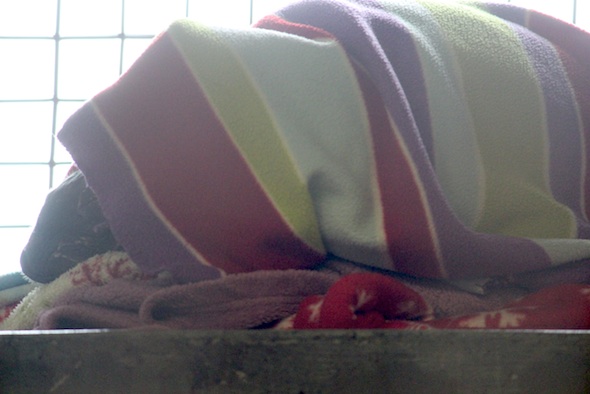
Negra cuddled in a giant nest:

web_negra_covered_blanket_nest_PR_dm_IMG_7898

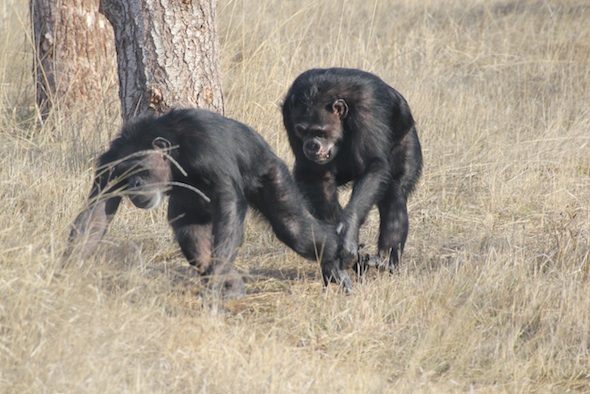
Missy and Annie:

web_Missy_footgrab_Annie_play_YH_jb_IMG_7365

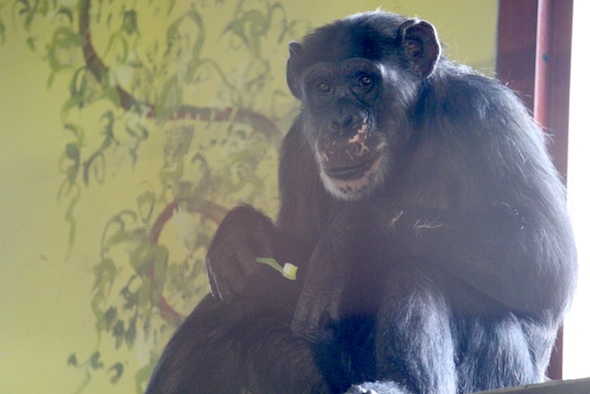
And just for fun, Missy’s enrichment item of choice on grooming day:

web_missy_hold_toothbrush_PR_dm_IMG_7893

I so look forward to the changes that are to come and see how the Cle Elum Seven will continue to flourish in sanctuary , but I know I can still count on some stability in the foundation of what they each love, and will continue to enjoy more and more for the rest of their lives.

Filed Under: Annie, Chimpanzees in Biomedical Research, Enrichment, Jamie, Missy, Negra, Nesting, Play, Sanctuary Tagged With: animal protection, animal rescue, animal rights, Animal Welfare, chimpanzee, chimpanzee rescue, chimpanzee retirement, chimpanzee sanctuary, Chimpanzee Sanctuary Northwest, Cle Elum 7, Cle Elum Seven, csnw, Enrichment, Jamie, Missy, Negra, Sanctuary

  • « Go to Previous Page
  • Page 1
  • Interim pages omitted …
  • Page 14
  • Page 15
  • Page 16
  • Page 17
  • Page 18
  • Interim pages omitted …
  • Page 49
  • Go to Next Page »

Primary Sidebar

Subscribe To the Blog and Get Notified of New Posts First!

Archives

Calendar of Blog Posts

June 2026
S M T W T F S
 123456
78910111213
14151617181920
21222324252627
282930  
« May    

Categories

SUBSCRIBE TO OUR NEWSLETTER

Footer

PO Box 952
Cle Elum, WA 98922
[email protected]
509-699-0728
501c3 registered charity
EIN: 68-0552915

Official DDAF Grantee

Menu

  • The Chimpanzees
  • Blog
  • About Us
  • You can help
  • Resources
  • Contact
  • Donate

Proud Member of

Connect With Us

Search

Copyright © 2026 Chimpanzee Sanctuary Northwest. All Rights Reserved. Site by Vegan Web Design