Welcome to the first installment of “Field Notes,” a blog where we share some of the more recent research articles.
In today’s edition, we will go over a sound that can be heard throughout the Chimp House on those perfect days: laughter!
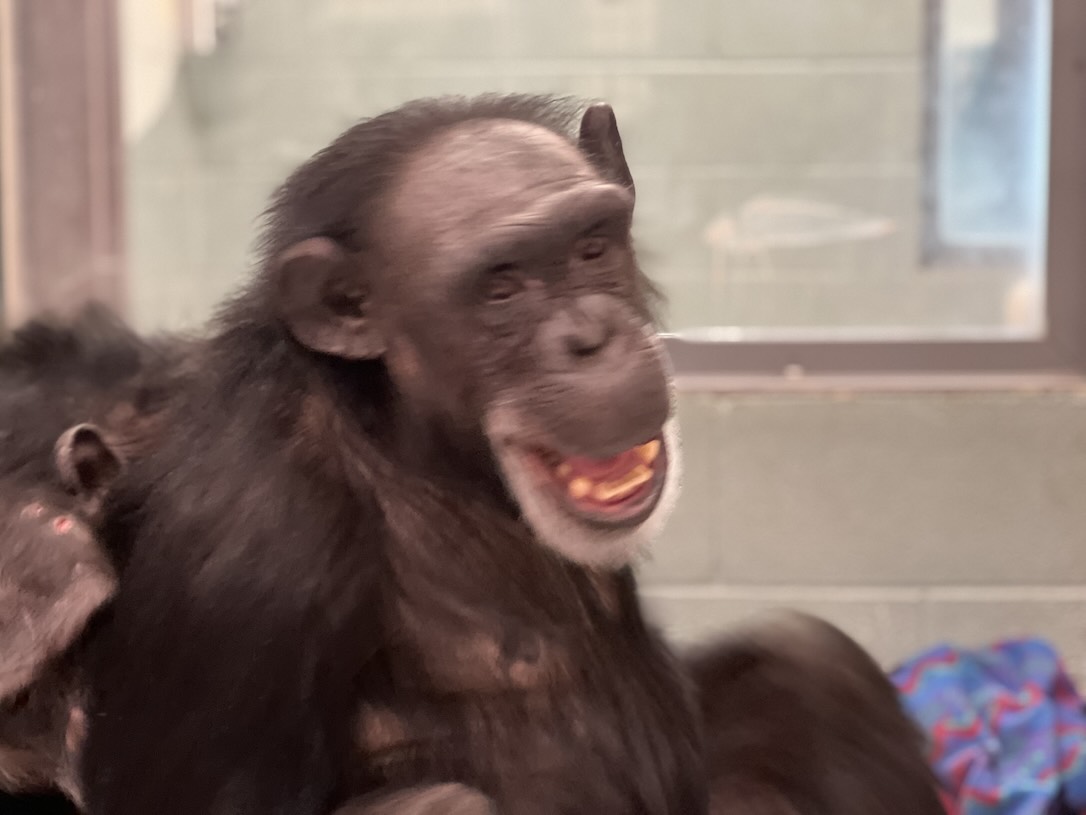
Recently, researchers from Warwick University and Portsmouth University, both based in the United Kingdom, analyzed recordings of chimpanzees, bonobos, gorillas, and orangutans living in zoos in the Germany and Malaysia. Researchers also analyzed the laughing patterns of human children as a comparison to the apes’ laughter.
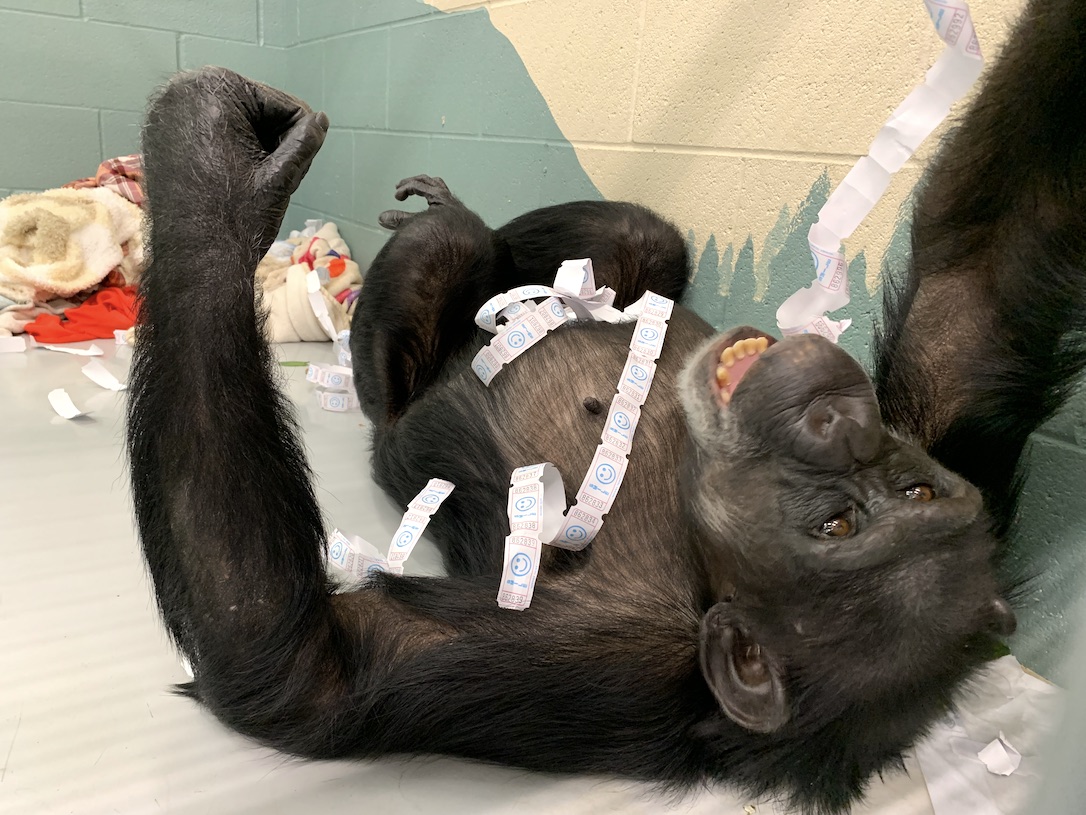
The recordings were taken when the apes laughed during periods of play with a caregiver whom they know fairly well and tickled by their familiar human.
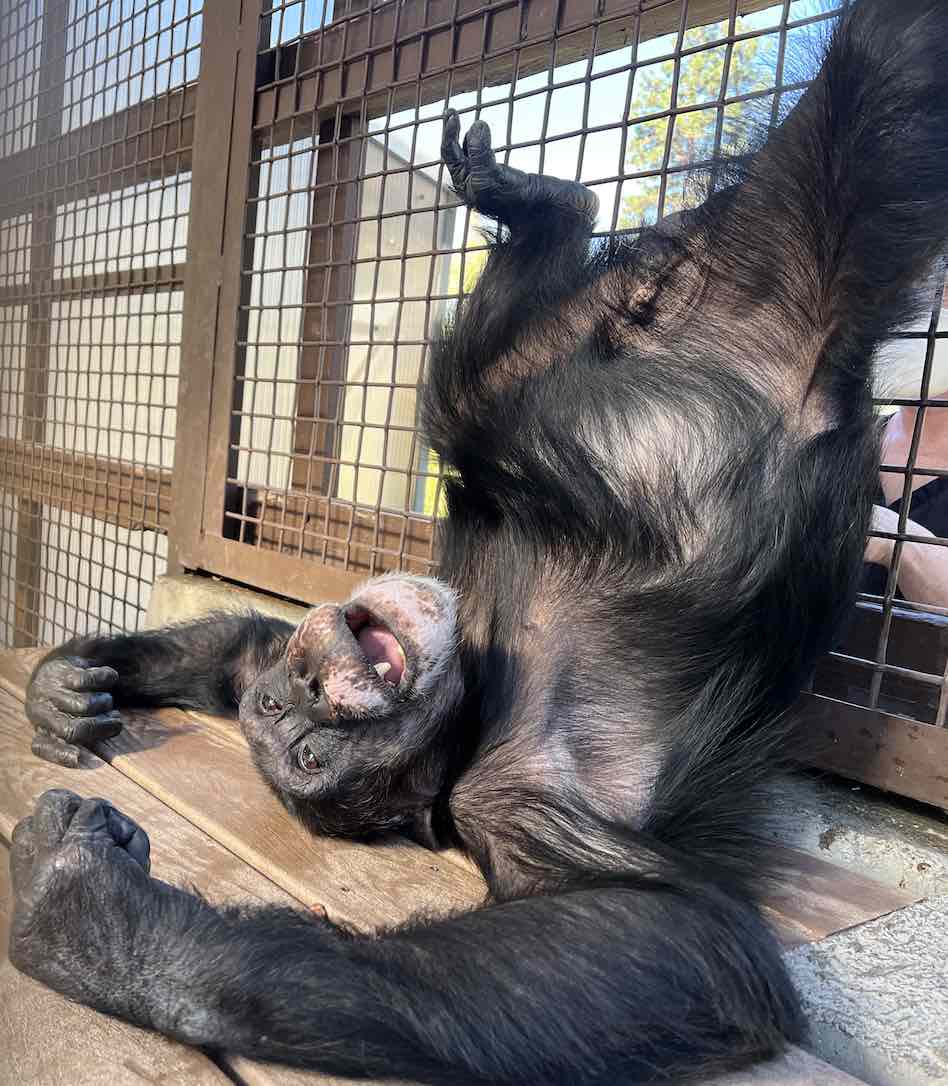
The research found all apes, including humans, have a rhythmic pattern to their laughter with humans being the only found (so far) to alter their laugh based on the context of the situation invoking the laugh. Researchers found the speed of the laughter, which is the part I found interesting, changed from species-to-species. Not only did the speed of the laughter change based on species, but it also fell nicely in line with the theory of when scientists predict each species branched out on the evolutionary tree. The theory is orangutans were the first to be stabilized as their own species, followed by gorillas, followed by chimpanzees and bonobos, and finally humans. Orangutans were found to have the slowest laughing rate, followed by gorillas, followed by chimpanzees and bonobos, followed by humans.
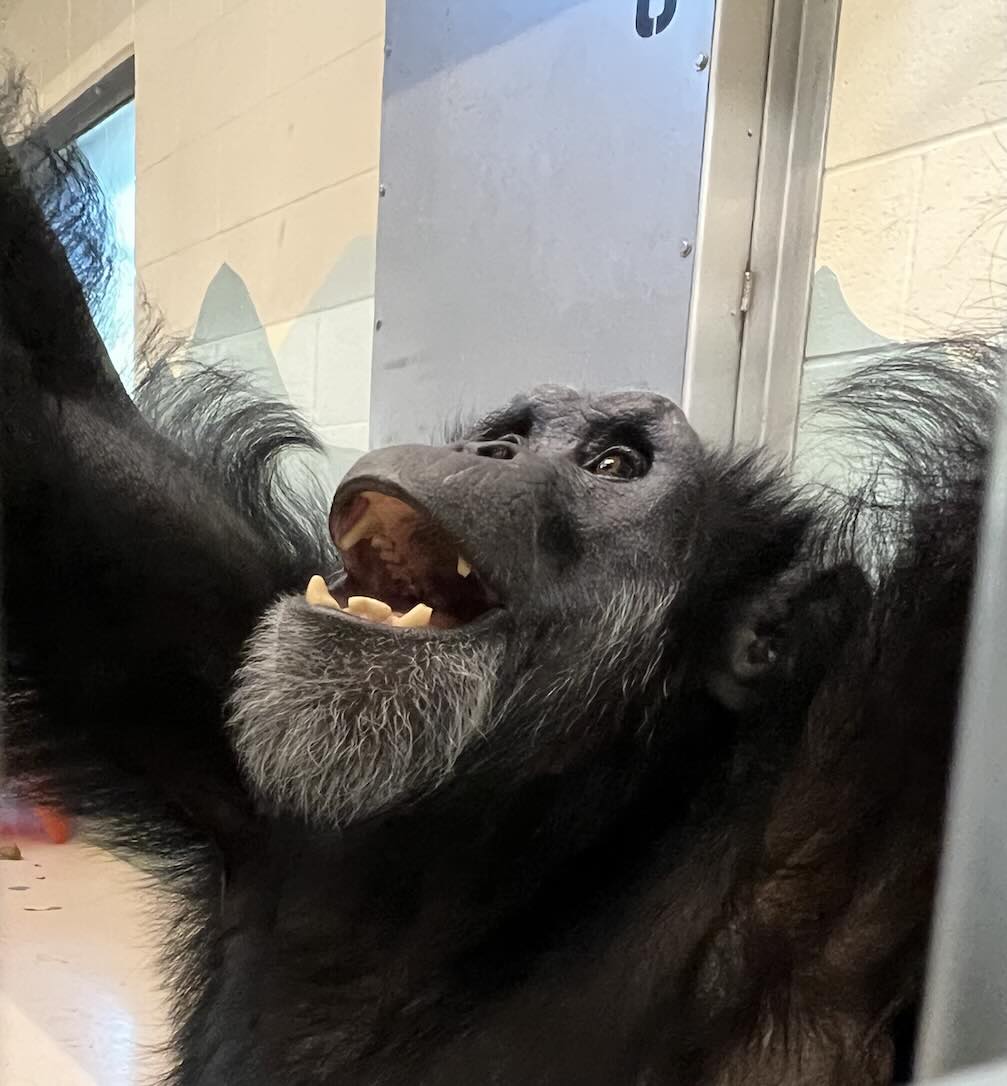
Here in the Chimp House, laughter is the greatest sound a caregiver can hear, and I’ve heard my share. For me, the two laughs that stick out are Honey B’s and, you guessed it, Burrito’s laugh.
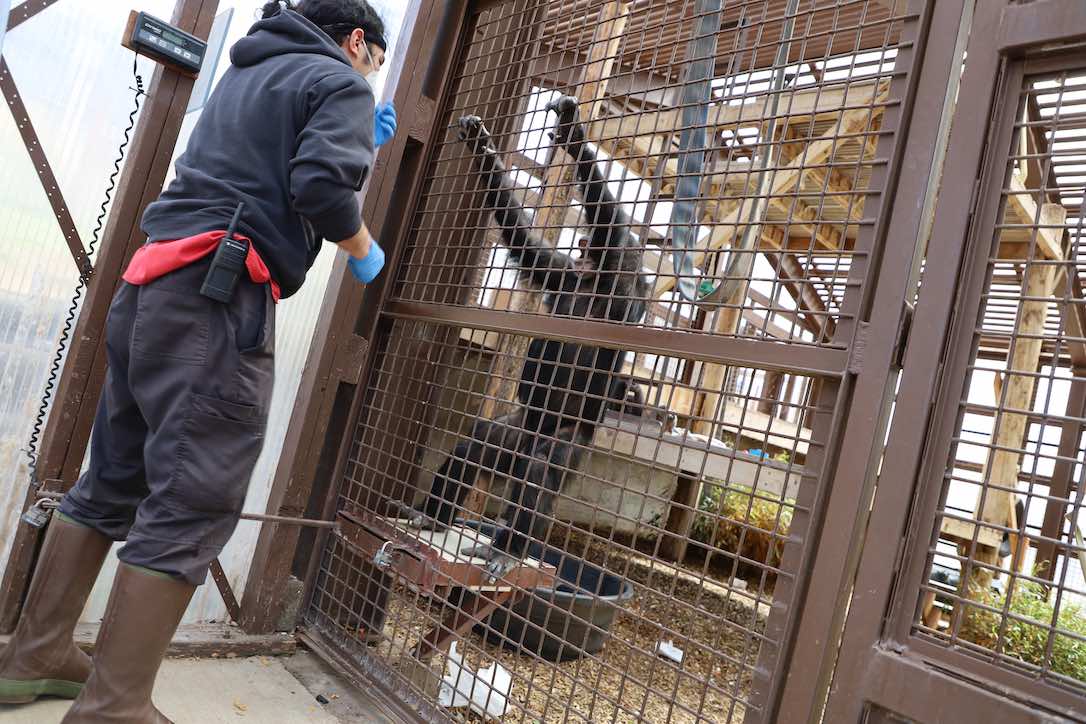
It’s still hard for me to believe there was a period when Burrito did not laugh! Back in 2021, Diana wrote about Burrito’s laugh, or lack thereof, when he first arrived at the sanctuary in 2008. To me, Burrito has such a distinct laugh that can be picked out anywhere in the sanctuary. My favorite is when you get him really going and his laugh comes from his belly. That is usually my goal when I play with him; to get him to that specific laugh that cannot be contained no matter how hard he tries.
Honey B’s laugh stands out to me because she only has one volume: LOUD!
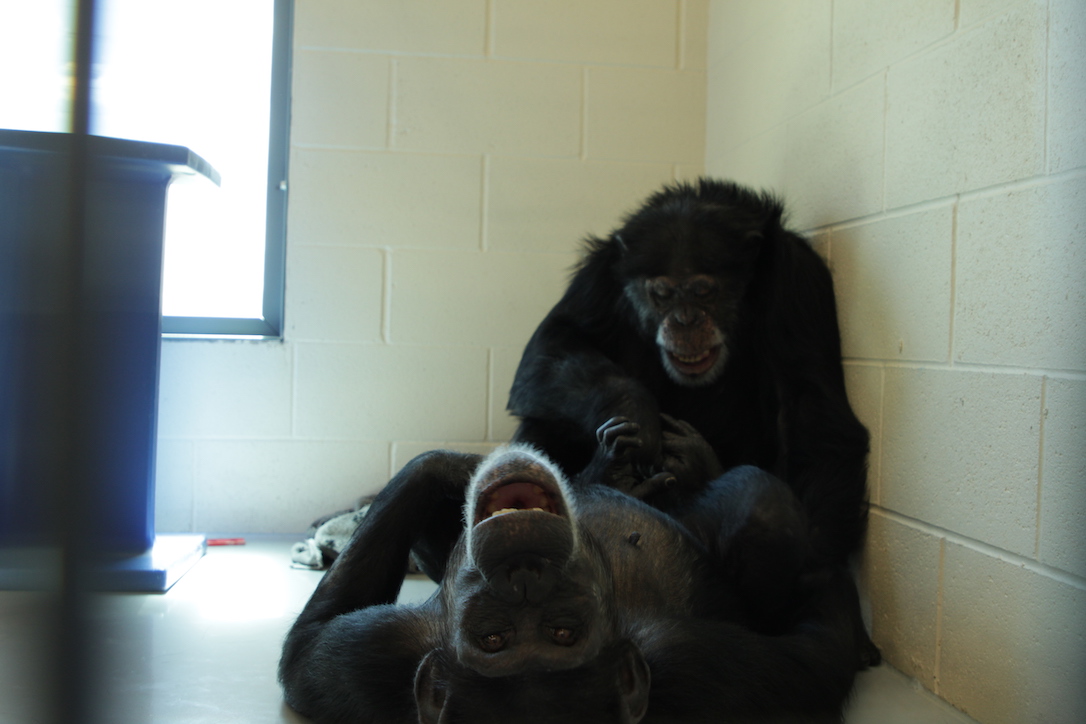
As someone who studies language, both chimp and human, it was neat seeing the patterns of laughing kind of fit nicely in the evolutionary process of apes. If you had the ape evolutionary branch in front of you, you can sort of guesstimate where on the branch human speech started to develop.
With that, I will leave you with this very precious video of Burrito laughing while playing with our dearly missed Jody.
And a last minute photo of Rayne!