• Skip to main content
  • Skip to primary sidebar
  • Skip to footer

Chimpanzee Sanctuary Northwest

Hope. Love. Home. Sanctuary

  • Our Family
    • The Chimpanzees
    • The Cattle
  • Blog
  • About Us
    • Visiting the Sanctuary
    • Philosophy
      • FAQs
      • Mission, Vision & Goals
      • Privacy Policy
    • The Humans
      • Staff
      • Board of Directors
      • Founder
    • Annual Reports
    • The Future of CSNW
    • CSNW In The News
  • You can help
    • Donate
      • Become a Chimpanzee Pal
      • Sponsor A Day
      • Transfer Stock
      • Be A Produce Patron
      • Be a Bovine Buddy
      • Give from your IRA
      • Personalized Stones
      • Bring Them Home Campaign
    • Leave A Legacy
    • Employment Opportunities
    • Volunteer
    • See Our Wish List
    • Events
  • Resources
    • About Chimpanzees
    • Enrichment Database
    • Advocacy
      • Advocacy Action Center
      • Apes in Entertainment
        • Trainers
        • Role of the AHA
        • Greeting Cards
      • Chimpanzees as Pets
      • Roadside Zoos
      • Chimpanzees in Biomedical Research
      • Conservation
        • African Apes
        • Orangutans
  • Shop
    • Merchandise Store
  • Contact
  • DONATE NOW

poop throwing

Chimpanzee Stereotypes

June 25, 2024 by Jenna

There are many stereotypes out there about chimpanzees. Anytime I tell someone that I work with chimps, it is almost a guarantee they bring up something about bananas or poop-throwing in their response. Today, I am weighing in on these stereotypes!

Bananas

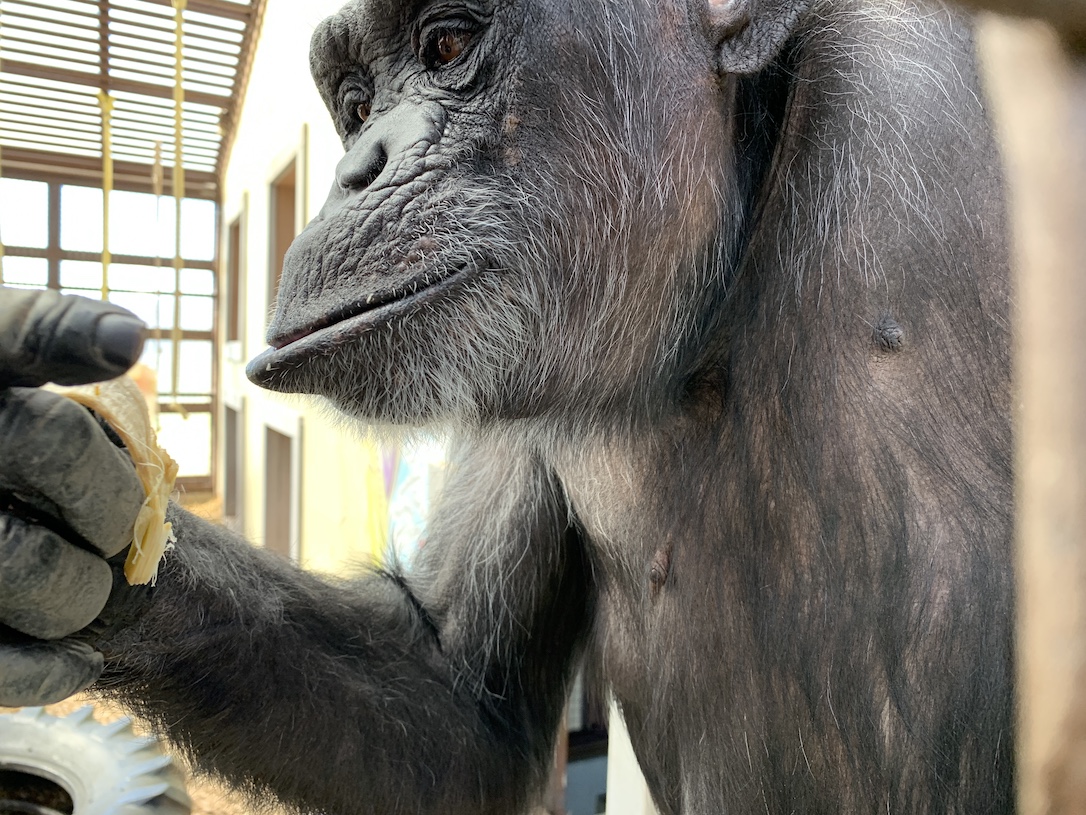
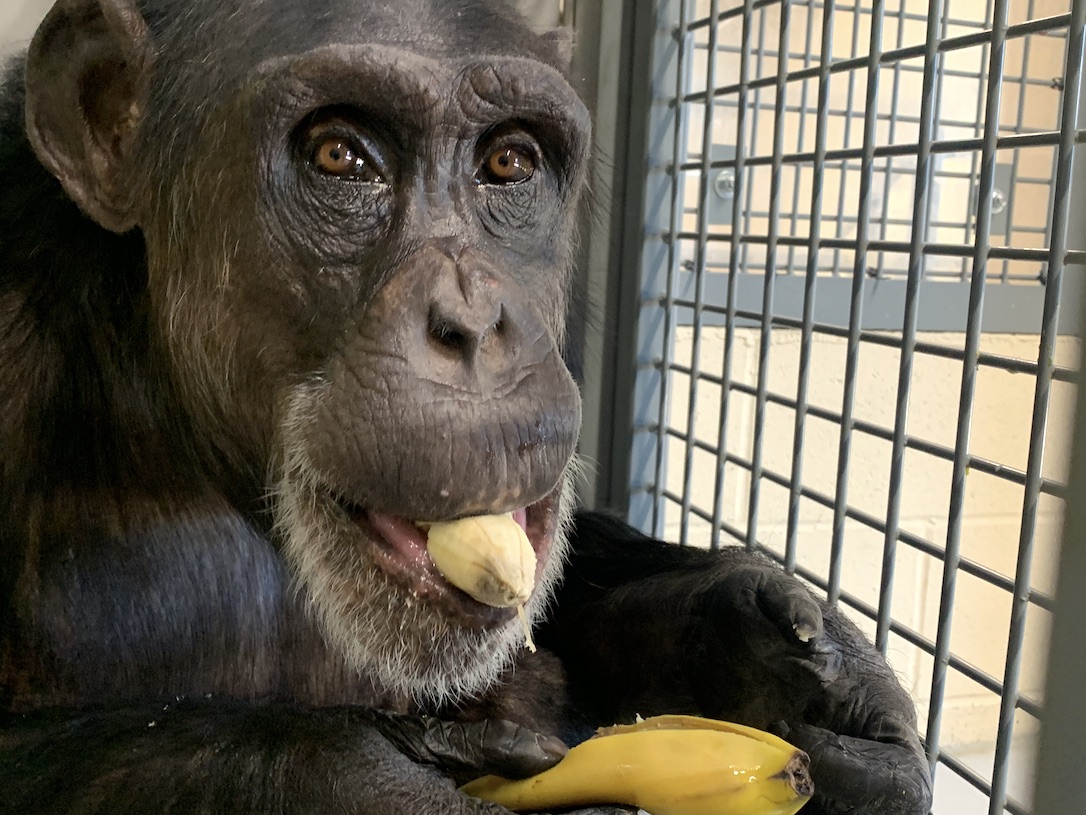
Do chimpanzees love bananas? Yes. Do chimpanzees love bananas more than every other food? No. Do chimpanzees only eat bananas? No.

Chimpanzees love bananas, but they love fruits in general! We serve the chimps at CSNW a variety of fruits and veggies and they all individually have their favorite foods. While bananas are a well-liked fruit, apples, pears, melon, or oranges, are equally as liked. I’m not entirely sure why we as a society have latched on to the pairing of primates and bananas, but it shows up in movies, greeting cards, toys, etc. Weigh in below on where you think this stereotype originated!

Foxie eats banana:
Honey B eats banana:
Poop-throwing

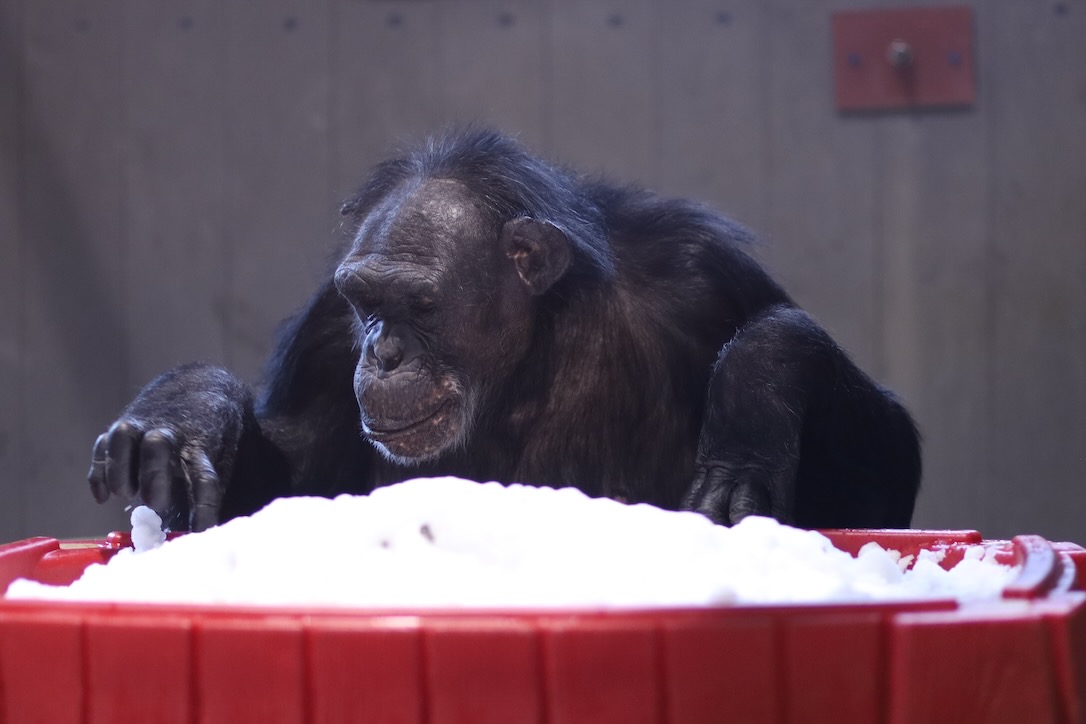
I have worked at two ape sanctuaries and out of about 90 apes (orangutans and chimpanzees), only three chimpanzees threw feces. As you may or may not know, Jamie is our only poop-thrower at CSNW. And one is plenttttttttty. Chimpanzees don’t normally throw feces in the wild, but it is seen in captive settings. There are other primates, such as howler monkeys, that are known for throwing feces.

Jamie throws feces at new staff members or volunteers, when they are doing something that she doesn’t want them be doing (whether that be playing with Burrito, scrubbing toys, or simply existing). She doesn’t throw feces as much at her long-time human friends, such as J.B., Diana, or Kelsi, so her newer friends get the brunt of it.

I don’t want you to think less of Jamie because she throws feces. Instead, think about it from the perspective of her trying to control an environment that is run by humans.

Jamie:
What other stereotypes are out there about chimpanzees? Let me know!

 

Filed Under: Advocacy, Chimpanzee, Chimpanzee Behavior, Intelligence Tagged With: bananas, chimp stereotypes, chimps and bananas, feces, feces throwing stereotype, feces-throwing, poop throwing, stereotypes

A Necessary Evil?

December 14, 2011 by J.B.

A recent study on chimpanzee behavior has caught the attention of the media. It’s formally titled The Neural and Cognitive Correlates of Aimed Throwing in Chimpanzees: A Magnetic Resonance Image and Behavioral Study on a Unique Form of Social Tool Use, but if you’re wondering why the media would care so much about this subject, it may help to know that some people refer to it as “The Poop-Throwing Study.” Some journalists just love an excuse to put the word “poop” in their stories.

In fact, it’s not really about poop-throwing, but about aimed throwing in general (some chimps just happen to throw feces because that’s what’s available to them, and because they know that it will provoke a strong reaction from the recipient). Specifically, the authors propose that the development of brain areas responsible for aimed throwing, a complex behavior requiring both planning for the future and knowledge of velocity and trajectory, laid the foundation for the development of human language.

The origin of human language is an interesting subject and chimpanzee caregivers, much like journalists, love to discuss poop. So I was interested in reading this paper. But reading about the methods reminded me that there is a whole world of invasive research on chimpanzees that goes largely unnoticed.

For this study, the authors used 78 chimpanzees from the Yerkes Regional Primate Research Center in Georgia. The chimps were separated from their social groups and anesthetized. They were then transported to an MRI machine where their brains were scanned. Following the scan, they remained in isolation for 6-12 hours until the anesthesia wore off.

Anesthetizing a chimpanzee is something that should never be taken lightly. From a chimpanzee’s perspective, the options range from bad to worse. For this study, the laboratory immobilized the chimpanzees using ketamine, an anesthetic commonly used at zoos, sanctuaries, and laboratories due to its high safety margin. It’s very difficult to lethally overdose a chimpanzee on ketamine, but that doesn’t mean that the drug’s effects are pleasant. Ketamine is a dissociative drug; it creates perceptual distortions and a feeling of separation from one’s own body. It is related to PCP and is similarly abused as a street drug. Some chimps tolerate ketamine better than others. One chimpanzee that Diana and I worked with at the Fauna Foundation, named Billy Jo, had a terrible reaction to ketamine. In the laboratory, he chewed his own thumb off while under anesthesia – on two separate occasions. Watching him recover from anesthesia, even in the caring environment of the sanctuary, was heartbreaking.

Many captive chimps will present a part of their body to the technician for injection. Either they have learned the hard way that it’s easier than being darted, or they have been trained through operant conditioning. I know that Yerkes uses operant conditioning for this purpose, so I’m sure that many of the chimps used in this study cooperated with their own anesthesia. But training is time-consuming, and some chimps are less receptive to training than others (and who can blame them if they refuse to cooperate!), so I would also guess that many had to be darted. Chimps are usually darted using an air- or CO2-powered pistol to shoot pressurized or explosive darts which eject the anesthetic drug upon impact.

Anesthesia is a sad fact of life for captive chimps. There are times when medical intervention is necessary and in the best interest of the chimpanzee, and most procedures require a chimpanzee to be immobilized for their safety and ours. But if we are going to separate a chimpanzee from her family, shoot her with a dart, and inject her with drugs that can induce fear, confusion, and anxiety, I think we need a better justification than curiosity about the origins of language.

Biomedical research involving chimpanzees is commonly portrayed as a necessary evil, but there is nothing even remotely necessary about research like this. MRI’s and PET scans may technically be noninvasive, but not when used on chimpanzees against their will. At a primatology conference I attended last year, many researchers whose careers revolve around brain imaging were upset because the Great Ape Protection and Cost Savings Act would ban experiments like these. Here’s hoping we can get it passed soon.


Filed Under: Chimpanzees in Biomedical Research, Sanctuary Tagged With: anesthesia, biomedical research, chimpanzee, dart, feces, ketamine, northwest, poop throwing, research, Sanctuary

Primary Sidebar

Subscribe To the Blog and Get Notified of New Posts First!

Archives

Calendar of Blog Posts

June 2026
S M T W T F S
 123456
78910111213
14151617181920
21222324252627
282930  
« May    

Categories

SUBSCRIBE TO OUR NEWSLETTER

Footer

PO Box 952
Cle Elum, WA 98922
[email protected]
509-699-0728
501c3 registered charity
EIN: 68-0552915

Official DDAF Grantee

Menu

  • The Chimpanzees
  • Blog
  • About Us
  • You can help
  • Resources
  • Contact
  • Donate

Proud Member of

Connect With Us

Search

Copyright © 2026 Chimpanzee Sanctuary Northwest. All Rights Reserved. Site by Vegan Web Design