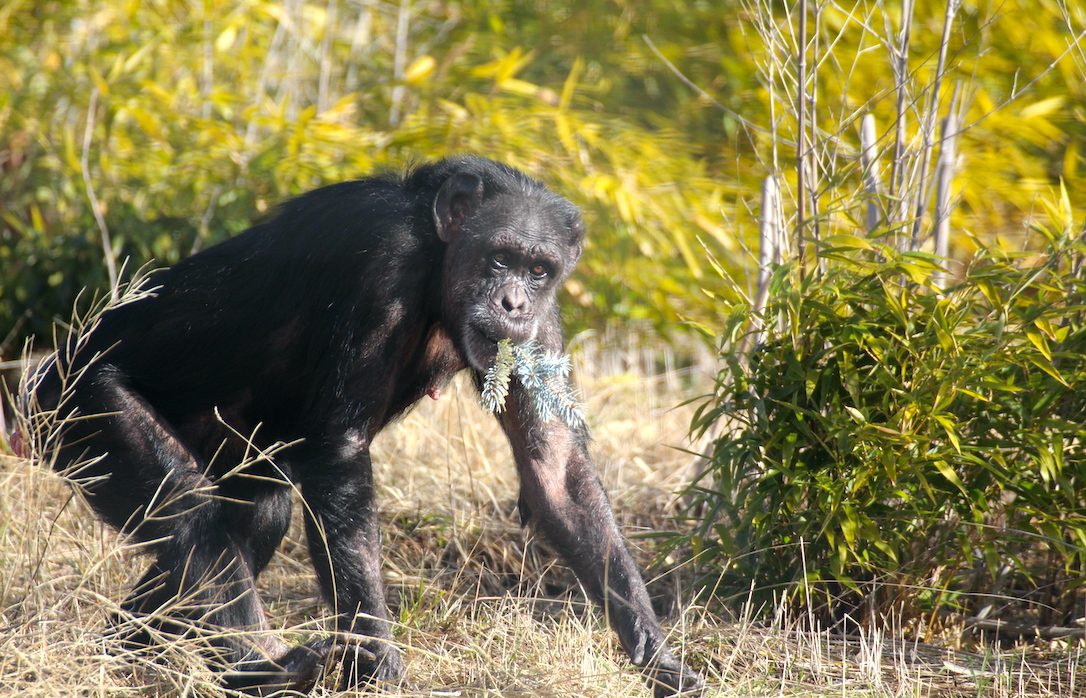
You’ve probably heard by now that several members of a gorilla troop at the San Diego Zoo began exhibiting respiratory symptoms and later tested positive for the coronavirus that causes COVID-19. This is a moment that we’ve all been fearing, and to a large extent expecting, since the pandemic began. From what we know, the gorillas’ symptoms are still mild and zoo officials are hopeful that they will fully recover. But there’s so much we still don’t know about the pathogenicity of SARS-CoV-2 in nonhuman apes.
The coronavirus isn’t the first airborne pathogen transmitted by humans to threaten the health of captive apes. Historically, one of the greatest concerns for captive ape populations has been tuberculosis, which is why most facilities, including CSNW, require staff and volunteers to be tested at least annually and avoid the sanctuary when exhibiting any new respiratory symptoms. But in rare cases, even something as seemingly innocuous as the common cold can have devastating effects on other apes, as we saw in the death of an otherwise healthy chimpanzee at the Lincoln Park Zoo in 2009. Incidents like this, and the lingering unknowns surrounding COVID in great apes, have led most institutions to further strengthen the precautions they take to protect the apes in their care. In the case of the gorillas at the San Diego Zoo, there’s nothing at all to suggest that a lack of adequate precautions contributed to the transmission. But it’s a stark reminder that we cannot let our guard down too soon.
Like our colleagues, we’re still doing what we can to protect the chimps from COVID based on the best information available. We wear masks at all times and don scrubs, gloves, and boots when around the chimps and when cleaning their enclosures or handling food and enrichment. We take the chimps’ temperatures as well as our own each morning. We’ve invested in several commercial air scrubbers, which have been shown to help filter the air of large airborne particles that may contain the virus. And we rely on a mix of natural ventilation via open doors and windows and our industrial ventilation systems to maintain fresh air in the building. We’re always thinking about what more we could do but there’s just no way to isolate captive apes from their human caregivers entirely.
One of the most difficult changes we had to make as a result of the pandemic, both for the staff and the chimps, was suspending our intern and volunteer program. Only two volunteers, Patti and Lisa, were able to meet our strict criteria for COVID precautions in their lives outside of the sanctuary, and we and the chimps are incredibly lucky to have them. But the chimps are missing many of their other friends.
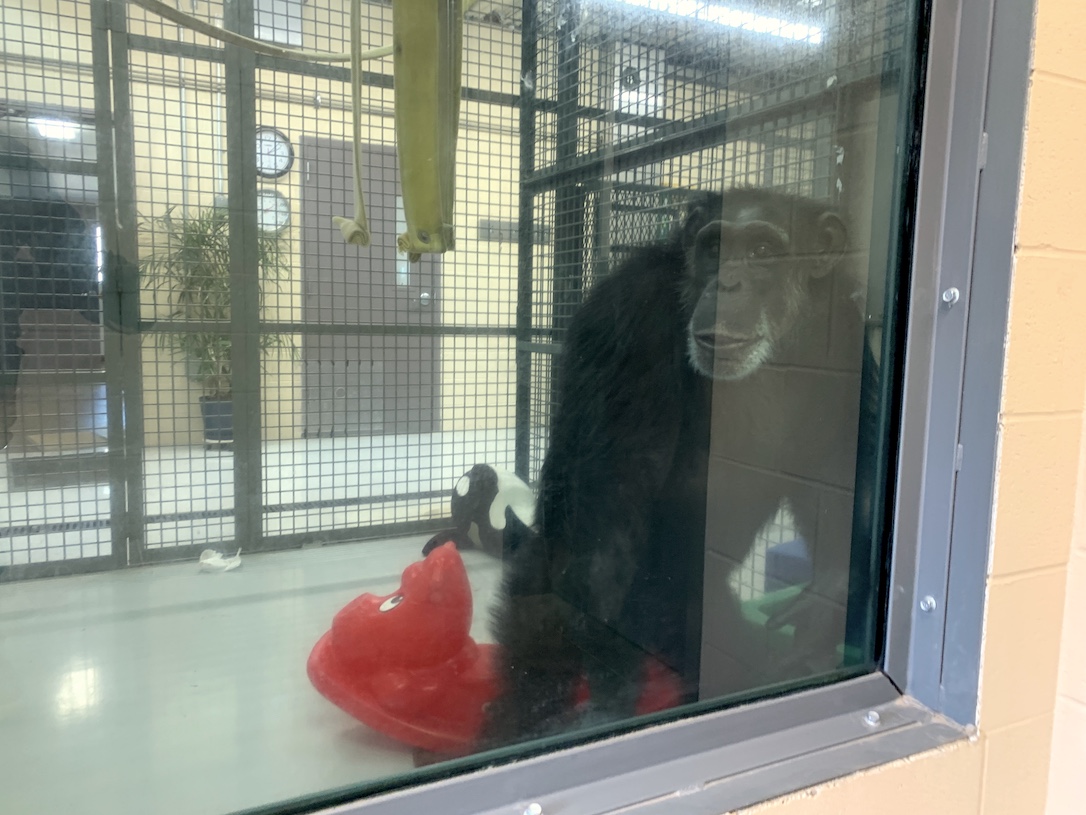
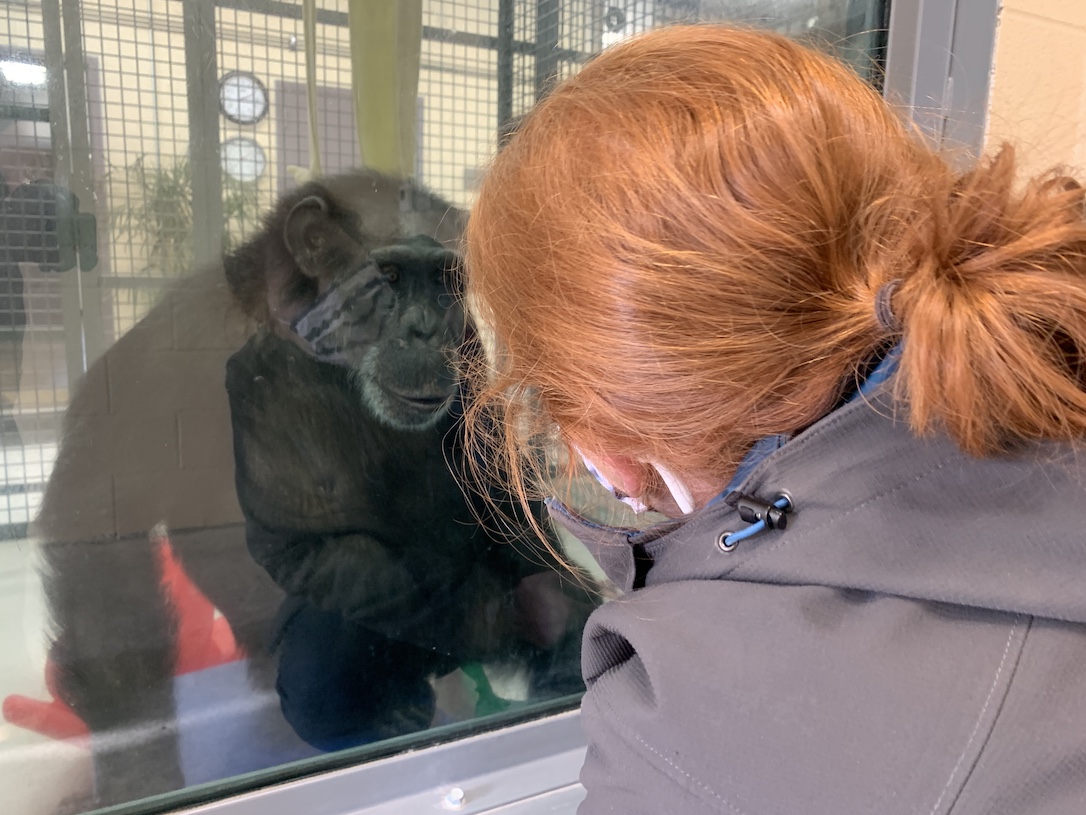
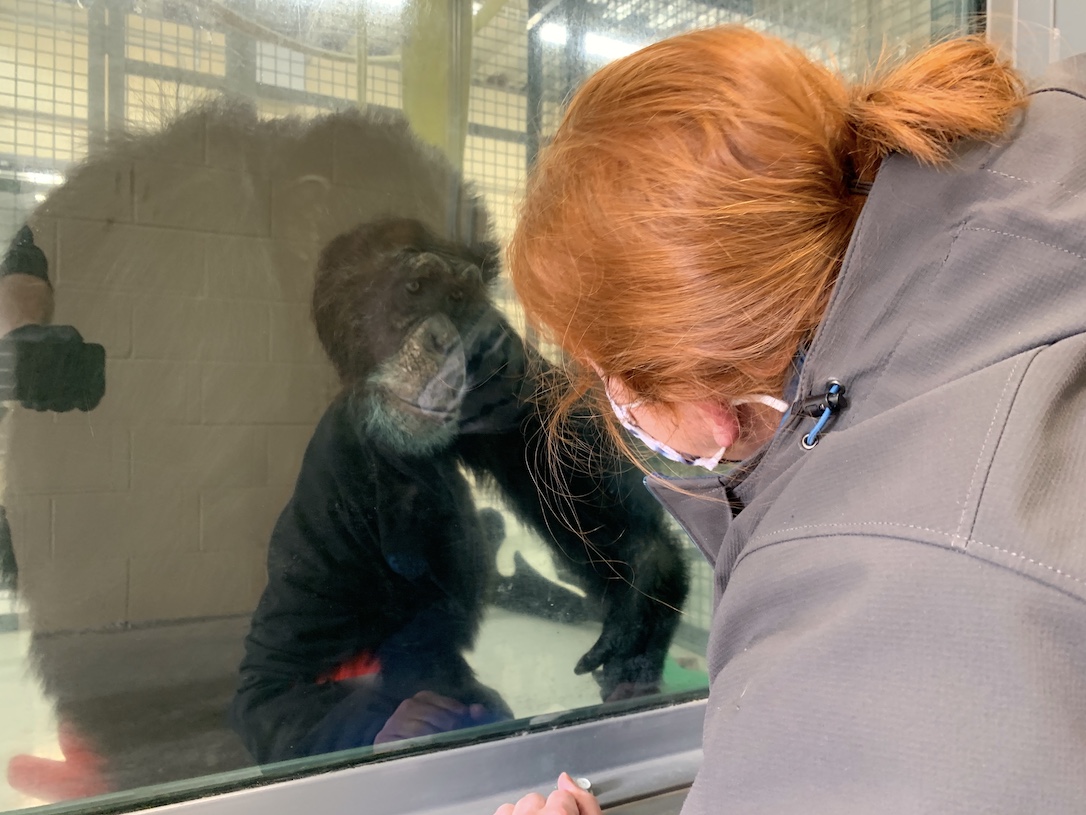
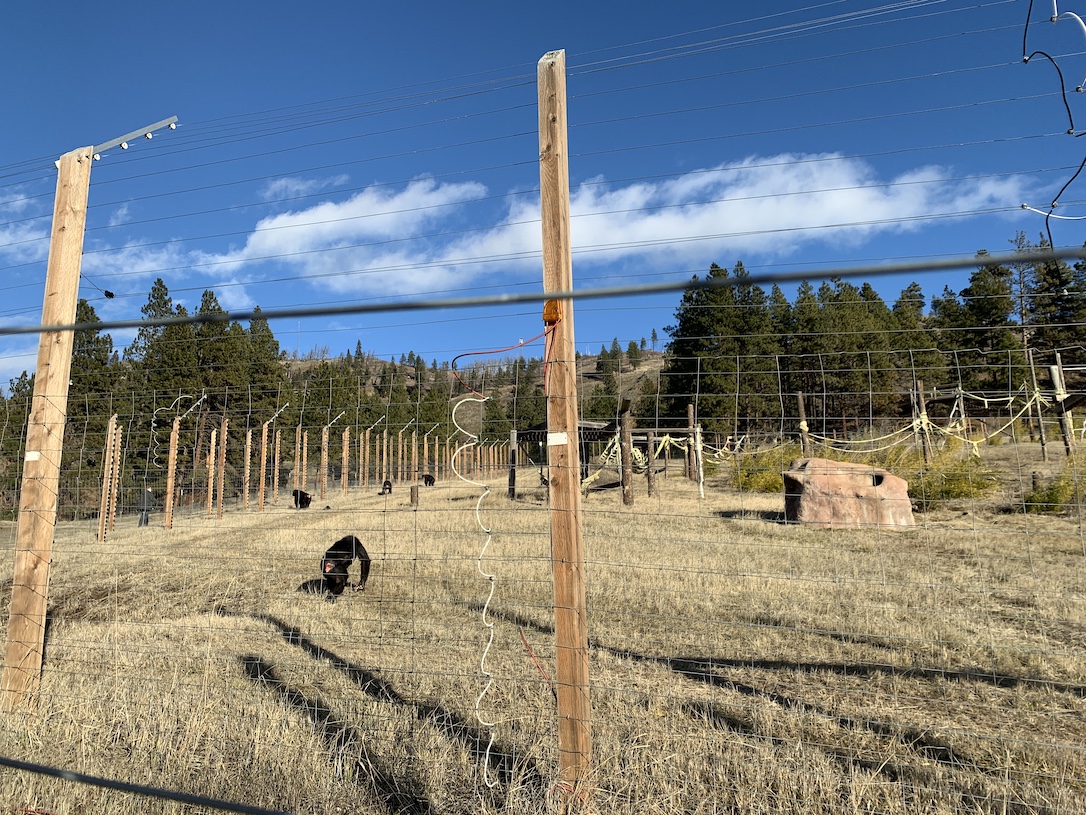
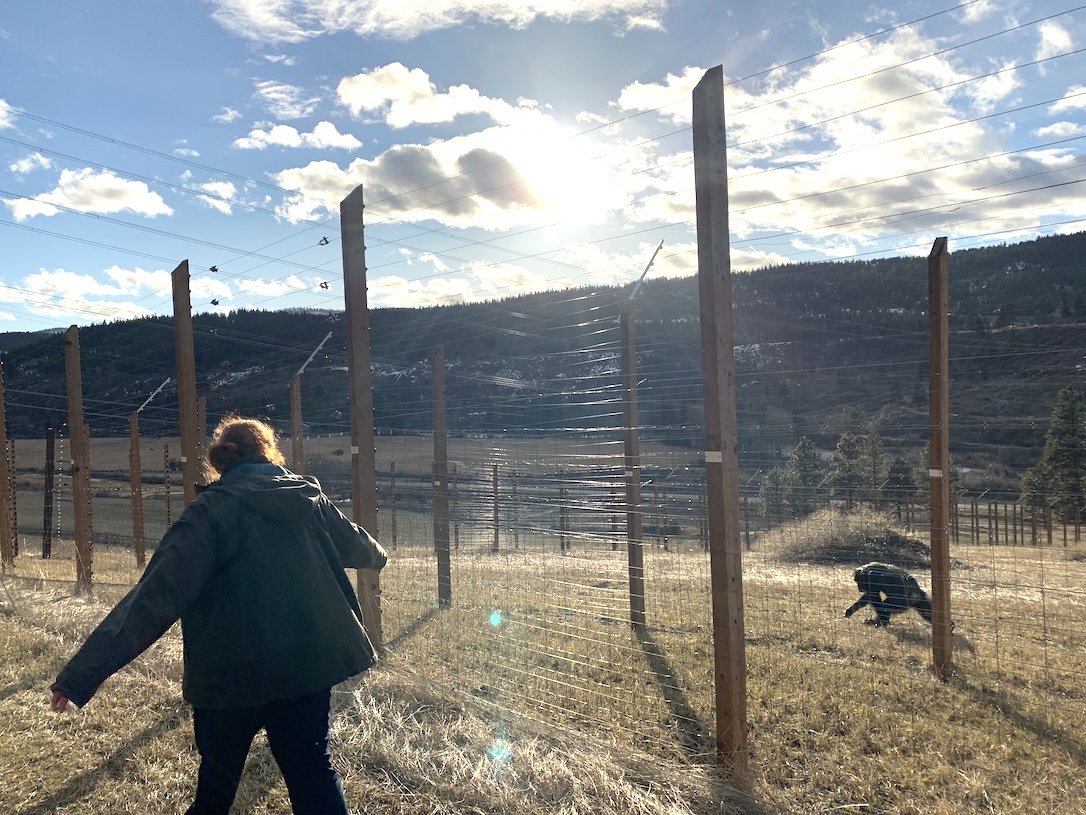
Thankfully, spring-like weather has made socially distanced walks around the hill possible all winter long for our other local volunteer caregivers. And now, with our new building, we have several locations where the chimps’ friends can visit with them through glass without sharing the same air space. Long-time staff member turned volunteer, Elizabeth, came by this afternoon to see her chimp friends. Everyone was so excited to see her – Burrito even did his happy dance.
As COVID continues to challenge us all, we’re thankful for bright moments like these.



Thank you for the great information about this topic.It’s been on my mind alot lately.Thank you for the wonderful care you give these beautiful 10 chimps.I can breathe better now.
So glad all our friends, ape and human, are so far safe from this dreaded disease. And how wonderful to be able to have a visit from an old friend. I love to hear about the chimps’ excitement any time!
Holding good and healing vibes for the gorilla troop at the S.D. Zoo.. So much responsibility in keeping not just humans safe but the vulnerable captives that we love so much. Such a grand visit everyone got to have with Elizabeth. Nothing calms the soul like a beautiful picture (a whole series of them) of Bubba and Elizabeth heading out on a walk in the lovely sky of the evening… Thanks J.B. for the wonderful post and terrific series of photos.
the question of the day is whether the vaccine would work on the chimps ? with all the delays in the program startup, i am sure they would not be afforded any vials in the foreseeable future…but an opinion on the application’s use would seen possible for discussion…….
Hi Tom – Yes, the vaccine should work in chimps, as it was shown to be effective in rhesus macaques during the development of the drug and then of course later in humans. As you say, it could be some time before it is available for use in nonhuman animals since there are 8 billion humans in line before them. But it will certainly be an option on the table for captive apes, and there are already discussions of potentially vaccinating wild population if the virus reaches them.
So Thankful the Staff and Volunteer caretakers are taking precautions to protect themselves and the Chimps. Keep up the good work you are doing and stay safe? Thank you for the Awesome updates.
Anything with the information regarding covid in the Gorillaz at San Diego it turned out to be a beautiful blog today.
again many thanks to all the interns volunteer and staff at the sanctuary and so happy to see this young lady Elizabeth to be able to come back and meet her beautiful friends, the chimpanzees. I feel it is definitely good and healthy for the chimpanzees as well as us humans to be able to share the beautiful friendship that was displayed in the photos that you share today.
Wishing everyone a wonderful and safe weekend and let’s all pray for all animals to not come down with the virus and if they do to be able to fight it off and live on.
???
When I heard the news of the gorilla troupe at the SD Zoo my heart jumped to my throat. The news showed the gorillas looking well, and the “zoo keeper” explained that primates in captivity receive the best of care, but they also pointed out that it’s not the same for the primates in the wild. You can’t isolate a chimpanzee in the wild, nor can you take temperatures. Knowing chimpanzees and many gorilla populations are Endangered or Critically Endangered the fear of coronavirus infecting a wild population seems more dire than ever. I think about the stress of Covid and added pressure it must place on you everyday. I don’t how you have handled the past year with just your core staff, and with the new building going on too. You think of everything and you make it look easy but clearly running a primate sanctuary during a world wide pandemic is anything but. My heat goes out to all of you.
At times it feels as if there is no good news to be found, just a bombardment of negativity. And then I come here, to your blog, and I see Elizabeth and her beautiful red hair and I smile from the inside out knowing that the excitement and joy of Elizabeth and the chimps seeing each other runs both ways — you can feel it in these photos. I can’t get over the expressions on Honey B and Mave’s faces. Elizabeth, what does it feel like to be looked at that way?! Speaks volumes to your friendship with those ladies. Lucky you. And Burrito, having a patrol all by himself with his old pal, on such a beautiful afternoon no less. (It all makes me feel a little bit choked up.)
This was the best news I’ve seen in ages. Thanks.
I am so glad you covered this topic today as I’ve been wondering about it. I loved the thought of Buritto being so happy to see Elisabeth that he did a “happy dance”…just goes to show how much the caretakers mean to these chimps. It must have warmed her heart too to see how much they loved her and missed her.
Thank you for all that you do for these wonderful chimps.
Thanks so much for sharing Elizabeth’s visit! Hearing about the happiness it brought the chimps is so special and I know Elizabeth was doing her own happy dance. The impact of social isolation on humans has been devastating and it must be just as difficult for the chimps. I’m sure that the added work and responsibility you all are assuming is taking a toll. Thank you for all that you have done.
I can see Burrito’s happy dance now!
Is this the first time Elizabeth met the Californians? I feel like she left before they arrived.
Thanks for sharing the pics, JB!
Hi Linda – She left as an employee before they arrived but she had been volunteering regularly until the pandemic hit.
Oh, that’s right! I forgot! Hope the new job is going well, Elizabeth!