We have a treat for you today! I am sharing a guest blog post by board member and chimp house volunteer Dr. Lori Sheeran, who is a Professor of Anthropology at Central Washington University.
Dr. Sheeran was inspired by last month’s publication of a scientific article entitled, “A comparative approach to the evolution of kissing” in the journal Evolution and Human Behavior. The article by authors Brindle, Talbot, and West explores the evolution of kissing in Asian and African monkeys and apes.
We thought it would be a great guest blog topic with Valentine’s Day coming up! Please enjoy learning about kissing in our evolutionary kissing cousins from Lori:
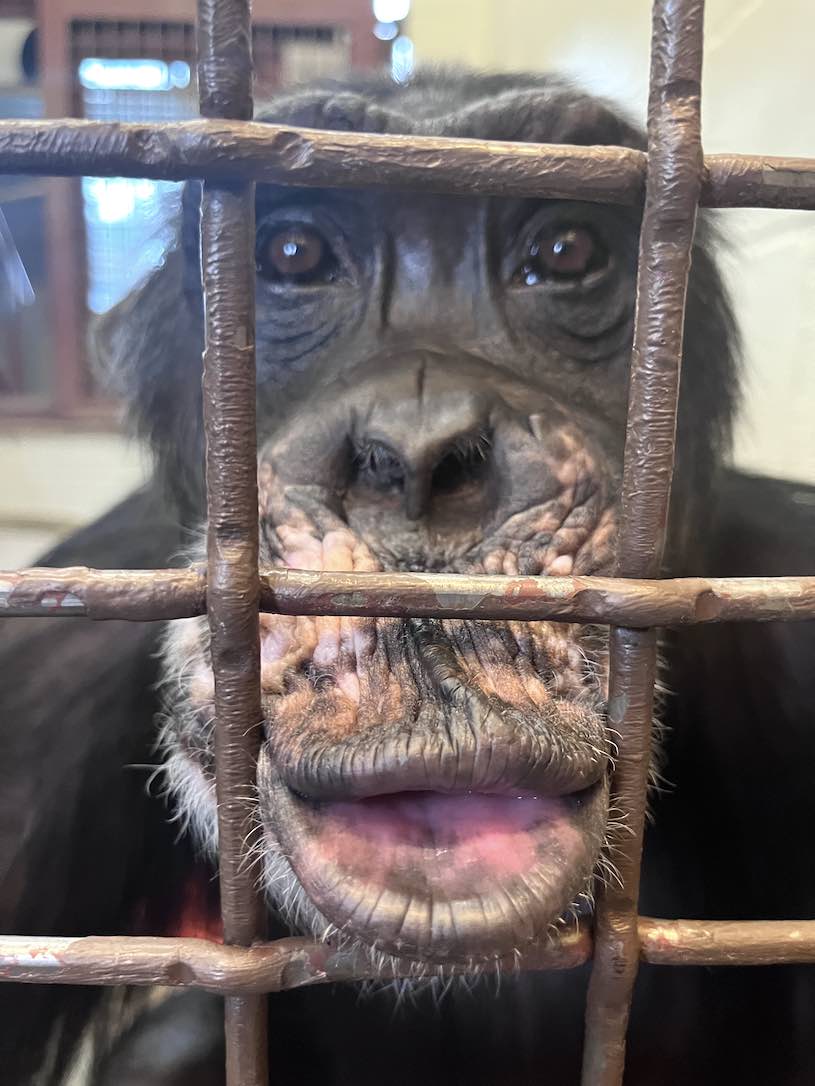
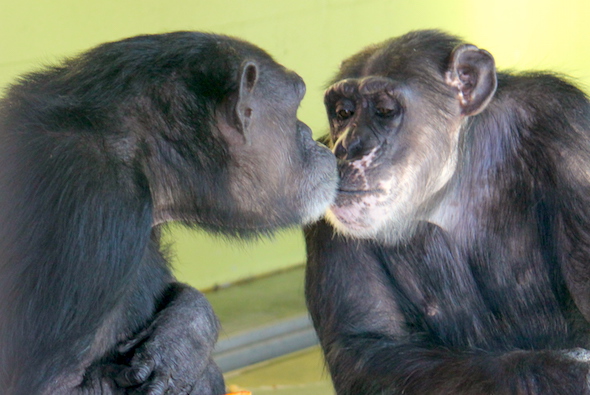
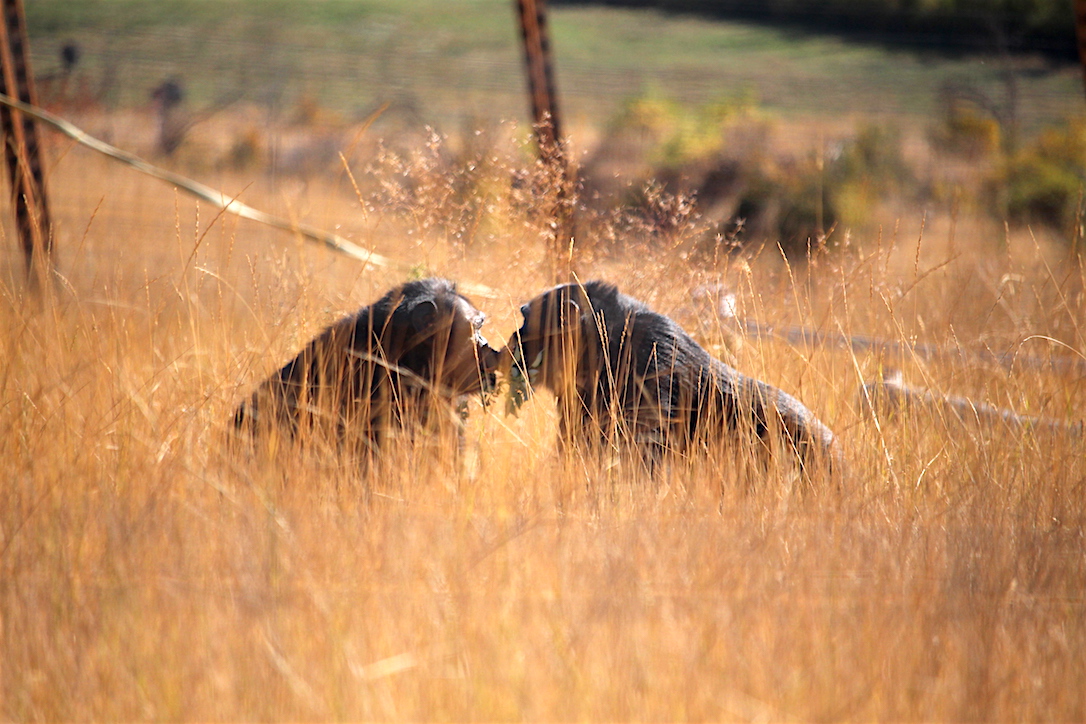
To study kissing, scientists first needed to define it: “…a non-agonistic interaction involving directed, intraspecific, oral-oral contact with some movement of the lips/mouthparts and no food transfer (Brindle et al., 2025, p. 1).” I know, not much romance in that definition! The researchers recognize that kissing may occur in sexual and platonic contexts, and that its function likely differs in each context, but they were unable to separate those two contexts in their review of kissing reported in the primate literature.
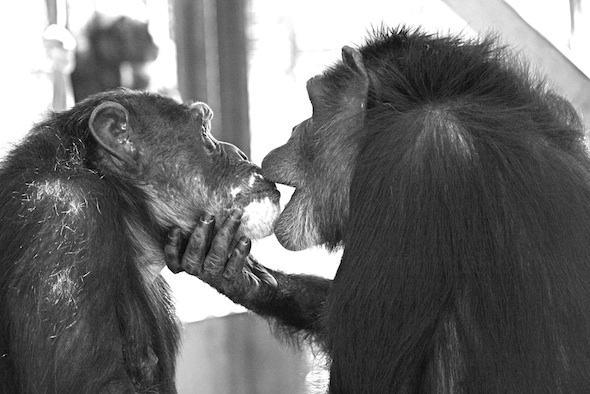
They also explain that for any given behavior, such as kissing, researchers can think about answering “HOW” questions and answering “WHY” ones. For kissing, HOW questions might include studies focused on the form and context of the behavior, how the behavior is learned, and at what developmental stages it occurs.

WHY questions tend to focus on the evolutionary purpose of the behavior, which usually relates to how it affects the kisser’s survival and reproduction. Here, a researcher might focus on whether those individuals who kiss (or kiss well) have more reproductive opportunities than those who do not kiss (or who kiss poorly).
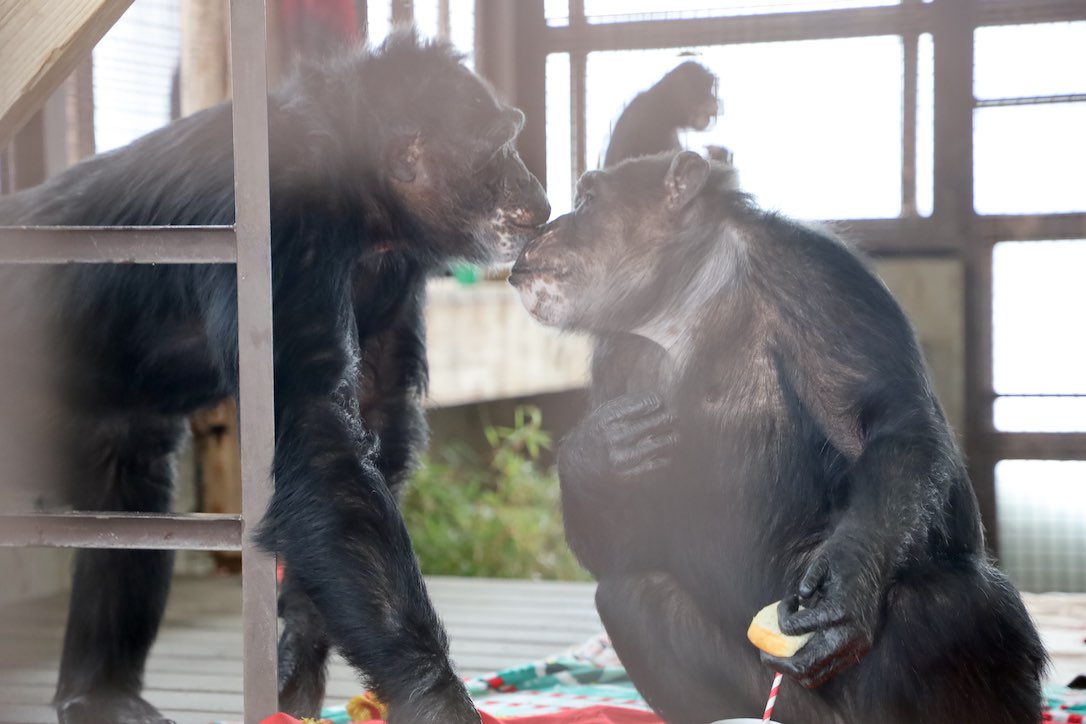
Kissing occurs in many species, including non-primates, but the authors note that the most information on it currently exists for African and Asian monkeys and large-bodied apes (orangutans, gorillas, chimpanzees, and bonobos). Gibbons and siamangs, sometimes referred to as the small apes, have not been reported kissing, or at least not yet (some gibbon and siamang species, however, do have “love songs” and pairs sing to each other).
The authors’ preliminary results indicate that kissing may have evolved independently in African and Asian monkeys and in large-bodied apes, due to the apparent absence of kissing in gibbons and siamangs. Large-bodied apes’ kissing may have evolved as early as 21.5 million years ago, before the orangutan, gorilla, chimpanzee, and bonobo lineages diverged, because nearly all of these species kiss—with the possible enigmatic exception of eastern gorillas. Thus, as is true for human societies, there is variation in the presence or absence of kissing among large-bodied apes, which opens the possibility that it is a learned and socially transmitted behavior—culture!

The authors had little information on platonic kissing, but I find it interesting to speculate on how this might be an important affiliative behavior. Kissing entails vulnerability, so engaging in it shows some degree of trust in one’s kissing partner. It might occur within primate groups in contexts similar to other affiliative behaviors such as grooming: to repair relationships after a disagreement, to reinforce bonds between parents and children, or to show concern for an injured or bereaved relative.
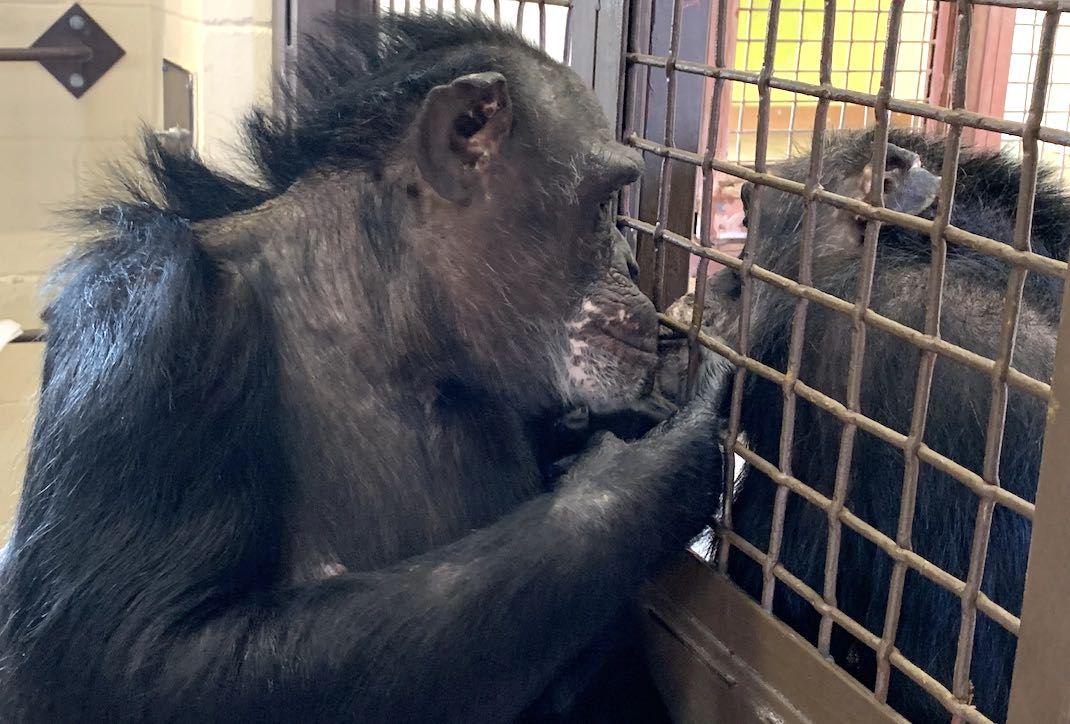
If you have a chance to pucker up with those you love this Valentine’s Day (human or not!), you might spare a moment to thank our ape ancestors for inventing this marvelous behavior.
Feel free to thank Lori in the comments for this guest blog post!
And if you’re looking for some Super Bowl content, see Chad’s blog post from a few days ago :).