• Skip to main content
  • Skip to primary sidebar
  • Skip to footer

Chimpanzee Sanctuary Northwest

Hope. Love. Home. Sanctuary

  • Our Family
    • The Chimpanzees
    • The Cattle
  • Blog
  • About Us
    • Visiting the Sanctuary
    • Philosophy
      • FAQs
      • Mission, Vision & Goals
      • Privacy Policy
    • The Humans
      • Staff
      • Board of Directors
      • Founder
    • Annual Reports
    • The Future of CSNW
    • CSNW In The News
  • You can help
    • Donate
      • Become a Chimpanzee Pal
      • Sponsor A Day
      • Transfer Stock
      • Be A Produce Patron
      • Be a Bovine Buddy
      • Give from your IRA
      • Personalized Stones
      • Bring Them Home Campaign
    • Leave A Legacy
    • Employment Opportunities
    • Volunteer
    • See Our Wish List
    • Events
  • Resources
    • About Chimpanzees
    • Enrichment Database
    • Advocacy
      • Advocacy Action Center
      • Apes in Entertainment
        • Trainers
        • Role of the AHA
        • Greeting Cards
      • Chimpanzees as Pets
      • Roadside Zoos
      • Chimpanzees in Biomedical Research
      • Conservation
        • African Apes
        • Orangutans
  • Shop
    • Merchandise Store
  • Contact
  • DONATE NOW

Free

Hanging treat bags

November 10, 2018 by Leave a Comment

Brief Description: The chimpanzees have to pull in paper treat bags that are hung on the outside of the caging.

Materials: Paper gift bags (with handles), tissue paper, small cardboard boxes, raffia (or string if allowed in enrichment program) for hanging

Assembly instructions: No assembly required

How to use:
Stuff bags with paper, smaller boxes and treat of choice, hang on the outside of caging. Chimps will pull in the bags and have to work to get them through the caging.

Price: free if using recycled materials

We used these for Jamie’s birthday party:
Frozen Fabric Knots

June 15, 2018 by 1 Comment

Brief Description: A simple, yet challenging puzzle requiring the chimps to untie and pull apart frozen fabric to get to their treats.

Materials: Pieces of fabric large enough to tie into knots and able to absorb water. We use towels and blankets.

Assembly instructions: Cut pieces of blanket or towels to make your fabric pieces. Any size will work as long as you are able to tie a knot in them.

How to use: Dip fabric pieces in water. Towels will absorb more water and make more difficult knots to untie when they freeze. Put nuts or other treats in the middle of the fabric piece and tie into a knot. Freeze on a cookie sheet.

Price: No cost if using recycled fabric

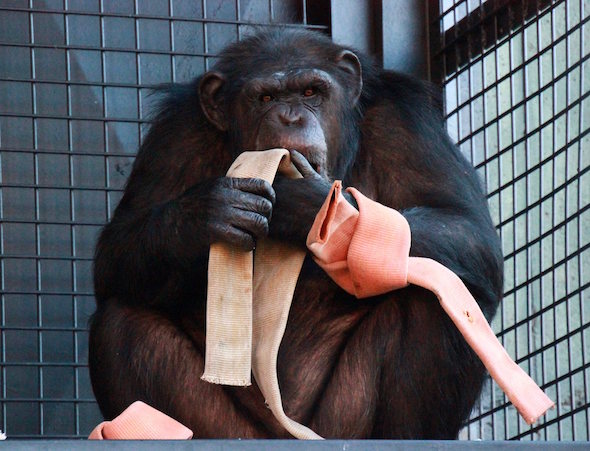
Fire hose Knots

November 2, 2017 by Leave a Comment

Brief description: Small lengths of fire hose with food stuffed inside are tied in knots. The chimps have to untie the knots and figure out how to get the food out of the hose.

Materials: Fire hose! Can be varying widths. We use a medium width hose.

Assembly instructions: Cut fire hose into approximately 3 foot lengths. Pull out inner rubber tube and discard.

How to use: Add dry treats such as walnuts in the shell into the hose. Tie the hose in a knot, or add multiple knots, depending on the length and flexibility of the hose. You may want to start off with loose knots and do a demonstration so the chimpanzees learn how the puzzle works. You can adjust the level of difficulty by making tighter knots, using a longer hose, or a smaller food item.

Price: Free if using donated fire hose. Contact your local fire department to see if they have hose they can no longer use.

Latricia at Project Chimps. Photo Credit Project Chimps

Cardboard Boxes

March 3, 2016 by Leave a Comment

Brief description: Cardboard boxes serve multiple purposes when enriching chimpanzees. They are great for caregivers to hide food and other enrichment in, the chimpanzees can use them for nesting or sitting in, and they can tear them apart to create impromptu tools.

Materials: Cardboard boxes. We use boxes that our produce and other packages are delivered in (we do not use waxy boxes, and we are careful to remove any staples or tape that may come on the boxes for safety reasons.

Assembly instructions: No assembly required (just be sure to remove any potential safety risks like tape or staples).

How to use: Provide boxes in the animal areas.

Price:
Free

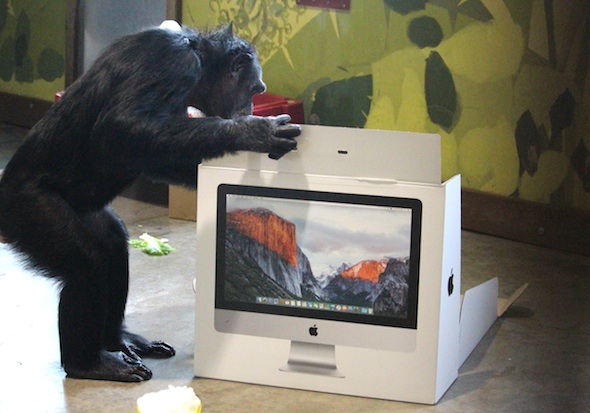
Jamie inspects a computer box.

Gordo sits inside a box.

Jody nests with boxes.

Forages

March 3, 2016 by Leave a Comment

Brief description: In free-living situations, chimpanzees spend a great deal of their time traveling and searching for food. In captivity, caregivers spread out food in enclosures to encourage chimps to exercise and show their natural foraging behavior. At CSNW, we do forages on a regular basis. However, we make sure to continue to serve the majority of meals directly to the chimpanzees. This way we can monitor their diets and ensure that less dominant individuals are getting enough to eat.

Materials: Regular diet, or novel forage items like cereal, freeze-dried fruits and veggies, popcorn, seeds, etc.

Assembly instructions:
Cut up regular diet, or gather novel items.

How to use: Spread food throughout indoor and/or outdoor enclosures. Forages can be made more challenging by cutting food up very small or putting it in a difficult place to reach. Sticky foods like peanut butter or banana can be smeared on clean walls for additional enrichment.

Price:
Free (assuming food for forages is already accounted for in food budget).

Negra forages for cabbage.

Foxie collects primate chow on a forage.

Clothing and Footwear

December 11, 2015 by Leave a Comment

Brief Description: Chimpanzees may enjoy playing with, nesting with, or wearing different types of clothing and footwear.

Materials: Shoes, boots, socks, scarves, pants, shirts, ball caps, bucket hats, fanny packs, etc.

Assembly Instructions: None required

How to Use: Put out a variety of clothing to see if chimpanzees are interested. Tie different enrichment objects onto clothing. At CSNW, troll scarves are a favorite.

Cost: None if using recycled clothing

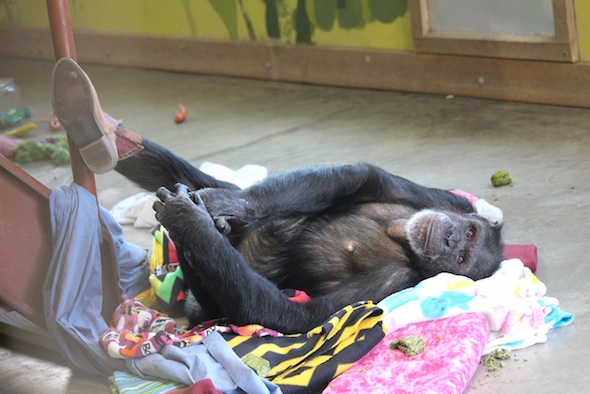
Jamie wearing a cowboy boot given to her by a volunteer.

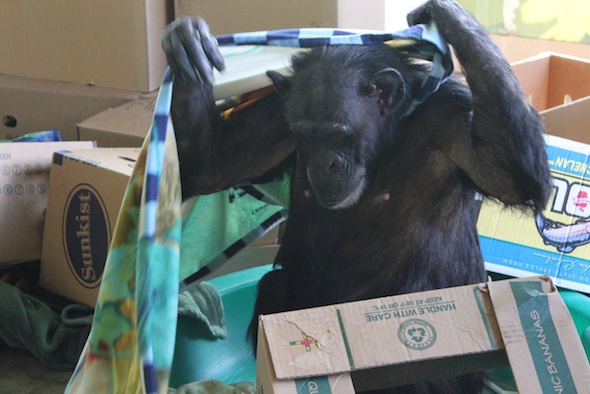
Jamie wears two troll scarves and holds a flute.

Paper Towel Rolls

December 10, 2015 by Leave a Comment

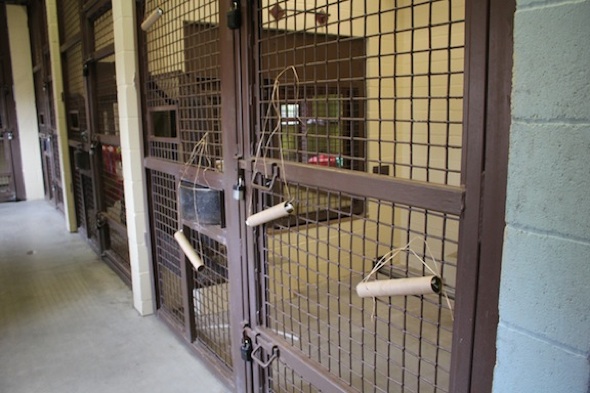
Brief description: Paper towel rolls filled with treats and paper can be put out as a forage or attached to the outside of caging. The chimpanzees must pull them through the caging before they get to open them.

Materials: empty paper towel rolls, strips of paper, raffia (optional),

Assembly instructions: If you are hanging the rolls, string a long piece of raffia (about 3 feet) through the empty paper towel roll. Then add a few strips of shredded paper into the paper towel roll. Add nuts/seeds/dried fruit and other forage items to the tube, then add more paper to prevent the food items from falling out. Continue doing this until each roll is full. If string is allowed in enrichment program, you can substitute string for raffia.

How to use: Use the raffia (or string if allowed) to tie each tube to the outside of caging.

Price: Free if using all recycled material

Paper towel rolls hanging on the front room caging.

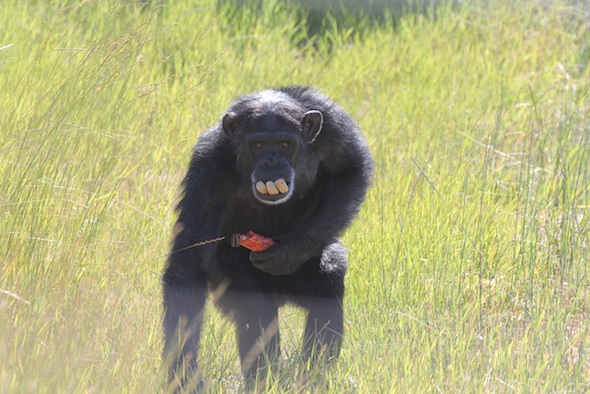
Annie.

  • Page 1
  • Page 2
  • Page 3
  • Go to Next Page »

Primary Sidebar

Subscribe To the Blog and Get Notified of New Posts First!

Archives

Calendar of Blog Posts

June 2026
S M T W T F S
 123456
78910111213
14151617181920
21222324252627
282930  
« May    

Categories

SUBSCRIBE TO OUR NEWSLETTER

Footer

PO Box 952
Cle Elum, WA 98922
[email protected]
509-699-0728
501c3 registered charity
EIN: 68-0552915

Official DDAF Grantee

Menu

  • The Chimpanzees
  • Blog
  • About Us
  • You can help
  • Resources
  • Contact
  • Donate

Proud Member of

Connect With Us

Search

Copyright © 2026 Chimpanzee Sanctuary Northwest. All Rights Reserved. Site by Vegan Web Design