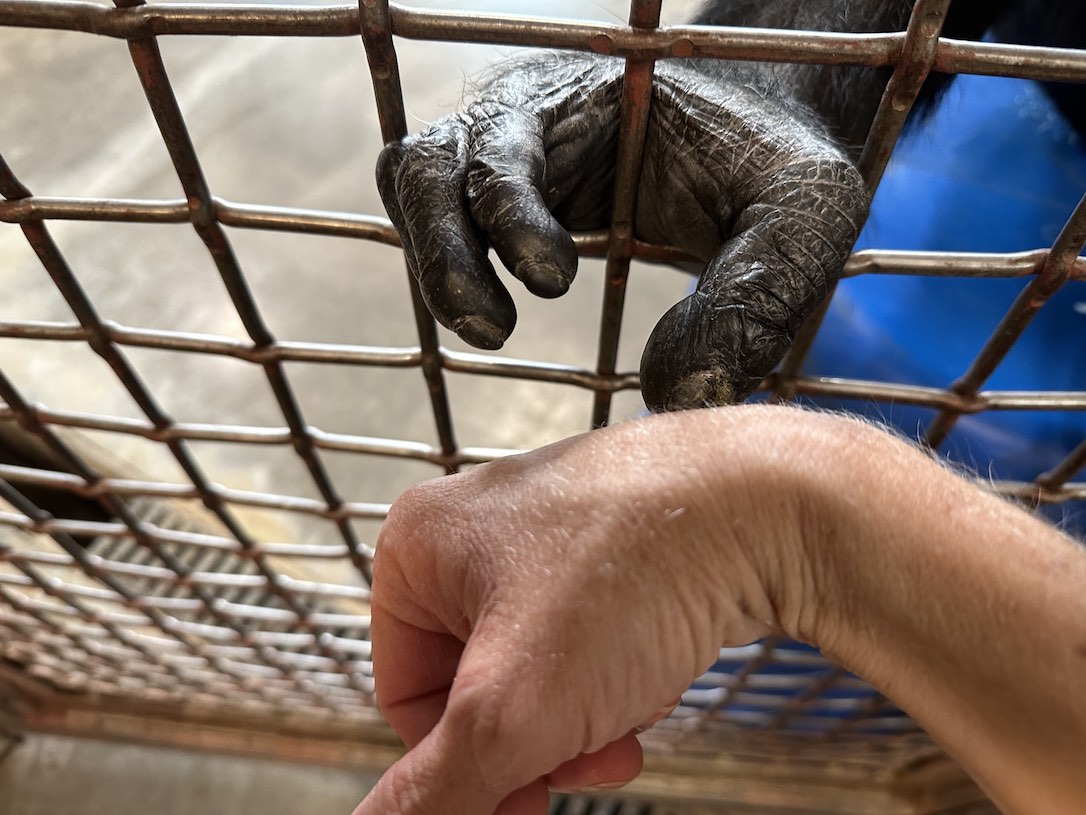
Elizabeth asked, “Is it intimidating when you first start working with chimps? How do you move pass that if so? (Watched a blog video of chimps descending from the top and kicking caging at caregivers)”.
Chimpanzees are large and intelligent individuals. When they display (a series of threat behaviors), it can be quite intense, especially for new people and visitors. However, it is best to come into a chimpanzee caregiving role with a healthy respect and understanding of their strength and abilities, opposed to being straight fearful. Captive chimps notice fear and will pick up on that and use it to their advantage for a reaction.
Chimpanzees are territorial by nature. New chimpanzees and new people on sanctuary grounds are something the chimps are quickly quite aware of. During this time, the chimps (particularly the high-ranking chimpanzees) will almost always display, making their presence known to the newcomer, and showing them this is their home. Displaying can look different by individual, but typically the chimps’ hair will be pilo-erect (standing on end), and they will be loud, often banging, hitting, kicking, or throwing items. The chimpanzees often pair their display with vocalizations (a long, loud pant-hoot that starts quietly until it reaches a climax). Most of the time, after the displays, the chimps will begin to relax and then will go back to their normal activities.
My advice to someone who is incredibly fearful of chimpanzees would be to look more into chimpanzee behavior so they know more what to expect and the element of surprise wouldn’t be so overwhelming. The chimps also need to get used to someone’s presence so they may display at a new human for awhile before they get used to them. The chimps won’t often display towards someone they’re used to seeing, like their caregivers, unless there is another factor at play, such as group tension.
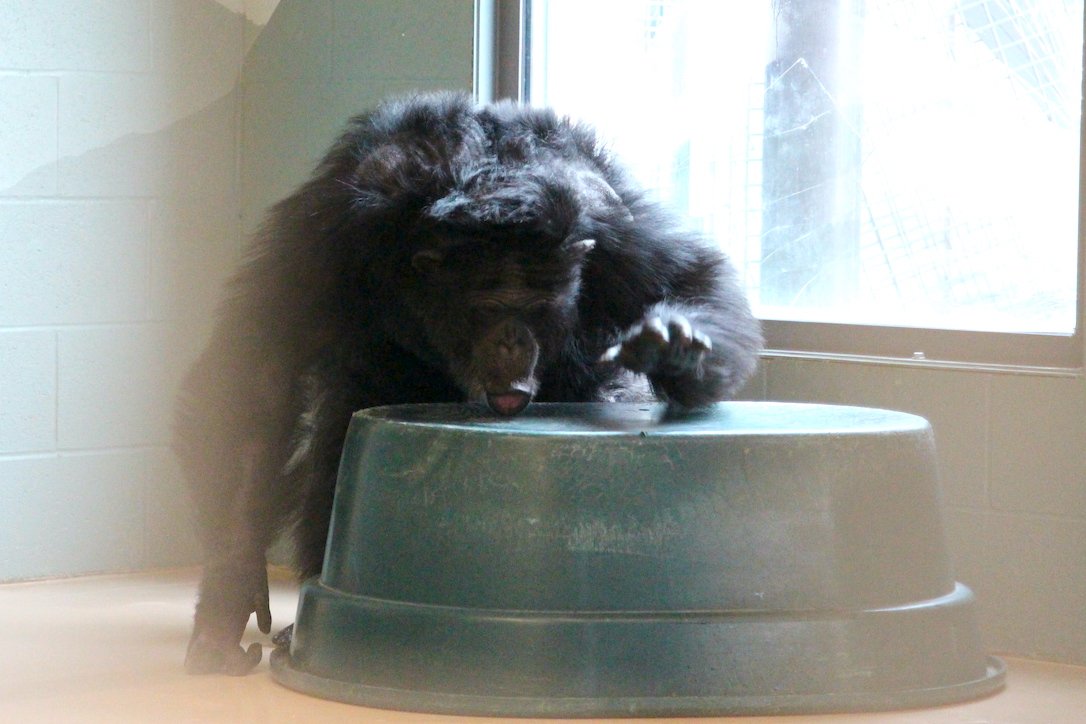
Cy pant-hooting while banging on a tub for maximum noise during his display:
Kathleen asked, “Do any of the chimpanzees have a preferred caregiver?”.
There is not a clear cut answer here, as we will truly never know what the chimps are thinking. However, I do believe that some of the chimps have caregivers they prefer more than others. Some of the chimps I couldn’t even guess who their preferred caregiver is, as they treat many caregivers the same and love them all (like Burrito, Cy, Terry). Some have several caregivers they seek out for grooming or play. There are also chimps that are indifferent enough about many caregivers, I also couldn’t guess (such as Negra, Missy, Mave, Dora). There are also some chimps that make their dislike for someone more known (such as Jamie whom spit her lunch time med cup in the back of my hair – it is crusty as we speak). And, on the rare occasion, some chimps have one caregiver they look forward to seeing the most and it is quite clear (example being Foxie and caregiver Katelyn). In my experience though, many of the chimps appreciate us full-time caregivers by showing us they noticed when we were gone on a vacation and they greet us when we come back (these are my best moments with Jamie, Annie, Negra, and Honey B).