For today’s blog post, I thought it would be worthwhile and prudent to review some of our positions and policies for anyone who may be new to our content.
First, I hope that everyone takes the time to find out why we exist, how we do what we do, and why we do it that way. The quickest way to familiarize yourself is to visit the Mission, Vision and Goals page on our organization’s website.
You’ll quickly see that we’re extremely opposed to practice of keeping nonhuman primates in captivity. Unfortunately, many chimpanzees were taken from the forests of Africa years ago and have been bred and behaviorally conditioned for use in research and entertainment. The majority of these individuals were deprived of the irreplaceable maternal bonds and complex social networks that free-living chimpanzees depend on for survival, essentially rendering the entire captive population incapable of a reintroduction into the wild.
As a response to these past injustices, the sanctuary provides a permanent retirement home for these individuals where they are free from further exploitation and can have some degree of self-determination.
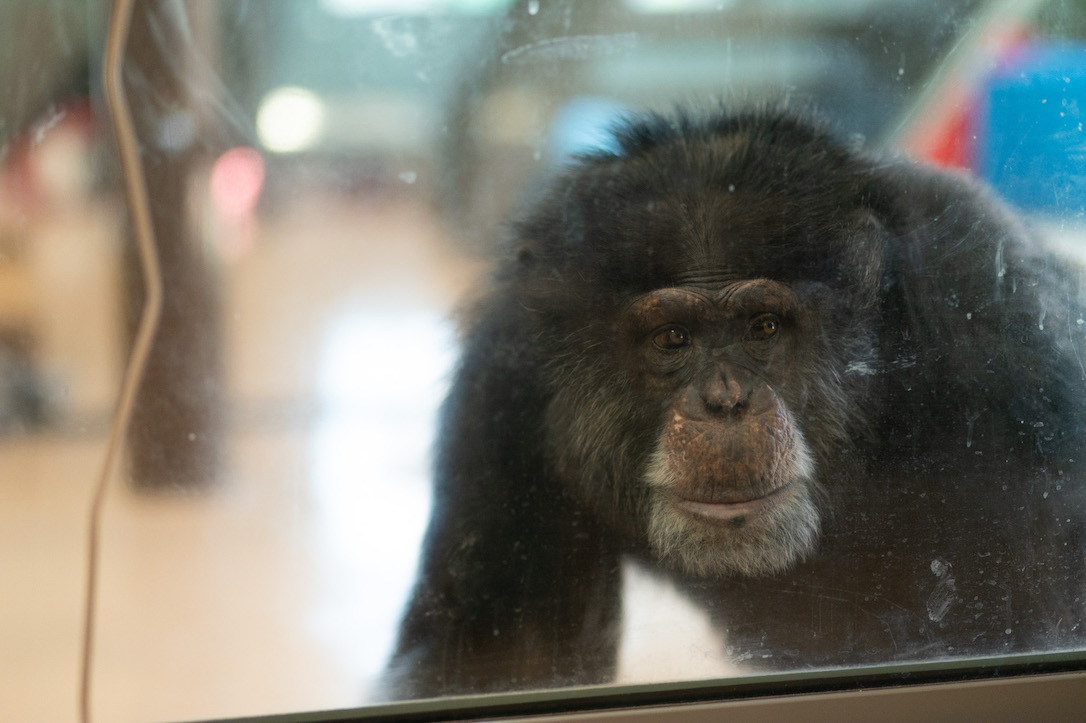
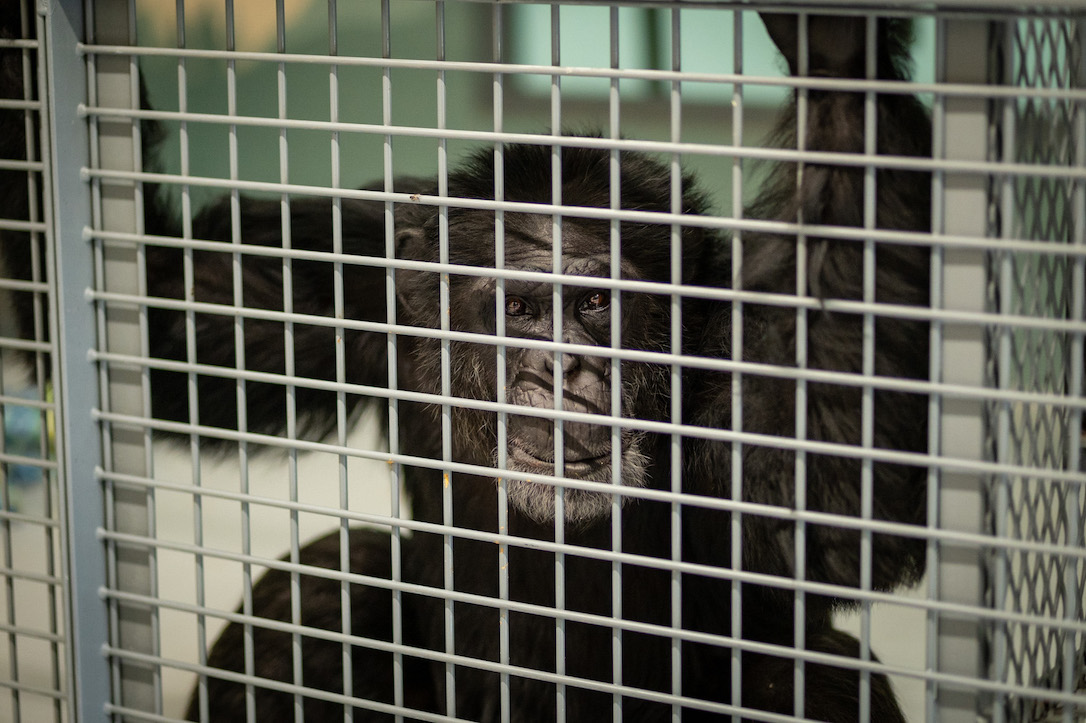
This protection from harm does not, however, come with absolute freedom from captivity. Each group of chimps has regular access to several different enclosures, but they must stay within these areas for their own security (and for human safety). Chimpanzees are not a domesticated species and the individuals we care for are not tame, so it would be irresponsible and dangerous to let them out of their enclosures to interact with humans in any capacity. Likewise, we never enter an enclosure occupied by chimpanzees; Before staff can unlock a space for cleaning or repairs, multiple trained personnel must confirm that all the chimps are accounted for elsewhere and that all the barriers between the areas are secure.

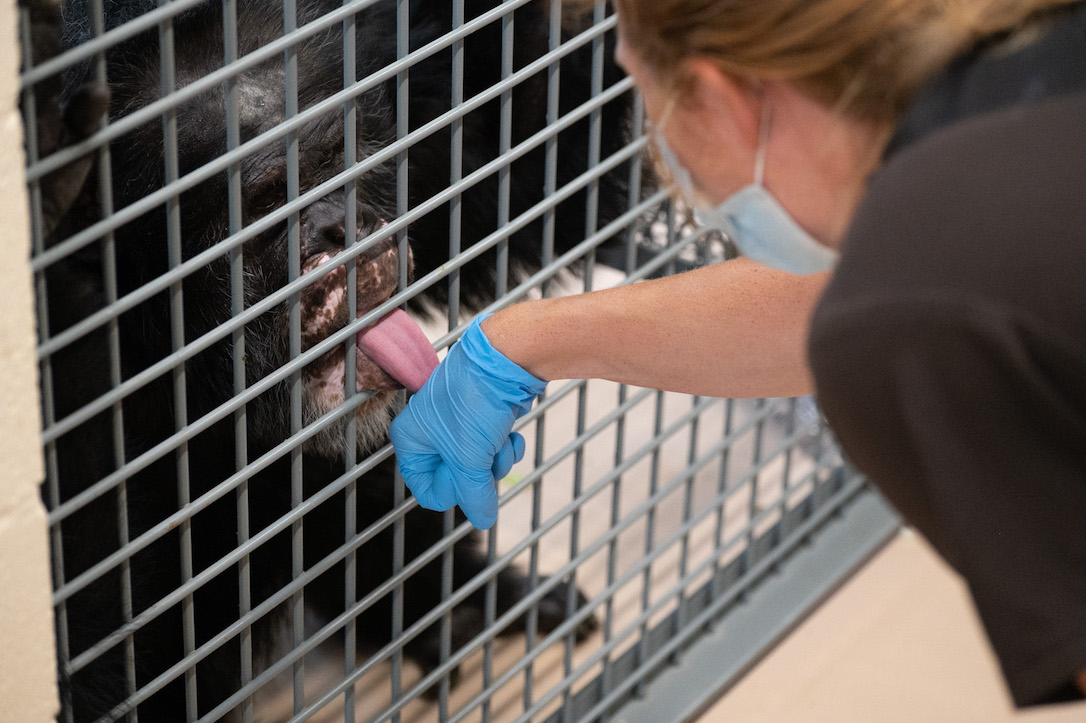
If a staff member or experienced volunteer wants to have a social interaction with a chimpanzee (e.g., playing, grooming, serving food), the human must follow our protected contact protocols which minimize the risk of physical injury. This policy also requires us to wear appropriate protective equipment, such as masks and gloves, in order to protect the chimps from any respiratory illnesses that we may be carrying.
When we share photographs or videos of humans and chimpanzees engaging in these activities, we add a disclaimer that provides key contextual details and reiterates our philosophy on captivity. Otherwise, we’d risk spreading the harmful myth that chimps can be safely handled.

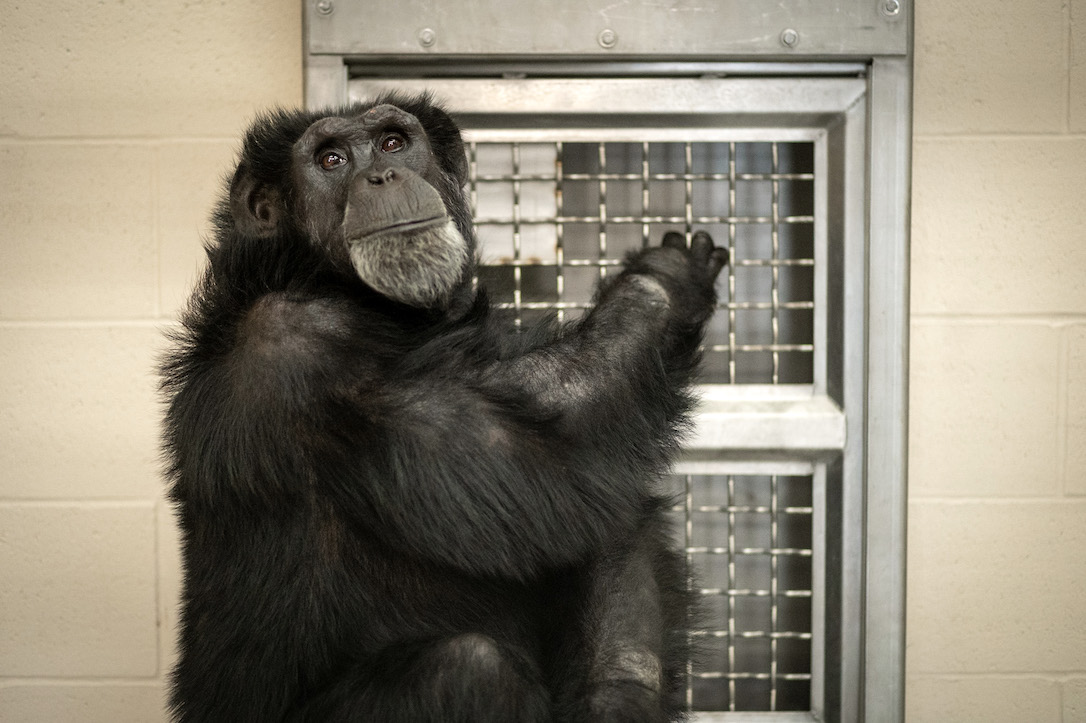
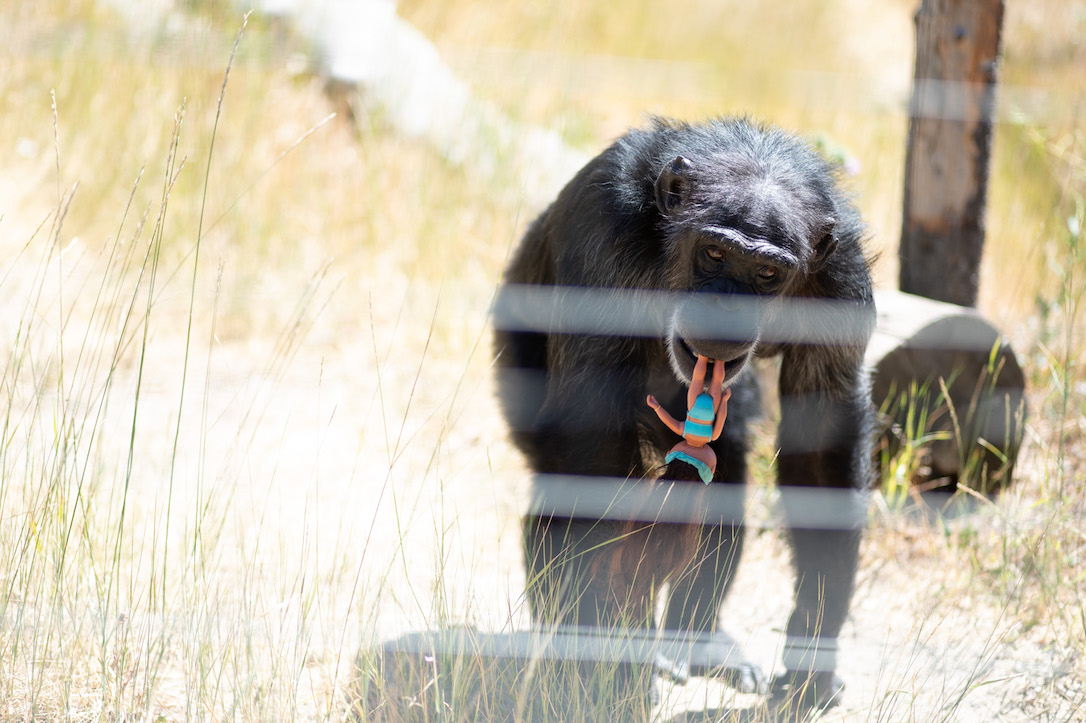
Similarly, imagery of nonhuman primates situated in artificial environments (or provisioned with similarly anthropogenic objects) may cause people to wrongly believe that they are meant to be in proximity to humans. As advocates for these individuals and their species, this puts us in an awkward place. Are we better serving the chimpanzees if we portray them as they should be or as they currently are?
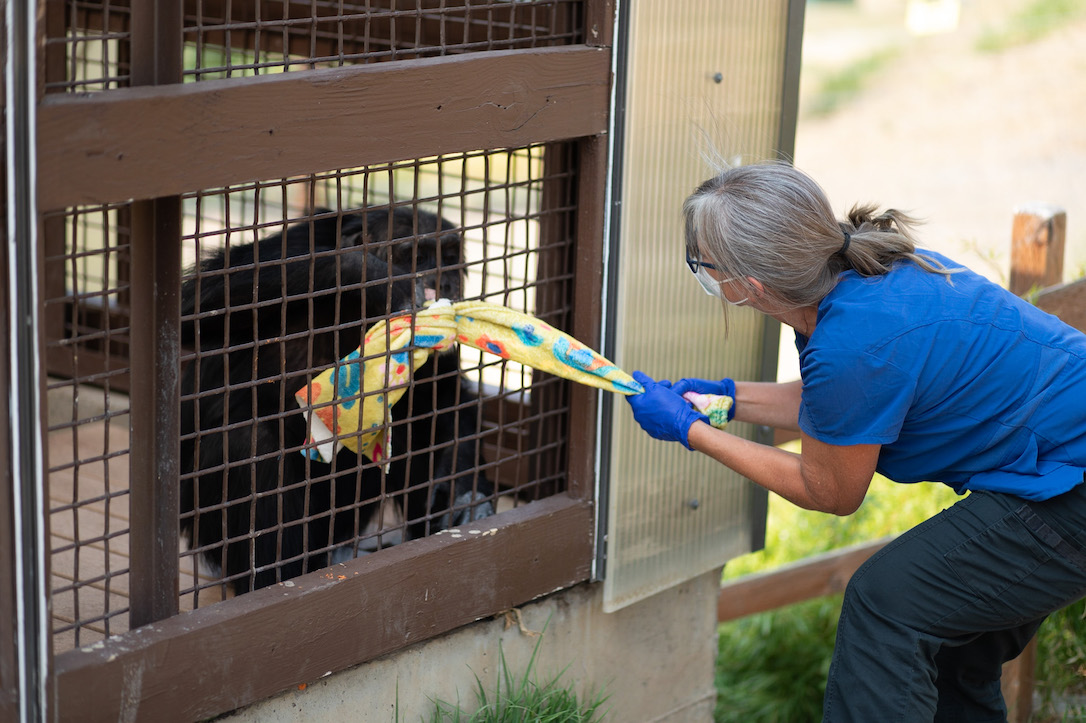
When sharing any content online, our team also has to consider the aesthetics of our facility and how it may be perceived. While we prioritize the design and regular enrichment of these enclosures in ways that maximize their suitability for the chimpanzees, they still have some unmistakable hallmarks of captivity: cement floors, industrial architecture, steel caging, and giant padlocks. For this reason, we often belabor the fact that the chimps have access to various indoor and outdoor areas throughout the day (except for the brief periods when we’re cleaning each of those spaces) but often choose to hang out inside regardless of the other options made available to them.
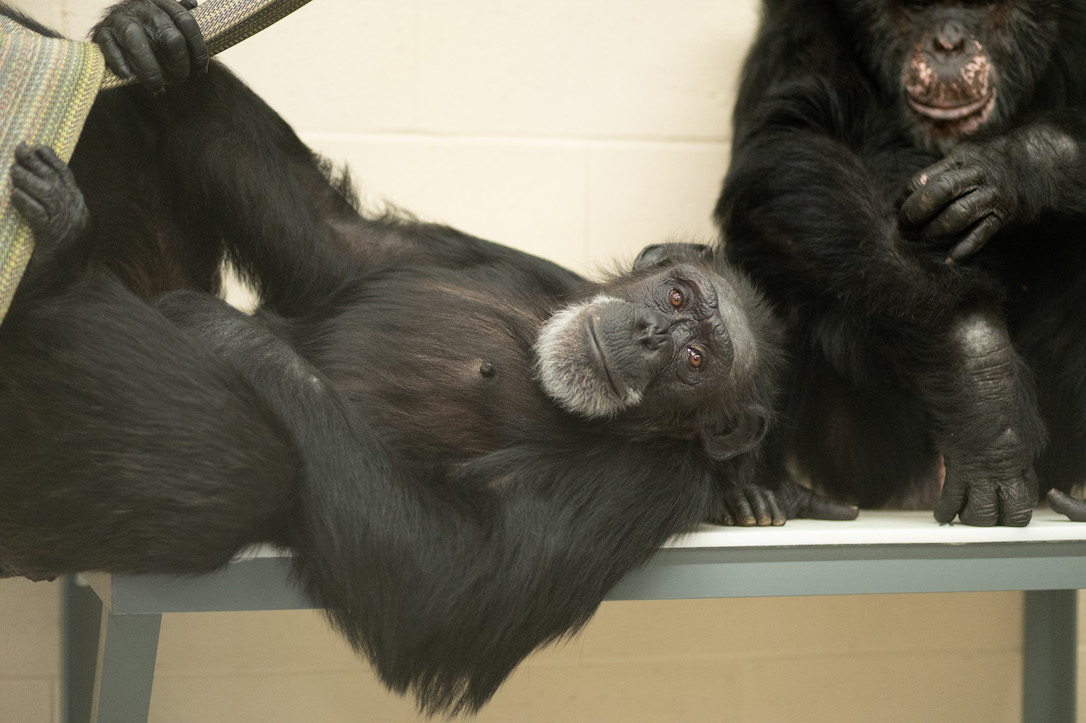
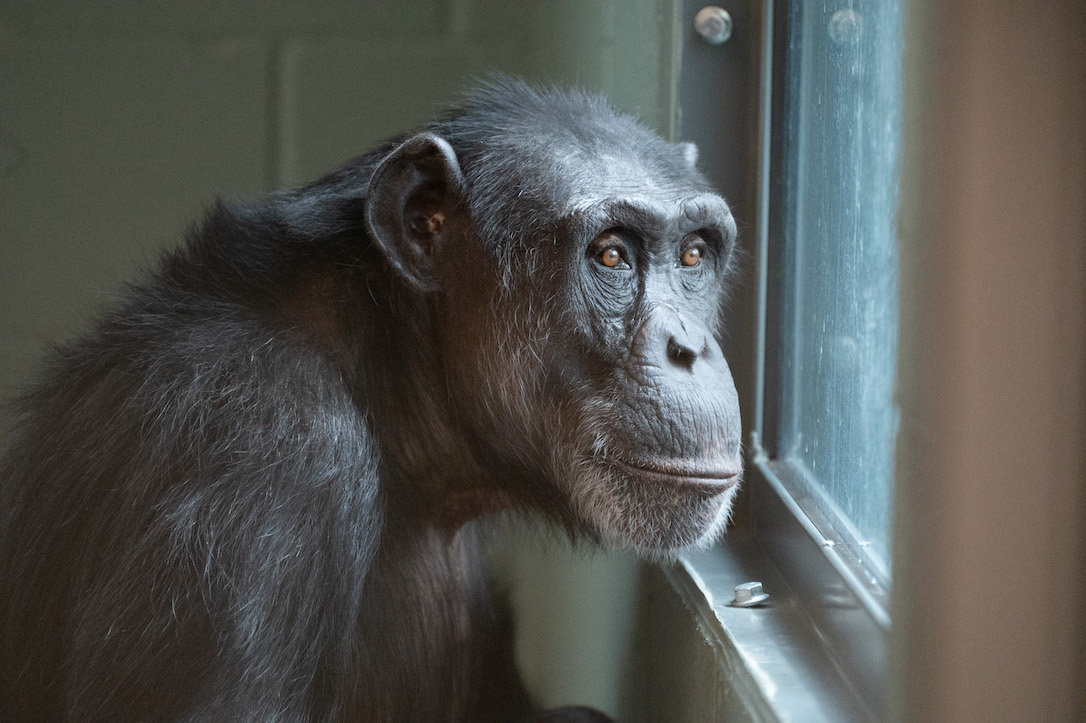
The facility’s largest (and most “natural”) enclosure is Young’s Hill, a two-acre meadow furnished with wooden climbing structures and surrounded by a perimeter of electrified fences. The chimps frequently explore and patrol this space and we look forward to having another outdoor area for additional group of chimps to use simultaneously. Even so, the chimpanzees who reside at the sanctuary choose to spend only a small fraction of their time out there (despite the unique opportunities that such a habitat gives them). Instead, the chimps generally prefer to socialize and lounge in the semi-enclosed “greenhouses” throughout the day and make their nests in the elevated portions of the climate-controlled “front rooms” and “playrooms” each night. Some even choose to sleep on the heated cement floors.
The truth is that these chimps have lived most of their lives in artificial spaces like these. Apparently, they feel more comfortable in them.
Who would we be if we forced them to do anything different?


Last year, Diana wrote some words that, in my opinion, say it best.
We’ll continue to blur the fencing out of some photos and put the cameras up to the caging for an unobstructed view, but it’s not because we want you to forget that it’s there; it’s so you can fully see the unique and wonderful chimpanzees who are choosing to do whatever they are doing in the moment when the camera shutter closes.
I compiled an assorted reading list for anyone who wishes to read more about these nuanced issues (and hopefully get some perspectives besides my own)!
From our website:
CSNW Blog: “Why are the Chimps in Cages?” (by Diana, 2015)
CSNW Blog: “The Tough Questions” (by Me, 2020)
CSNW Blog: “Caging is OK” (by Diana, 2020)
From other sources:
Study: Impact of Visual Context on Public Perceptions of Non-Human Primate Performers
IUCN’s Best Practice Guidelines for Responsible Images of Nonhuman Primates
North American Primate Sanctuary Alliance’s Position Statements
Thank you all for caring so much about chimpanzees!