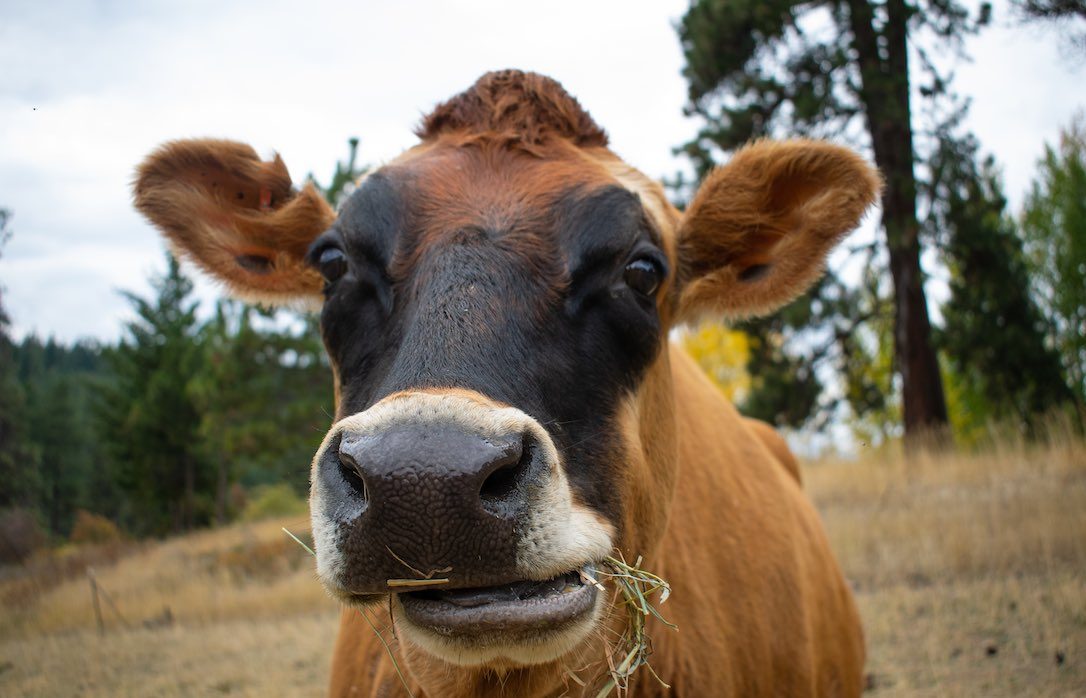
We cannot think of anyone better to share beautiful Meredith’s story than our own absolute gem of a veterinarian, Dr. Erin Zamzow:
Today, as we continue celebrating our love for the residents of CSNW, we’re shining a spotlight on a cow whose life has been shaped by resilience, family bonds, and lucky twists of fate. We’d like to (re)introduce you to Meredith—a gentle, thoughtful soul who has overcome more than her share of challenges and who holds a very special place in our hearts. She’s also someone who could use a few more Bovine Buddies to help support her ongoing care. Meredith will be turning 11 this fall, an age most dairy cattle never get to.
An Unusual Beginning
Meredith’s origin story is anything but ordinary. Her mother, Honey, and another dairy cow named Betsy were purchased for a short-lived reality TV series called Utopia. Meredith was born right there on the set, where the crew—displaying a rather cringeworthy sense of humor—dubbed her “Ca$h Cow.”
When filming ended, the cows were spared the grim fate of returning to the dairy industry. Instead, Honey, Betsy, and baby Meredith were sent to Farm Sanctuary’s Northern California location. Soon after arriving, Honey developed a painful case of mastitis and was unable to nurse her newborn. Luckily Betsy—who was pregnant with her son, our beloved and now departed Nutmeg—stepped in as Meredith’s surrogate mother. Together, Honey and Betsy “co-raised” her, and when Nutmeg arrived a few months later they became a true family, a rare gift for beings born into the cattle industry.
Baby Meredith zoomies! (all baby Meredith photos courtesy of Farm Sanctuary):
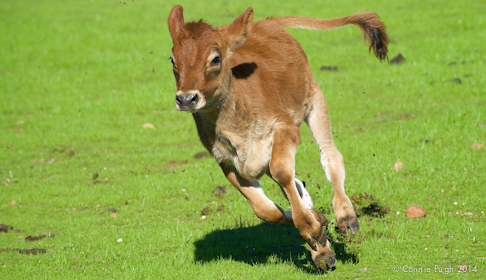
For many years, the herd of 4 lived safely at Farm Sanctuary. Then, in November of 2018, we were honored to welcome them to their forever home here at CSNW.
A Childhood Almost No Dairy Calf Gets
Most calves in the dairy industry are separated from their mothers within days of birth so the cows can be returned to the milking line. Meredith was one of the lucky few who got to nurse from a cow—an experience almost unheard of for dairy calves.
Some people claim that mother cows don’t care when their calves are taken away, or that some are “bad moms.” But when cattle are allowed to live without the stress and demands of intensive dairy production, their maternal bonds are unmistakably strong and can last a lifetime. Meredith’s early nurturing—first from Honey, then from Betsy—shaped her into the confident, independent and grounded cow she is today.
Honey and young Meredith:
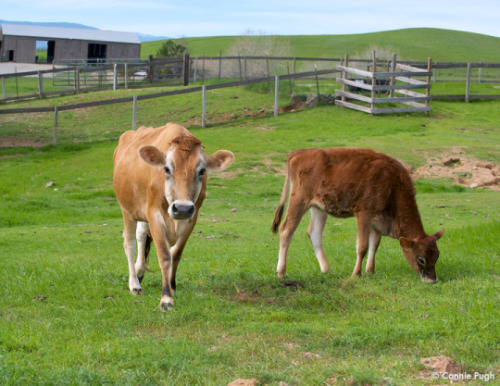
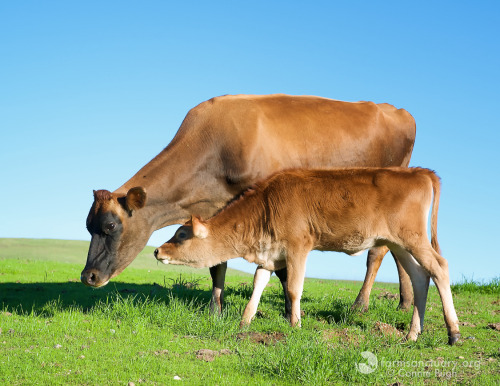
Meredith and Auntie Betsy:
Growing Into Herself
In the dairy industry, female calves are typically bred at around a year old, long before they reach full maturity. Meredith, however, was never bred. That means her body used its energy to grow—and grow—as it was designed to do. Jerseys, like all domestic cattle, have been selectively bred for specific traits, and when they grow larger than expected, it can predispose them to mobility issues and arthritis later in life.
Meredith at WSU veterinary hospital
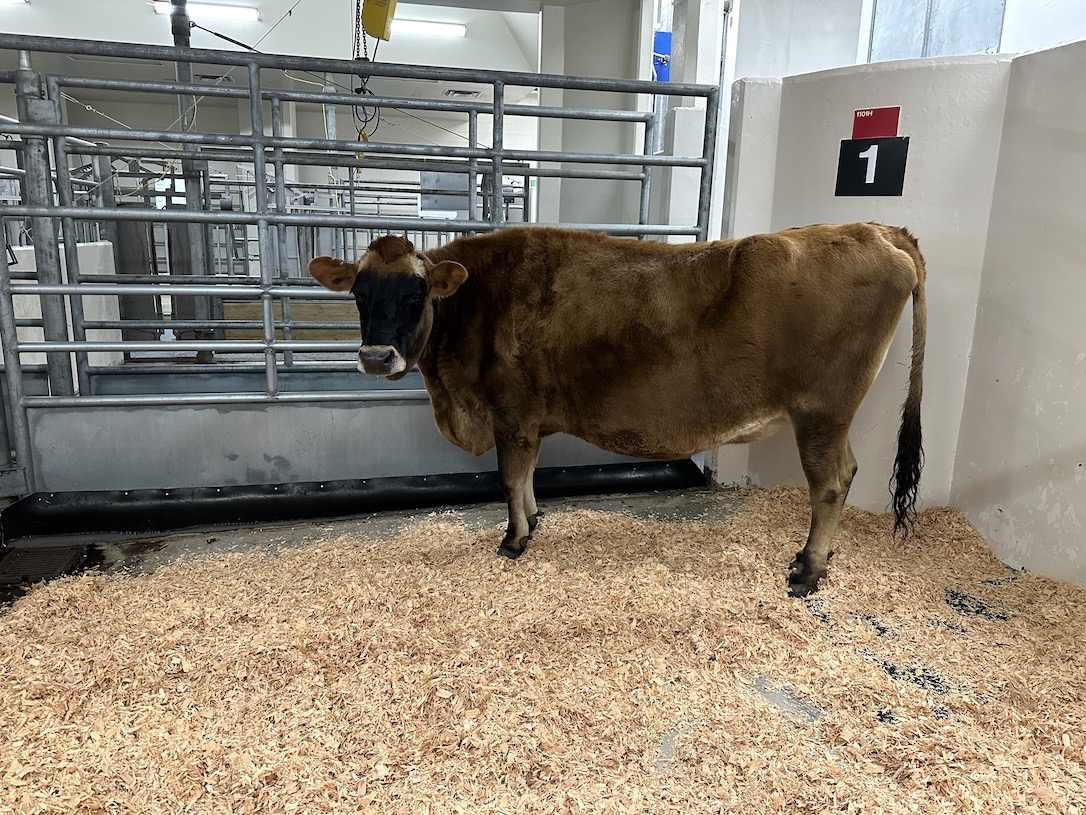
A few years ago, when Meredith began showing signs of lameness, we took her to Washington State University for diagnosis and treatment. She was found to have arthritis in her right front foot. Those two trips to WSU—and the intensive aftercare she needed—are among my favorite memories with her. I’ll never forget the moment Honey came running to greet her daughter when Meredith finally returned home after a prolonged hospital stay.
Mama Honey (right) welcoming her daughter home:
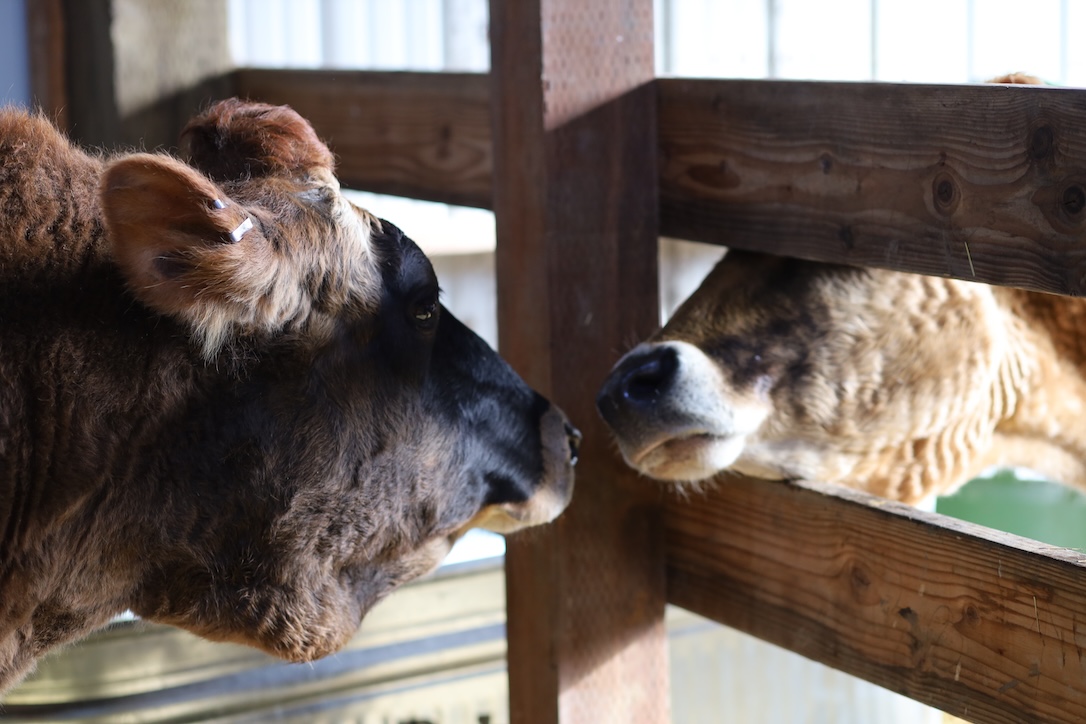
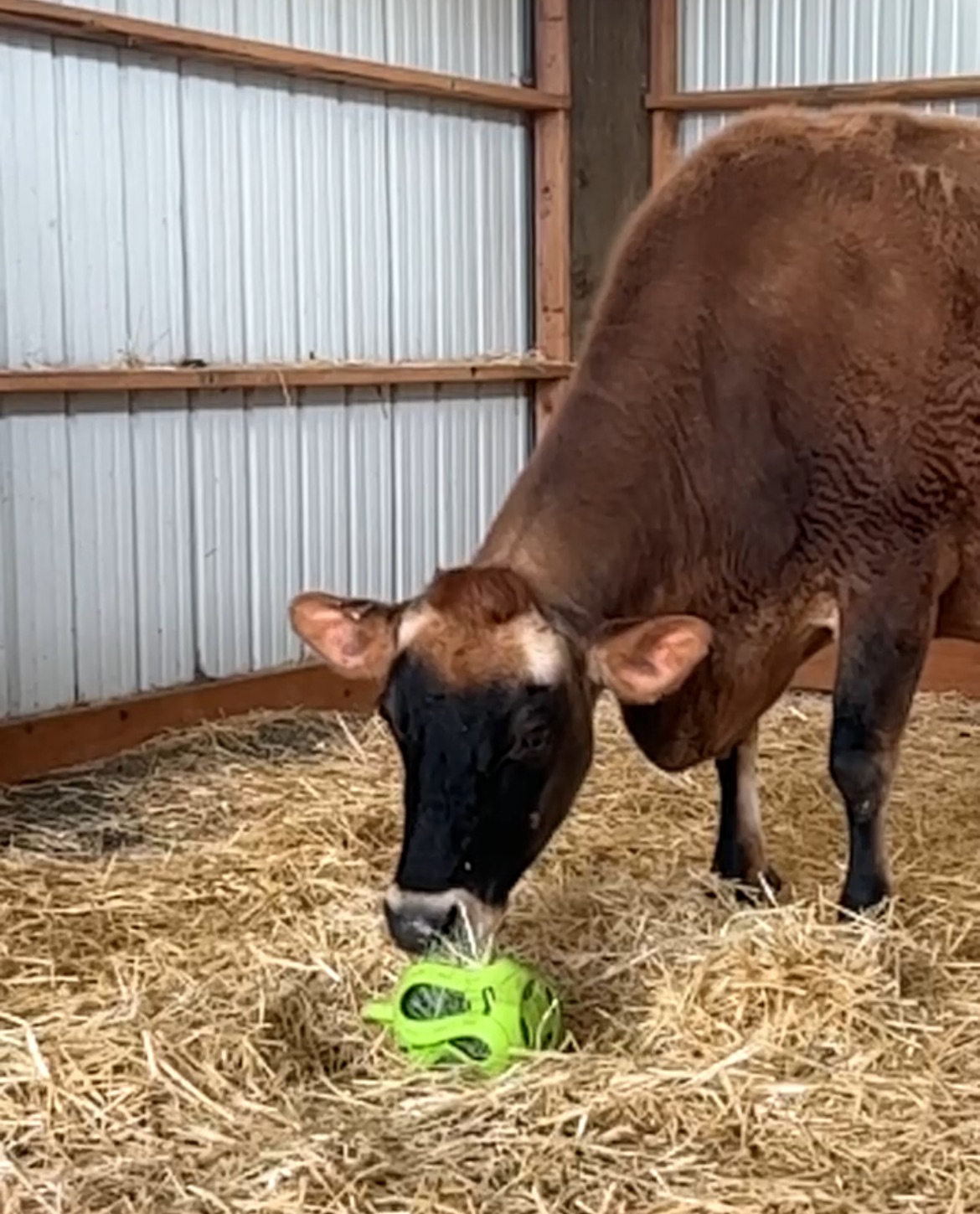
Caring for her during recovery—spending quiet time in her deep, straw-bedded stall, giving her endless scratches, lasering her treatment area, and making sure she got all her medications—was a special bonding experience, even though I know the separation from her herd was hard on her.
Investigating hay-ball enrichment during her recovery:
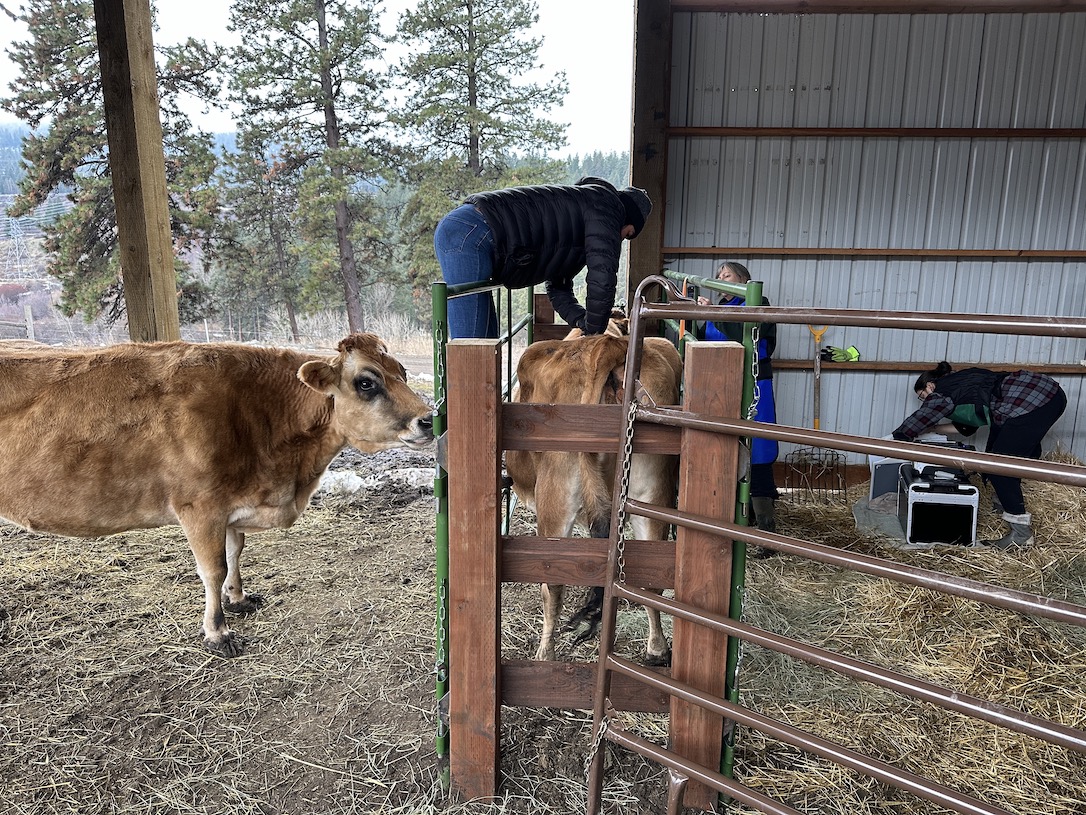
Sweet Nutmeg checking on Meredith during one of her chiropractic sessions:
A Cow With Her Own Rhythm
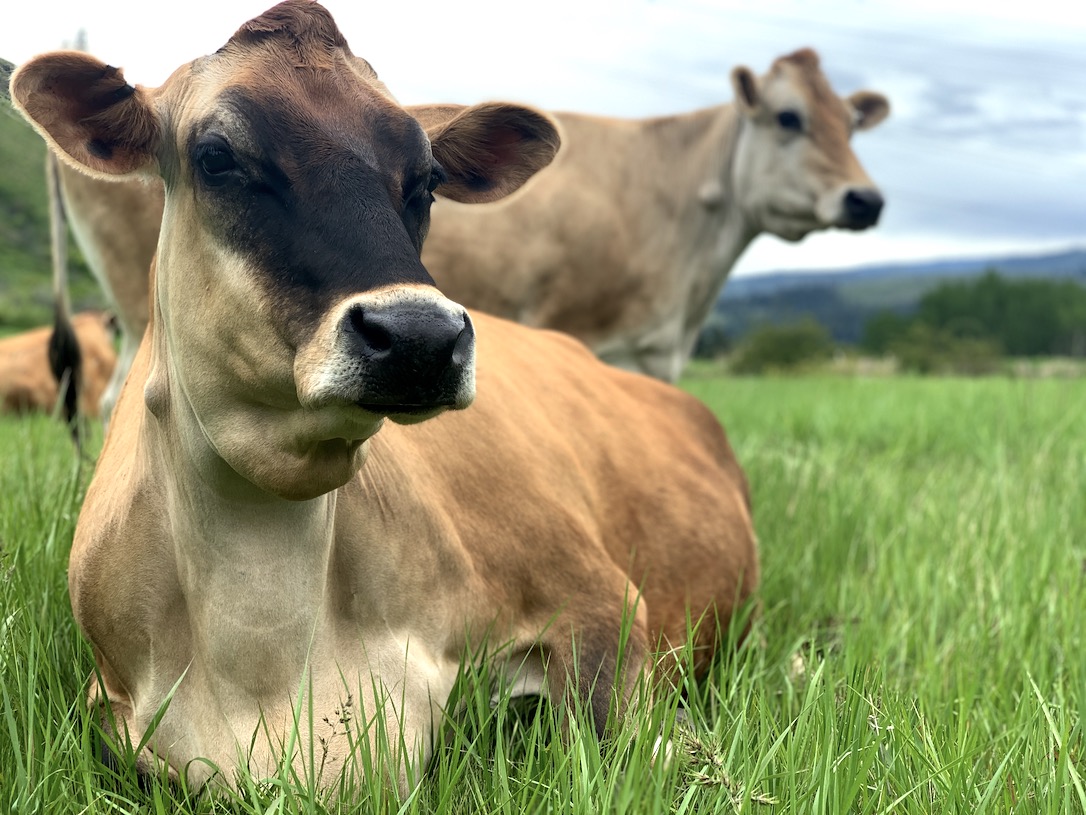
Meredith is known for being a bit of a loner. She’s deeply bonded to her herd and rarely lets Honey or Betsy out of her sight but she often chooses to stand a few yards apart, observing the world in her own thoughtful way.
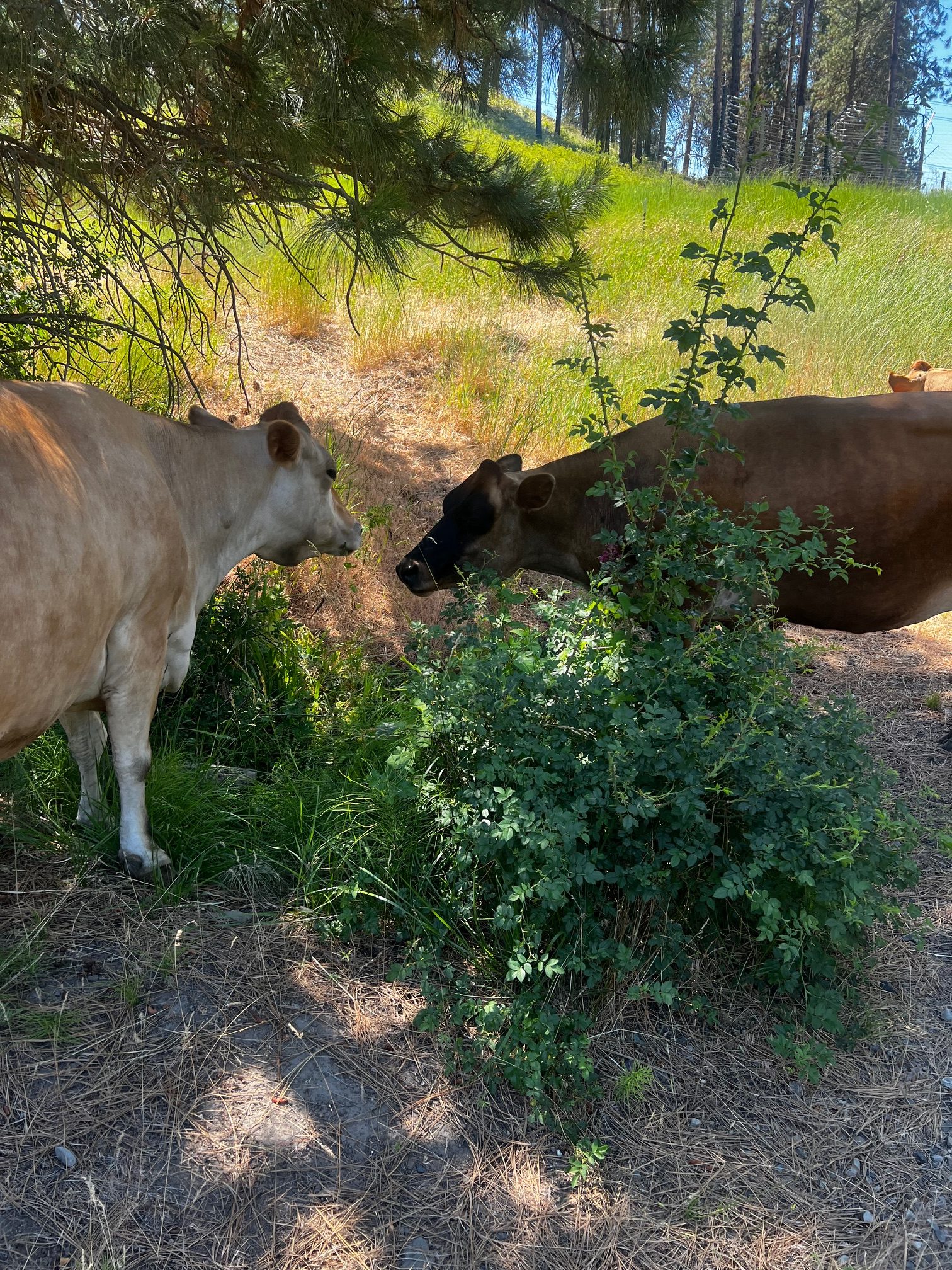
In winter, she’s always one of the first to greet the morning hay toss—her version of that first whiff of coffee that gets me out of bed on cold winter mornings. But late spring and early summer are when she truly comes alive. The summer pasture is her paradise: bed, breakfast, sunshine, and space to ruminate-all in one. That’s where you’ll find her resting or meandering out in the lush grass or chewing her cud under the warm sun. The trek from summer to winter pastures and back has been dubbed the “running of the cows”. This short journey is one the herd always seems to enjoy and gives the girls a chance to partake of the particularly delicious local plants that grow along a small stream between the pastures. Hedgenettle, watercress, delicate willow leaves and wild rose bushes are just a few of the treats this biannual mini migration offers. We will often let the cows linger and munch for an hour or more before completing their brief journey.
Meredith and her mom, Honey (l):
Smart, Sensitive, and Strong
Don’t let anyone tell you cows aren’t smart. Meredith knows me well—and if I don’t keep up my occasional routine of visiting, feeding, and scratching the cows, she quickly reverts to seeing me as the human who gives injections and supervises hoof trims. Fair enough.
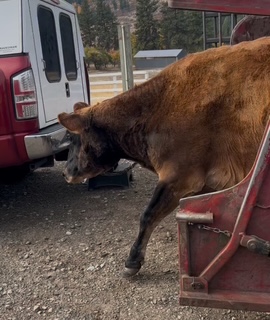
All three cows have their hooves trimmed twice a year by a traveling hoof trimming service. A specialized chute and tilt table get the job done safely and quickly.
Meredith coming out of the hoof trimming chute:
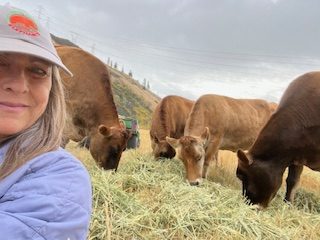
Luckily, I love spending time with the herd, whether it’s up in their forested summer pasture or in the winter barns:
Meredith doesn’t enjoy having a halter put on or receiving her monthly arthritis injections, but she bravely tolerates these inconveniences. I hope she knows how much we care about her and how committed we are to keeping her comfortable.
At around 1,500 pounds, Meredith receives daily pain medication (15–20 times the amount we’d give a chimp), a monthly Adequan injection, and a supplement to help slow the progression of arthritis. She currently has three Bovine Buddies supporting her care, and we are so grateful for them. We’d love to see her circle of supporters grow.
Help Us Care for Meredith
Meredith’s life has been shaped by compassion—from the cows who raised her to the people who have ensured her safety and comfort. If you feel a connection to her story, consider becoming one of her Bovine Buddies. Your support helps us provide the medical care, comfort, and love she deserves.
If you’re called to join her human herd, you can sponsor Meredith here!




:cow2:A proud Meredith-buddy here!!!:cow2:?Although I’m the greatest admirer of my two chimp-pals Rayne and Gordo, I must admit I can relate the most to my bovine buddy – arthritis here and there, constant battle with the weight, a loner who is hard to manage, oh that’s me! I’m sending my warmest greetings to my fellow Merry-buddies! :sunflower:And thank you, sanctuary staff for taking a very good care of the big girl! :tulip:
Hi Dr. Erin, I think you need to join the daily blog authors, even if you only drop in for a monthly post! Throughly enjoyed reading about your dear friend through your eyes. Thank you ever so much for ensuring Meredith and her family receive the best care imaginable. How fortunate Meredith made it this far with the arthritis in her foot. Amazing what love and top notch care will do. Thank you.
I do get a kick out Meredith’s independent streak! And it is indescribable to explain the joy it brings me when I see photos of the moo family happily hanging out in their Paradise of a home. They say “Home is where the heart is”. Thank you for pouring your heart into this sanctuary so it can forever be a happy, healthy home.
What a delightful and informative blog today! Happy to hear about Meredith’s story. So sad to read the frightful lives animals are forced to endure at human hands in the name of commerce. I first became aware of animals as sentient beings when I saw a clip of cows in a chute bringing them to slaughter. It was clear that the cows knew, and were terrified. I’m so grateful to CSNW and to Dr. Erin for the love and safety and freedom of these beautiful bovines and fabulous chimps. Thank you!
Dr. Zamzow,
As always, I am grateful for all that you do for the beneficiaries of the sanctuary. I very much appreciate your in-depth essay about the life of my bovine buddy, Ms. Meredith Beauvine.
And these pictures…it is wonderful —- revolutionary, even — to see the cattle people living as they.should, not as commercial assets but as ensouled individuals. Sometimes they get the zooms, and sometimes they stop to lick the sides of each other’s faces with their sandpaper-like tongues.
And last Spring, when the cows walked over to their summer pasture, I remember that Cy, instead of alarm-calling at them, seemed to do a happy dance for his bovine neighbors. Who knows, maybe Cy will choose a bovine huddy of his own?