What is personhood? What is a person? Who deserves to bear those titles? It’s an argument that is fought for several years.
If you follow other NAPSA sanctuaries online, then you might be familiar with some cases that have taken place that paved the way for certain individuals to call a sanctuary home. There’s Sandra at Center for Great Apes, who in 2019 was granted rights as a “non-human person” in Buenos Aires, Argentina. In that case, the judge granted the basic rights of life, freedom, and a premise of “no harm” either physically or psychologically to Sandra and soon thereafter she made the trip to Florida.
Unlike Sandra, Leo and Hercules didn’t win their case to have habeas corpus granted to them, though they did make their way to Project Chimps afterward. In the United States, the fight to grant chimpanzees (or any species really) rights as a living being is a tougher fight. What seems to be the main sticking points are; does a “person” mean “human” and does a “thing” mean “everything else other than human whether it be living or inanimate?”
The reason this came to my mind is because there was a hearing in Michigan today about this very topic. There are currently seven chimpanzees who live at DeYoung Family Zoo. Animal rights organizations have been pleading their case to have these seven be transferred to an accredited sanctuary (Note: I just want to make it clear I am not talking about us.). The route they have chosen is to take the case of non-human animal personhood to court. The ruling on this hearing is still pending as I am writing.
In the U.S., there are two legal categories that fall under the law: persons and things. In a sense, this particular fight is if chimpanzees are persons or things. There is a great reference book called “Chimpanzee Rights: A Philosophers’ Brief,” which dives pretty deep into this argument. If you would like to read more about it, I would recommend that book. It breaks down the arguments for and against for considering chimpanzees as persons in a language I wouldn’t ever to be able give justice.
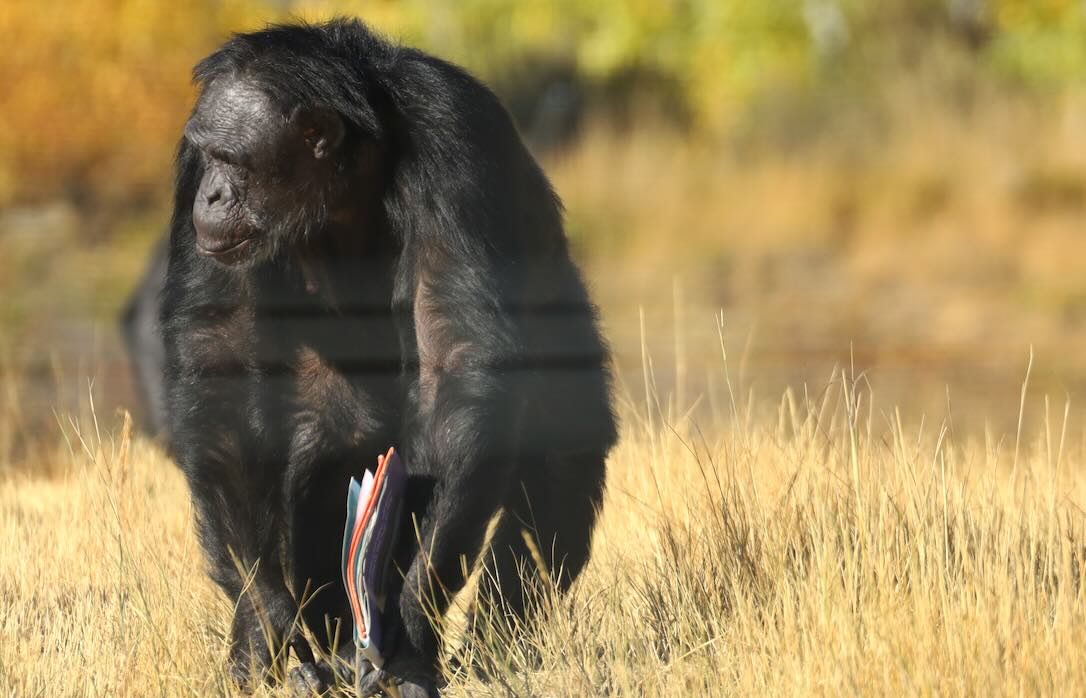
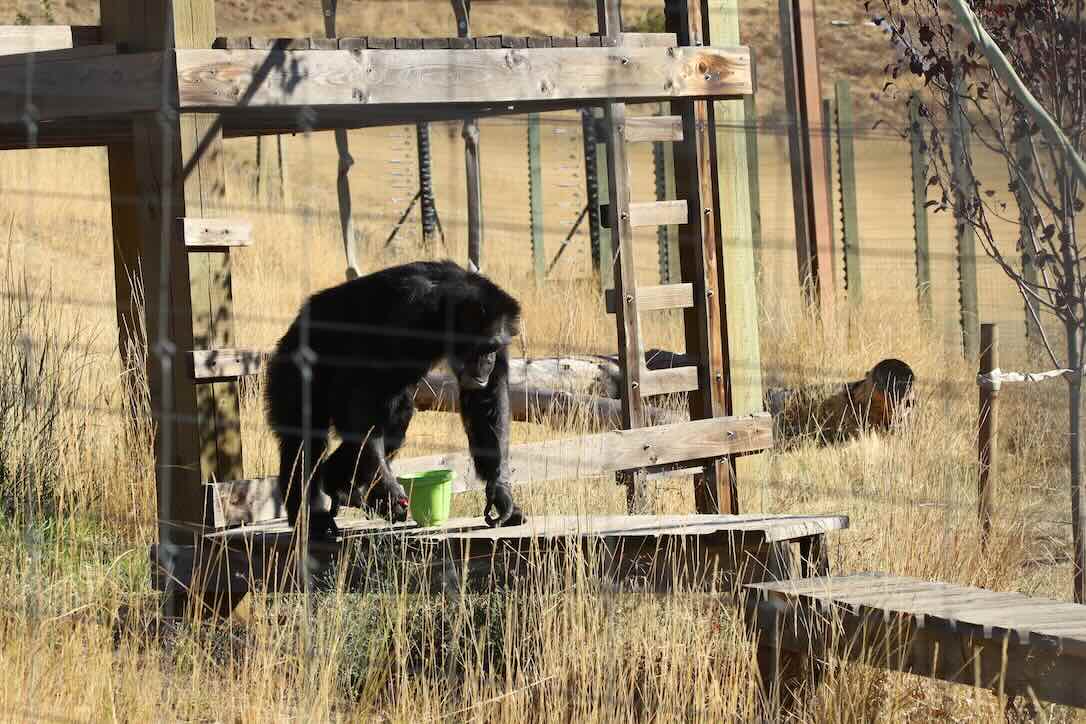
I am by no means an expert on this case and don’t know the full, complete details regarding those chimpanzees and their situation. But I know in my heart of hearts, chimpanzees are more than mere “things.” They are not simply property that can be sold or traded. They are smart. They are curious. They are complex. And yes, they also can be goofy. They can make their own choices and their own decisions in a way that mirrors humans. They can send signals, whether it be vocal, gestural, or just simply body posture, and reversely, they can receive those signals as well, even from us humans. They are brave. They are fearful. They are confident. They are anxious. They may not be human, but they are people.
Now, for what I’m sure most of you came here for: photos from the day!




Rivers have legally been granted Personhood, known as Environmental Personhood, thus giving a river the status of legal person. And corporations have been granted Personhood as a legal concept that allows some constitutional rights similar to individuals. So why not grant Personhood to a primate, an elephant, or a marine animal who needs to be seen, respected, and protected as an individual deserving dignity and autonomy?
You can watch the NonHuman Rights Project trial here: https://www.nonhumanrights.org/?ms=20251014__DeYoung_Family_Zoo&utm_campaign=general&utm_medium=email&utm_source=20251014__deyoung_family_zoo&emci=65fc0fb4-46a9-f011-8e61-6045bded8ba4&emdi=2df45421-4ca9-f011-8e61-6045bded8ba4&ceid=1190840
It’s good food for thought. I am personally grateful that each chimpanzee, cow, and barn cat, are treated with the respect and autonomy they deserve. If only all animals were treated like this, what a wonderful world it would be. Thanks for these wonderful photos demonstrating how truly wonderful it is to be loved for who you are.
Thanks for the link Kathleen! I’m excited to watch it. It strikes me as shocking that a business can be legally identified as “person” yet when it comes to other living creatures it’s a hard fight.
I really hope I’m alive long enough to see big changes in how animals are viewed (I’m 43 next month).
Thank you, Kathleen.
They certainly should never be considered things. That to me inducates inanimate objects. Chimpanzees have numerous aspects of their lives which mirror human lives. The chimps serve as a great testament to tremendous RESILIENCE. Not many humans could have endured so many hardships like so many of them endured for so many years and then given the opportunity to live a chimp life their resilience saw them through to who and where they are today.
I think we humans and all the Great Apes are now classed in the same family, Hominidae, based on our very close biological (genetic) relationship. This, to me, indicates that Chimpanzees,Bonobos, Gorillas,and Orangutans are definitely “persons” and should be treated as such. I would also argue that all mammals (perhaps even all vertebrates) are deserving of that status to some extent. I know that every dog I have known was a “person” in my family.
I am very grateful to CSN and all the other ape sanctuaries that are making homes for these beautiful beings.
I absolutely agree!
Chimpanzees and great apes are very much our closest living relatives and the should not be seen as ‘things’. It breaks my heart.
Personally I would have liked humans to come under the ‘pan’ subcategory with chimps and bonobos. As we are closest to them biologically.
My cats are little people, who are quite able to communicate, emote and choose what they want, within their abilities.
Yes Chad, I enjoy seeing the photos, but I always love and think its very important that there are informative, educational, and opinionated blogs that help us keep in mind the plight of the chimpanzees, and all apes and monkeys for that matter.
Thank you for this, it is important work you do.
Thank you for this blog entry. Of course they are persons. Not humans, but humans are not chimps either. We are relations, cousins, if you like. All you have to do is watch them make and use tools, communicate in chimp or a sign language, get in disagreements, help or teach each other, or express grief and bereavement over the death of a baby or a friend. Dr. Jane Goodall taught us so much, but are we listening? In the US, don’t certain Christian assumptions bias this attitude of what is human or indeed sentient?
Thankyou Chad for this post! It’s vital that as much as we see the Chimps (who I see as people), living a life that is secure, more natural, and allows them choice and control, its also vital that we remember that is not the story for others.
It breaks my heart to think about the mistreatment of other chimpanzees and the battles that have to happen to allow them dignity. We still have a long way to go in the fight for even basic needs for them.
Thankyou also for the book suggestion. I hope that I will be able to find a copy through my state library service.
I believe that to truly appreciate where these folks (the chimps), are at, we need to appreciate where they have been.
Thankyou, Chad, for sharing “People, Person, Chimp” and your insightful comments in this matter. I recall Jane Goodall, during her early studies of the Gombe chimps, being criticised for giving names to the chimpanzees (remember her famous “F” chimpanzee groups like Flo, Florrie, Flint and Frodo). Jane was told that she should not humanise the chimpanzees with names but should give them numbers as hers was a scientific study. She argued very strongly against this and I am sure she never regarded her chimpanzees as things to be studied.
Heartfelt thanks also for the gorgeous collection of photos and as Karen says, while we love seeing these photos, your words of wisdom give us much food for thought. :sparkling_heart:?
All animals deserve basic rights and dignity, but even if one doesn’t buy into the idea of personhood for other animals, it’s impossible to deny that the great apes are so similar to us, even down to their means of communication. Of course they’re people! It angers me so much that there are still chimpanzees locked up in terrible roadside zoos or human homes. I am not optimistic, but I hope and pray for a victory in this case.
Thank you, Chad.
If Burrito could speak English, I am positive he would say “Ditto”.