I saw this illustration of primate hands shared on social media recently and thought it was a great example of how diverse the primate order is.

The most unusual hand belongs to the aye-aye (Daubetonia). It taps its long, slender fingers on trees in search of food. After opening up a hollow with its rodent-like incisors, it uses its specialized middle digit to extract grubs. Think of them as the primate version of a woodpecker.
Some primates, like the slow loris (Nycticebus) and potto (Perodicticus), have evolved hands that allow for better arboreal grasping. Notice how the index fingers have become mostly vestigial and the thumb has rotated away from the other digits. This is part of a suite of adaptations that allow them to maintain a strong grip for long periods of time. It’s probably not a coincidence that they look more like birds’ feet.
In another example of form following function, the long digits of tarsiers (Tarsius) have rounded, frog-like pads, allowing them to cling and leap like…yes, frogs!
Many arboreal species, like orangutans (Pongo), have evolved small thumbs while others, like the spider monkey (Ateles), lack an external thumb entirely to aid in climbing. While it’s tempting to think of opposable thumbs as somehow better or more advanced (even the spider monkey’s genus name sounds judgmental – Ateles, meaning incomplete or imperfect, is a reference to their missing thumbs), this is simply not true. The ancestor to the spider monkey had opposable thumbs but in the course of adapting to their environment, spider monkeys got those lousy things out of the way so that they could grip and swing better. They are perfectly complete for the niche they inhabit.
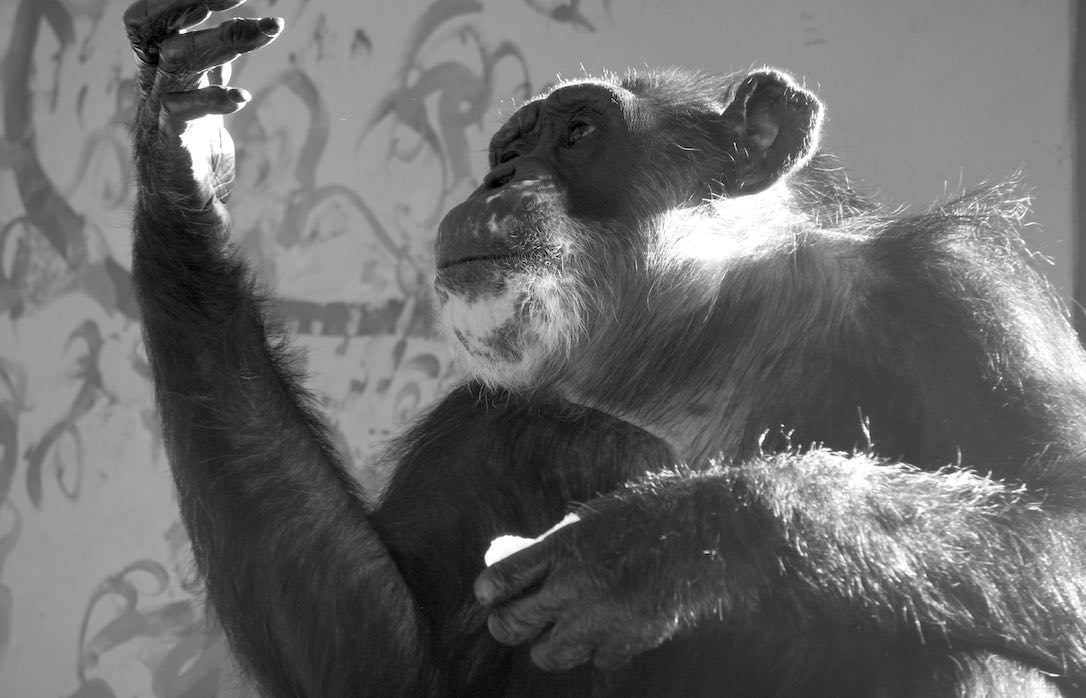
Looking at a chimpanzee’s hand, you can see that they are far less specialized than those of many other primates, making them generally well-suited to both climbing and walking. While chimpanzees walk on the soles of their feet, they flex their hands and bear weight on the outside of the intermediate phalanges (the part of the finger between the second and third knuckle).
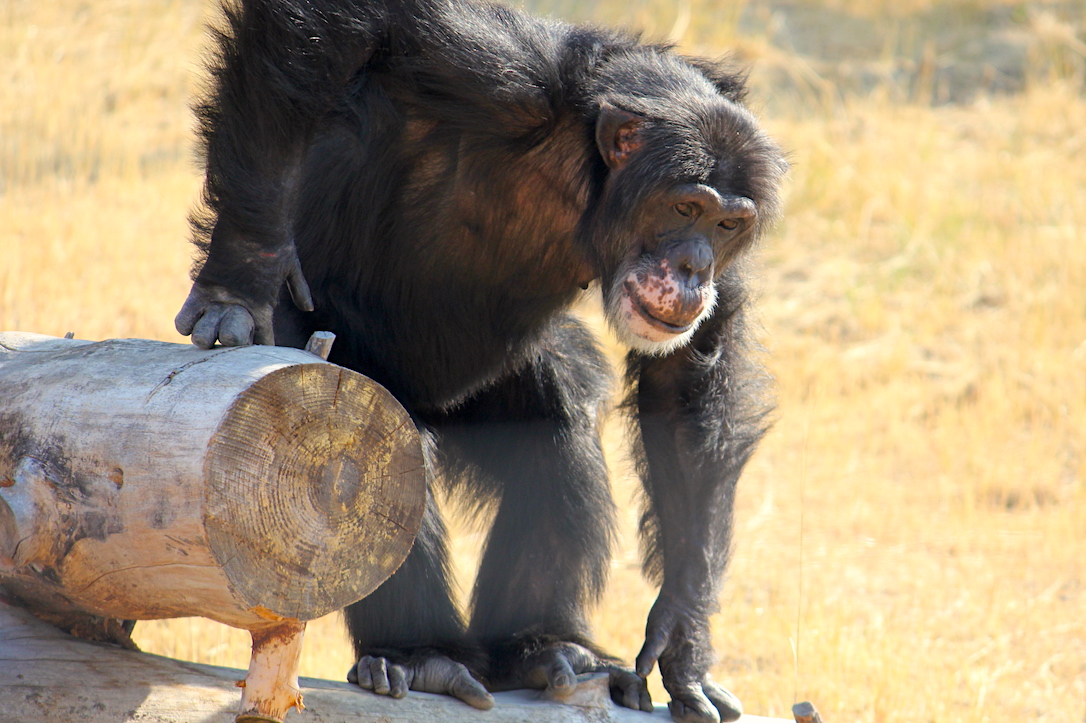
Thick pads develop on this part of the hand for protection.
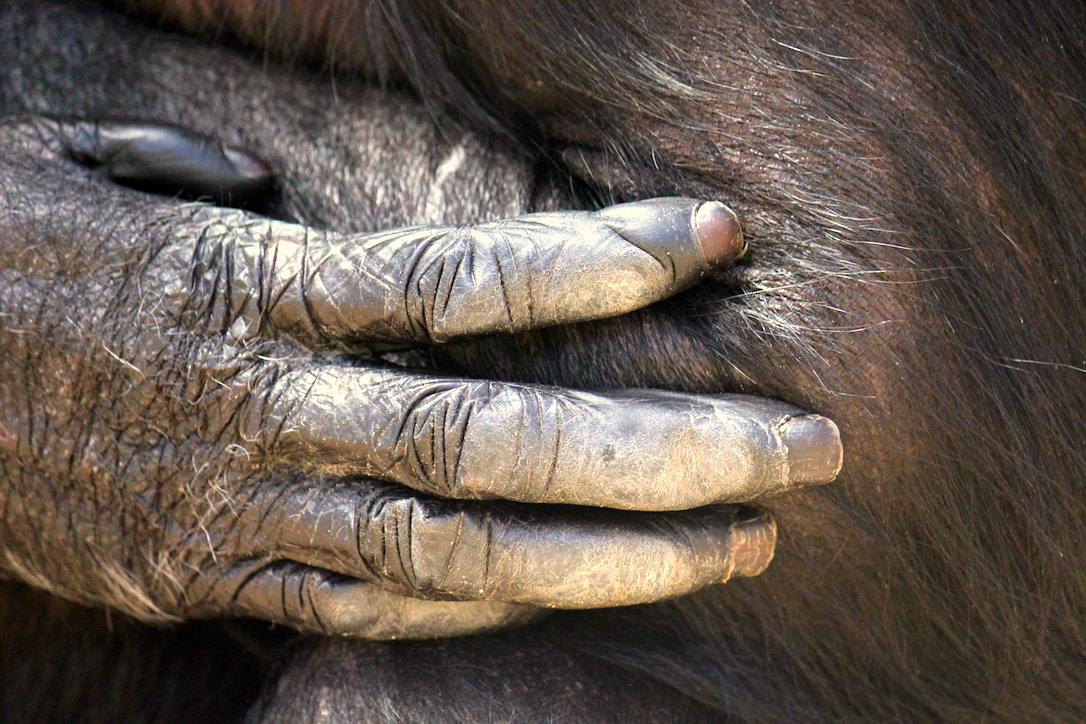
Long palms and fingers and short thumbs aid in gripping large trunks and branches.
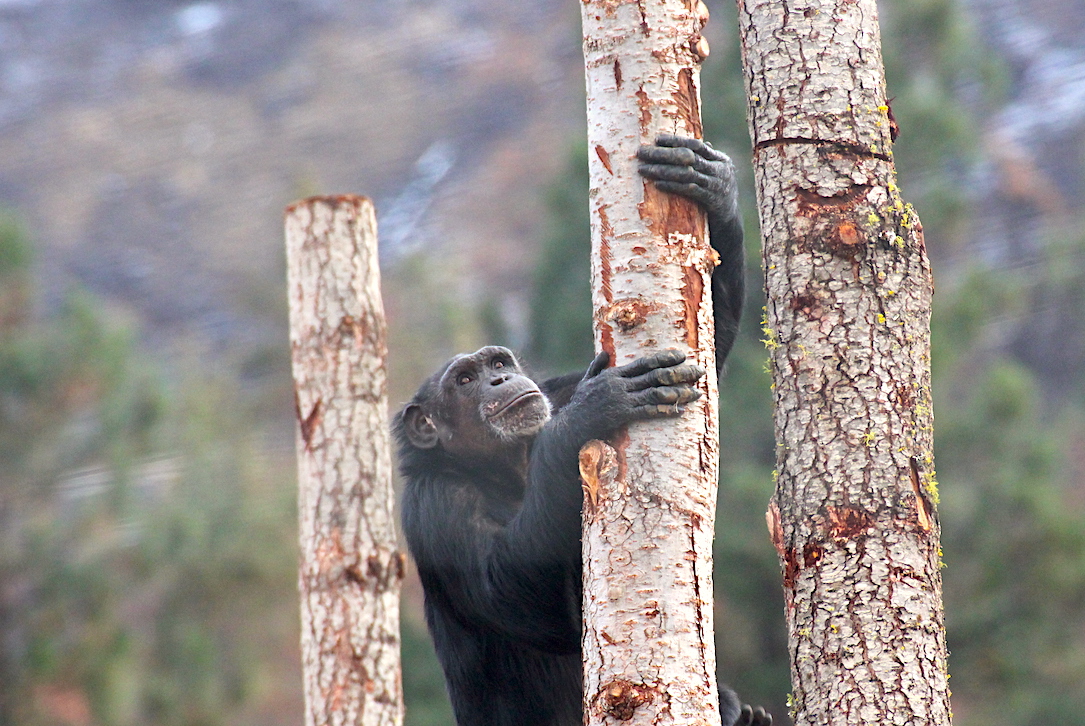
The trade-off, when compared to human hands, is less power and control in the precision grip.
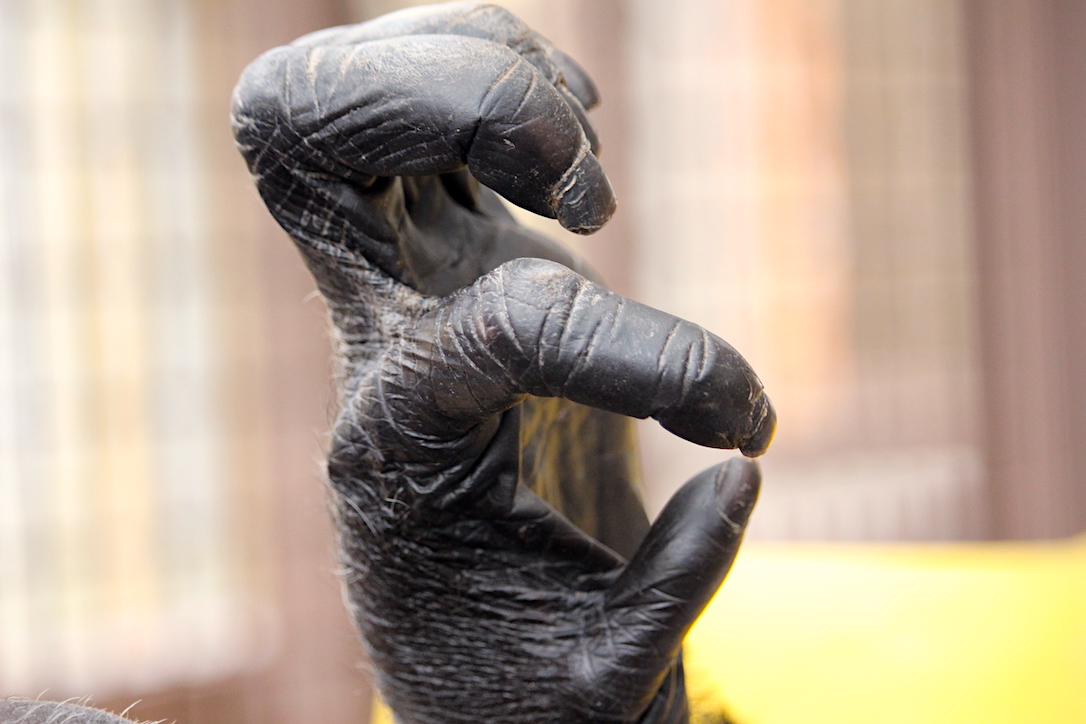
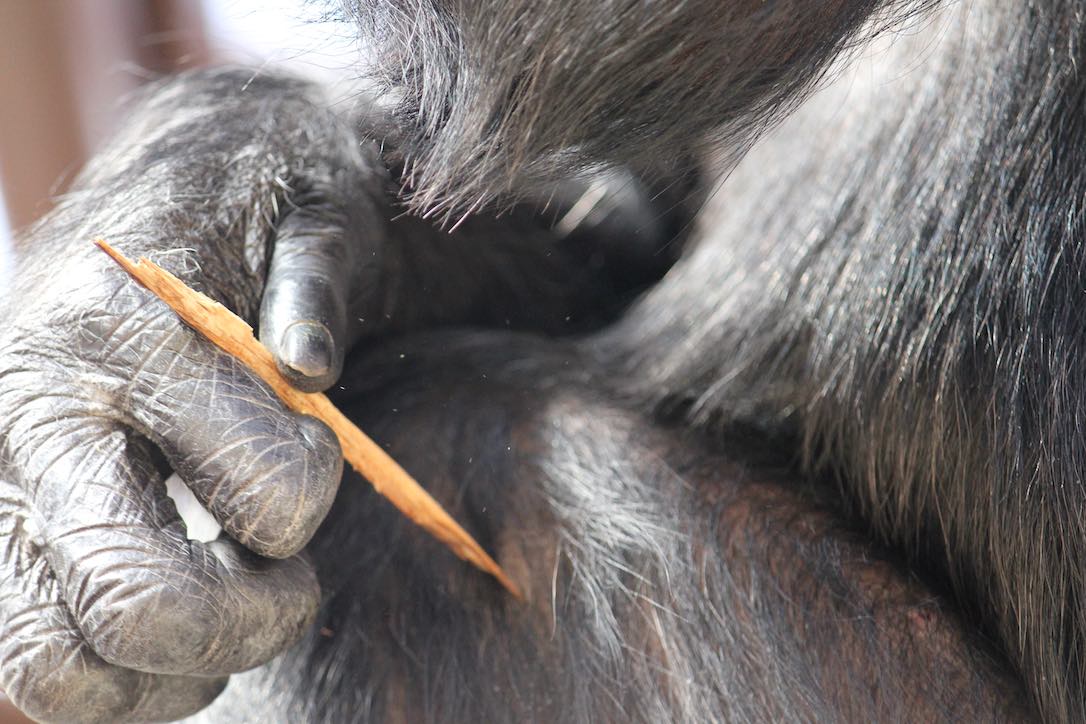
The length of a chimpanzee’s hand and more limited rotation and flexion of the thumb prevent pad-to-pad gripping or pinching, but they are still able to grasp and manipulate objects between the thumb and fingers, allowing for the use of tools.





Fascinating, J.B. Thank you!! Love and hugs to you all…
Fascinating J.B., thank you. The graphic of the hands is very interesting and I think I’ll have some fun looking into who’s who. I do enjoy looking at photos of the chimps hands and feet — why is this? We all feel it. Is it simply because there is such a close similarity to our hands?
I always think of Annie, because it seems to me that her hands are longer than the others’………..or maybe it’s just the way she holds them……
But yeah, this explains why Jamie can’t quite get those boots on!
She’s a size 8, right? I’ve got my niece and her children into the blog now, and my niece and I are both the same shoe size…she said she’ll look through her closet for some boots for Jamie.
Hi, Jeeb,
Love this.
The thing that strikes me most is that the Pygmy and Common (Pan) both have the highest percentage of our DNA, and yet, the hand most closest to ours would be the gorilla. I would guess the reason would be because the other great apes like Pongo and Pan live more of their time in the trees than the gorilla or human. Is that correct?
Cheers. ??
Argh! It didn’t read my gorilla or monkey emojis at the end. 🙂
Yes, I think that’s right. I believe there is evidence to suggest that the human and gorillas hand forms are plesiomorphic (closer to the ancestral state), so it was actually the other, more arboreal apes that evolved longer palms and fingers over the last 20-25 million years.
Thanks so much, Jeeb!
Since I’ve had to take a break from University this semester because of my cervical pinched nerves, I’ve been trying to study ahead in some of my classes, and haven’t reached this information yet, so I truly thank you for the reply. (I’m also glad to see that my brain is still working and I was able to logic through that. 🙂 )
BTW, for some fun, I guess the only emoticons for Pongo (my least favourite of the great apes) are ASCII, so here’s one I found years ago by some kid. If anyone has a better one I’d love to see it.
{:(|)
Perfect for my anthropology class! Thank you so much J.B.
Thanks for this explanation J.B. I also saw this on social media and was very intrigued. It goes to show how little most of us know about our friends. I’m going to spend a little time researching some of the different species to enlighten myself. So interesting.