• Skip to main content
  • Skip to primary sidebar
  • Skip to footer

Chimpanzee Sanctuary Northwest

Hope. Love. Home. Sanctuary

  • Our Family
    • The Chimpanzees
    • The Cattle
  • Blog
  • About Us
    • Visiting the Sanctuary
    • Philosophy
      • FAQs
      • Mission, Vision & Goals
      • Privacy Policy
    • The Humans
      • Staff
      • Board of Directors
      • Founder
    • Annual Reports
    • The Future of CSNW
    • CSNW In The News
  • You can help
    • Donate
      • Become a Chimpanzee Pal
      • Sponsor A Day
      • Transfer Stock
      • Be A Produce Patron
      • Be a Bovine Buddy
      • Give from your IRA
      • Personalized Stones
      • Bring Them Home Campaign
    • Leave A Legacy
    • Employment Opportunities
    • Volunteer
    • See Our Wish List
    • Events
  • Resources
    • About Chimpanzees
    • Enrichment Database
    • Advocacy
      • Advocacy Action Center
      • Apes in Entertainment
        • Trainers
        • Role of the AHA
        • Greeting Cards
      • Chimpanzees as Pets
      • Roadside Zoos
      • Chimpanzees in Biomedical Research
      • Conservation
        • African Apes
        • Orangutans
  • Shop
    • Merchandise Store
  • Contact
  • DONATE NOW

chimpanzee

Don’t Be Suspicious… Don’t Be Suspicious

September 13, 2022 by Chad de Bree

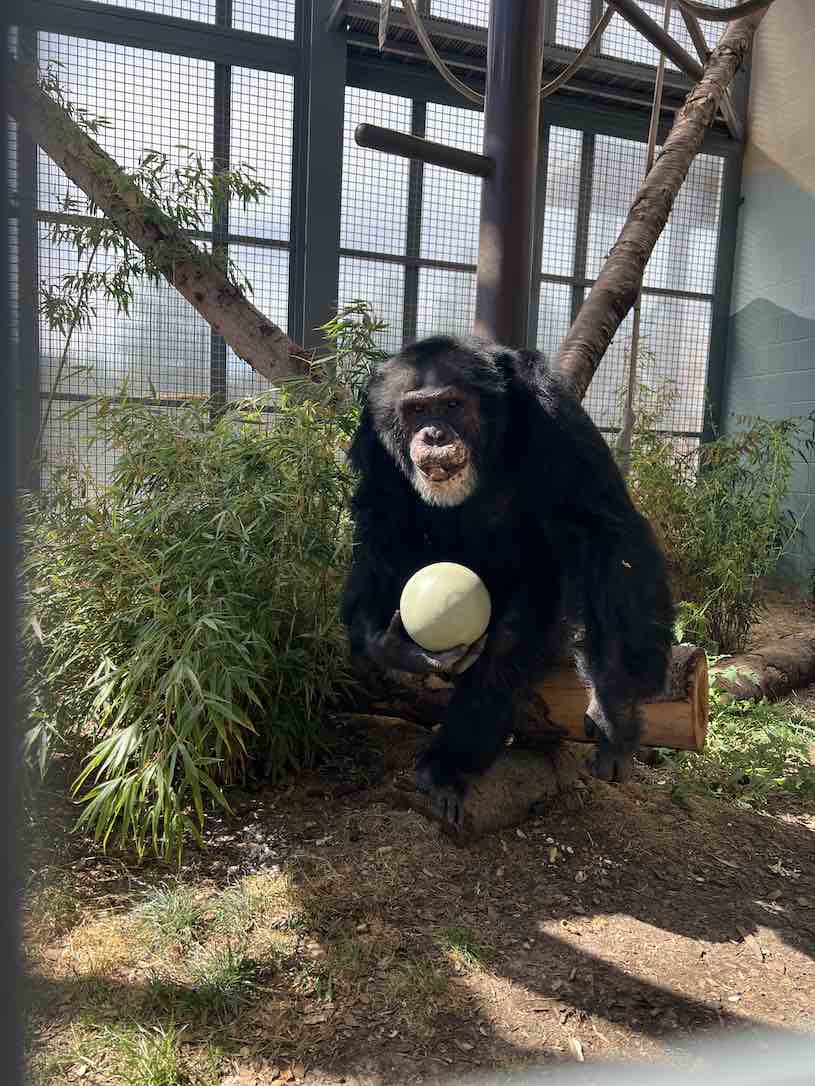
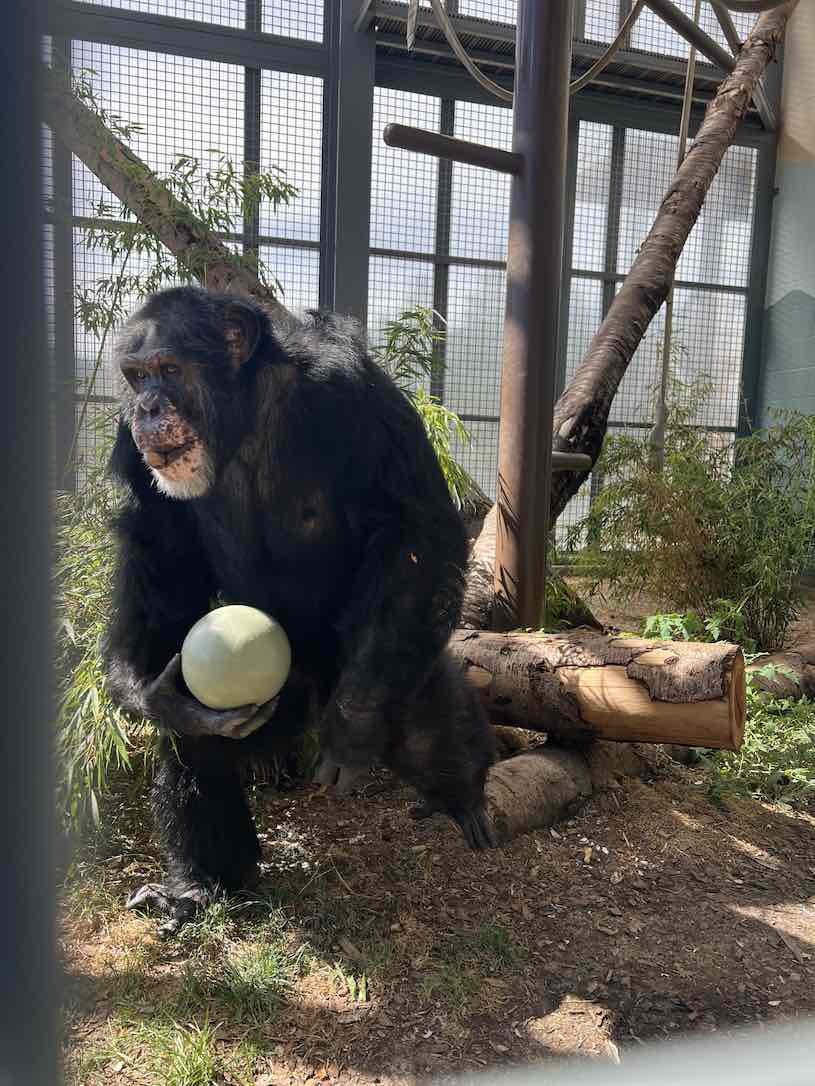
New foods for chimpanzees can either make them excited, or suspicious. Today, the chimpanzees were introduced to mangosteens. I know that some of you know about Annie’s allergy to mangoes. Don’t let the name of these super fruits confuse you. They are not related to mangoes. They are more closely related to things like starfruit and lychee, though they are really in their own class. The taste has been described as a combination of strawberries, peaches, pineapples, bananas, pomegranates, and lychees, among other things. Again, they really are in a class of their own and hard to describe.
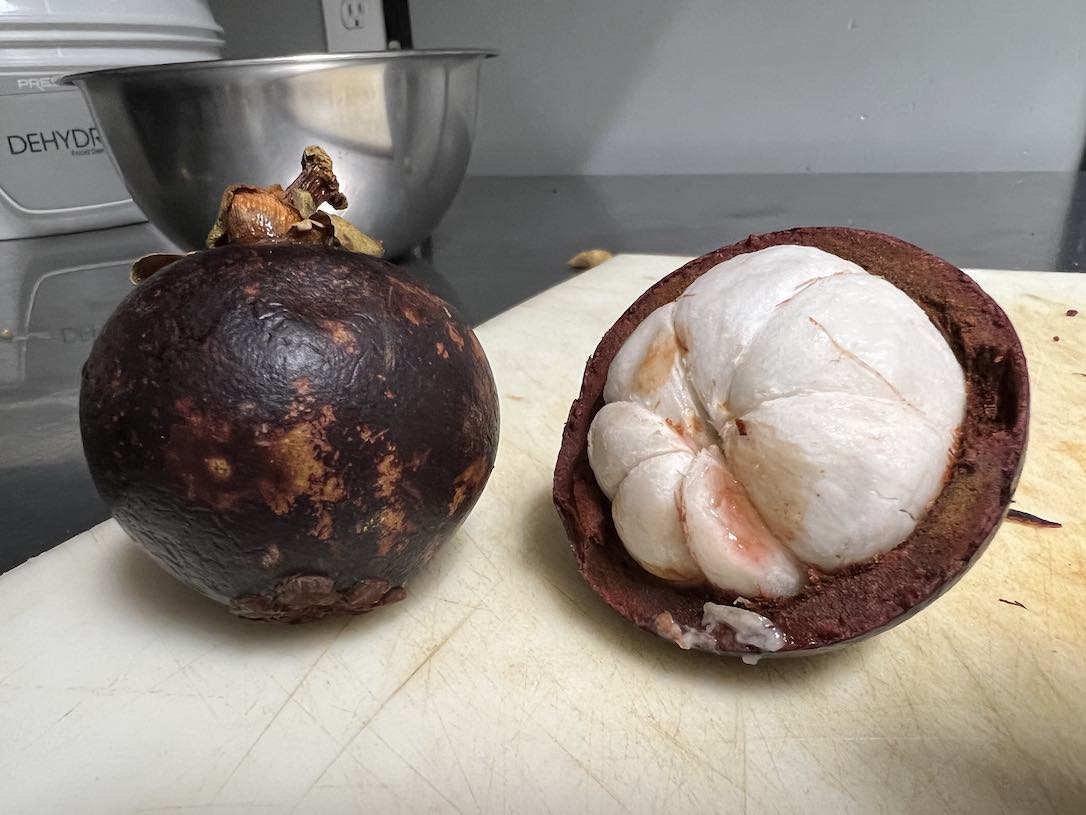
Mangosteens are indigenous to Southeast Asia. Found in countries such as Indonesia, Malaysia, Singapore, and the Philippines, it is known as the “Queen of Fruits.” Besides being extremely tasty, there are also many health benefits to mangosteens. They are packed with antioxidants, anti-inflammatory properties, support blood sugar control, and some studies have found they may also help promote weight loss.

Overall, everyone in Foxie’s group loved them! Cy’s group, on the other hand, had mixed feelings. Some didn’t even bother to try them. Those who did try them, however, seemed to love them!

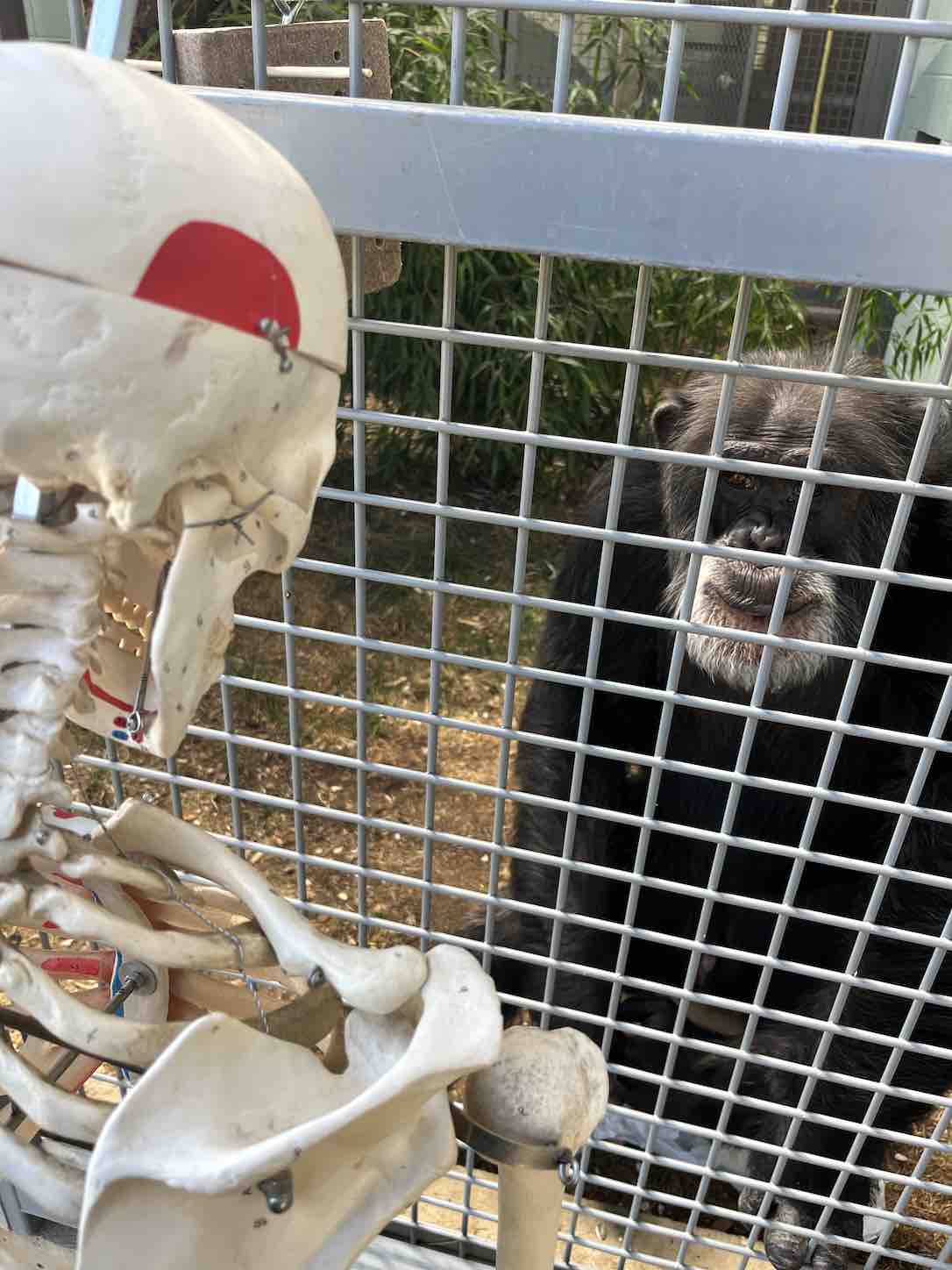
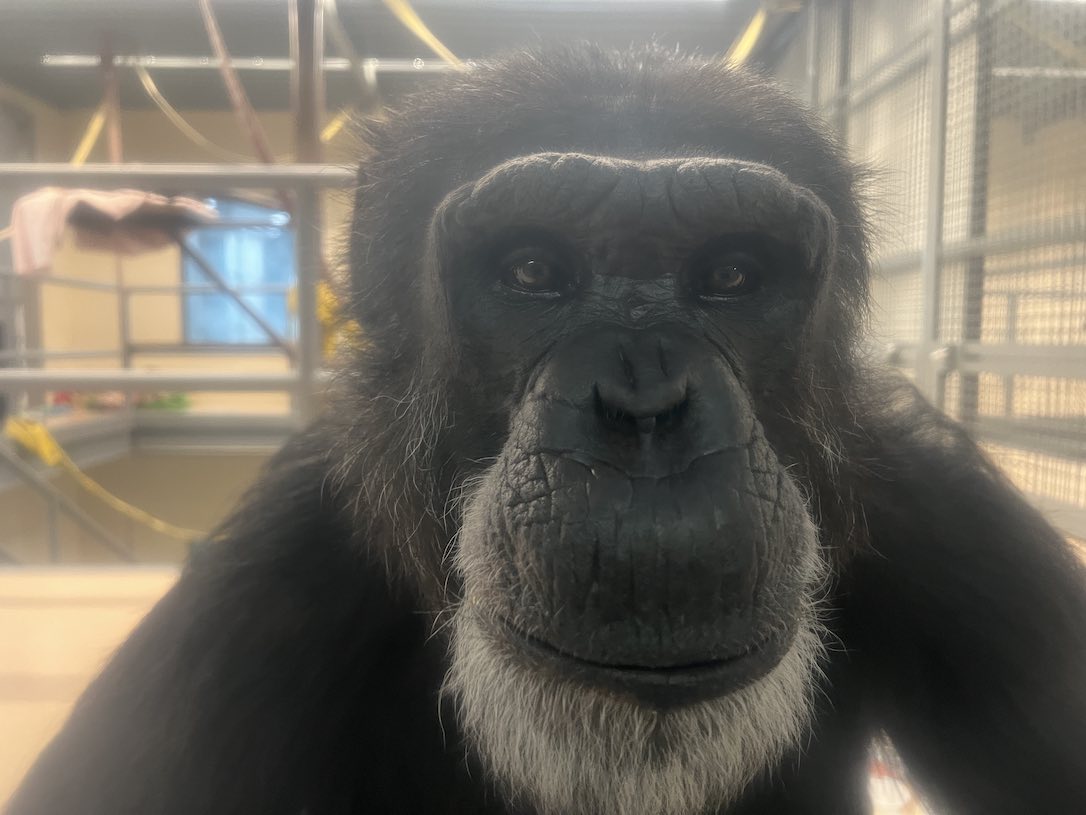
Bonus photo of Cy watching me as I was cleaning their mezzanine yesterday:
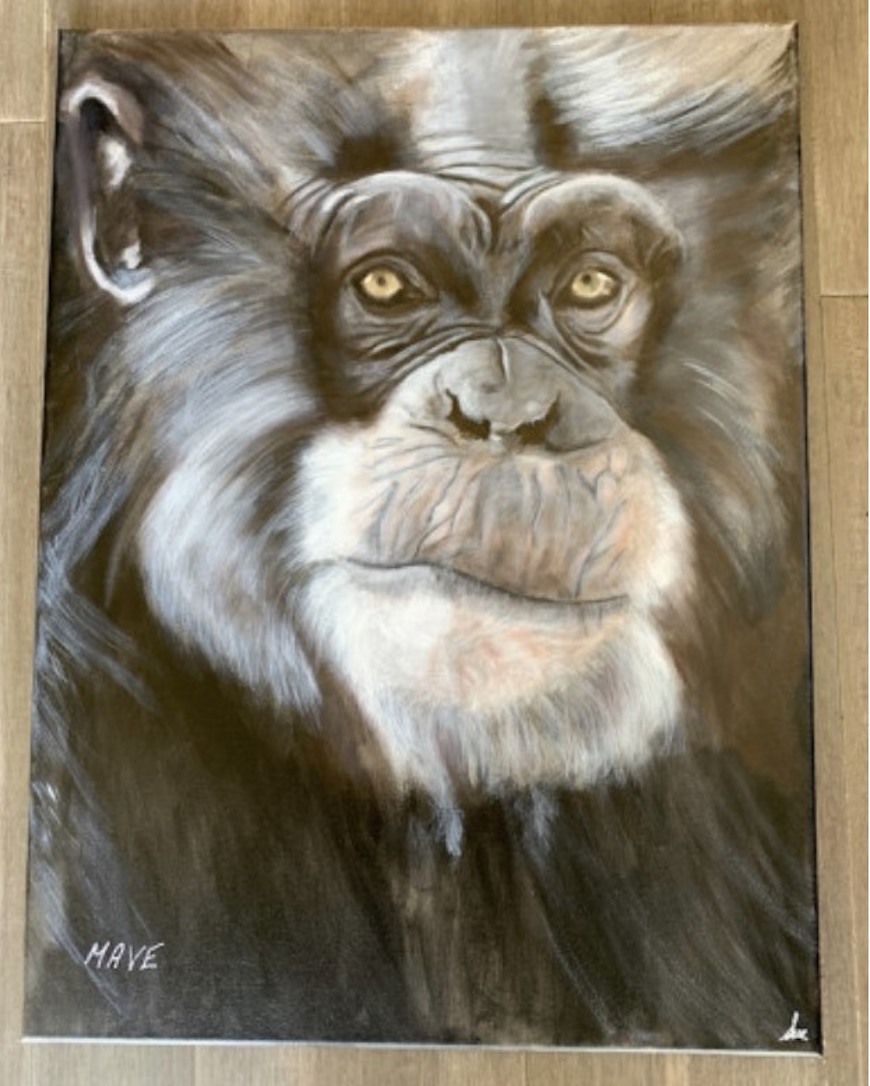
Also, don’t forget to check out the online auction items! You can begin to bid on the items you want now! And for those who are attending in person, you can start thinking about which items you are going to bid on! I’m quite partial, and biased, on this beautiful painting of Mave!
Filed Under: Food, Latest Videos, Sanctuary Tagged With: chimp, chimp enrichment, chimp sanctuary, chimpanzee, chimpanzee sanctuary, Chimpanzee Sanctuary Northwest, chimpanzees, chimps, Sanctuary

Graze Anatomy

September 12, 2022 by Anthony

Before I dive into today’s blog, I have an exciting update to share: The HOOT! 2022 online auction started today!

You can visit the online-only page to decide which amazing items to bid on. Tickets are still available for the live event which will be held on Friday, Sept. 16 at The Foundry by Herban Feast in Seattle! You can learn more about the event by clicking here and buy tickets here.
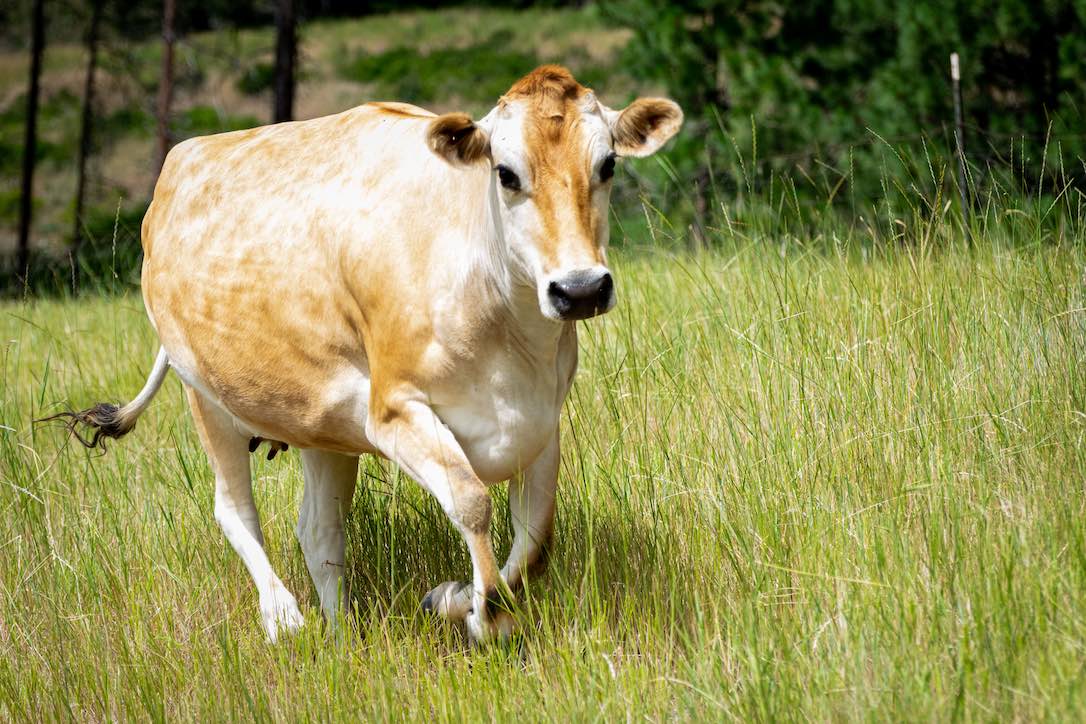
We caregivers also enjoy viewing (and occasionally bidding on) items that commemorate our favorite sanctuary residents. Although there are some great chimpanzee-themed items, I must admit that I am quite partial to the plush Cuddle Clone of the Jersey cow, Meredith.

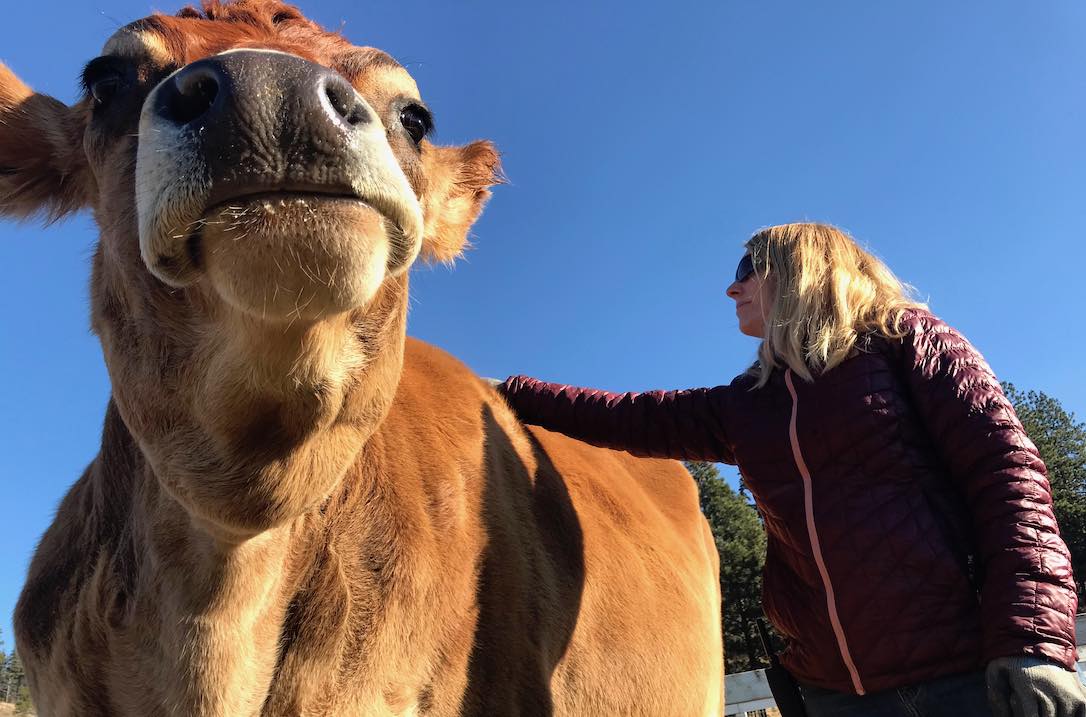
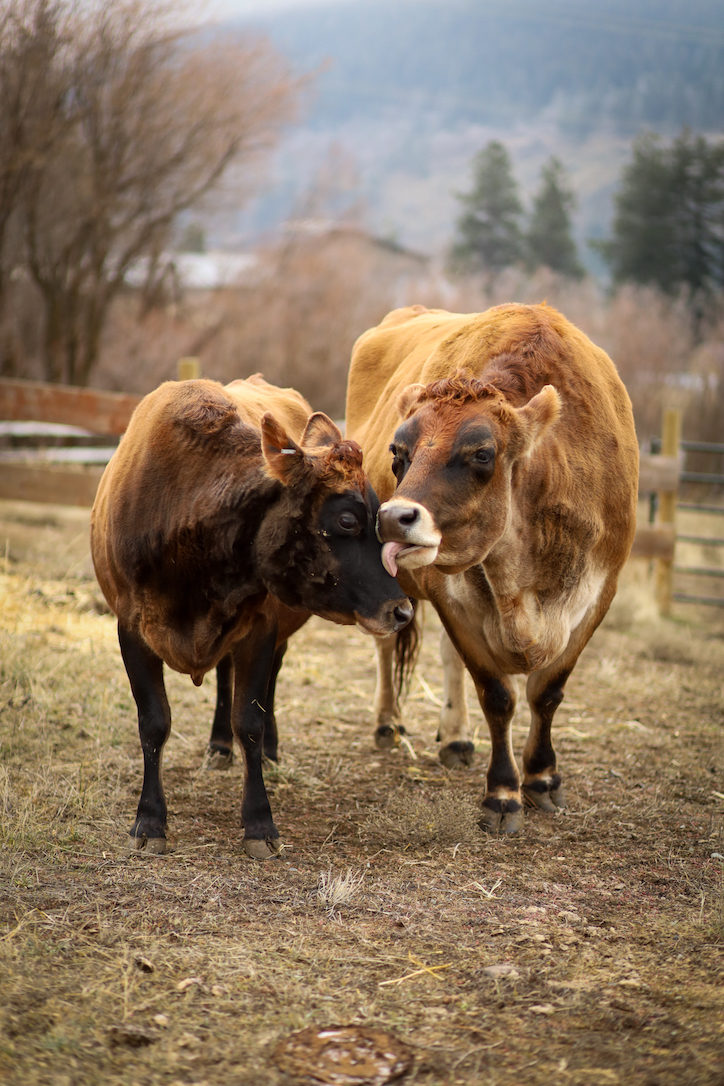
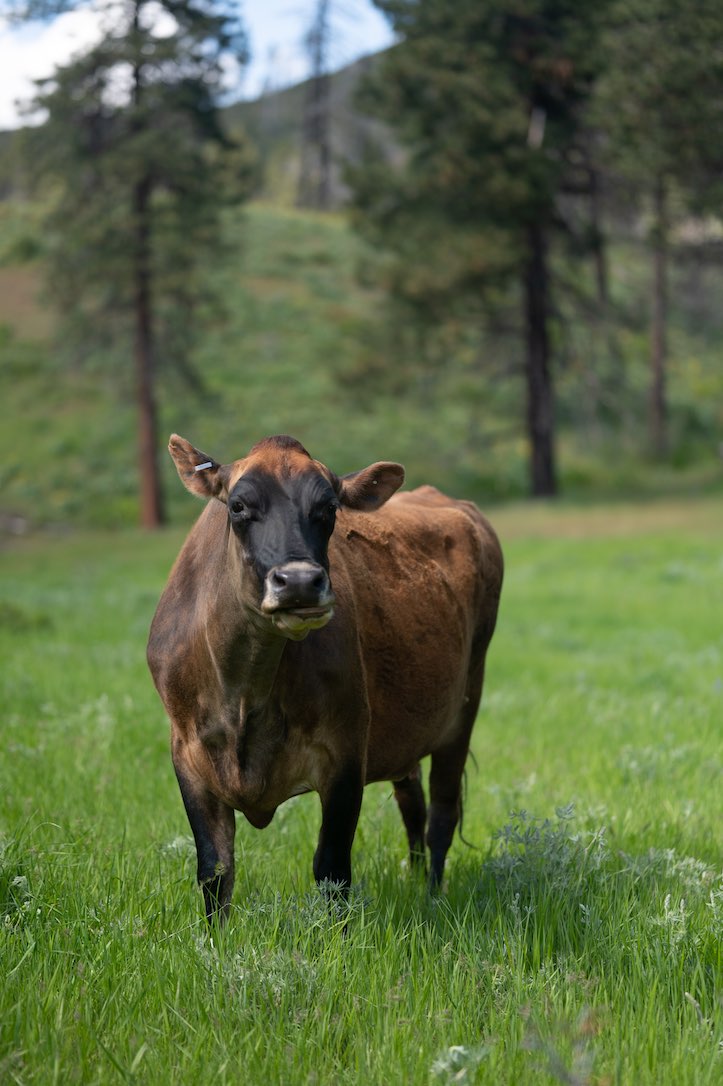
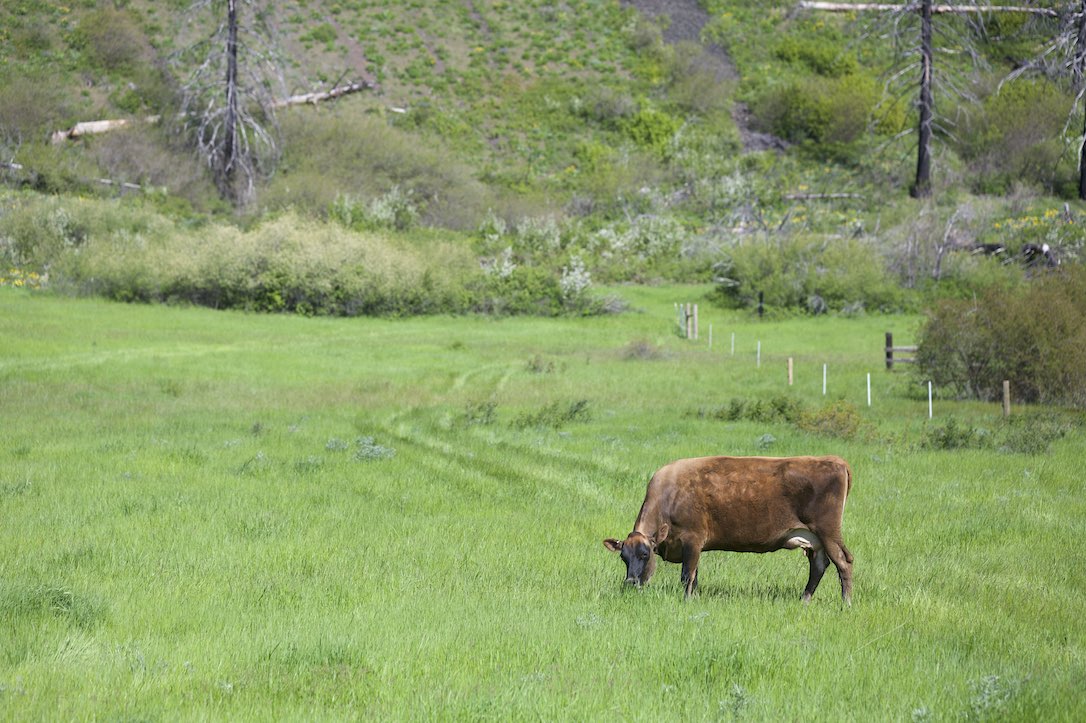
As many of you already know, the pastures that surround the sanctuary’s Chimp House provide a home to four rescued cattle: Betsy, Honey, Meredith and Nutmeg. This little herd helps the sanctuary by consuming vegetation that could potentially fuel wildfires. In turn, we give them food, water, shelter, enrichment, veterinary care, and everything else they need to thrive. Caring for these creatures is often quite different from the work we do with chimpanzees, so I’m taking a moment to share some interesting trivia about the sanctuary’s lovable, living lawnmowers.

  • Domestic cattle (Bos taurus) are often called bovines because they belong to the subfamily Bovinae. This group also includes bison, buffalo, yaks, and other species of wild cattle. Sheep, goats and antelope are their closest living relatives and belong in the same family: Bovidae.

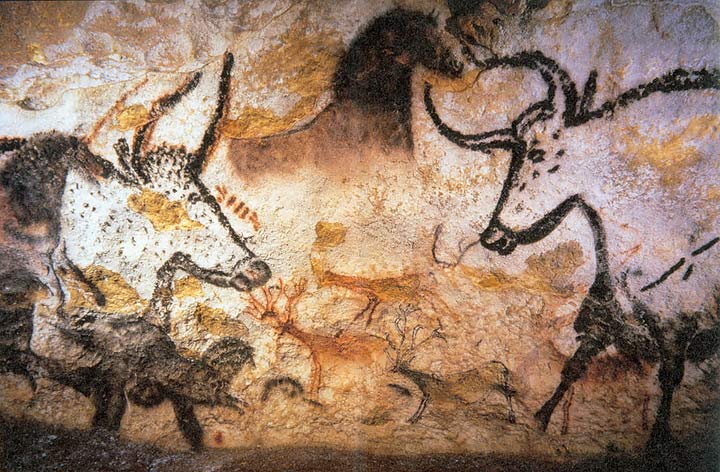
  • The ancestor of all living cattle is the extinct aurochs (B. primigenius). Aurochs once ranged across Eurasia and North Africa and were commonly depicted in prehistoric art (e.g. the Lascaux cave painting shown below). People across the Roman Empire commonly used them in bullfights, but they likely went extinct due to deforestation, over-hunting, and competition with domestic cattle. The last known aurochs cow lived in Poland and died in 1627.

  • Jersey cattle are specifically adapted to life on Jersey, one of the United Kingdom’s Channel Islands. The island’s human inhabitants carefully bred these cattle to yield milk with a high percentage of butterfat, and even prohibited the importation of foreign cattle in order to maintain this quality.
  • Jerseys are not the most popular dairy breed in North America. That title belongs to the black-and-white Holstein-Friesian, which are larger and produce more milk per cow.

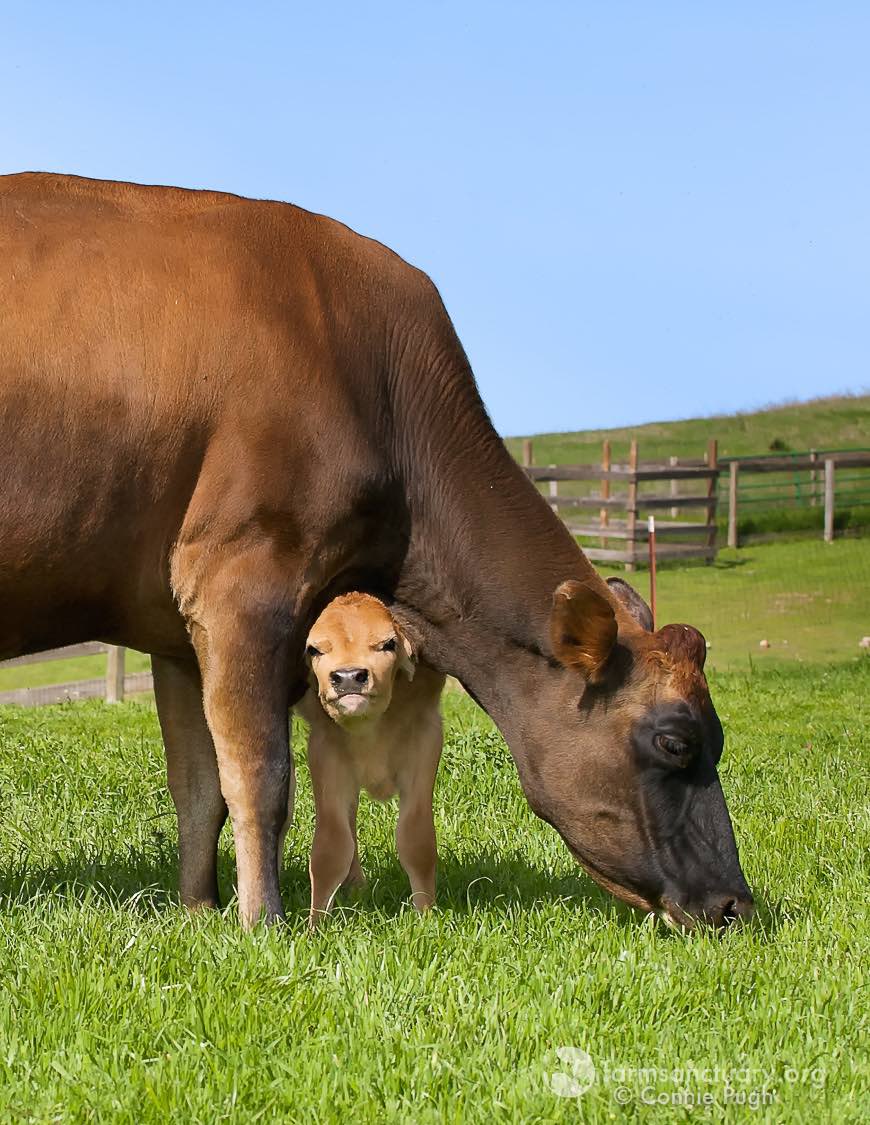
  • Newborn cattle are called calves (e.g. newborn Nutmeg with mother Betsy, shown in the Farm Sanctuary photograph above). Immature females are called heifers and are only considered cows after birthing their first calf. Calves gestate for nine months and typically remain dependent on their mother’s milk for ten months before naturally weaning.
  • Ranchers often castrate male calves so they don’t develop into adult bulls, which are difficult to house and manage. Young castrated males are called steers until they eventually mature into fully-grown oxen. Historically, humans utilized oxen as draught animals for pulling plows and carts. Even though they are a relatively small cattle breed (females are usually around 800 pounds), Jersey bulls and oxen can grow up to 1,800 pounds.

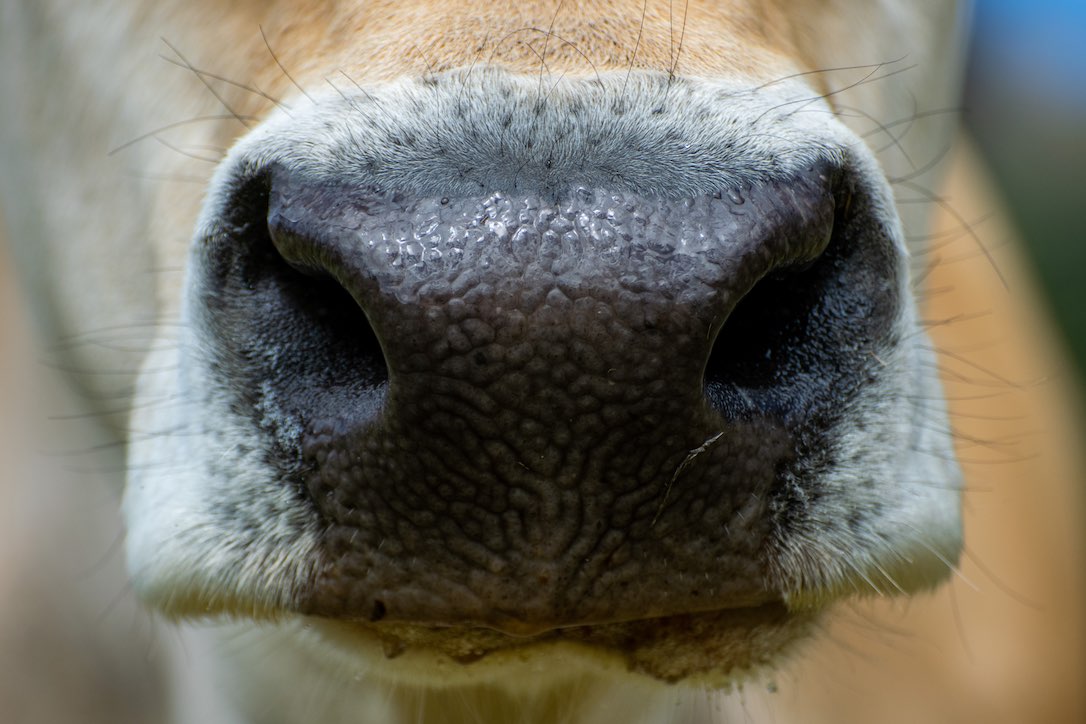
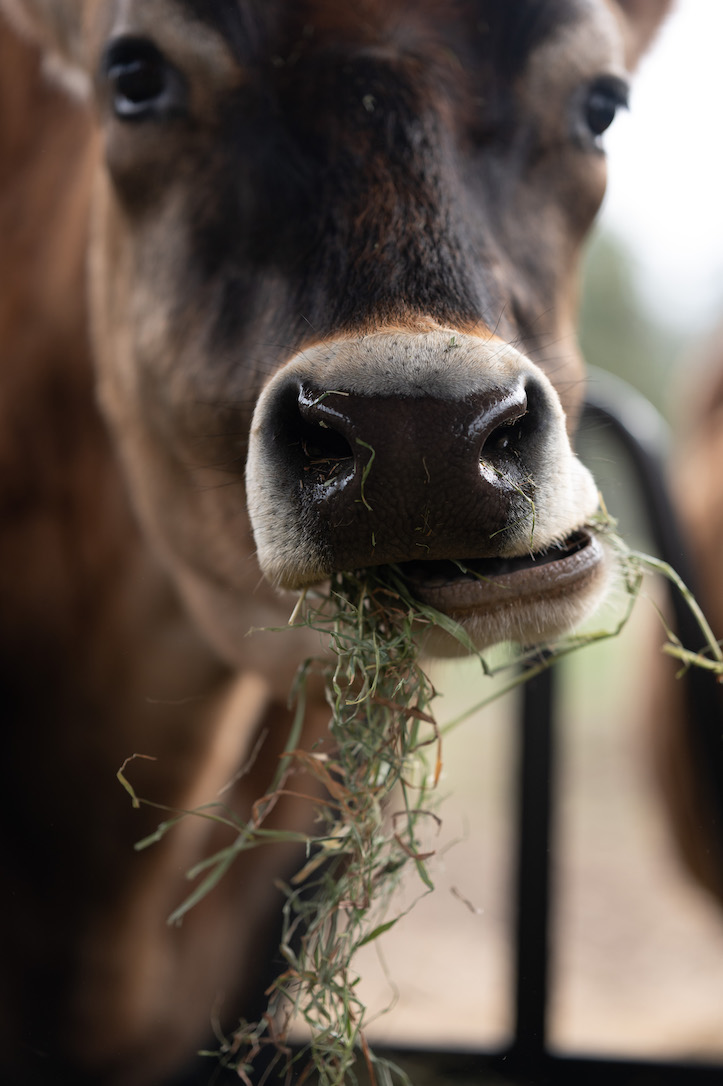
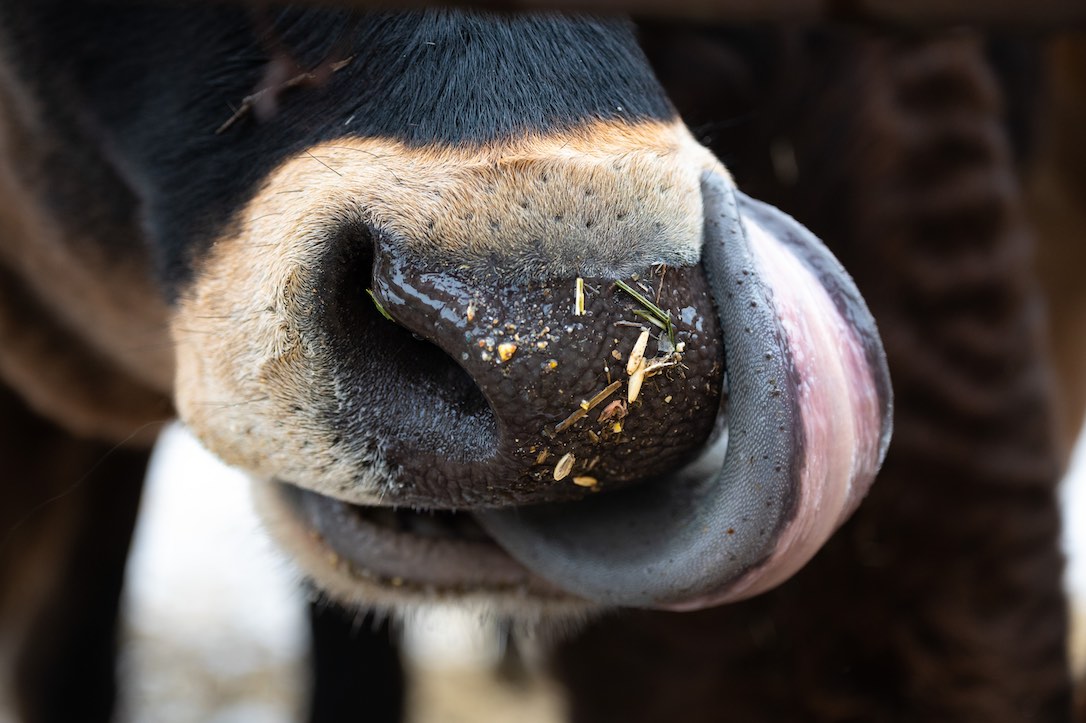
  • The glands on cattle noses make distinct patterns that are as unique as human fingerprints.

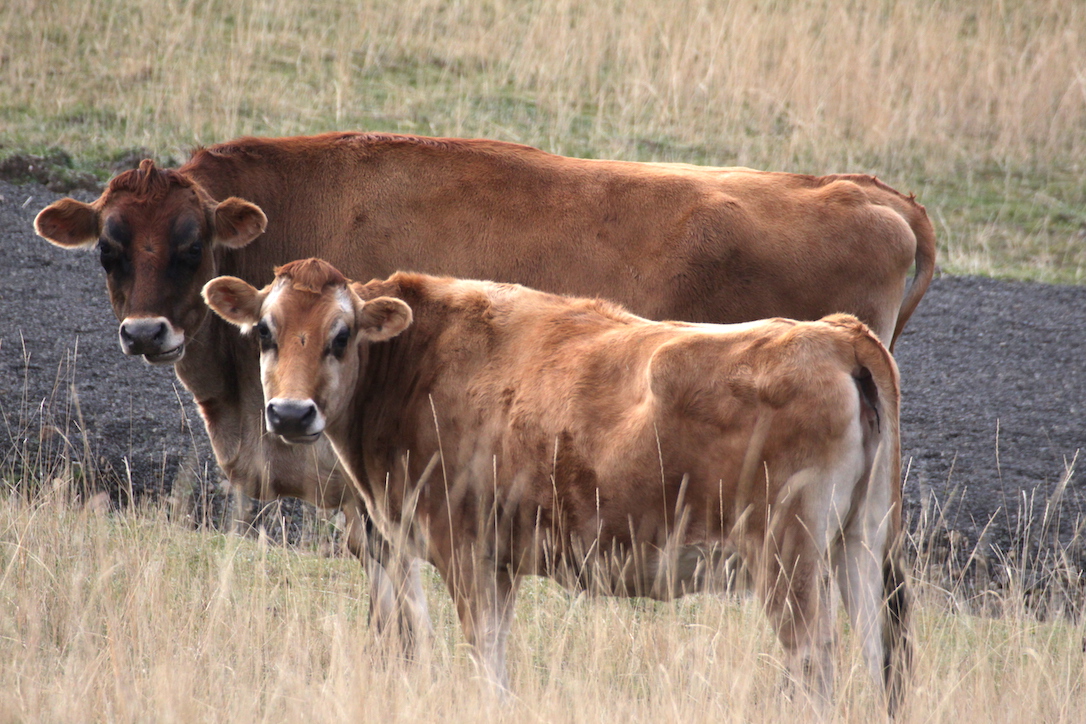
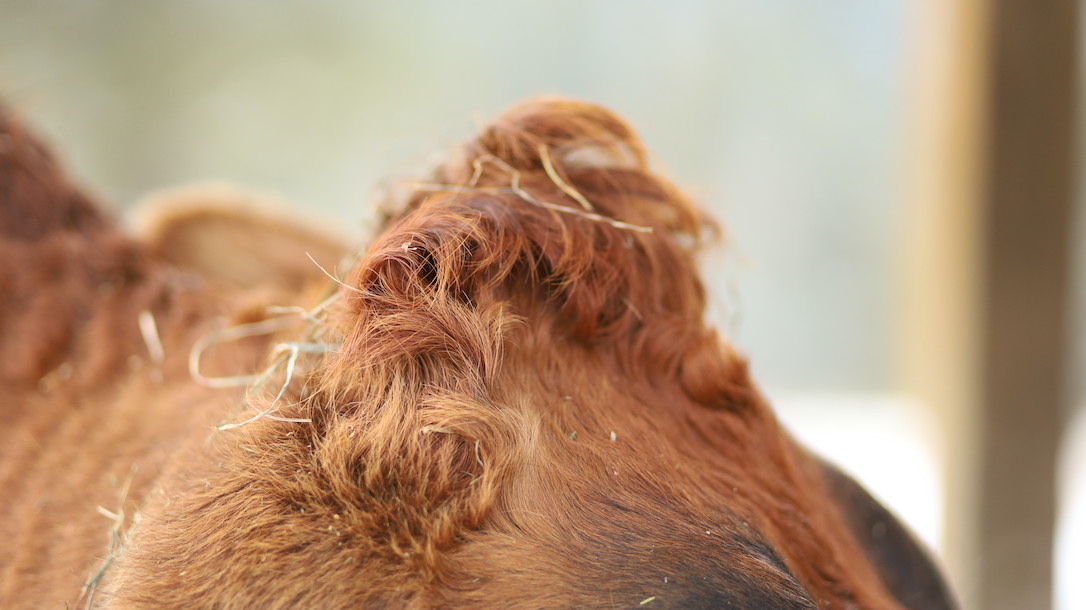
  • Cattle horns and hooves are bony structures encased in sheaths of keratin, the same protein that makes up human nails and hair. Hooves generally grow ⅕ -¼ of an inch each month. The hooves of domestic cattle must be trimmed periodically to prevent a variety of health issues (below).

  • The common safety practice of horn removal is called polling. The remaining knob is called a poll and any subsequent horn growths are called scurs.

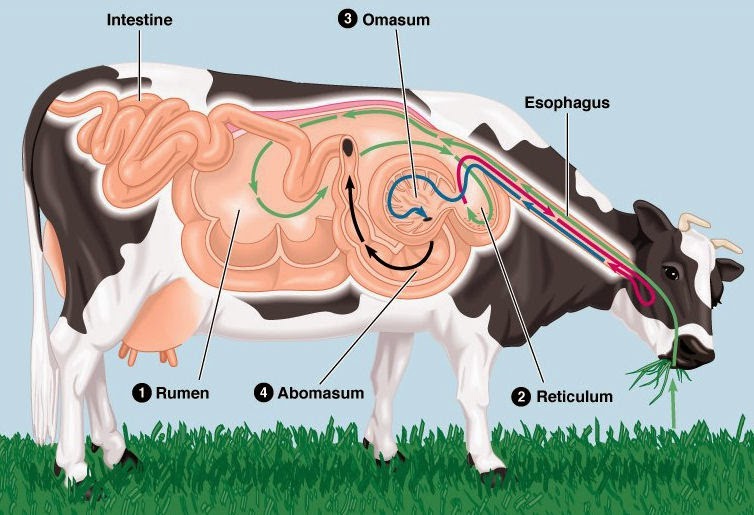
  • Cattle and other ruminants have a complex, multi-chambered stomach that specializes in breaking down fibrous plant matter. They do not have four stomachs. The chambers are called the rumen, reticulum, omasum and abomasum (diagram below)  . The rumen alone can hold up to 25 gallons of plant material. Each chamber contains a unique microbiome that is critical for proper digestion and overall health.

  • Cattle regurgitate chunks of semi-digested food called cud. They chew these again before re-ingesting them. This process is called “rumination” or “chewing the cud.” They chew in a conspicuous circular motion, grinding the forage against a leathery dental pad that they develop in place of upper incisors

  • Bovines are quite intelligent and have excellent long-term memories. Experiments show that cattle can discern between individual humans and learn to avoid humans who treat them roughly and trust humans who treat them kindly.

  • Cattle herds are complex societies that regularly split up and reunite (fission-fusion behavior). When not managed by humans, cattle form matriarchal hierarchies where bulls only associate for competition and breeding.

  • Domestic cattle can run up to 17 miles per hour (for short distances).

  • Cattle develop friendships with familiar individuals and reinforce their social bonds through grooming. Their preferred method of grooming is to lick each other with their raspy prehensile tongues (which also help them to grab food).

  • The USDA estimates the current global population of domestic cattle to be over one billion head (individuals), up 13.2 million from the previous year. These populations contribute significantly to anthropogenic climate change. The methane released from cattle ranches accounts for around 14% of global emissions.

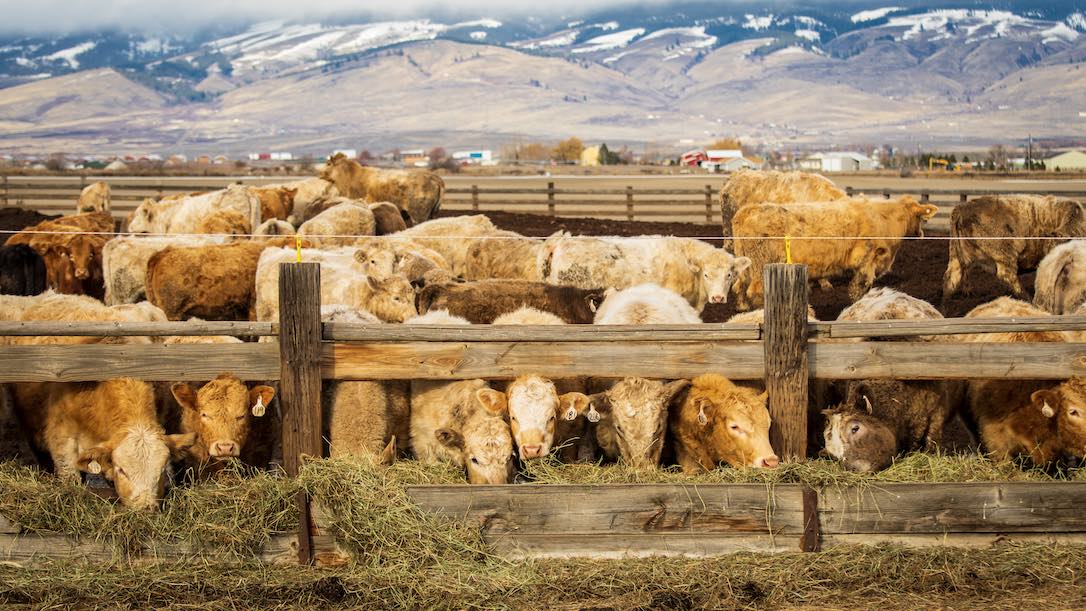
  • Red meat consumption peaked in 1976 and has fallen dramatically since, but the average American still consumes around 57.2 pounds of beef each year. Ranching remains a key industry in the communities near the sanctuary (below). Recently, the availability of plant-based meat substitutes, the rising costs of beef production, and the recent drought in the American West may all be contributing to this decline.

Now you’re all prepared to absolutely slay a Jeopardy category on the subject of bovines. You’re welcome.

Don’t forget to check out the HOOT! page to get your bovine collectibles and contribute to their sanctuary home!

Filed Under: Cattle, Farmed Animals, Fundraising Tagged With: animal rescue, animal rights, animal sanctuary, Animal Welfare, chimp, chimpanzee, chimpanzee sanctuary, Chimpanzee Sanctuary Northwest, cows, farm animals, jersey cattle, Sanctuary

The end of an eventful weekend!

September 11, 2022 by Jenna

We have had so much to celebrate this weekend!

Yesterday, Annie turned 48 years old AND our awesome caregiver, Kelsi, got married!

The chimp house has been full of play sessions, laughter, special treats, and relaxation. Check out today’s video to catch moments from our eventful weekend!

*Bonus* photos I have been saving from my phone:

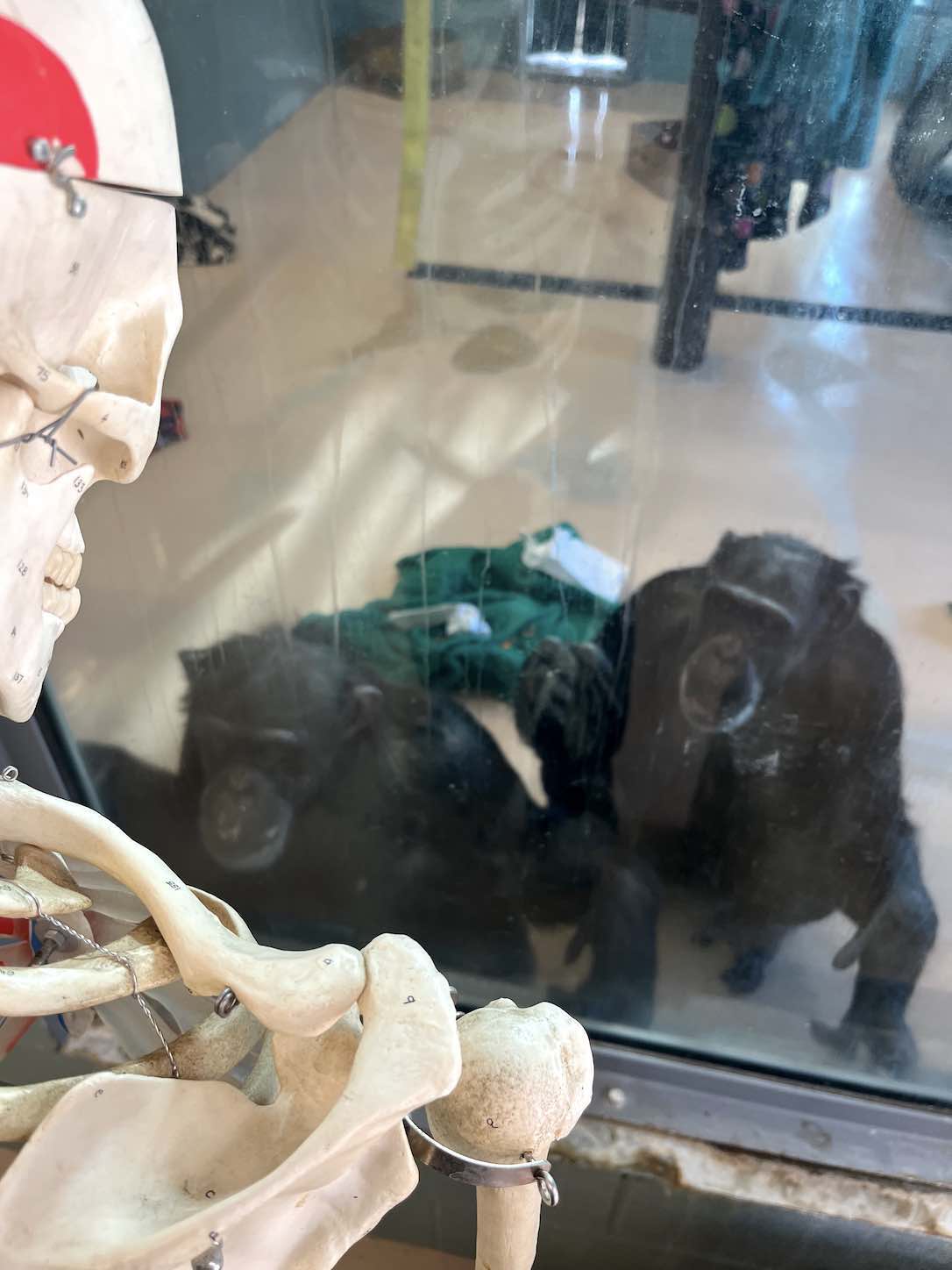
Dora (L) and Honey B (R) meet the skeleton for the first time:

Gordo meeting the skeleton with a mouthful of water:

Foxie:

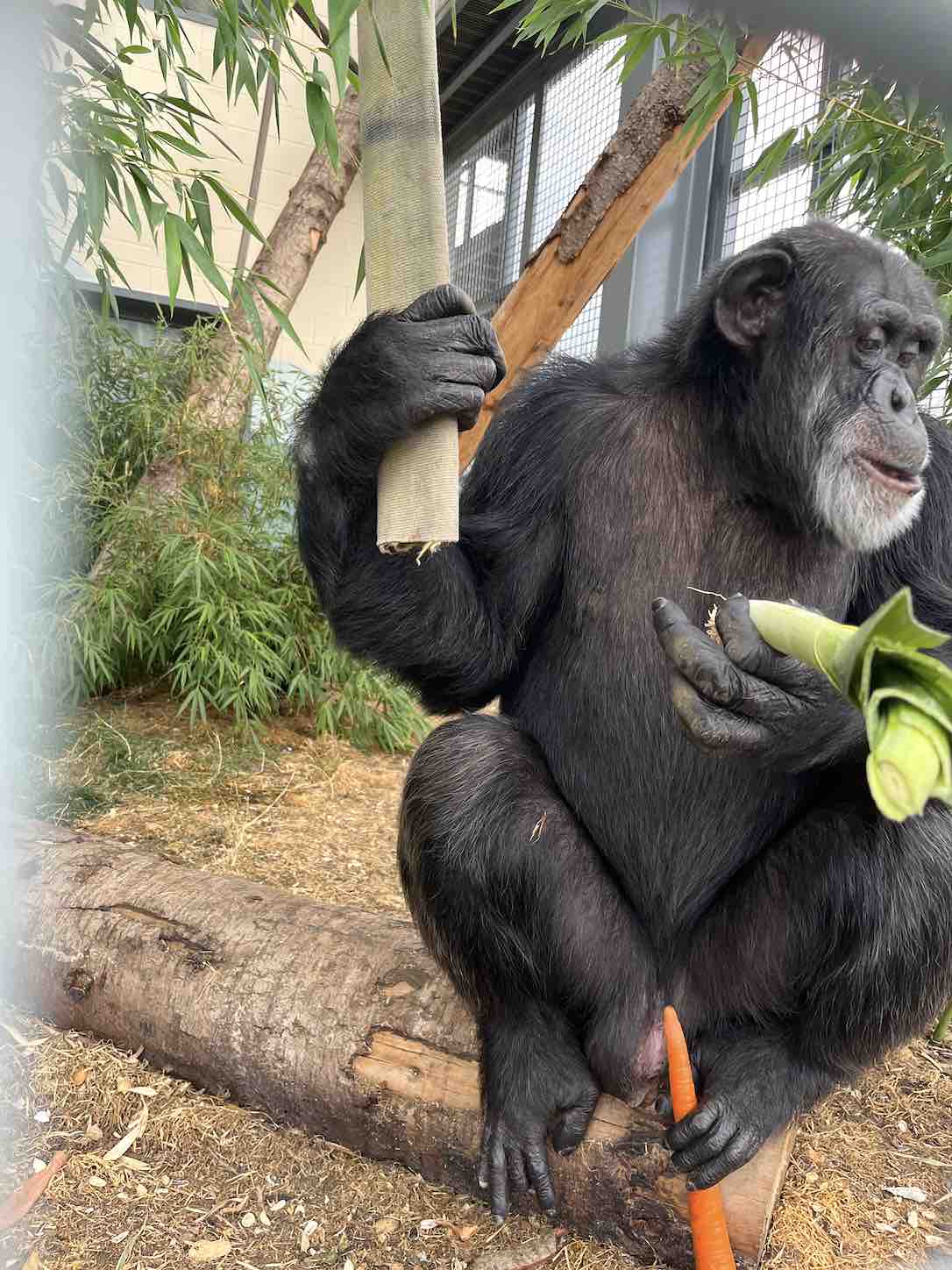
Gordo holding his carrot with his foot:

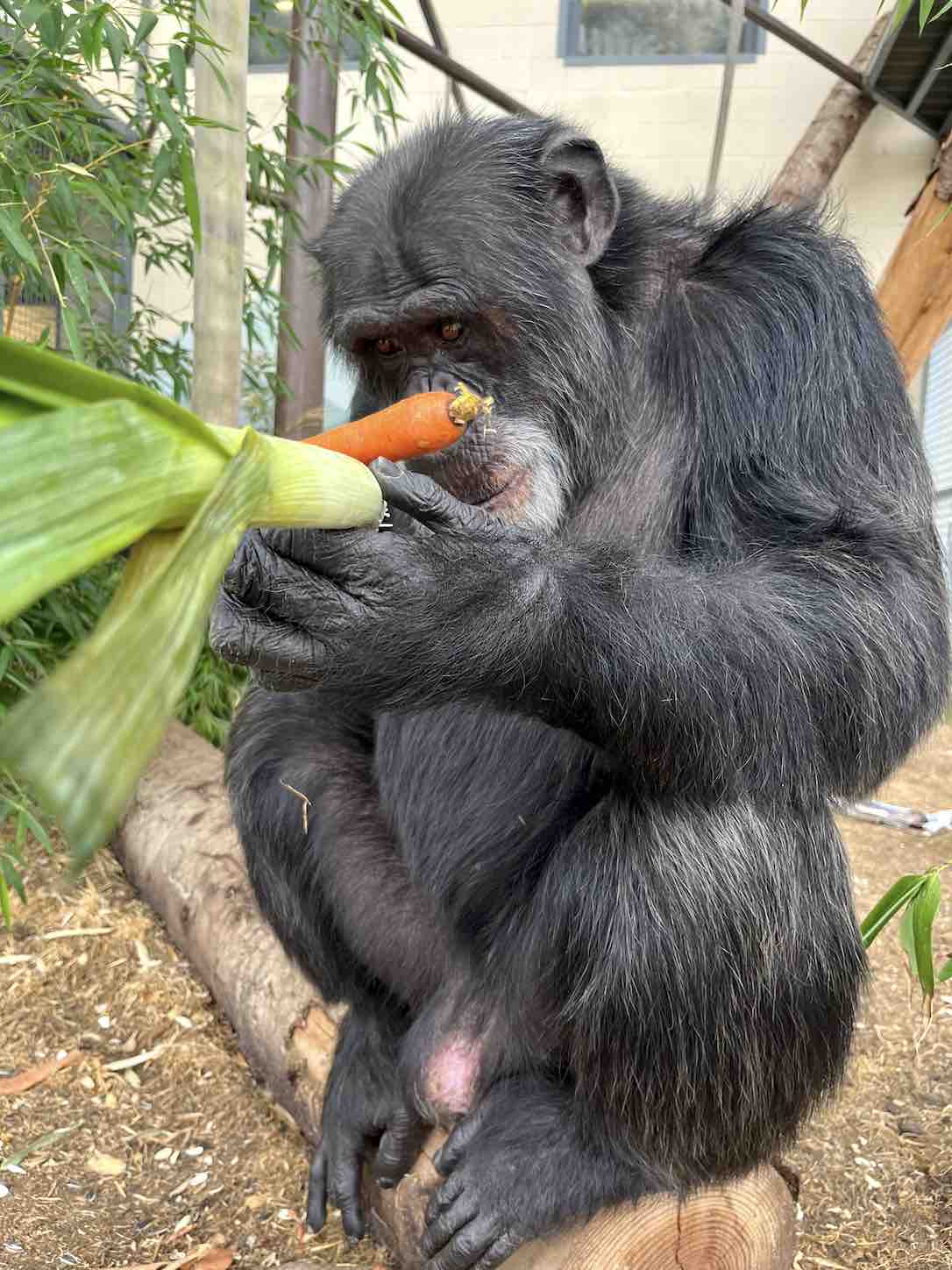
Gordo smelling said carrot:

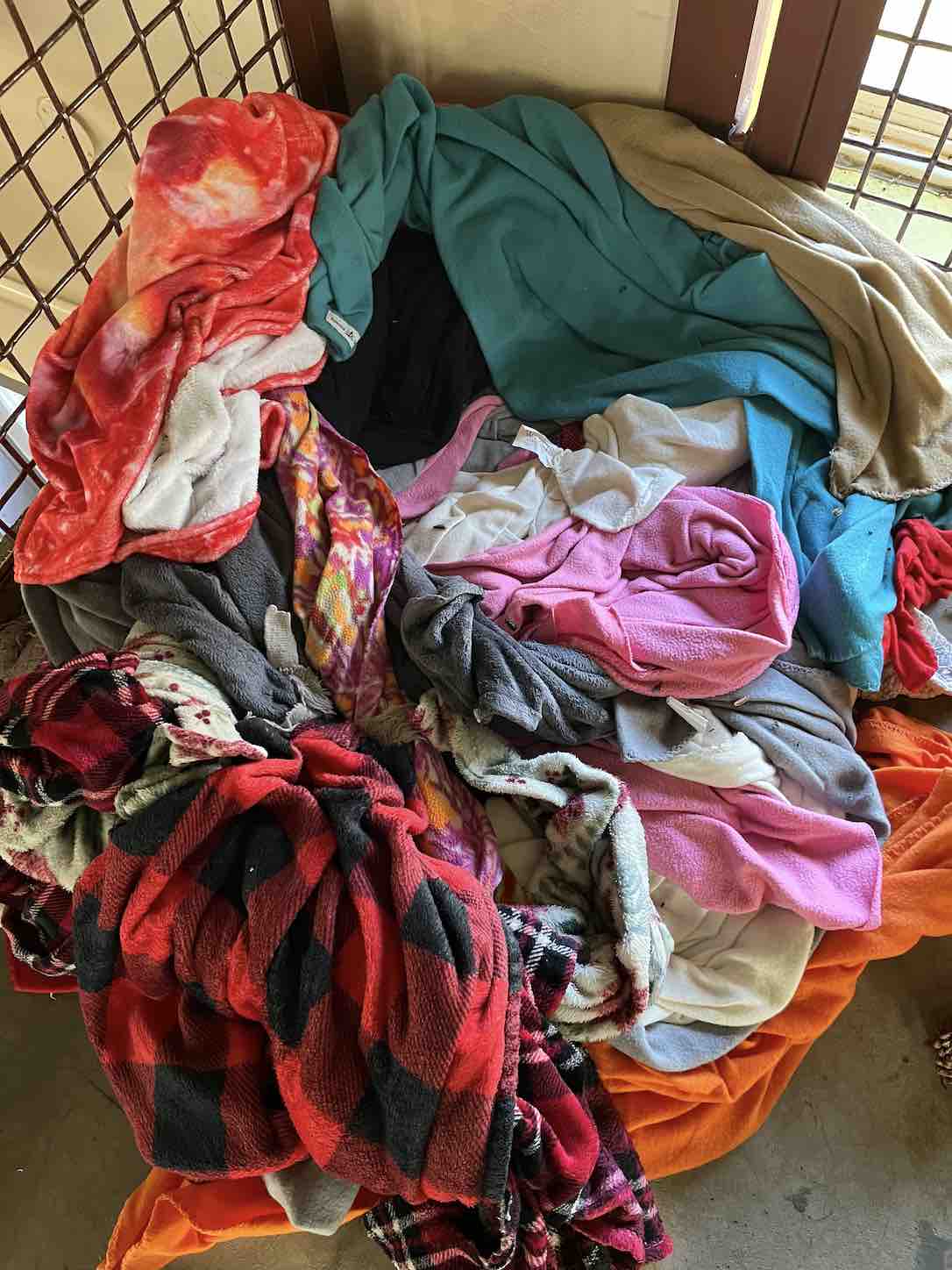
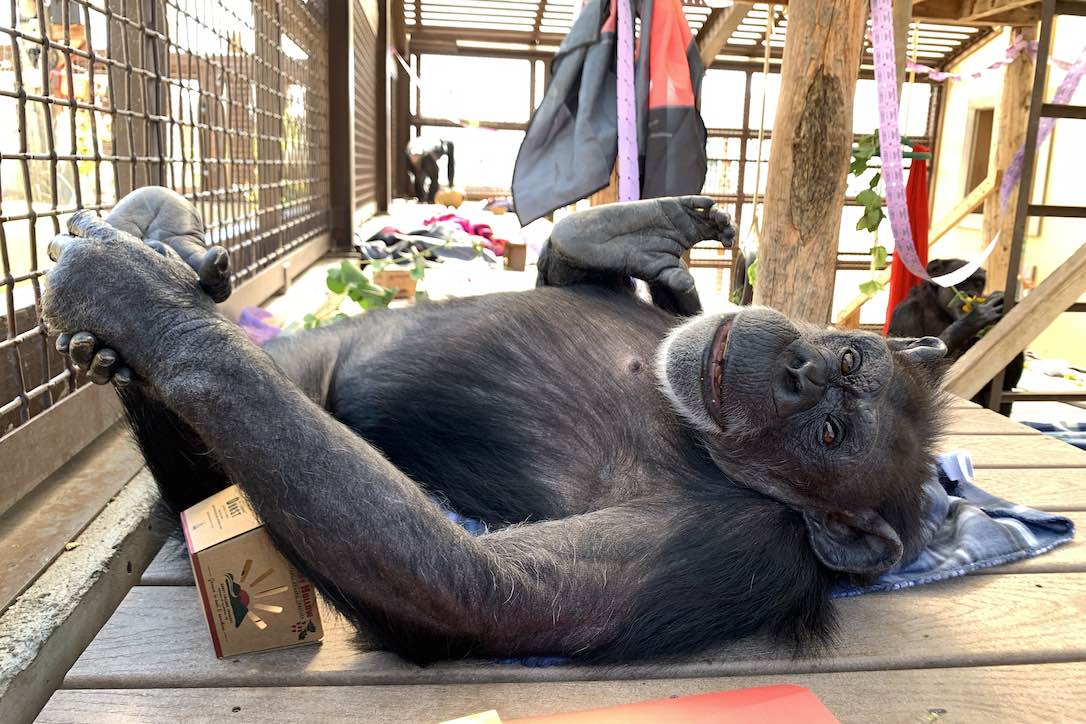
Negra’s nest:

Disclaimer: others may have contributed to the building of this nest. However, Negra claimed it!

Have a great week! 

Filed Under: Annie, Caregivers, Chimpanzee, Dora, Enrichment, Foxie, Gordo, Honey B, Negra, Nesting Tagged With: Animal Welfare, chimp sanctuary, chimpanzee, chimpanzee sanctuary, Chimpanzee Sanctuary Northwest

Annie’s 48th Birthday Party

September 10, 2022 by Diana

All of the primates had a great day celebrating Annie (and Kelsi and Adam!) today.

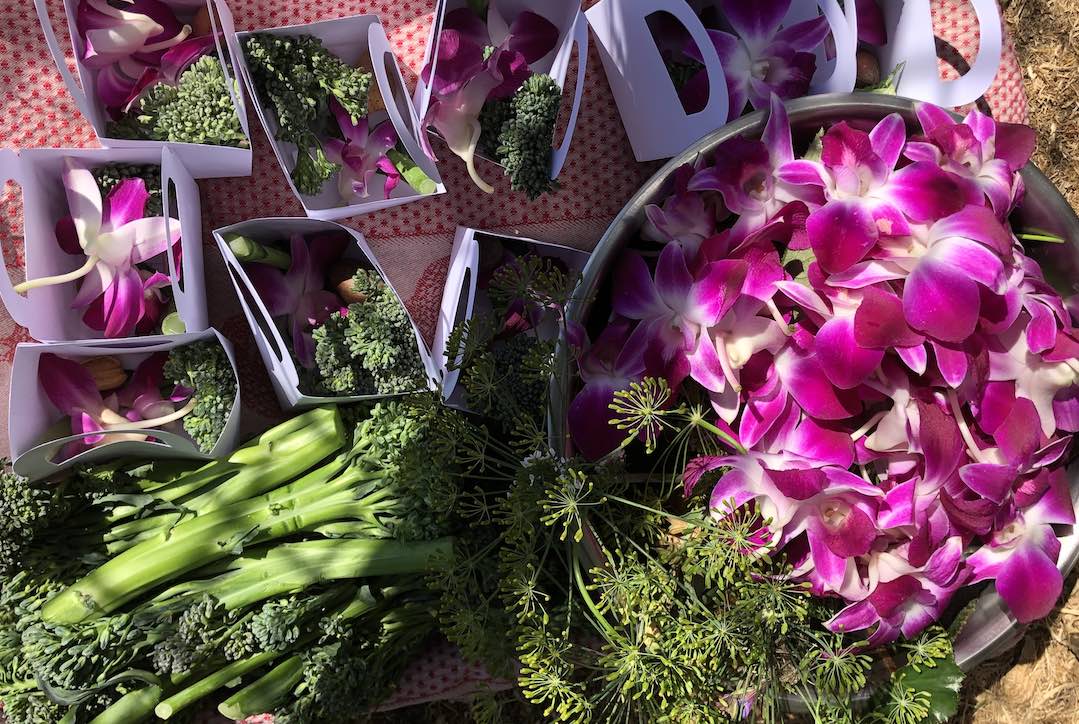
Thank you to Paulette for always remembering the many birthdays at CSNW and sponsoring today for Annie on her 48th birthday. And thanks to Dr. Erin for bringing a load of edible flowers and grape vines!

Along with the always great produce (including edible orchid flowers and banana leaves) from Charlie’s Produce, we also harvested grapes from the vines that grow by the sanctuary caregiver house to round out the birthday forage.

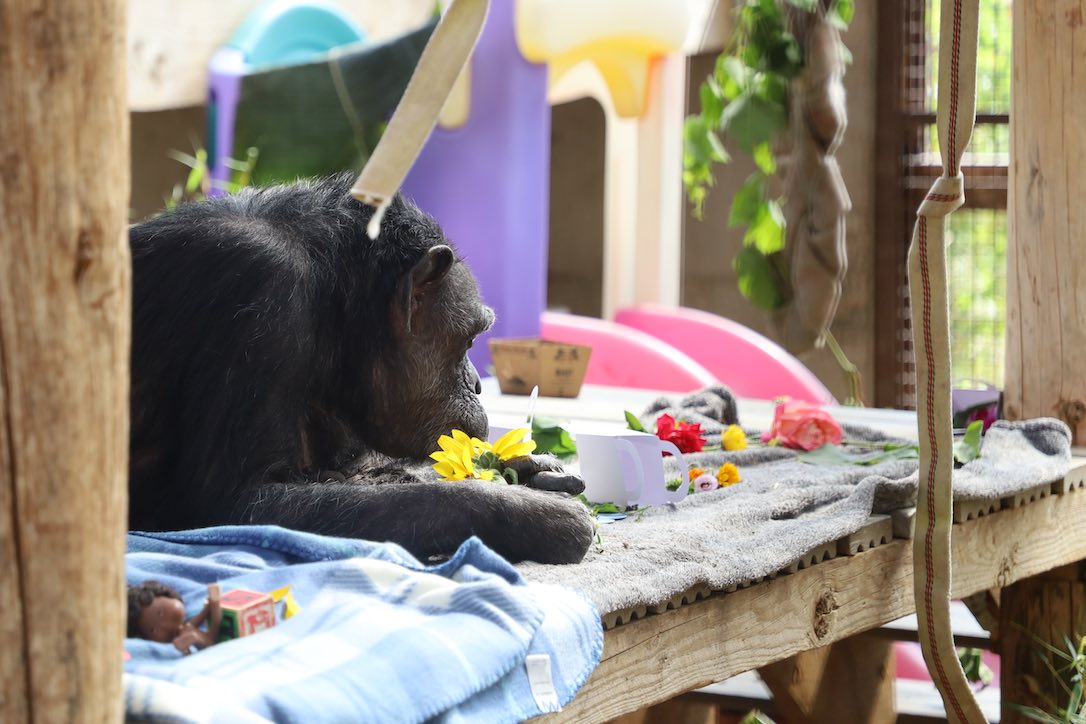
Aside from this photo of Annie I took:

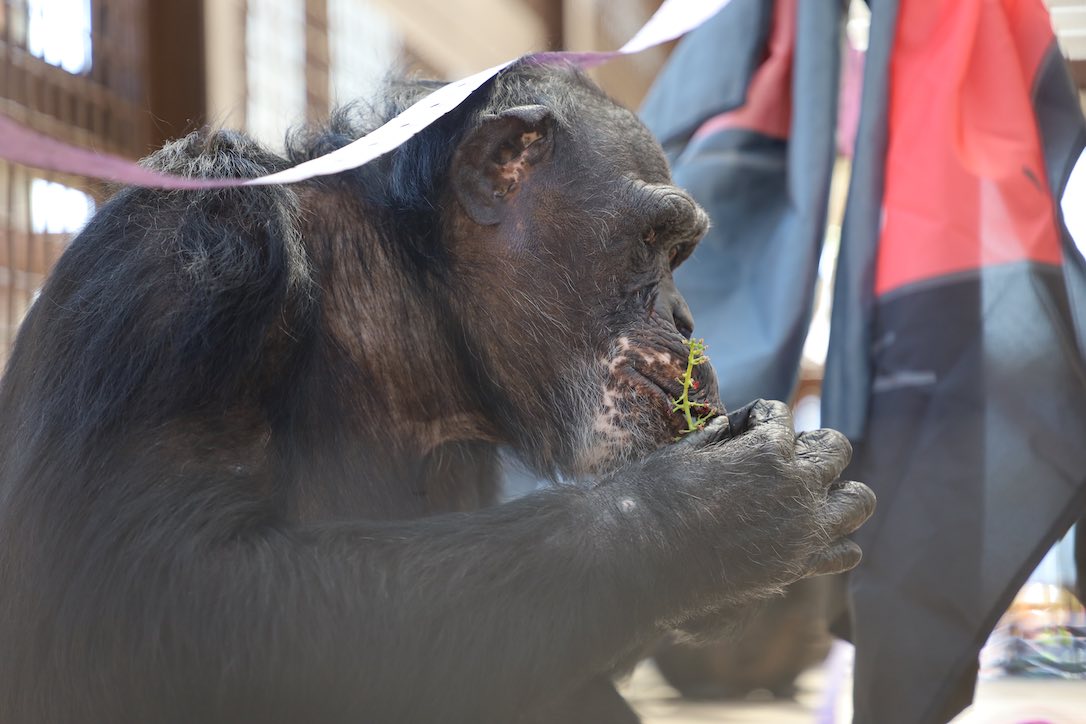
Here are a few other of my favorite photos of the day:

Jody with a sunflower:

Jamie getting every last bit of grape off of a vine, unbothered by the raffle tickets brushing her head:

Filed Under: Latest Videos, Party, Sanctuary, Sponsor-a-day, Thanks Tagged With: animal protection, animal rights, birthday party, celebration, chimp, chimpanzee, chimpanzee sanctuary, edible flowers, grape leaves, primate protection, primate rescue

Redecorating

September 9, 2022 by J.B.

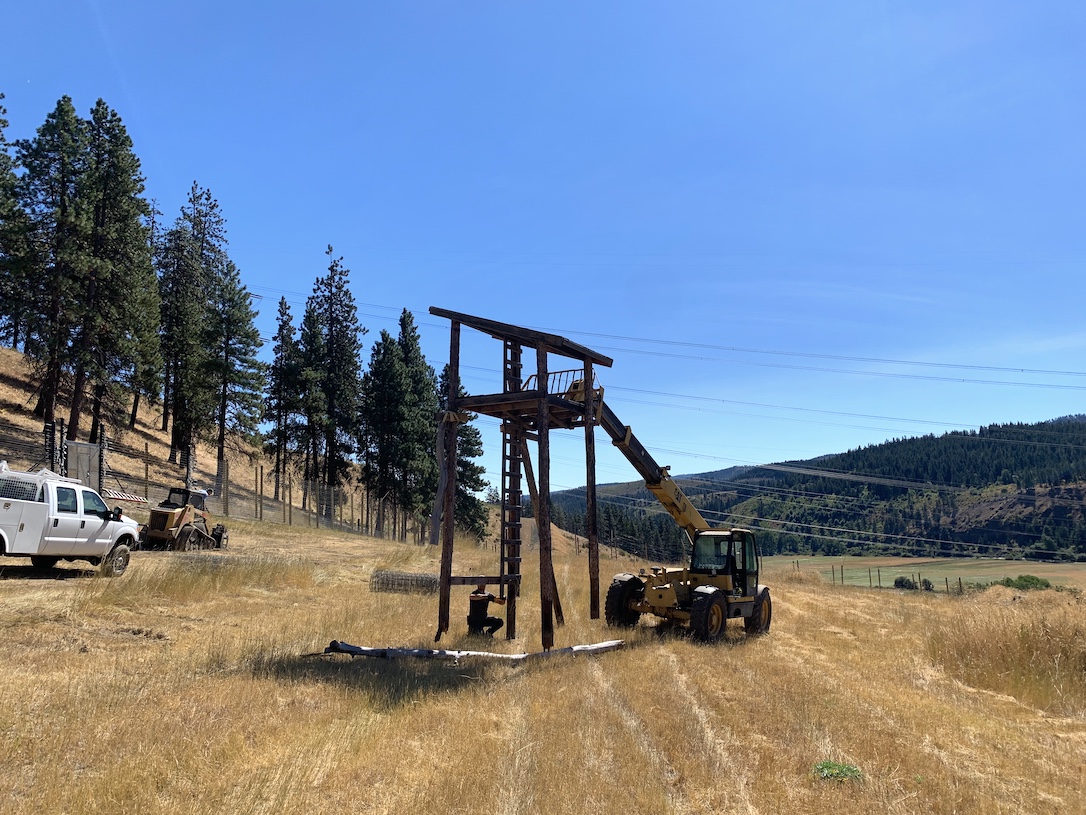
As Chad mentioned the other day, we’re in the final stretch of building the new open-top outdoor enclosures. There’s still a lot of work to be done, but the time had finally come to start tearing down the original fences so that we could install the last stretch of four fences that will separate the new Young’s Hill from the Bray. The only problem was that a few climbing structures were in path of the new fences, including one of the chimps’ favorites: Carlene’s Tower.

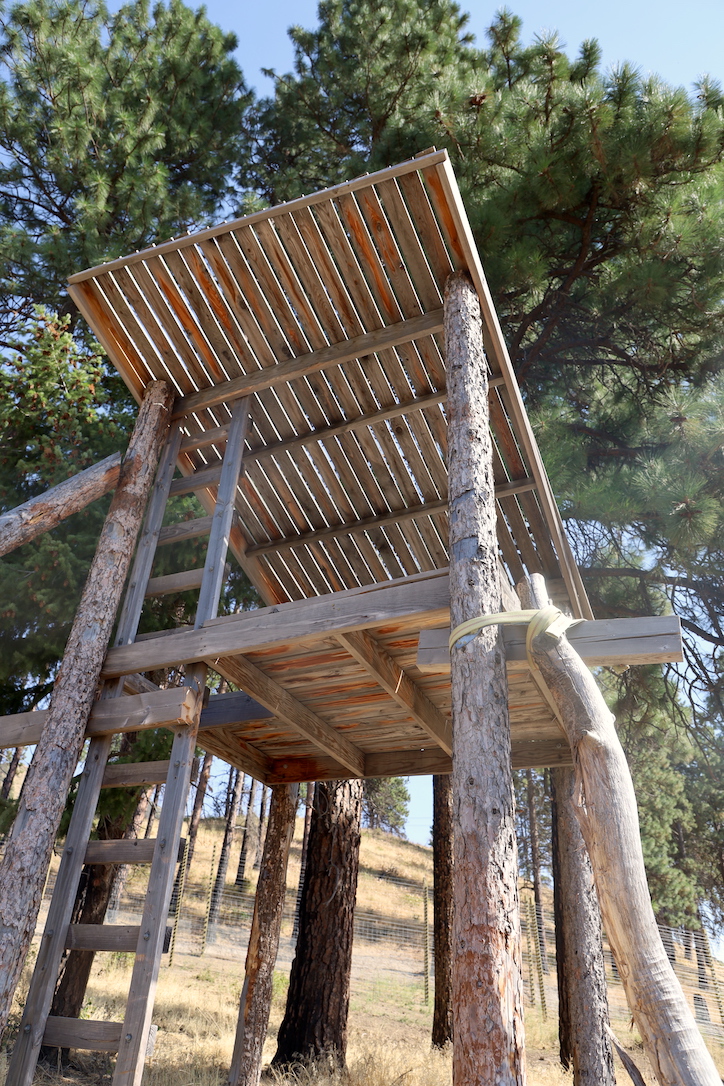
Luckily our friends at Sage Mechanical were on hand to help us do a little redecorating. They plucked the tower out of the ground and drove it to a new location.

And now Carlene’s Tower has found a new home among the evergreens at the very top of the hill, where it us sure to become one of the most popular spots in the renovated habitat.

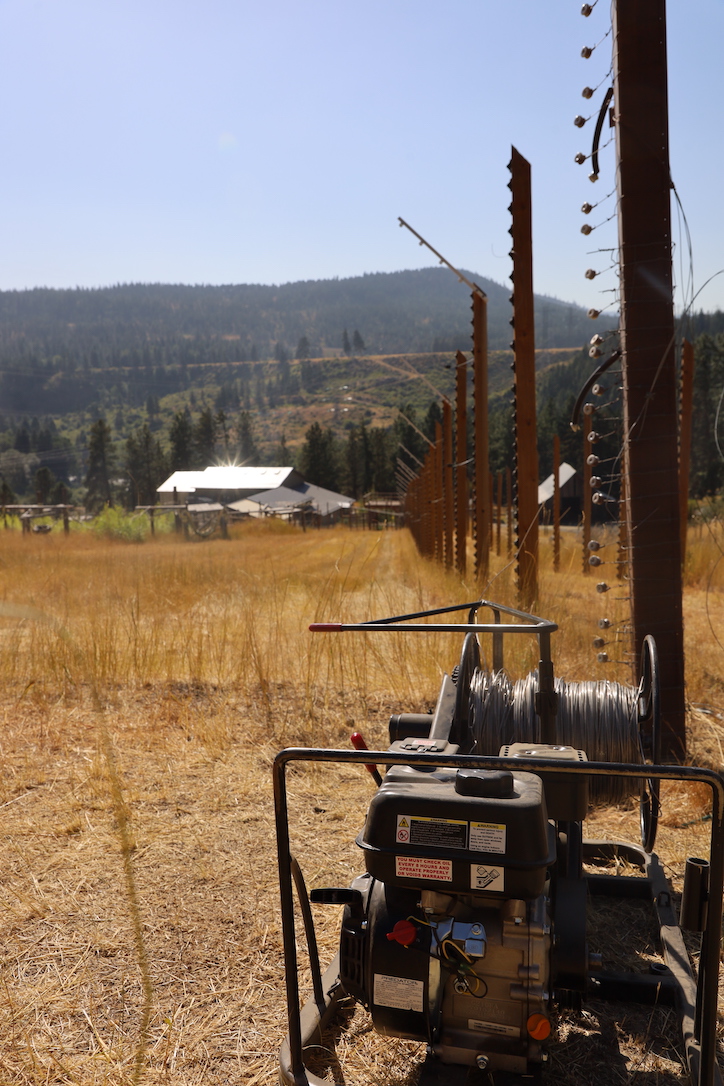
While the final posts are being set, we’ll be busy winding up all 14 miles of wire from the original fence. Eventually, the insulators will be removed from the old posts and the posts will be used to build more climbing structures.

With over double the acreage, we’ll have a lot of building to do. But our immediate goal is just to get the new fences up and running so the Seven can get back outside and Cy’s group can get a chance to explore before winter. That process alone will take at least a month. As was the case with the original Young’s Hill, the new enclosures will be works in progress, with new play structures, trees, and swings added each year.

Filed Under: Construction, Young's Hill Tagged With: chimpanzee, Construction, habitats, northwest, rescue, Sanctuary

“Chimps Are Off The Hill”

September 6, 2022 by Chad de Bree

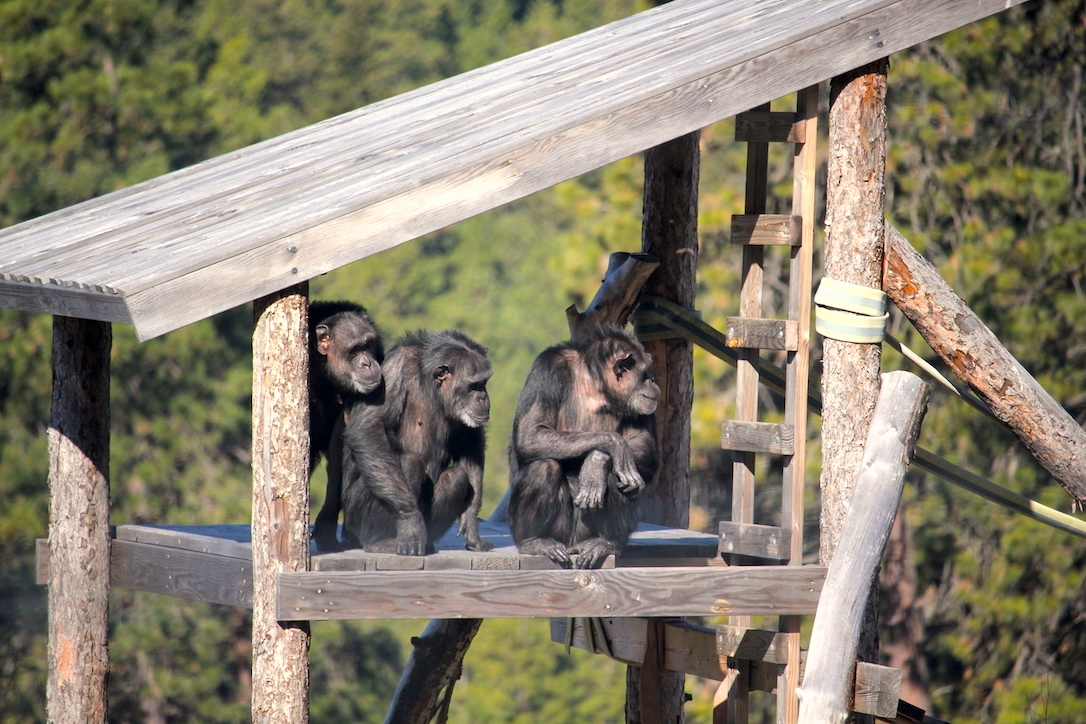
A couple of years ago, Caregiver Anthony wrote a blog about some of the lingo we use around the sanctuary. As staff prepare for the day to end, one of the things we do is a head count of each chimpanzee to ensure they are off of Young’s Hill and aren’t out in the cold at night. When we are able to close off Young’s Hill (at Jamie’s discretion that is), we announce over the radio “the chimps are off the hill.” It is one of the more common announcements made over the radio that can be heard around the sanctuary.

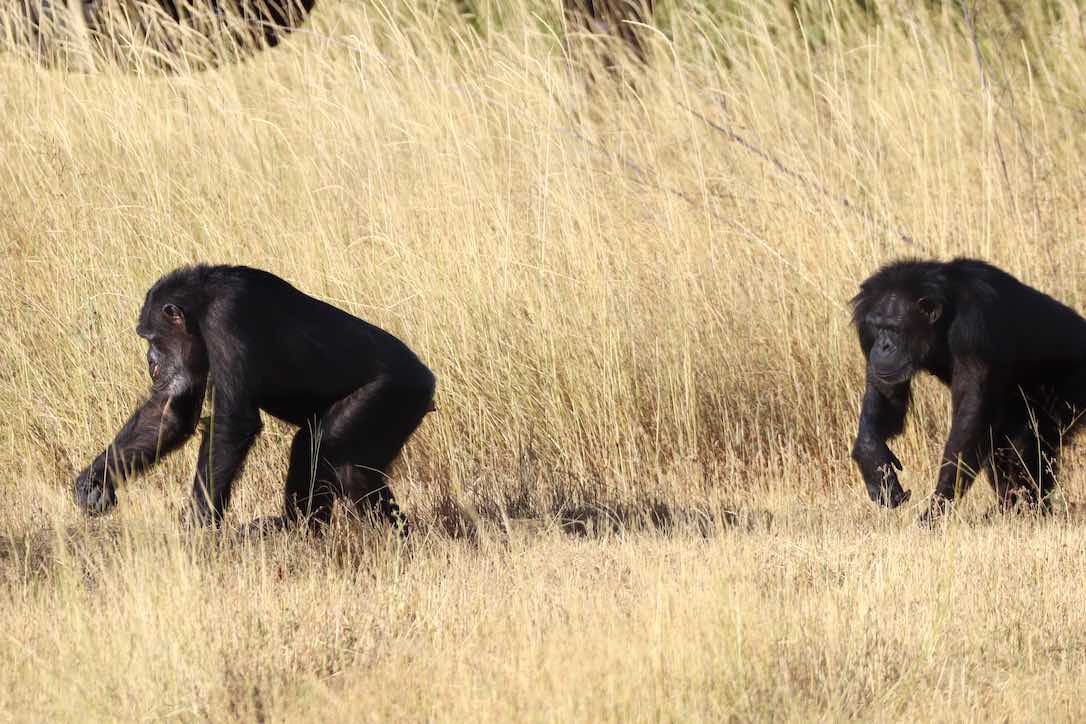
As J.B. mentioned a couple of months ago, the construction around the Young’s Hill expansion and The Bray is picking up. Well, we have reached the point of that blog where Jamie’s group will not have access to Young’s Hill for a little bit. As caregivers, we are obviously conflicted by this. On one hand, they will not have access to Young’s Hill. On the other hand, their outside habitat is expanding and Cy’s group will get the opportunity to venture into The Bray. Plus there’s the addition of new climbing structures and flora for them to interact with. There are cost and benefits to everything, and I personally think the benefits are astronomical in comparison to the cost of some time off Young’s Hill.

So please excuse the hiatus of seeing photos of the chimpanzees on Young’s Hill. They will still have access to their greenhouse, which still provides them with fresh air and sunshine during this time.

And enjoy these recent photos!

Missy and Annie on their morning patrol before coming in to make way for construction.

Terry enjoying one of his favorite food puzzles: Boomer Balls!

Honey B falling into slumber while watching the humans clean.

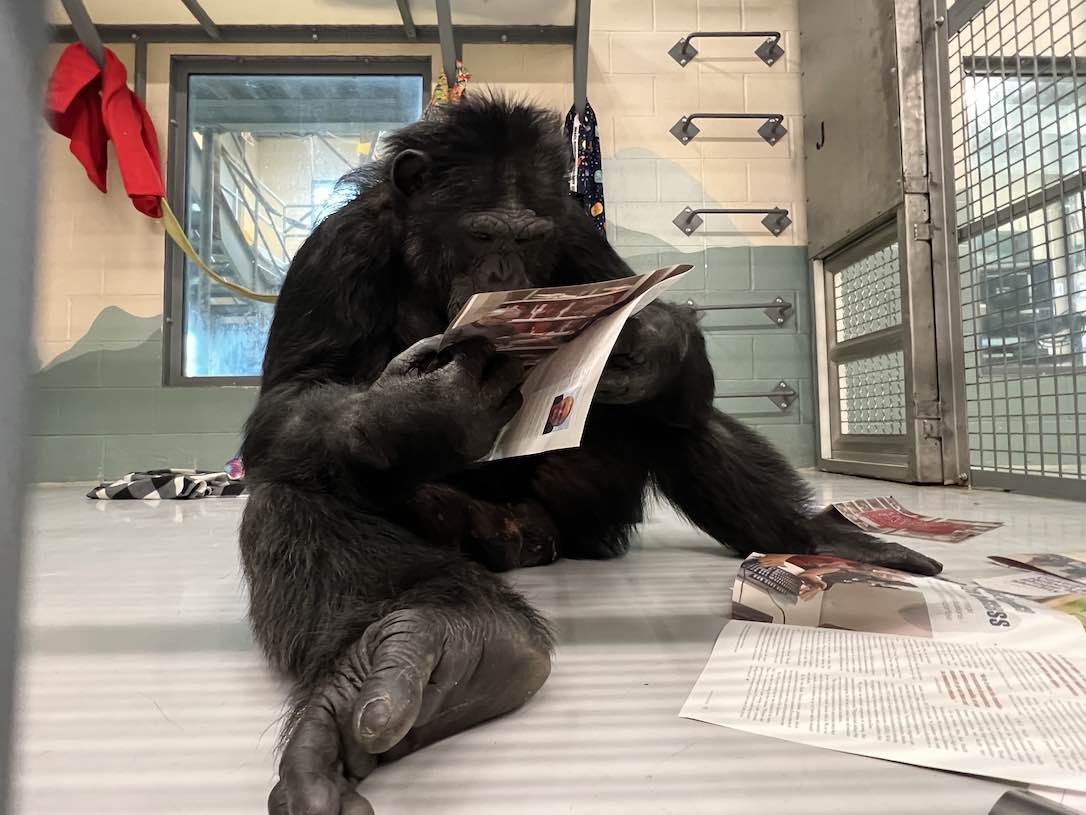
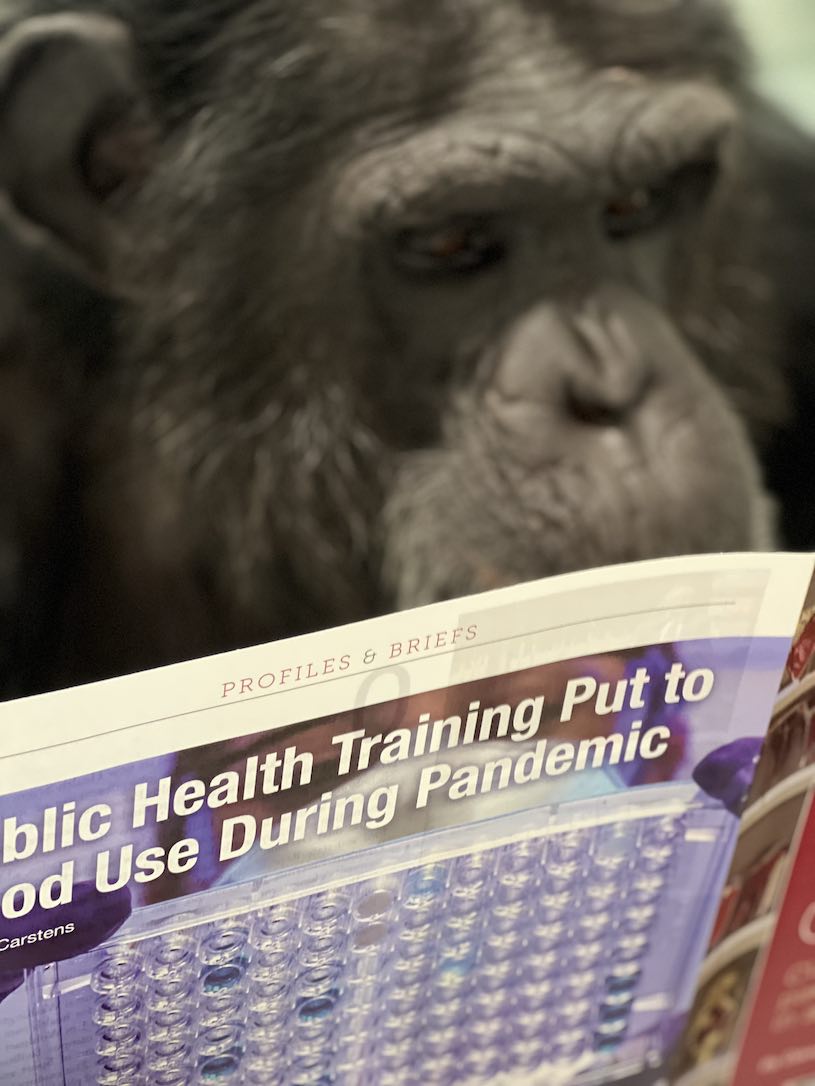
Cy catching up on his reading during National Read a Book Day!

Honey B enjoying lunch in the Oakwood Greenhouse!

Filed Under: Annie, Construction, Honey B, Missy, Sanctuary, Terry, Young's Hill Tagged With: chimpanzee, chimpanzee retirement, chimpanzee sanctuary, Chimpanzee Sanctuary Northwest, chimpanzees, northwest, Sanctuary, young's hill

“Are the chimps trained?”

September 5, 2022 by Anthony

When I tell people that I work at a chimpanzee sanctuary, they usually respond with one of the following frequently-asked questions: Do you get to touch the chimps? Do they go outside? Can people visit the sanctuary?

Today’s blog post responds to another common question with a complex answer: Are the chimps trained?

If this question refers to the awful practice of coercing captive primates to perform tasks for our entertainment, then the answer is a plain and emphatic “no.” (“We don’t do that here.”)

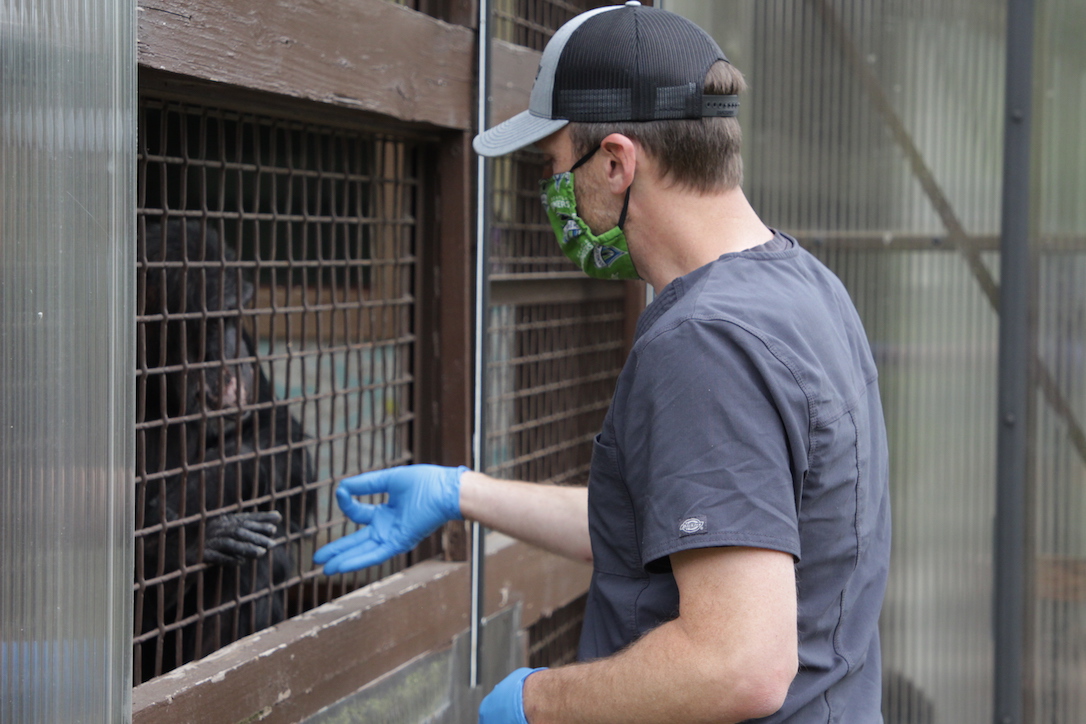
When defined more broadly though, behavioral training can be an important practice for improving and maintaining excellent animal welfare. For example, chimpanzees can be taught to voluntarily cooperate in their own veterinary care, greatly reducing the stress and risk associated with medical procedures. Training can also be a powerful tool for improving human-chimpanzee relationships, desensitizing chimps to unfamiliar environmental changes, and providing the chimps with additional cognitive, social and sensory enrichment.

CSNW, like many institutions that care for chimpanzees, has adapted a behavioral training program to improve the lives of the residents. Our past training initiatives have helped us administer medical care and monitor chimpanzee wellness over the years. We are now revamping this framework to utilize a larger staff, accommodate an additional group of chimps, and target loftier goals. Last year, we invited Margaret Whittaker of Creative Animal Behavior Solutions to review training methodology and help us optimize our plans for the future. One key takeaway has been that progress requires a shared understanding of the underlying theory and familiarity with common techniques. We caregivers should understand what training is, value training as an important component of care, and know how to train efficiently and responsibly.

Essentially, training is the process of behavior modification through learning. We often call training between humans “teaching” and training with non-humans “conditioning,” but they’re basically synonymous. Our preferred type of training, operant conditioning, allows the chimps to voluntarily participate and choose which behaviors to present. The chimpanzees are free to come and go at their own leisure, and we never punish them for choosing not to participate. Indeed, certain individuals often decline our invitation because they have better things to do, and that’s okay. In operant conditioning, they’re the operators.

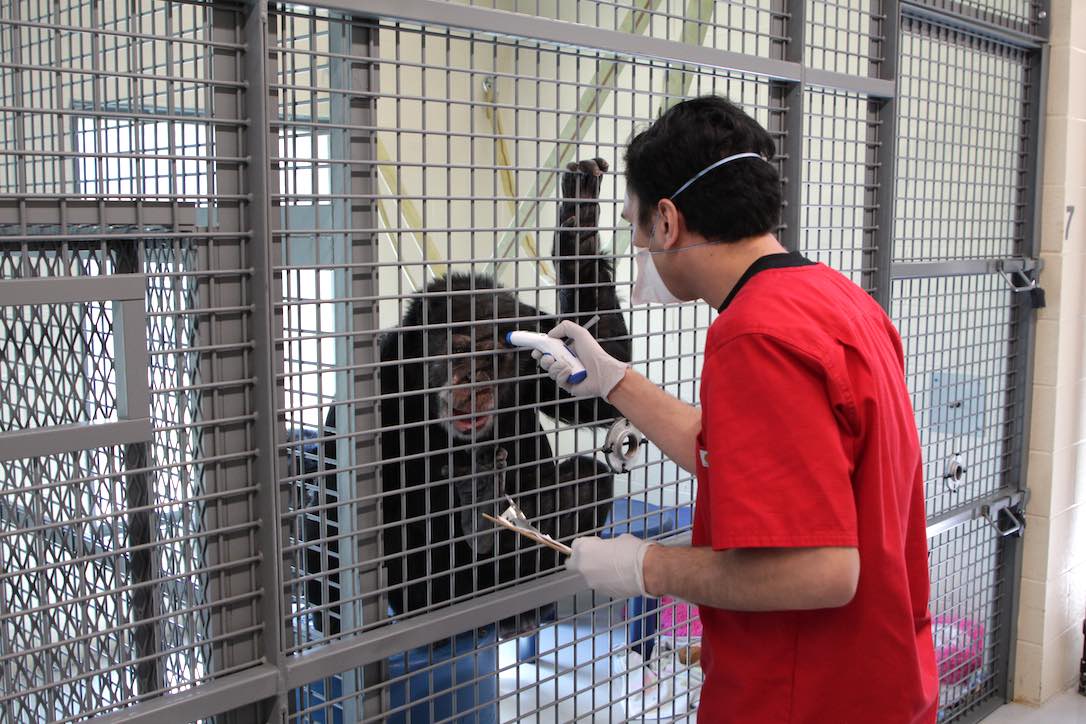
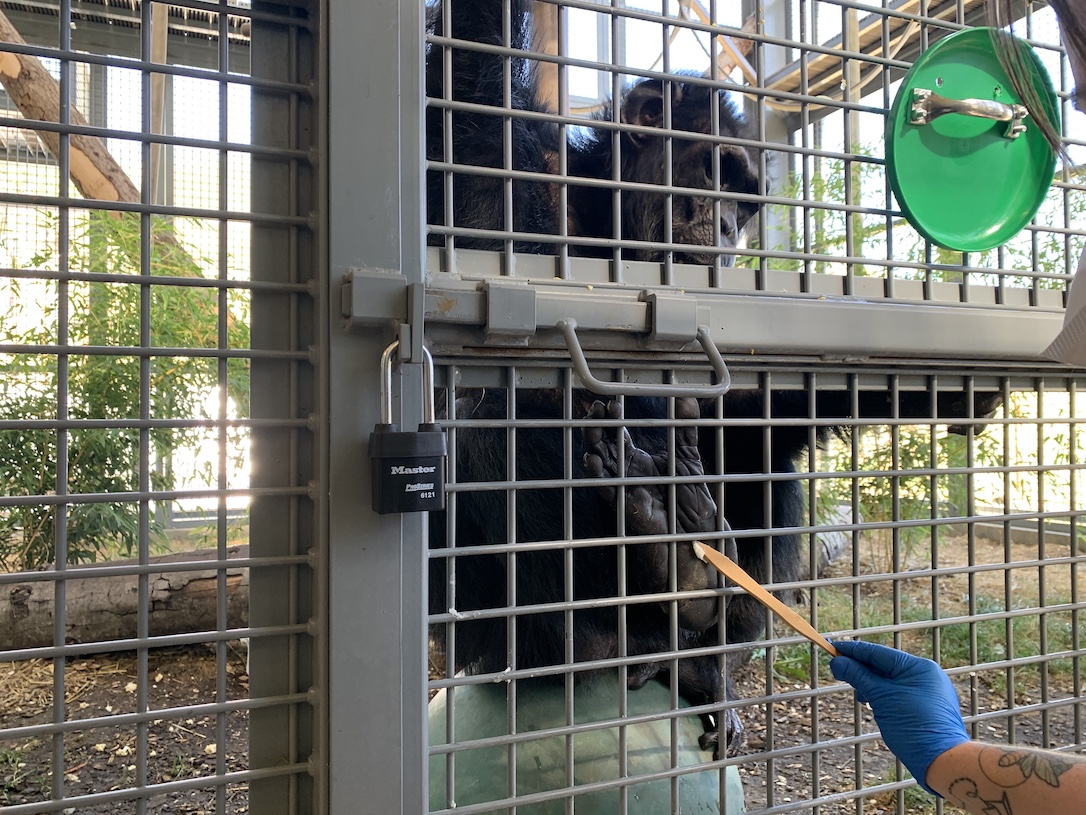
Although the semantics are complicated, the activity of operant conditioning is actually quite simple. First, the trainer uses both a verbal and gestural cue to communicate that a desired behavior will be rewarded in the subsequent window. (You can see an example of J.B. asking Burrito to present his right foot below.) Then, the trainer uses an audible “bridge” to mark the correct behavior and indicate that a treat is on the way. This edible reward is a form of motivation via positive reinforcement. In training jargon, “positive” refers to the addition of a stimulus and “reinforcement” refers to the increase in a desired behavior.

In short, we give rewards when the chimps choose to do desirable behaviors.

You may be wondering why we choose to modify chimpanzee behavior through training. After all, the chimps are wild creatures and we should respect their freedom to choose their own behavior. Even so, captivity is an unfortunate and complicated circumstance, unfairly chosen for them long ago, and purposeful training has the potential to make this environment more comfortable for them. Of course, we caregivers carry the responsibility to only focus our efforts on behaviors that benefit the chimps and use the least intrusive, minimally aversive methods for each.

Some examples of behaviors we train and rehearse are:

Eating cooperatively and/or at stations (allowing subordinate group members to receive food)

Presenting various body parts for injury treatment and monitoring

Receiving injections for vaccinations and sedation/immobilization

Shifting between enclosures to enable cleaning and to facilitate social integrations

Sitting on a bench scale to monitor weight and body condition

In the future, we will also prioritize desensitizing the chimps to uncomfortable but necessary medical procedures, including heart and lung auscultation, radiographs, EKGs and ultrasounds. These approaches usually require that we isolate, immobilize and anesthetize chimpanzees; winning their voluntarily participation is a safer and less stressful alternative for all involved!

I hope to share more content related to behavioral training (including visual demonstrations of our progress) in the near future!

Filed Under: Caregivers, Chimpanzee Behavior, Intelligence, Sanctuary, Training Tagged With: Animal Welfare, behavior, chimpanzee, chimps, Primates, Sanctuary, training

  • « Go to Previous Page
  • Page 1
  • Interim pages omitted …
  • Page 32
  • Page 33
  • Page 34
  • Page 35
  • Page 36
  • Interim pages omitted …
  • Page 532
  • Go to Next Page »

Primary Sidebar

Subscribe To the Blog and Get Notified of New Posts First!

Archives

Calendar of Blog Posts

June 2026
S M T W T F S
 123456
78910111213
14151617181920
21222324252627
282930  
« May    

Categories

SUBSCRIBE TO OUR NEWSLETTER

Footer

PO Box 952
Cle Elum, WA 98922
[email protected]
509-699-0728
501c3 registered charity
EIN: 68-0552915

Official DDAF Grantee

Menu

  • The Chimpanzees
  • Blog
  • About Us
  • You can help
  • Resources
  • Contact
  • Donate

Proud Member of

Connect With Us

Search

Copyright © 2026 Chimpanzee Sanctuary Northwest. All Rights Reserved. Site by Vegan Web Design