• Skip to main content
  • Skip to primary sidebar
  • Skip to footer

Chimpanzee Sanctuary Northwest

Hope. Love. Home. Sanctuary

  • Our Family
    • The Chimpanzees
    • The Cattle
  • Blog
  • About Us
    • Visiting the Sanctuary
    • Philosophy
      • FAQs
      • Mission, Vision & Goals
      • Privacy Policy
    • The Humans
      • Staff
      • Board of Directors
      • Founder
    • Annual Reports
    • The Future of CSNW
    • CSNW In The News
  • You can help
    • Donate
      • Become a Chimpanzee Pal
      • Sponsor A Day
      • Transfer Stock
      • Be A Produce Patron
      • Be a Bovine Buddy
      • Give from your IRA
      • Personalized Stones
      • Bring Them Home Campaign
    • Leave A Legacy
    • Employment Opportunities
    • Volunteer
    • See Our Wish List
    • Events
  • Resources
    • About Chimpanzees
    • Enrichment Database
    • Advocacy
      • Advocacy Action Center
      • Apes in Entertainment
        • Trainers
        • Role of the AHA
        • Greeting Cards
      • Chimpanzees as Pets
      • Roadside Zoos
      • Chimpanzees in Biomedical Research
      • Conservation
        • African Apes
        • Orangutans
  • Shop
    • Merchandise Store
  • Contact
  • DONATE NOW

J.B.

Honey B Update and a February Day on the Bray Video

February 5, 2024 by J.B.

Watch the video above to see Cy’s group enjoy another mild February day—a welcome change from January’s relentless cold and snow. Just don’t tell Gordo that I shared that clip of him.

And a quick update on Honey B:

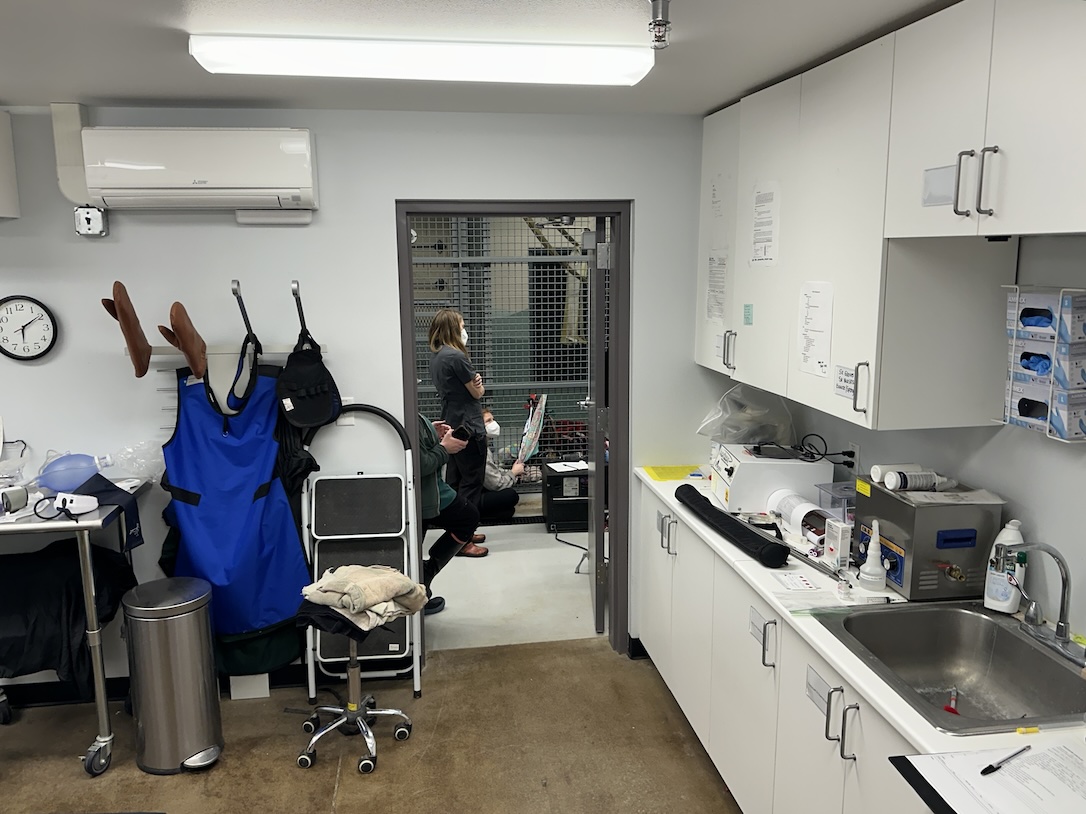
As you may know, Honey B sustained a laceration to her lower right eyelid a couple of weeks ago and Dr. Erin leapt into action to perform an emergency repair that same day. After monitoring the healing process, Dr. Erin thought that it would be in Honey B’s long term best interest to have a surgeon perform a revision to the eyelid to ensure that both the lid and tear duct would continue to function correctly. As she always does, Dr. Erin assembled a great team to not only perform the surgery but also to conduct as much diagnostic evaluation and preventative treatment as possible while Honey B was under anesthesia to reduce the need for further procedures down the road.

We were grateful to have Leah Bezzo, CRNA return to the sanctuary to perform anesthesia along with her colleague Christine Zielke, CRNA. Tyler Sugerman, DVM, another veteran CSNW volunteer, performed an abdominal ultrasound using our new machine. On the other side of the table, Jerry Woodfield, DVM DACVIM (Cardiology), performed an echocardiogram. And after the initial tests were conducted, Karen Brantman-Crosetto, DVM DACVO performed the surgery.

Here’s the good news: Honey B is overall quite healthy and Dr. Brantman-Crosetto did a wonderful job on the eyelid. Honey B will, unfortunately, need some additional time apart from her group while the revision heals but we are optimistic that she’ll be back with her friends soon. And in the meantime she will sit with her chimp friends at the window, spend tons of quality time with her human ones, and receive extra enrichment from Chad, Ellen, and the rest of the team.

As she often does, Dr. Erin served as both orchestra conductor and player, sneaking in joint and dental exams, x-rays, and other tests as her assembled team proceeded through their evaluations. Did you know that the CSNW caregivers also take turns serving as Procedure Manager? This role, filled on this occasion by Kelsi, ensures that the medical team follows a schedule developed in advance by Dr. Erin, keeps notes and records throughout the procedure, makes sure each task is completed, and finds that thing that no one else in the clinic can seem to find when they need it.

Many thanks again to this incredible group of volunteer medical professionals! And keep your fingers crossed that Honey B leaves Dr. Brantman-Crosetto’s beautiful handiwork alone.
Filed Under: Honey B, Sanctuary, The Bray, Veterinary Care Tagged With: chimpanzee, Honey B, northwest, rescue, Sanctuary, surgery, veterinary

Your Questions Answered

January 22, 2024 by J.B.

After posting about Honey B’s trip recent trip to the clinic, many of you on the blog and social media had great questions. I thought we could take this opportunity to answer a few in greater detail here.

How do you isolate a chimp that needs treatment in the veterinary clinic?

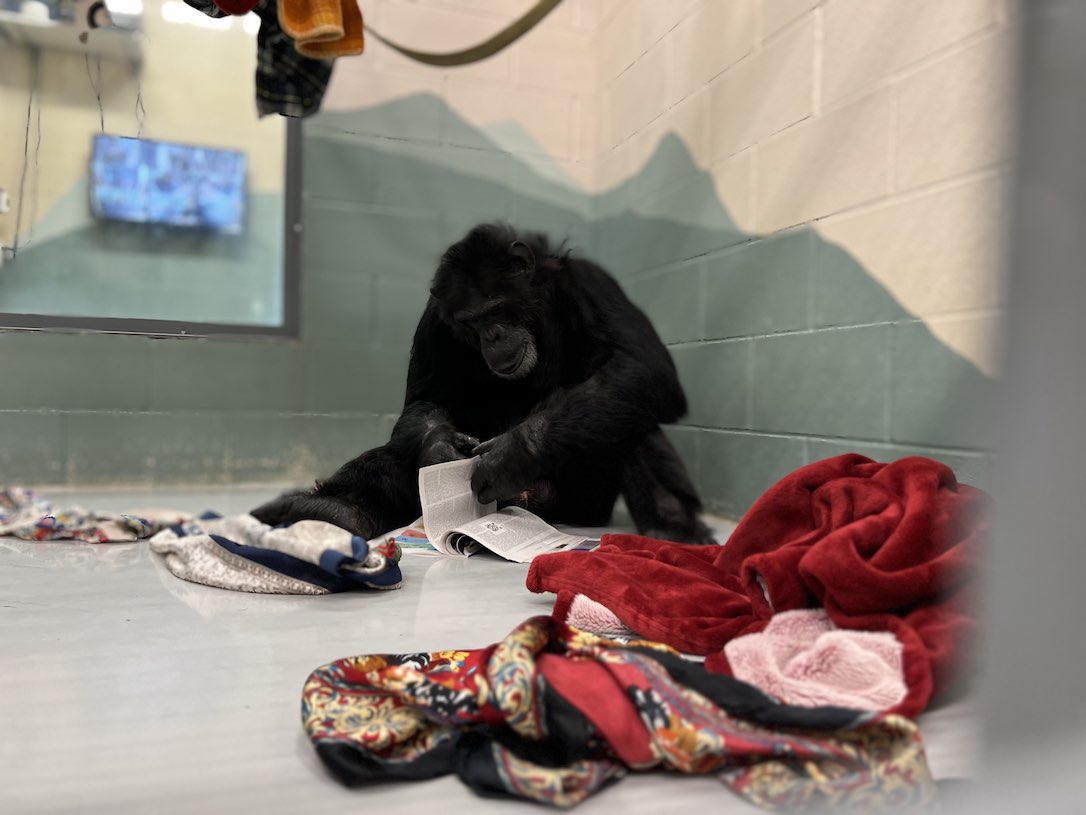
The first step in bringing a chimp into the veterinary clinic for treatment is to isolate them. Each wing of the building contains a series of smaller rooms, which we refer to as “front rooms” due to their proximity to the human areas of the building. The front rooms may not look like the most desirable places for a chimp to spend their time but they are open to the chimps on a regular basis just like the playrooms and greenhouses and are actually quite popular spots for sleeping, monitoring the humans’ activity, watching television, or simply finding a quiet spot away from the rest of the group. They are generally smaller (most are approximately 8’W x 8’L x 10’H) and they have surfaces meant for easy cleaning and disinfection, as opposed to, say, the grass, mulch, and bamboo found in the greenhouses. One front room in each wing lacks the benches, ladders, food chutes, and other more permanent “furniture” found in the others, and these are the rooms where we isolate the chimps for anesthesia. The lack of furniture limits the potential for a chimp to fall as they succumb to the anesthetic, as some chimps may be inclined to climb up and perch if they are feeling sick or scared.

Cy likes to read magazines in the medical room (Front Room 7):

If a treatment or exam is planned in advance, we typically try to get the patient into one of these medical rooms the night before. This is done for two reasons: 1) so that we can begin early the next day, and 2) so that we can restrict their food and water intake. In the new wing, for example, each “lixit,” or water fountain, has its own shutoff so we can turn just their water off a couple hours before the procedure. Of course, some procedures are conducted on an emergency basis and we have no choice but to forego fasting.

Getting the patient into the medical room—and getting the others out!—is the part of the process that strikes fear into the hearts of caregivers everywhere, especially when outside professionals are coming to assist with the procedure (No pressure but the cardiologist will be here promptly at 7am and the dental surgeon has to get back to their practice by 10!). Though it can be a challenge, the staff have always been successful (eventually). It just takes a little patience and a lot of bribery. Honestly, sometimes the cattle are more difficult to sort than the chimps.

Ideally, we end up with the patient in the medical room with the other front rooms empty so that there is no peanut gallery to cause interference and we can safely enter adjoining rooms if necessary. We have found that, contrary to what one might think, there is no reason to restrict the rest of the group from seeing what is happening and in fact letting them observe from afar seems to help ease their concerns. Thus, they can often watch from a nearby window.

How do you get a chimp into the veterinary clinic?

Once the chimps are in the clinic they are usually maintained on a gas anesthetic, but they have to be immobilized before we can safely take them out of the front rooms in the first place. For this we use an injectable anesthetic. And there’s just no getting around it—this part usually stinks.

We often begin with an oral sedative or anesthetic to help reduce their fear and anxiety, and follow this sometime later with an injectable to fully anesthetize them. Many of the chimps have been trained, or in some cases maybe even learned on their own, to cooperate with the injection. Right off the bat this takes 90% of the stress out of the process. For the chimps that do cooperate, our Positive Reinforcement Team works to maintain that cooperation through routine practice with blunt or small-gauge needles—getting the chimps to present an arm or leg against the caging, poking them, and then rewarding them for their participation. For those who don’t, the team meets them wherever they are and works to increase their tolerance without provoking fear or anxiety. Will every chimp that spent decades in a lab getting poked and prodded against their will learn to cooperate? It’s theoretically possible but logistically improbable. Still, it’s a worthwhile goal.

When a chimp doesn’t present for the injection-by-hand, we have to fall back on other methods such as a pole syringe or the dart gun. Ideally, they have enough oral sedative or anesthetic on board that the trauma of the injection is short-lived and quickly forgotten.

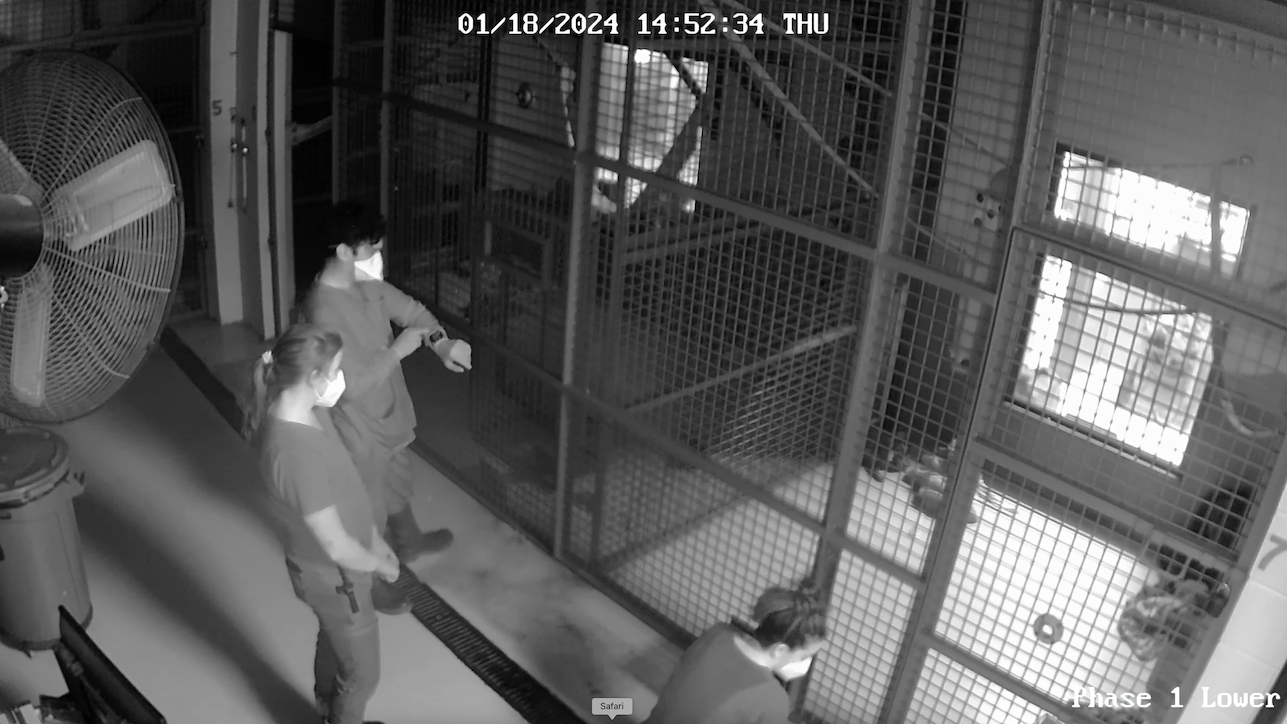
Once they’ve been given the injection, we turn the lights down, remain quiet, and monitor them. If we got the full dose in, they are out within 10-15 minutes but sometimes they need to be “bumped up” before we enter the room. We have a number of tests to evaluate their plane of anesthesia so they we don’t get surprised by a seemingly immobilized chimp suddenly jumping off the cot on the way out the door. The staff lift the chimp into the stretcher, roll them onto a scale to quickly check their weight against the last measurement we had on them from the bench scales inside their enclosures, and then it’s off to the clinic, where a team is waiting to start the IV and gas anesthesia.

The staff monitor Honey B with the lights dimmed after her anesthetic induction:

What happens when the procedure is over?

As the procedure is nearing its end, the chimps are taken off the gas anesthetic, which will continue to have an effect, and wheeled back to their room, which in the meantime has been cleaned and set up with piles of blankets for comfort and space heater just outside the caging for extra warmth. Depending on which type of anesthetics they were given and how much, it can take them anywhere from minutes to hours to begin to sit up. During this time we pay close attention to their vitals and their airway since anesthesia continues to present serious risks until they are fully recovered. If the chimp only underwent an exam, they could theoretically rejoin their group as soon as that same evening, provided it is clear they could safely run and climb around the enclosures should the group get a little rowdy. But typically they will get a good night’s sleep and rejoin the group the next day. If the recovery is slow or the chimp underwent a major procedure, staff will either sleep at the chimp house or come up to check on the patient throughout the night, with many photos and status updates shared amongst the staff for peace of mind.

The staff monitor Honey B as she lays in a bed of blankets in the medical room just outside the clinic:

Are you interested in learning more about the veterinary care provided at Chimpanzee Sanctuary Northwest? Check out some of our veterinary blog archives.

Still have questions? Ask away and we’ll do our best to answer in the comments below.

Filed Under: Veterinary Care Tagged With: anesthesia, chimpanzee, health, northwest, rescue, Sanctuary, vet care, veterinary

Welcome Home, Meredith!

January 15, 2024 by J.B.

Last week, we caught a break in the weather and were able to bring Meredith safely back home from WSU. While she has to remain confined to a pen in the barn for a short while during her recovery, she and her herd mates are happy to be together again. Notice in the video that you can see the exact moment when Honey realizes that Meredith is back…Mom sure missed her daughter.

Despite this, Meredith may actually wish she had stayed an extra week at the hospital, as yesterday we woke up to a temperature of -12.5F, which is the coldest I can remember in my nearly 16 years here at CSNW. Despite the extreme cold, the chimps and cattle are all doing well, and we’ve only had to deal with a few equipment freeze-ups so far. As a cold-climate sanctuary, we’re pretty well prepared for winter weather but these extremes certainly put all of our preparation to the test. In a couple days, we’ll climb out of these arctic temperatures and get to enjoy a regular old snow storm.

Filed Under: Cattle, Meredith Tagged With: cattle, chimpanzee, emotions, friendship, Meredith, northwest rescue, Sanctuary, veterinary, WSU

Caring for Meredith

January 8, 2024 by J.B.

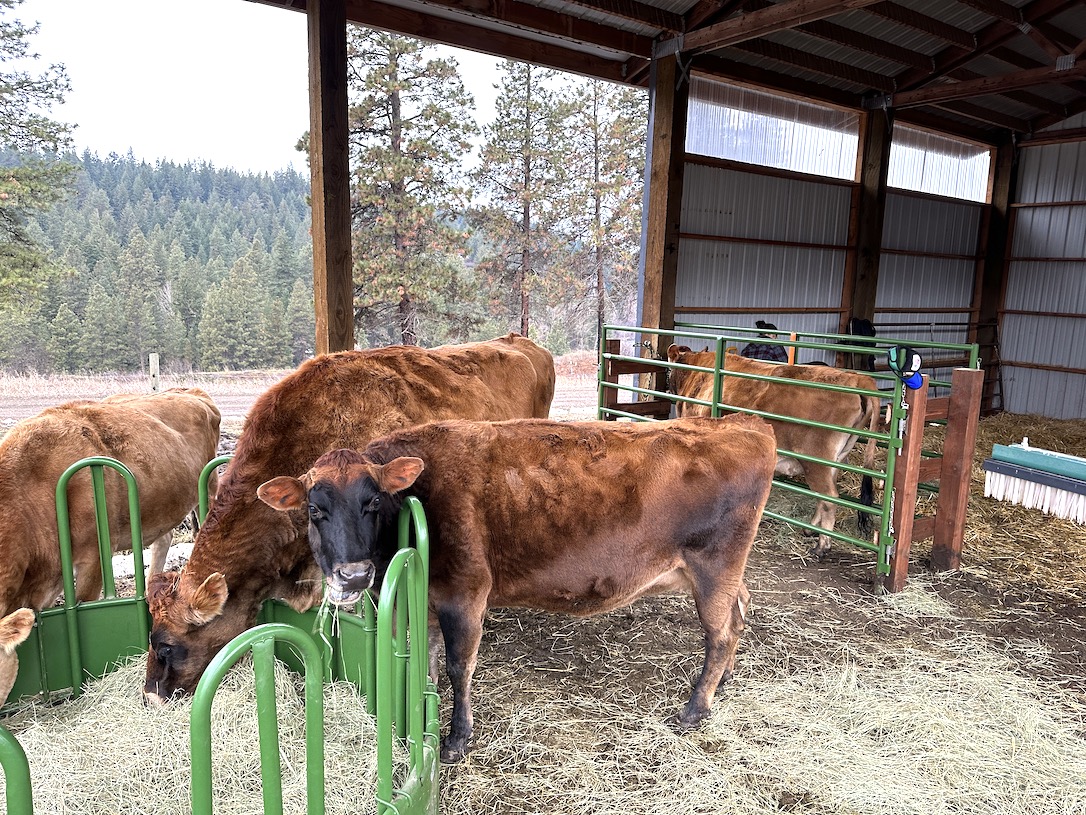
Meredith has always been a bit different from her herd mates — standing up when the others are lying down, facing east when the others are facing west, and so on — but this past summer we noticed that something other than her independent streak was causing her to lag behind her herd as they moved between pastures. By fall, a change in her gait became noticeable. Dr. Erin performed several evaluations, and Meredith even took a trip to the large animal hospital at Washington State University (WSU), but the veterinary team was unable to hone in on a specific diagnosis. Pain management and other therapeutics seemed to help, but not enough.

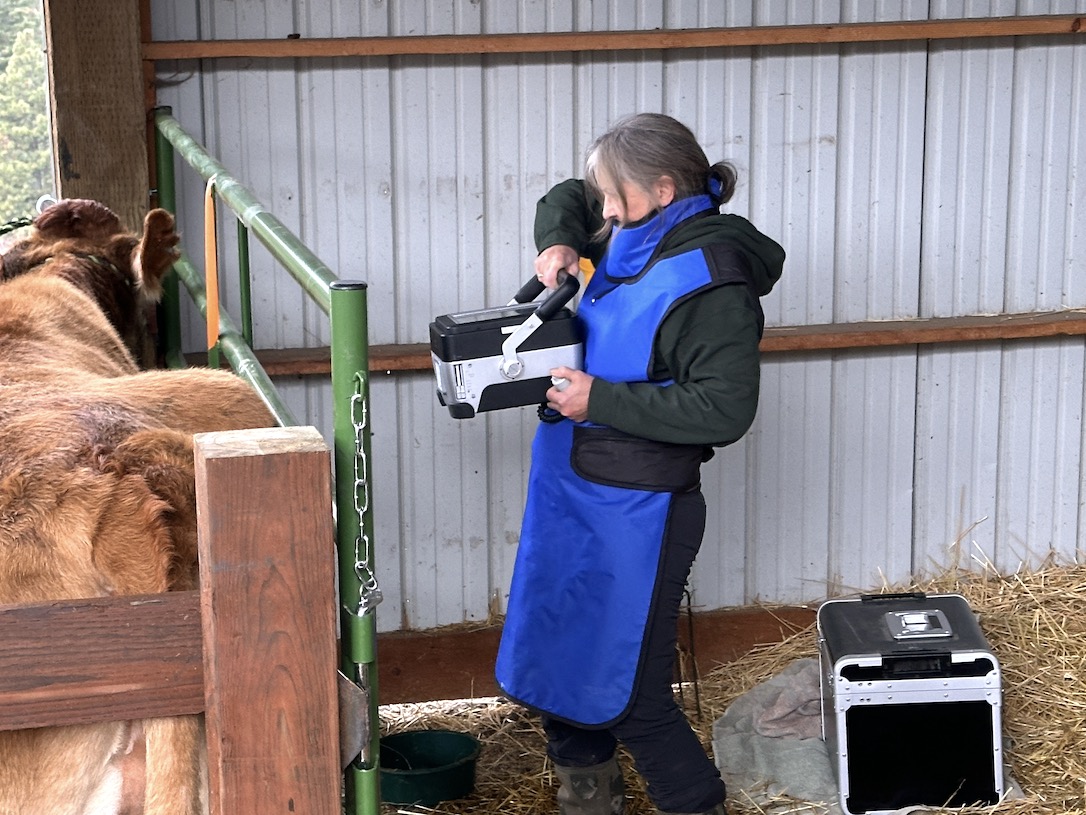
During her most recent exam at the sanctuary, however, Dr. Erin found radiographic evidence of osteoarthritis in Meredith’s front right foot, which meant that we had an explanation for her discomfort and, potentially, something we could treat with greater focus. Dr. Erin consulted with several large animal veterinarians and Meredith was booked for another appointment at WSU.

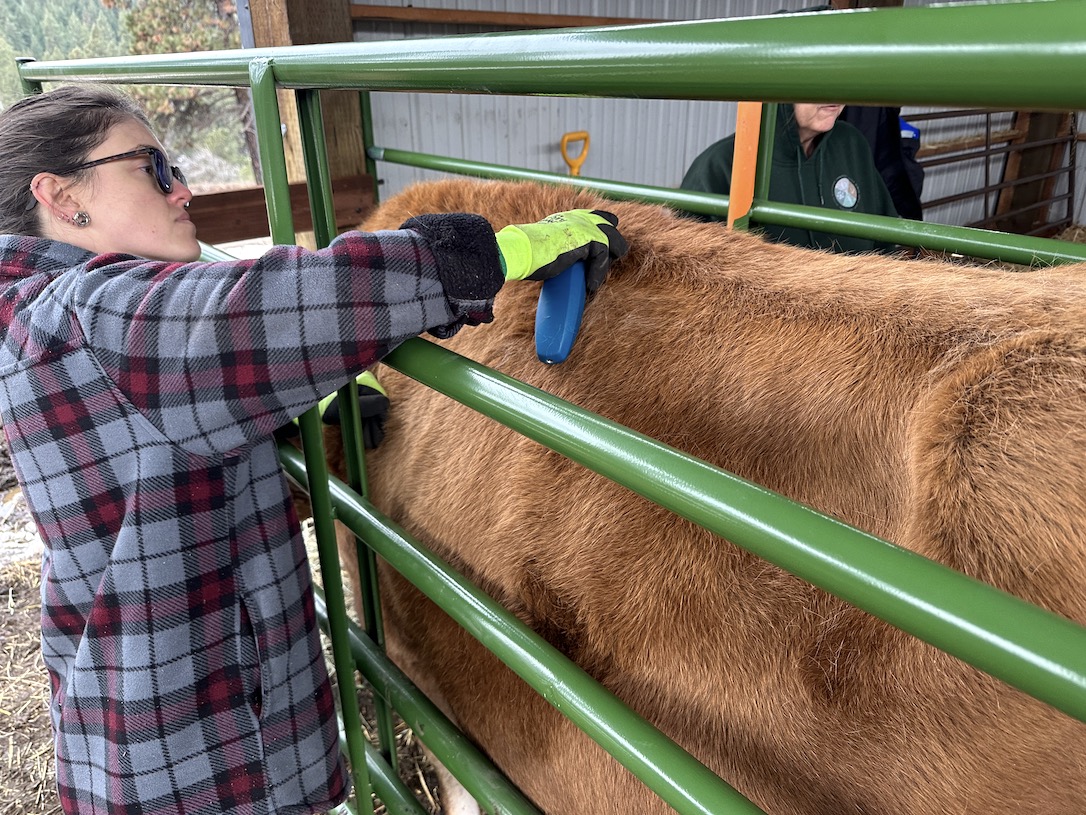
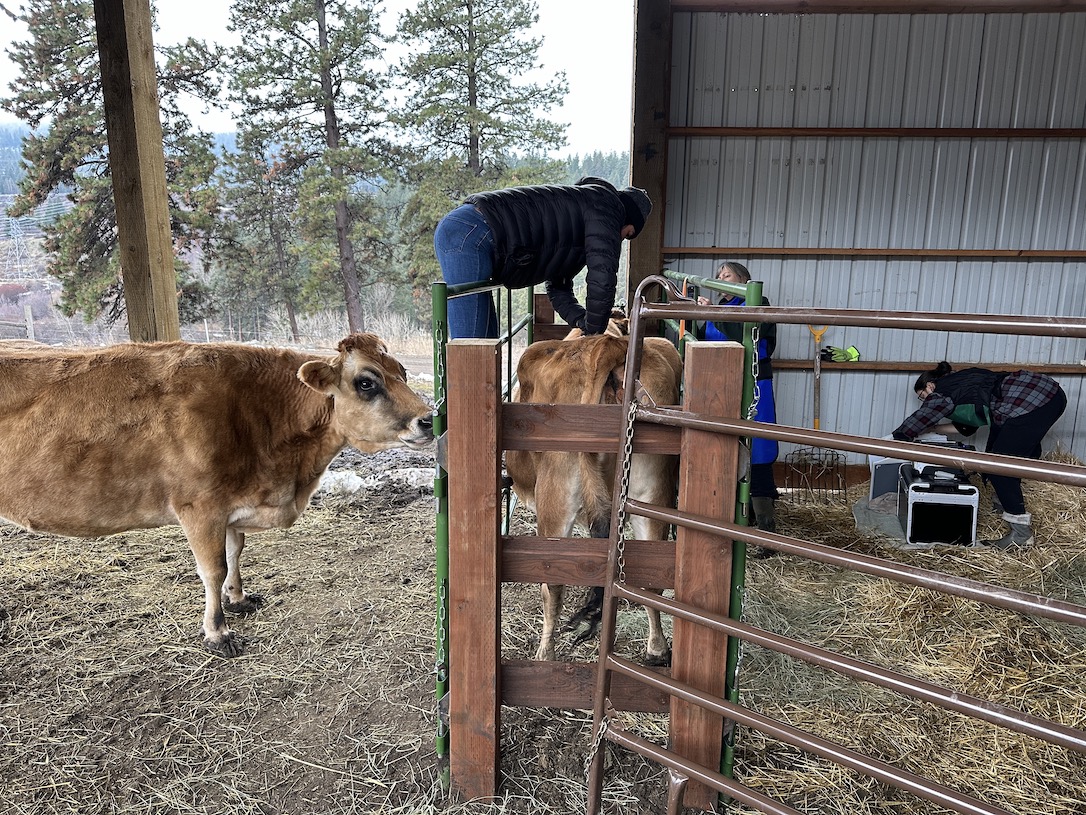
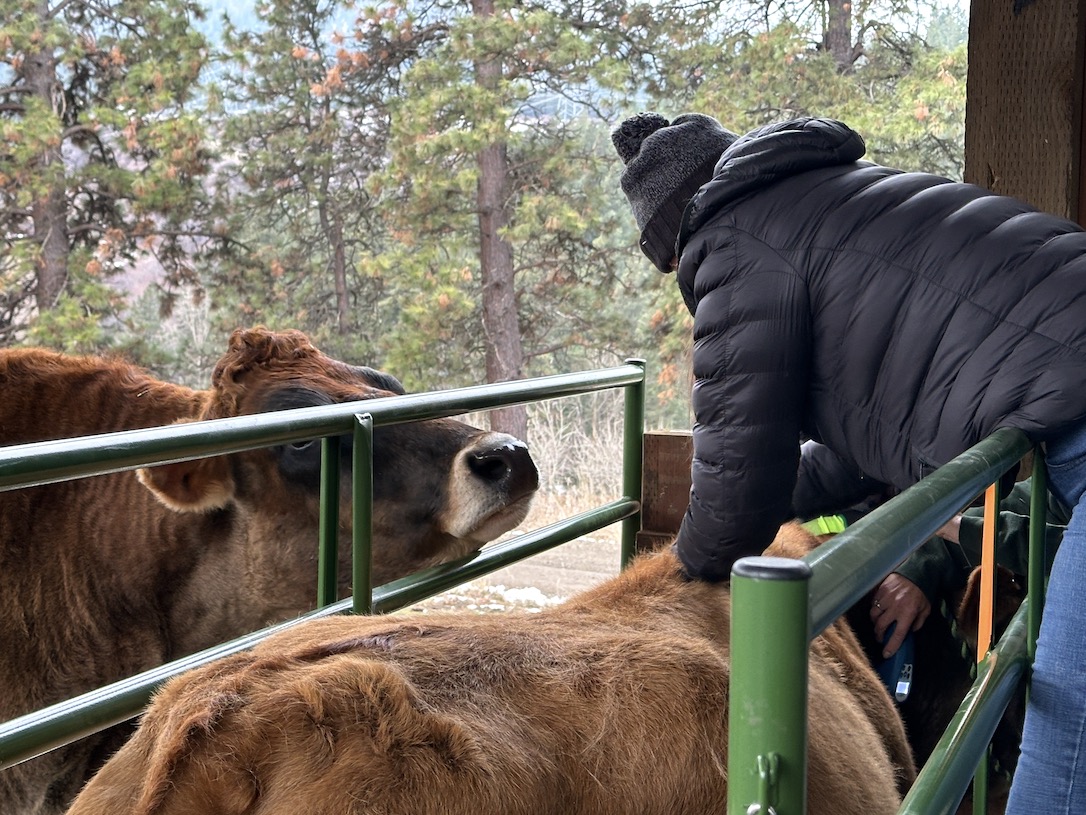
Meredith, in the chute, undergoing a recent exam:

Dr. Erin obtaining radiographs of the feet and spine:

Amanda treating Meredith with laser therapy:

Another Dr. Erin (Erin Thorlakson, Family and Animal Chiropractor), evaluating Meredith, with Honey observing:

Nutmeg, Assistant to the Regional Chiropractor:

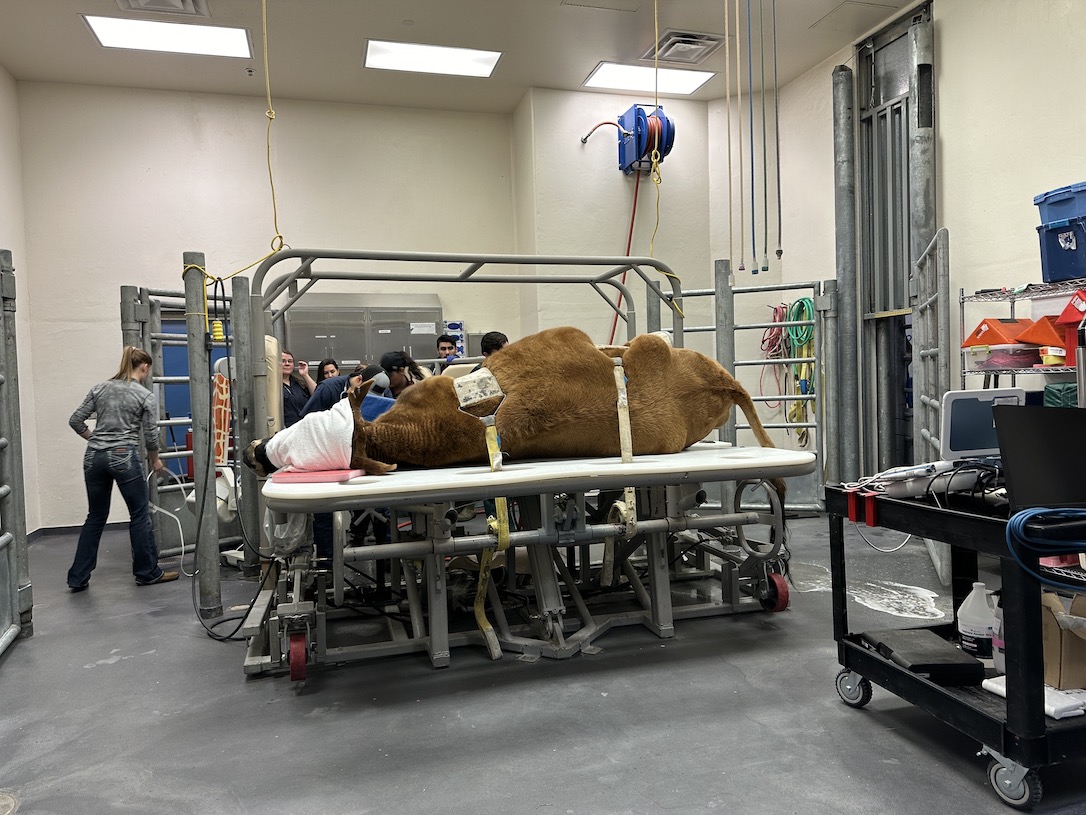
The treatment, known as facilitated ankylosis, would involve fusing the affected joints and would be performed by the veterinary staff at WSU. With everything arranged, we drove Meredith across the state again and the procedure was performed this past Tuesday.

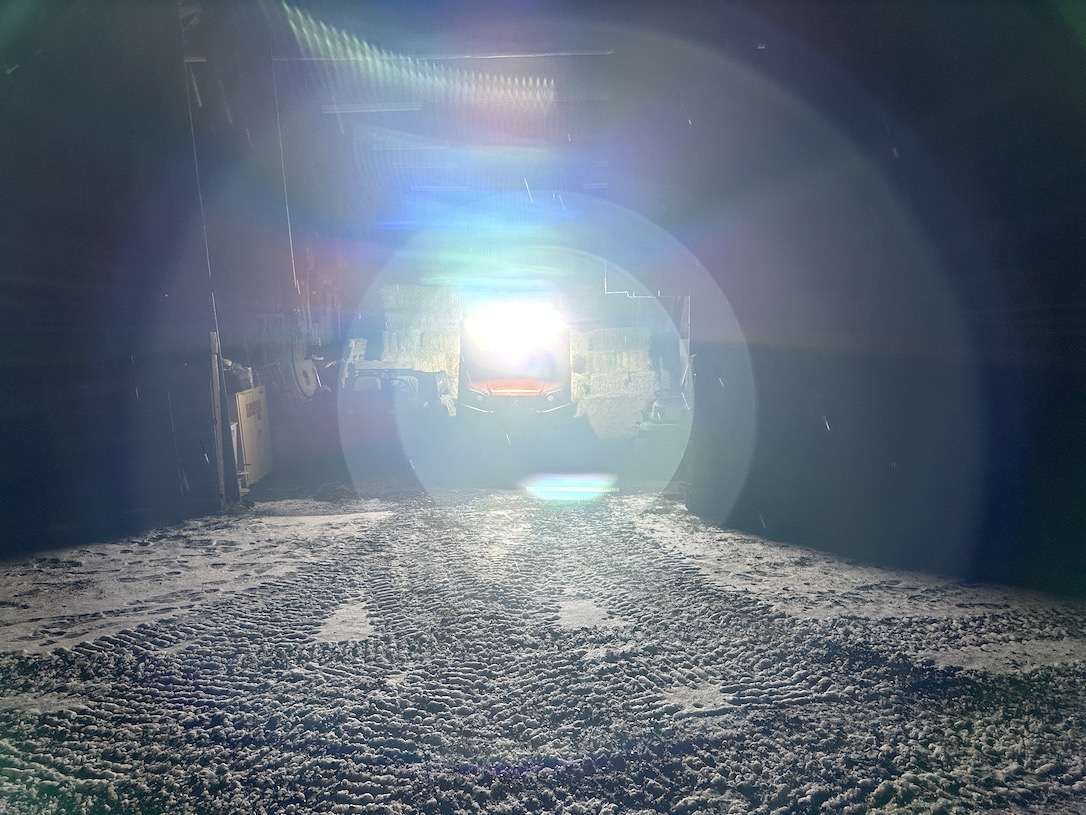
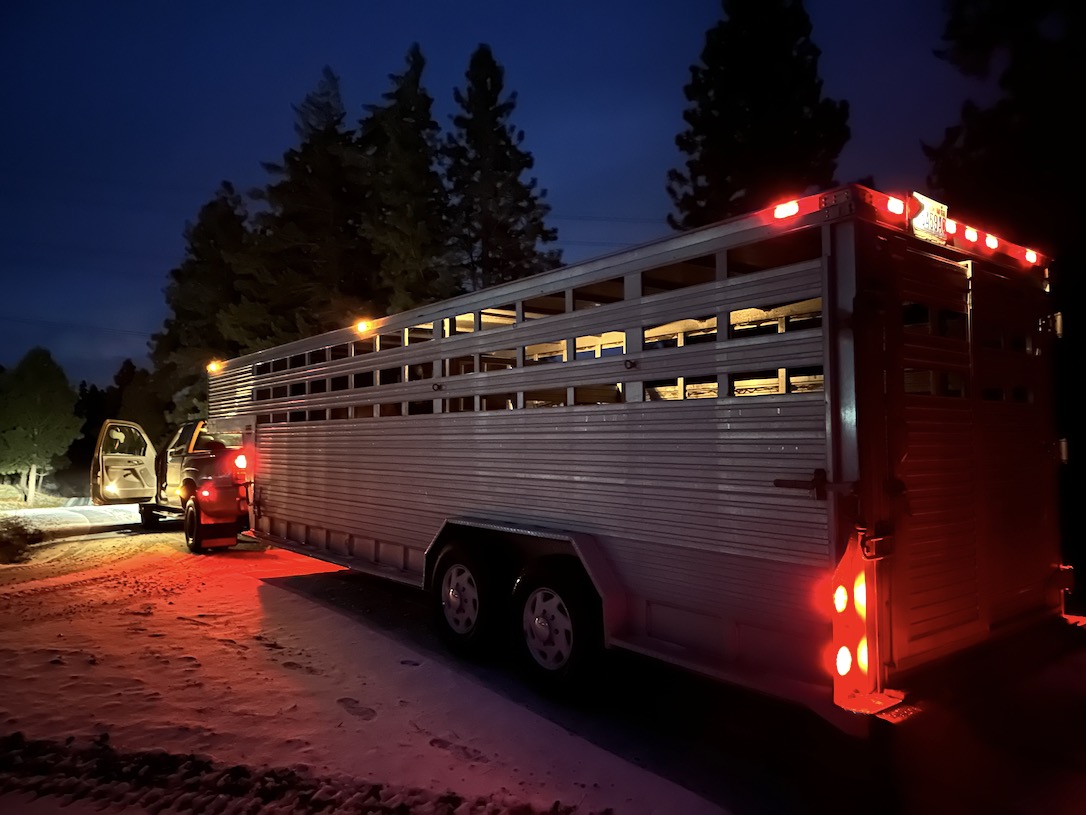
Getting a cow to an appointment 3 1/2 hours away requires starting early, bribing the herd with hay and grain to sort them, and praying to the cow gods that Meredith will load into the trailer without problems:

One last safety check before we depart on our road trip:

Meredith on the exam/treatment table at WSU, surrounded by faculty veterinarians, residents, and vet students:

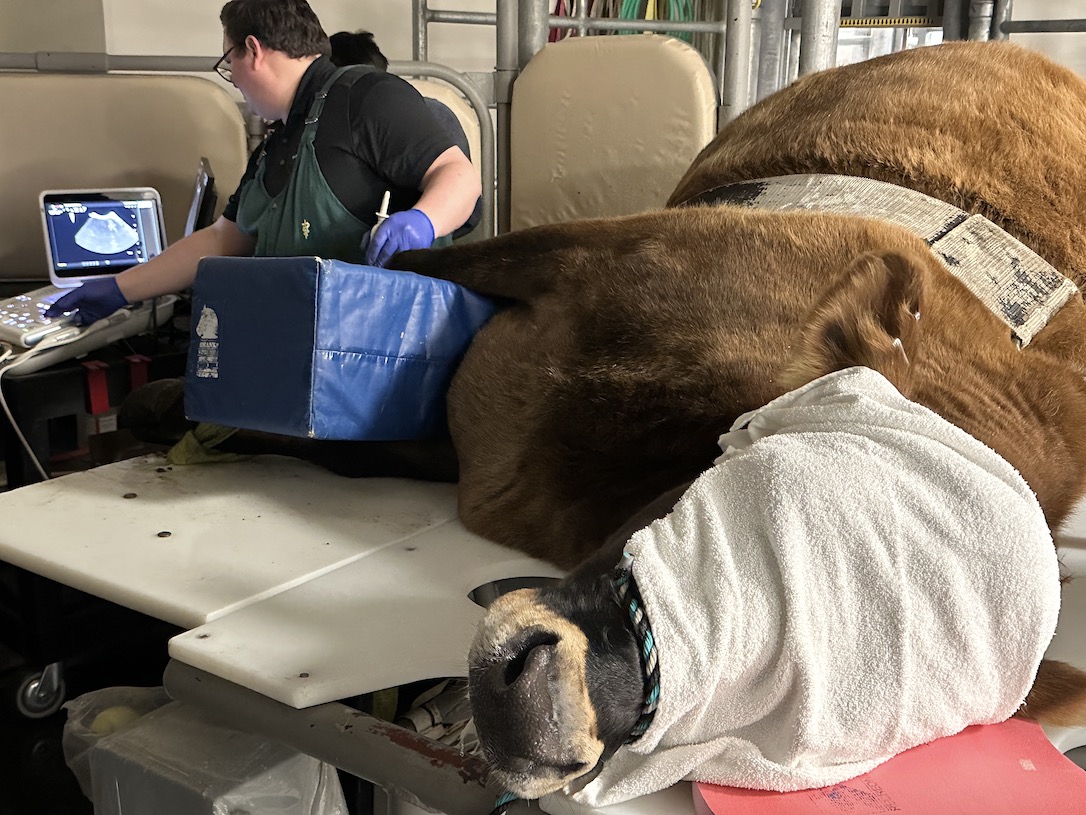
Dr. Oliverez performing an ultrasound on Meredith’s foot:

Right now we are making preparations so that Meredith can be on restricted activity for a while within her own cozy section of the barn. Weather permitting, we hope to pick her up on Wednesday and reunite her with her family. It will take some time before we can determine if or how well the procedure has worked, and she will likely have to make repeated trips to see her friends at WSU for follow-ups on this treatment and possibly treatments on other feet, but we are hopeful that she will be able to graze the upper pastures with her herd this spring.

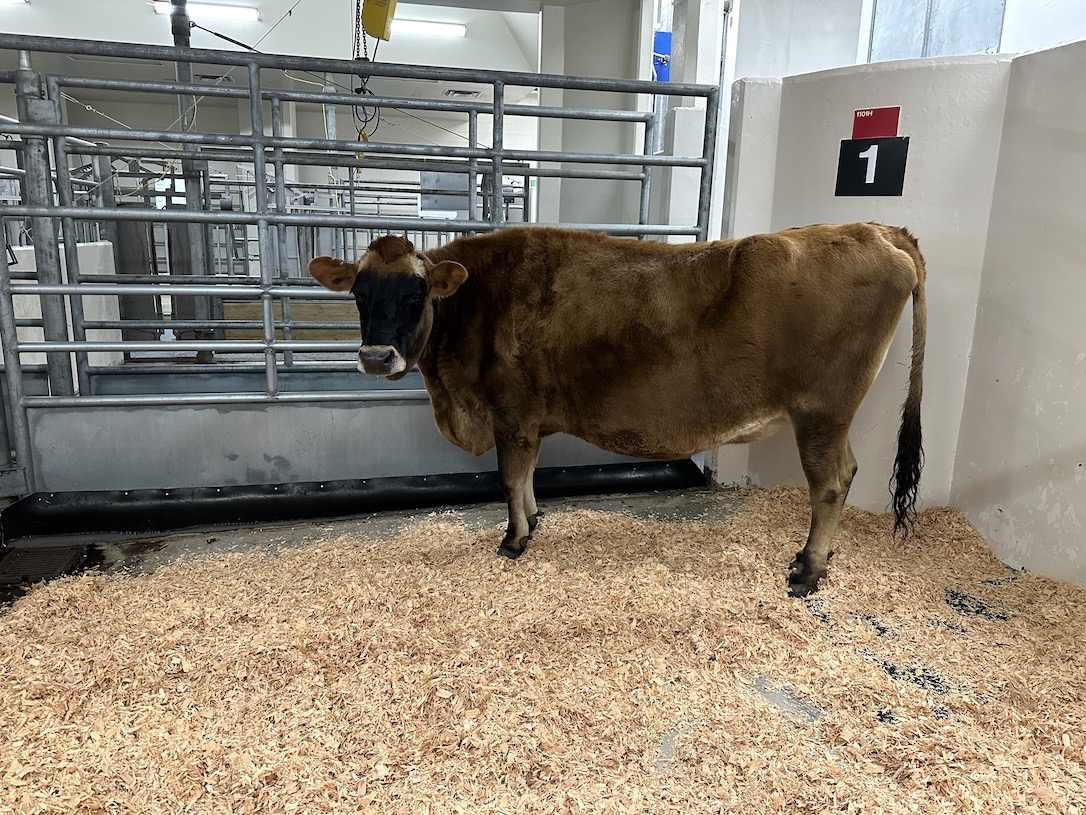
Meredith’s home-away-from-home at WSU while she receives her treatment:

By the way, some of you may know that we’ve been hoping to acquire a more powerful portable ultrasound machine for many years now. Thanks to a a whole team of people, including a wonderful family in Montana, our favorite veterinary cardiologist Dr. Nelson, and supporters Brad and Becky (who generously donated the funds!), we were able to purchase a very lightly used machine from an estate at an amazing price.

Don’t forget to vote in the photo contest – it ends tonight, January 8th at 6:00pm Pacific!


Filed Under: Cattle, Meredith, Sanctuary, Veterinary Care Tagged With: ankylosis, arthritis, cattle, chimpanzee, chiropractor, cow, Meredith, northwest, rescue, Sanctuary, veterinary

Christmas 2023

December 25, 2023 by J.B.

Our thanks, as always, to the dedicated volunteers who give up their own Christmas mornings to provide one for the chimps and to the staff that gladly work for an organization that never takes a holiday.

And Merry Christmas to all of our wonderful supporters! May you sleep soundly tonight atop your own mountain of gifts 🙂

Filed Under: Party Tagged With: chimpanzee, christmas, Enrichment, Food, gifts, northwest, Party, rescue, Sanctuary

My Favorite Subject

December 11, 2023 by J.B.

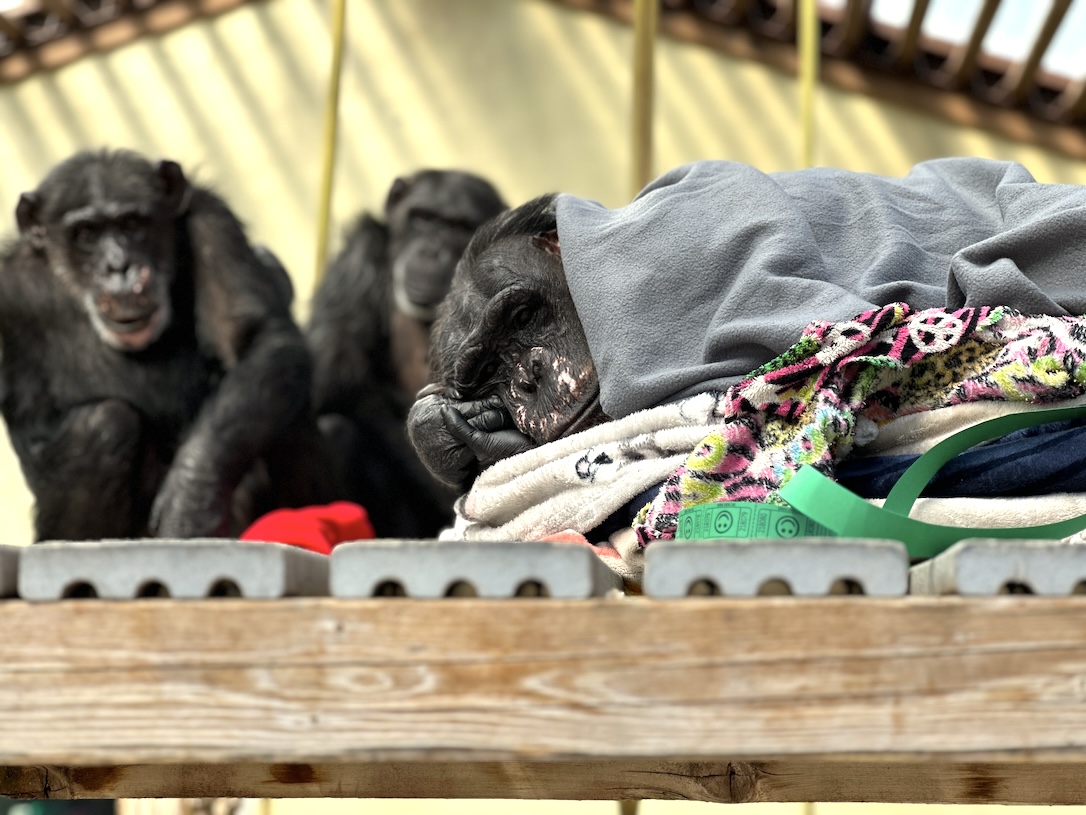
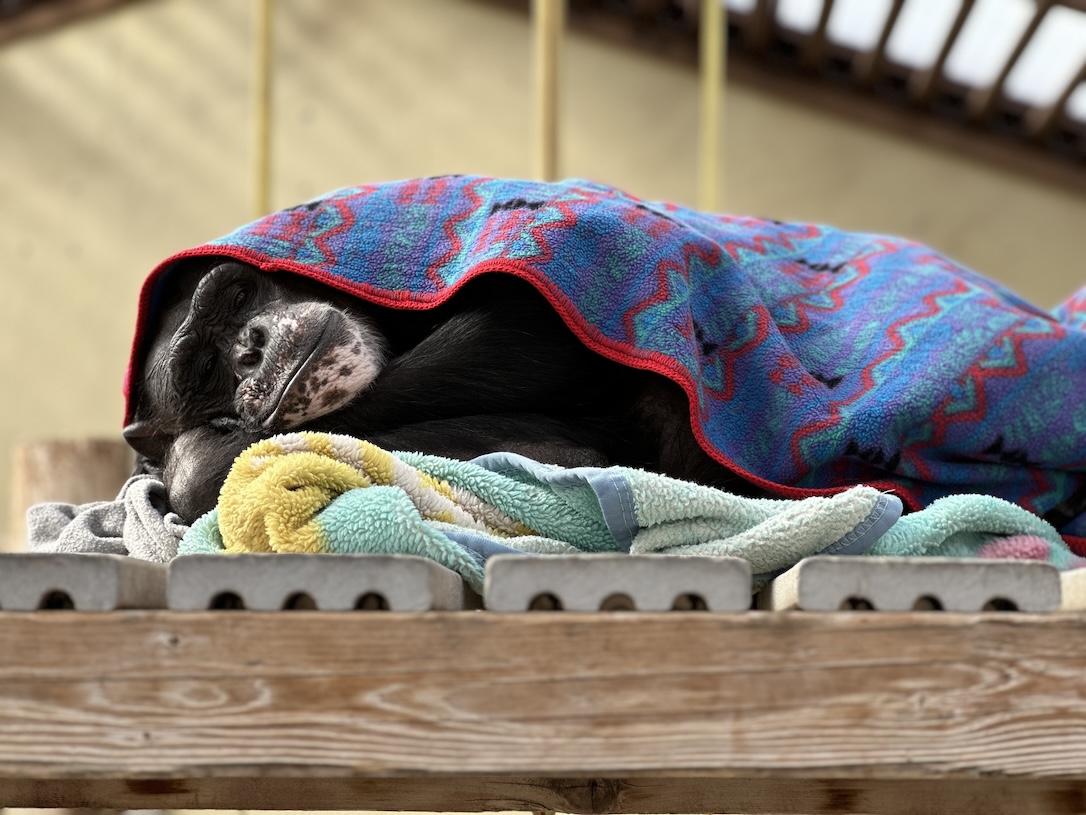
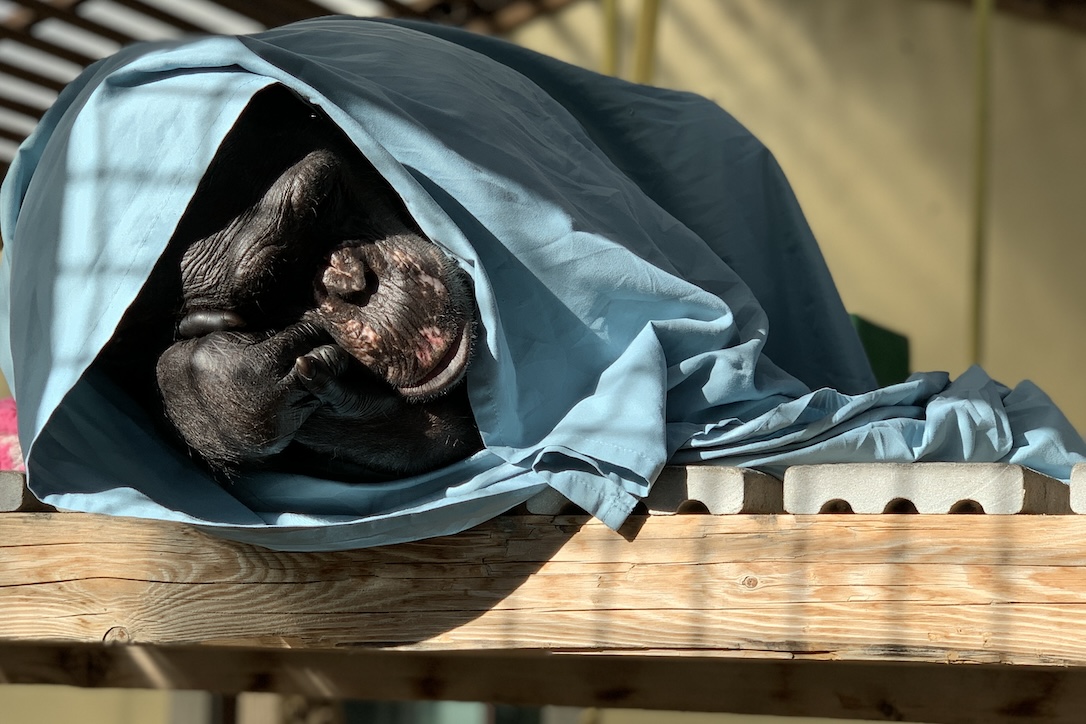
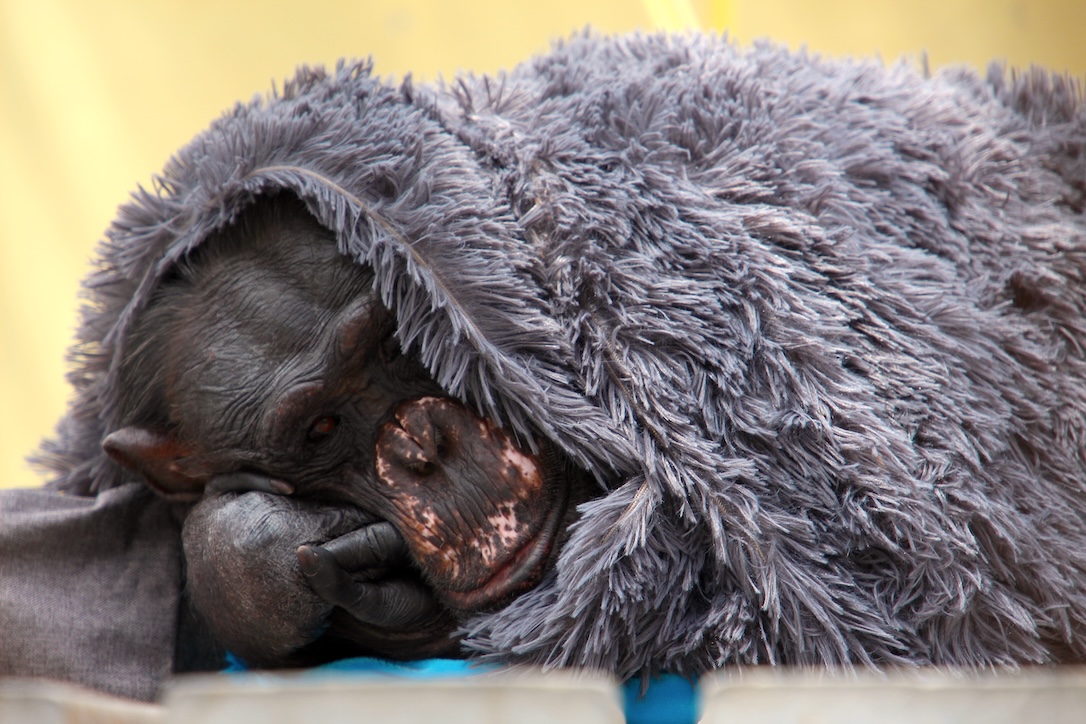
On busy days, we often look through the photos on our phones to see if we can piece together a blog post worth sharing. As I was doing this today, it became apparent that I have a fondness for a certain subject.

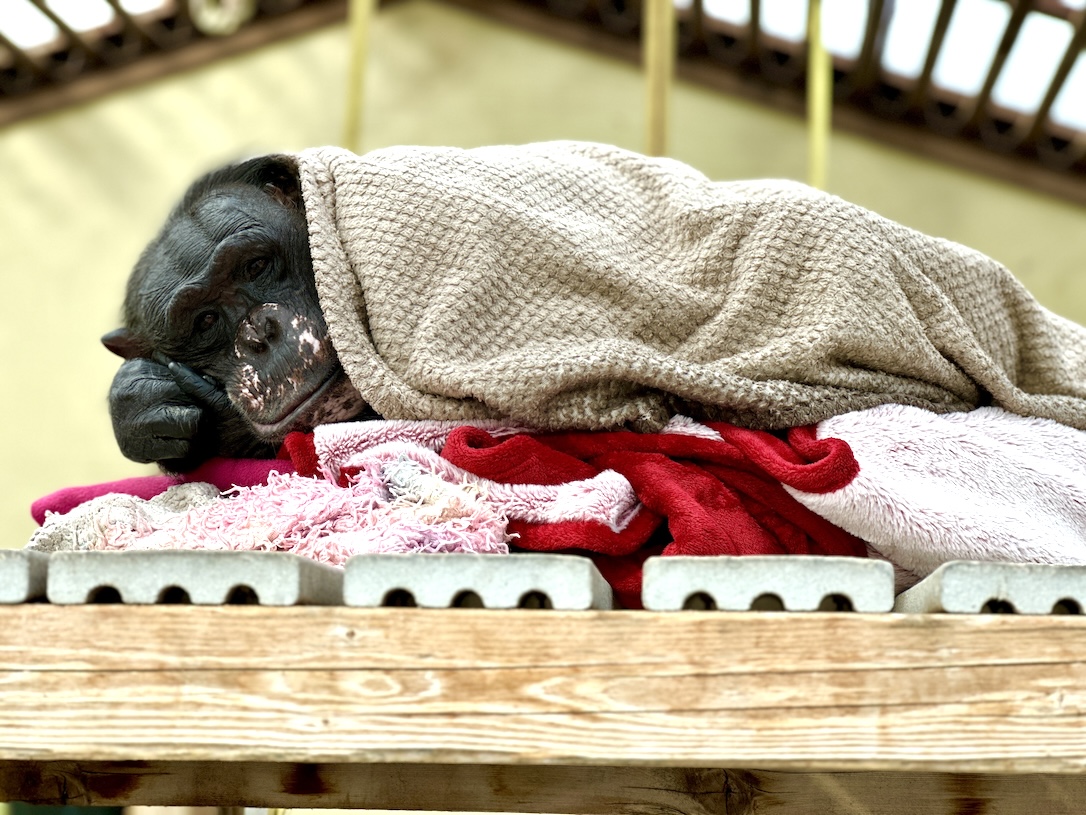
The photos are all slight variations on the same theme: Negra, nesting atop the greenhouse climbing structure under a mountain of blankets. Throughout the spring, summer, and fall, when I arrive for work and walk through the chimp house to say good morning, this is where I know I will find her. And it seems I am compelled to snap a photo each time. How could I resist?

Filed Under: Negra, Nesting Tagged With: blankets, chimpanzee, Negra, nest, Nesting, northwest, rescue, Sanctuary

Superhero

December 4, 2023 by J.B.

Two things to note before you watch the video below:

  • The video shows the chimps fighting. If that’s not your cup of tea, we understand.
  • If you choose to watch, you must do so with the sound on so you can hear the narration that attempts to explain some of what you will see. The chimps will be loud at first but we’ll turn down the volume on the screaming and pant-hooting early on in the video.

Showing the chimps in your care fighting may not be what they teach in nonprofit PR/fundraising school, but I’m always hopeful that people can learn to understand and appreciate chimps as they are while continuing to support them and the sanctuaries that care for them. Sanctuary life is filled with fun, happy moments. To a lesser extent, it also contains unsettling, even terrifying moments. They are still chimps, after all.

As I mention in the video, we are often of two minds in this job. First and foremost, we are caregivers, fretting over each bump and scrape the chimps receive and agonizing over every decision we make with regard to their care. This is the mind we inhabit in the midst of a conflict. But we are also primatologists and enthusiastic observers of chimp behavior. We are the people that, like many of you, were glued to Jane Goodall documentaries as kids and who find the complexities of chimpanzee social dynamics endlessly fascinating. And as I watched the footage of this conflict, I felt my 20-year-old self, just entering the field, marveling at each and every interaction. Perhaps you will feel the same.

If by chance you are new to Chimpanzee Sanctuary Northwest, this group is the result of the integration of two smaller groups: A group of six, led by Cy, and a group of three, led (mostly) by Willy B. Almost immediately after their integration in 2022, Willy B accepted Cy’s dominance and established himself as the #2. But Willy B does not have Cy’s social skills, and from time to time that can get him into trouble with a few others in the group.

Similar to what is seen in the literature, the rate of conflict in this larger group hasn’t gone down all that much since the initial integration; it ebbs and flows and at times it may even be higher. But the conflicts are shorter and result in fewer injuries (I don’t believe in jinxes, I don’t believe in jinxes, I don’t believe…). This conflict was unlike most in that it lasted a long time; as I say in the video, this is likely because of Gordo’s unique inability to calm down. Prior to the integration of these two groups, Gordo would occasionally get this upset with Cy. Cy, having nearly unlimited patience, would just let himself be chased by Gordo until Gordo eventually wore himself out. But that was a low-ranking male venting at the alpha, who clearly felt no threat to his own safety or status. Here, the relationships between the lower-ranking males is less well-defined. And thus the stakes are higher.

There’s an important caveat that I should mention here: I describe some of what I think I’m seeing, but any time I read a matter-of-fact description about relationships and behaviors as complex as those in chimpanzees, my BS detector starts to go off. Half the time we just don’t know or we drastically oversimplify things. So let me admit that up front. And this, I should add, is with the benefit of instant replay and slow motion—now maybe you can see why we say we don’t always know what happened in real time when the chimps get in fights.

Oh, and another one: Cy gets top billing in this blog post and he certainly has the most influence over the outcome, but boy that Honey B has some guts. And there are so many other interesting interactions that I didn’t touch on, many of which are also influential. Alpha males always get the headlines while the females quietly do much of the work. But this alpha sure did put on a show.

This video also doesn’t include what happened after the fight, which in some ways is the most interesting and important aspect of chimpanzee relationship formation and maintenance.

I could probably go on all day about this so I’ll stop here. Feel free to ask questions!

Filed Under: Cy, Fights, Friendship, Gordo, Honey B, Latest Videos, Rayne, Sanctuary, Terry, The Bray, Willy B Tagged With: aggression, alliance, chimpanzee, conflict, fight, friendship, hierarchy, northwest, rescue, Sanctuary

  • « Go to Previous Page
  • Page 1
  • Interim pages omitted …
  • Page 15
  • Page 16
  • Page 17
  • Page 18
  • Page 19
  • Interim pages omitted …
  • Page 134
  • Go to Next Page »

Primary Sidebar

Subscribe To the Blog and Get Notified of New Posts First!

Archives

Calendar of Blog Posts

June 2026
S M T W T F S
 123456
78910111213
14151617181920
21222324252627
282930  
« May    

Categories

SUBSCRIBE TO OUR NEWSLETTER

Footer

PO Box 952
Cle Elum, WA 98922
[email protected]
509-699-0728
501c3 registered charity
EIN: 68-0552915

Official DDAF Grantee

Menu

  • The Chimpanzees
  • Blog
  • About Us
  • You can help
  • Resources
  • Contact
  • Donate

Proud Member of

Connect With Us

Search

Copyright © 2026 Chimpanzee Sanctuary Northwest. All Rights Reserved. Site by Vegan Web Design